
BuddhistCatholicContemplativeEvangelicalGeneral ChristianHinduJewishLatter-day SaintMuslimNew VisionsProgressive Christian
Beliefs
- Buddhist
- Catholic
- Contemplative
- Evangelical
- General Christian
- Hindu
- Jewish
- Latter-day Saint
- More Voices
- Muslim
- New Visions
- Pagan
- Progressive Christian
Topics
- Religion News
- Food and Religion
- Sports and Religion
- Religious Art
- Religious Music and Entertainment
- Religious Events
- History and Religion
- Style and Religion
- Politics and Religion
- Women in Religion
- Recreation Outdoors and Religion
- Business Finance and Religion
- Careers Workplace and Religion
- Education and Religion
- Family Parenting and Religion
- Health Fitness and Religion
- Home and Religion
- Relationships and Religion
- Technology and Religion
- Travel and Religion
Columnists
- Buddhist Columnists
- Business Finance and Religion Columnists
- Careers Workplace and Religion Columnists
- Catholic Columnists
- Contemplative Columnists
- Education and Religion Columnists
- Evangelists Columnists
- Family Parenting and Religion Columnists
- General Christian Columnists
- Health Fitness and Religion Columnists
- Hindu Columnists
- History and Religion Columnists
- Home and Religion Columnists
- Jewish Columnists
- More Voices Columnists
- Latter Day Columnists
- Muslim Columnists
- New Visions Columnists
- Nonreligious Columnists
- Pagan Columnists
- Politics and Religion Columnists
- Progressive Columnists
- Recreation Outdoors and Religion Columnists
- Relationships and Religion Columnists
- Religion News Columnists
- Religious Art Columnists
- Religious Events Columnists
- Religious Music and Entertainment Columnists
- Sports and Religion Columnists
- Style and Religion Columnists
- Technology and Religion Columnists
- Travel and Religion Columnists
- Women in Religion Columnists
Resource Library
- 2026 Calendar
- Library of World Religions
- The 100 Most Holy Places on Earth
- Patheos Answers
- Podcasts
- Videos
- Faith Leaders Database
- Anglican Episcopalian
- Bahai
- Baptist
- Buddhism
- Christianity
- Confucianism
- Eastern Orthodoxy
- Hinduism
- Holiness and Pentecostal
- ISKCON
- Islam
- Judaism
- Lutheran
- Methodist
- The Church of Jesus Christ of Latter-day Saints
- New Age
- Paganism
- Presbytarian and Reformed
- Protestantism
- Religion Behind the Scenes
- Roman Catholic
- Scientology
- Shia Islam
- Sikhism
- Sufism
- Sunni Islam
- Taoism
- Zen
- See all religions
Research Tools
 Ad-Free & Subscriber Log-In Subscription Support
Follow Patheos 

- Trending:
- Advent
- |
- Forgiveness
- |
- Thanksgiving
- |
- Election
- |
- Seasonal Holidays
- |
- Marriage

-
About the Authors
- Home
- Evangelical
- Asian Americans and the Spirit of Racial Capitalism: An Interview with Jonathan Tran
Asian Americans and the Spirit of Racial Capitalism: An Interview with Jonathan Tran
Last updated on: November 15, 2021 at 7:45 am by Melissa Borja
Asian Americans and the Spirit of Racial Capitalism: An Interview with Jonathan Tran 2021-11-15T07:45:22-04:00 Melissa Borja
Patheos Explore the world's faith through different perspectives on religion and spirituality! Patheos has the views of the prevalent religions and spiritualities of the world.
Recent acts of violence and racism – most notably, the murders of George Floyd in Minneapolis in May 2020 and of eight Asian American women in Atlanta in March 2021 – have prompted intense discussions about how different groups experience the persistent problem of racism in the United States. Yet conspicuously absent in many conversations, especially those about Asian Americans, is a serious engagement in how religion shapes the ways that people both perpetuate and disrupt injustice.
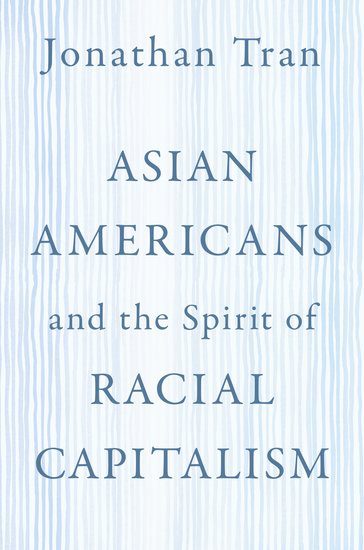
Jonathan Tran aims to change how we understand racism and religion in America through his new book, Asian Americans and the Spirit of Racial Capitalism, published this month by Oxford University Press. Tran, who is Professor of Philosophical Theology and George W. Baines Chair of Religion at Baylor University, uses historical and ethnographic methods to understand how racial capitalism was enacted at two specific sites: a Chinese migrant settlement in the Mississippi Delta and the Redeemer Community Church in the Bayview/Hunters Point section of San Francisco.
The week it came out, the book was Amazon’s #1 new release in religious studies and #1 new release in political science at the same time. There’s clearly a lot of interest in the book, so I spoke with Tran to learn more about it.
Note: the interview has been condensed and lightly edited for clarity.
Melissa Borja: Jonathan, tell me: why did you write this book?
Jonathan Tran: So the book has three big goals. The first goal is to try to understand race and racism, how they operate in America, and what’s going on where we are in this present moment. One of the things that’s driving the book is this question: If we universally agree that racism is bad, that it’s evil, that it causes untold destruction, then why does it persist? Why does it go on? Why is it still so prevalent? And the way I answer that question is I say racism persists because it works. It facilitates a system of extraordinary inequality, and it facilitates it by using race and racism as justification for that inequality. And so you can imagine a world in which you drive around your neighborhood or your city and you see certain people of color. You notice here that there’s dilapidated housing, there’s inadequate access to education, there’s limited resources for health care. And instead of asking the question, “What is wrong with our society that these folks don’t have access to these basic goods?” we instead blame the victims. We say it’s something about them, who they are, something about their race. I think in many cases that’s how racism works. It’s a system of domination and inequality that is justified by categories of and fictions around race. This is what’s happened and what’s been going on in this country since the beginning. Historically we know that race was used to secure labor and property distinctions, and it has consistently operated that way throughout American history and operates that way today.
Now this is a decidedly different picture of what racism is than what I would describe as the popular view. The popular view is a person is possessed of prejudices, or racist attitudes, often fueled by ignorance, a prejudicial culture, bad experiences, or what have you. The solution here would be simple enough: you go and correct that ignorance or get people to have better attitudes, maybe by exposure to so much diversity. In this popular view, racist attitudes sometimes rise to the level of structures and systems, but only sometimes. I think this view has it backwards. Racism operates as a set of structures and systems that then ingrain in individuals’ racist attitudes and behaviors, and this goes on as a cycle ad nauseum. We’ve tended to focus on the individual and the easy solution, when in reality we need to go after the structures and systems. To my mind, attempts to change racism and to pursue anti-racist agendas by changing hearts and minds without changing structures and systems are doomed to fail. Of course, we’re attracted to the all-too-convenient picture of the individual racist that sometimes rises to the level of structures and systems because it’s convenient to think that way. It allows most of us to go on with business as usual.
This popular, all-too-convenient view allows us to scapegoat the realities of our society and then put them on the heads of a hyperbolic image of racism—say, the Klansman or the red-faced sheriff armed with attack dogs. There are much larger structures and systems—for example, in relationship to housing. Redlining is certainly part of it, but it’s also the reality that rental gaps in communities, poor investment and infrastructures, poor governance and lack of access to democratic power, huge disparities in pay, huge disparities and access to education [play a part]. When we focus on the individual racist, we scapegoat those realities, oftentimes deservedly. Yet then we take our eyes off the structures and systems. We blame and scapegoat the individual racists, while many of benefit from the system, and insofar as we benefit from it, we perpetuate it.
MB: Okay, that’s just the first of your book’s goals. What’s the book’s second goal?
JT: The second thing I try to do is imagine Asian Americans as the miner’s canary of contemporary anti-racism conversations. And I do so by asking this question: Why is it that Asian Americans are not simply marginalized by anti-racist conversations, but consistently so? What I argue is that the way anti-racism is imagined in this country will inevitably lead to the marginalization of people already marginalized by racism. That’s why the events of last spring [in the wake of the Atlanta murders] were so illuminating, and revealing for, and of, so many Americans. They could not believe that Asian Americans experienced racism. So I asked the question: What is it about the way race operates, the way anti-racism operates, that Asian Americans are perpetually left out of the conversation? And then I look at the ways the conversation works.
MB: And the third goal?
JT: So the third thing I try to do is try to tell the story of Christianity and specifically the Christian Church, where there are still possible good outcomes for it. We all know, or we should all know, that in this country there has been a kind of unholy trinity between white people, Christianity and racism. What I try to do is disaggregate the Christianity and say that while a lot of Christianity is complicit in white racism, that’s not the whole story of Christianity. I try to imagine a story where God has not abandoned the church to its racism, even though much of the church deserves to be abandoned for its racism. So I try to tell the story of liberation as the activity of God and the way God invites Christians into this story, even if they perpetually and persistently reject that invitation.
MB: There are big visions for this book! I’m curious how you did this book. As I understand it, you are an interdisciplinary scholar, and you used ethnography along with theology and theory. Tell us about how you did the research for this book and how you pursued those three big goals.
JT: The questions I asked were raised through a theoretical apparatus often called “racial capitalism”—hence the title of the book—which is derived from the Black radical tradition. The way I talk about racism as always systemic and structural goes back to about one hundred years of reflection by Black radical theorists. So, this is nothing original to me. I’m simply drawing on a tradition of thought that’s been deeply respected and deeply helpful for us understanding things. I just apply it to the contemporary situation and describe it specifically in the history of Asian Americans. So that’s theoretically what’s going on.
The book is divided into two big haves. The first part tells the history of Chinese migrants at the end of the 19th century, just after Reconstruction, who come to America as cheap labor. Shortly after, they remain in what is often referred to as “the most Southern place on Earth,” the Delta Mississippi. And they stay there and build stores in neighborhoods largely at the intersection between Black neighborhoods and white neighborhoods. They’re not allowed to live in white neighborhoods, and neither are they at home in Black neighborhoods, so they build stores and homes in between. On the one hand, the grocery store business leads to extraordinary forms of neighborly relationships. On the other hand, the stores are modes of exploitation insofar as the grocers take advantage of food deserts created by inequality.
My sense is that this picture of the way racism operates is a pretty common, if also banal, account of how racism most often operates in our society. It’s not driven by the racist with hyperbolic racist attitudes. It’s rather a system where we take advantage of inequality that comes downstream from systems of racism, racial domination, and that’s what these folks were involved in. Incidentally, because they live in the South, over time they become Southern Baptist Christians. And at one point, they become per capita both the most Christian and wealthiest Chinese Americans in the country. And so it’s an amazing history. Again, the dual reality of trying to be neighbors [and] exploiting inequalities. This, I think, is a picture of what racial capitalism is, what I describe in the book as a “moving picture of racial capitalism.”
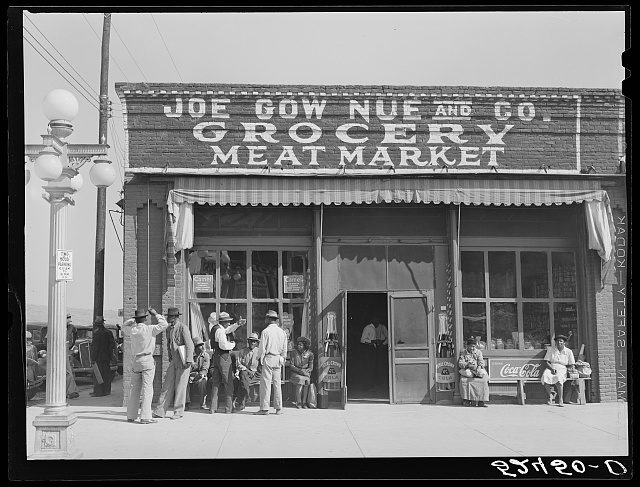
In the Mississippi Delta. There is an ever-increasing number of Chinese grocerymen and merchants. Leland. 1939. (Marion Post Wolcott, Library of Congress)
The second half of the book is an ethnographic study of a contemporary church in San Francisco, the Bay View-Hunters Point part of San Francisco. It is one of the most marginalized parts of the city and home to what it’s often called Black San Francisco, the site of rather extraordinary and breathtaking forms of environmental racism. I tell the story of a group of Christians, the majority of whom, but not all of whom, are Asian-Americans, who eventually find themselves in Black San Francisco at the invitation and behest of Black churches in the area. What they do is begin to love their neighbors, and this means living with neighbors and finding out what the needs are of this community are. Because many of the people in this church graduated from nearby Berkeley or Stanford with computer science or electrical engineering degrees, they start a software company, and they use the software company’s income to redistribute money through the local neighborhood. It’s a picture of what I describe as an instance of the divine economy of God’s grace, in contrast to the racial capitalism I describe earlier in the book. The other thing they do is they use some of that money to start a school and give high-quality education to neighborhood kids for, you know, extremely affordable prices, basically for free. And so I try to offer this as one way of addressing the institutional structural, systemic realities of inequality and larger San Francisco.
MB: What lessons do you think we should take away from the stories at the center of your work? And more broadly, how do you think your book is going to change our conversation—how we think about racism, how we think about racial capitalism, how we think about what it means to be a good neighbor, and how we think about Asian Americans? What are your main interventions through this book?
JT: One of the most significant is at this current moment, we tend to think of anti-racism and racism in terms of questions of racial identity. We tell stories that are populated by specific racial personalities, and we suggest that the moral of the story has something to do with race as an essential quality of persons. I’m trying to shift the conversation to this larger one about the political economy—namely, racial capitalism—that creates these racial identities.
There are signs that our larger conversation is already beginning to make this shift. For example, the New York Times ran an opinion piece just the other day about what structural racism is, and what the op-ed pointed to are thinkers that I also draw on in my book, like Oliver Cromwell Cox, and what Cox called a “world systems” analysis. These systems are often tied to not simply the local, but the state, the national, the global. That’s one thing that’s very powerful conceptually about introducing Asian Americans into this story. As you and your own work have shown, the transnational global reality of, say, Asian migration shows the global transnational—and, in our case, Trans-Pacific—systems of oppression, domination.
The other part of the intervention I hope to make is that in recent years, Christian academics have certainly told the story of how racist Christianity can be. It can be terrifyingly racist, and we can and should continue to tell that story. But we also need stories that tell different stories about what Christians can do insofar as they can do those things, insofar as they are Christian.
In doing so, one of the things I try to emphasize is that the primary key of Christian life is not resistance, but proclamation. What I try to say is that liberation is natural to the world because it’s natural to God. Justice and mercy are natural to the world because they’re natural to God. Those are features God builds into creation insofar as God created the world. So I argue that rather than Christians having to make something happen, start a revolution, really what they need to do is lean into a revolution that is 2000 years in the making.
MB: What you’re talking about is so provocative, and I appreciate your attention to not only stories of failing to live out values and commitments, but stories that can offer models for how to live a life that is more virtuous and in keeping with Christian commitments. That is very generative.
There are so many connections between your work and the work of other scholars, some of whom wrote a century ago and some of whom are writing right now. I know that there is a really lively conversation about Asian Americans today. I’m thinking, for example, of Minor Feelings by Cathy Park Hong and also Jay Caspian King’s book The Loneliest Americans. I wonder how you see your book connecting to this current conversation led by Asian American people talking about Asian American experiences in the 21st century.
JT: I begin the book with a quote by Angela Davis and then a quote by Cathy Park Hong and then a quote by Jay Caspian Kang. So yeah (laughing), they have been hugely influential to me. I consider Kang to be one of our most astute cultural observers, specifically around issues of race and racism. I imagine Kang and I are in agreement that, as he says, Asian American identity is mostly meaningless. What he means by that it’s hard to point to some concrete reality, right? There’s not an Asian American language, most of us don’t go back to Asian America when we go visit our families. So it’s not quite clear what the term means.
We know it’s incredibly difficult to capture the amazingly diverse histories of Asian Americans, right? You have not only different countries, but different cultures, different religions, different languages, different ethnicities, different histories. My family’s migration to America as war refugees at the end of the Vietnam War is a very different thing than, say, folks coming from Taiwan to go to Cornell to get graduate degrees in electrical engineering. Those are very different histories to capture all of that under, say, “Asian American” as a category. It’s unclear what Asian American identity means, and so I try to trouble the easy commitments to racial identity for Asian Americans. That’s where I agree with Kang.
I think the inverse also applies for me and Kang. That is, we want to really think through how we’re imagining racial identity in anti-racism, and we each want to avoid reinforcing the racial categories, especially when it comes to white people as if their being white is the only thing about them that matters. Offering holistic judgments on white people like “whiteness” or “white fragility” may capture some things, but the worry is that in doing so, we reinforce white racial identity when what we want to do is destabilize white racial identity.
What makes my book different from Minor Feelings and The Loneliest Americans is that it is a theology book written by a confessional Christian. What that means is that my work tries to be in service to some determinative end that has to be concretely and materially realizable or realized. It has to show up in the world with and as a group of people, and to me, that group of people is the church. So I take what might be theoretical or abstract ideas and locate them very specifically in groups of people who live faithfully or don’t live faithfully in terms of what I think the Gospel requires and makes available to us.
Previous Post

November 12, 2021
1709 and the End of the World
Next Post

November 16, 2021 Do Evangelical Churches Have a Catechesis Problem?
Browse Our Archives
Select a Category abolitionism Abortion Abraham Joshua Heschel Abraham Kuyper Abraham Lincoln Academia Activism Adam Renberg Advent Adventist africa African American Religion Agnes Howard Albert Camus American History American Religious History American Revolution American West Anabaptists Ancient History Andrea Turpin Andrei Tarkovsky Anglicanism Annales Ansley Lillian Quiros anti-Catholicism Antisemitism Anxious Bench apologetics Apparitions Arash Azizi Archaeology archives art Artificial Intelligence Asia Asian Americans Augustine Authors Bad Bunny Baptism Baptists Barack Obama Battle of Hastings Benjamin Franklin Bernard-Henri Levy Beth Allison Barr Beth Moore Bethany Mannon Bible Bill Cunningham Billy Graham Black Music Bob Dylan Body Boenhoffer Books Breastfeeding Bruce Springsteen C.S. Lewis Calvinism Cancel Culture Capitalism Carmelites Catholicism Cedric Robinson Cesar Chavez Charismaticism charity Charles Dickens Charles Lindbergh Che Guevara Chicago Children Chinese Christianity Chris Gehrz Christ Christian death Christian Higher Education Christian life Christian Nation Christian Nationalism Christianity Today Christmas Church life Church Practice cinema Civil Religion Civil Rights Movement Civil War civility Classics Climate Change Cold War Colonial Mexico colonialism Comer Communism community complementarianism Conference on Faith and History Congregationalism Conspiracies Conspiracy Conversion Narratives Coronavirus Costa Rica Council of Nicaea Covid-19 Creation Critical Race Theory Crusades Culture culture wars Daniel K. Williams David Barton David Swartz Death Ways death with dignity DEI democracy Democratic Party Devotion Digital Age Diplomacy discipleship diversity Donald Trump Drama Dua Lipa Early Church early modern Early modern Catholicism Easter Eastern Christianity economic exploitation Education elections Elie Wiesel Elizabeth II Elizabeth Taylor emotions Empire Engineering England enslavement Entertainment Episcopal Church Erica Ramirez eschatology Eurocentrism Evangelicalism Evangelicals Exegesis Family Feminism Film Flannery O'Connor folk music Food Foreign Policy founding fathers Franciscans Franciscus Junius fundamentalism Funerals G.K. Chesterton Gender Genocide genre geography George W. Bush George Washington George Whitefield Global Christianity Global church Grief Guadalupe guest post Guest Post gun control gun violence Gustavo Gutierrez Hamid Dabashi Harold John Ockenga Harvest Hate Hawaiian Christianity Healing health care Heather Cox Richardson Hell Heresy Hermeneutics Higher Education Hinduism Hippocratic oath Historical Fiction Historical Methodology Historical Profession Historical Profession Historical Theology Historical Thinking historiography Holidays Holocaust horror movies Human rights Humanitarian Work humanities Hummingbirds Hungary hymns Imago Dei Immigration Injustice Interviews Iran Islam Islamophobia Israel Ivan's Childhood Jacob Randolph James Bratt Janine Giordano Drake Japanese history Japanese Literature Jean Paul Sartre Jesse Miranda Jesus Jesus Christ Jimmy Carter Joan Baez Joan Didion Joanne Freeman João B. Chaves Joao Chaves Joey Cochran John Calvin John Fea John Tillotson John Turner Johnny Cash Jonathan Edwards Jonathan Tran Joseph Smith Josh Howerton Journalism Jr. Judaism Jürgen Moltmann Just War Justice Justin Brierley Karl Barth Katelyn Beaty koi ponds Kris Kristofferson Kristin Kobes Du Mez Latin American Religious History Latino Americans Lectio Divina Leisure Lent Leonard Cohen liberal arts liberalism Liberation Theology Linda Ronstadt Lisa Clark Diller Literature Lou Reed Lynchings Lynneth Miller Renberg Mainline Protestantism Malcolm Foley Marilyn Monroe Maritime history Mark Noll Marriage Martin Luther Martin Luther King Martyrdom Marxism Mary Masih Alinejad mass shootings material culture medieval Christianity Medieval Ethiopia Melissa Borja memory Mennonites Mental Health Mental Illness Methodism Mexican Americans Mexicans Mike Madrid Miles Mullin Min Jin Lee Miscarriage Missionaries Mister Rogers Mitt Romney modernity Monasticism Mormonism Motherhood Mothers of the Church Moving Music Musicals Nadya Williams Nahua Christianity Native Americans Natsume Sōseki New Contributor New England New Year New York Nico Non-Violent Protest Orthodoxy pacifism Paleo Evangelicals Palestinians Parenting Patti Smith Paul Kingsnorth Pedro Calderón de la Barca Pentecostalism Philip Jenkins Phillis Wheatley physician-assisted suicide pilgrimage Pilgrims Piracy pluralism Plutocracy Poetry Politics Pope Francis Pope Leo XIV post-modernism prayer preaching Presbyterians prosperity gospel Protest Public Executions Public history Publishing Puritans purity culture Quakers race Race Massacres Racial Capitalism racial reconciliation racialization Racism Raha Bahloulipour Re-Enchantment reading Reformation Refugees religion and the university religion and war Religious Freedom Religious Nones Religious Pluralism Religious Symbols religious violence Republican Party Revival Rita Coolidge Ritual Roger Williams Roman Catholic church Royalty Russell Moore same-sex marriage Sarah Irving-Stonebraker Scandinavia Science Science and Technology Scopes trial Scriptural Interpretation secularism Selena Quintanilla seminary Seventh-Day Adventists sexual morality Sexuality Sikhs Silence slaveholders theology Slavery Slavoj Zizek social justice Social Media Southern Baptist Convention Southern Religion Spain Spiritual Autobiography Spiritual but not religious Spiritual Discipline Sports Stanley Hauerwas Suffering Summer Camps Sunday Night Odds and Ends Supernatural Supreme Court Syriac Christianity Tal Howard Taylor Swift Teaching Technology Television Thanksgiving The Beatles The Mission theater TheoBros Theology Thomas Dixon Thomas Jefferson Thomas Kidd Thomas Merton Tim Gloege Tim Walz Tom Holland Tourism tradition Tragedy Translation Transnationalism Travel Trump Ukraine Uncategorized Unitarians United Methodist Church US History Vanessa Chan Velvet Underground Verónica A. Gutiérrez Veronica Gutierrez Vikings Violence Virgin Mary Virtue Virtue ethics Visions Voting War WCTU Wendell Berry Westminster Assembly White Evangelicalism Wildfires Winnie the Pooh Witches women Women in Ministry Women's and Gender Studies Work Worship writing Yasunari Kawabata Zena Hitz
Select a Month November 2026 October 2026 September 2026 August 2026 July 2026 June 2026 May 2026 April 2026 March 2026 February 2026 January 2026 December 2025 November 2025 October 2025 September 2025 August 2025 July 2025 June 2025 May 2025 April 2025 March 2025 February 2025 January 2025 December 2024 November 2024 October 2024 September 2024 August 2024 July 2024 June 2024 May 2024 April 2024 March 2024 February 2024 January 2024 December 2023 November 2023 October 2023 September 2023 August 2023 July 2023 June 2023 May 2023 April 2023 March 2023 February 2023 January 2023 December 2022 November 2022 October 2022 September 2022 August 2022 July 2022 June 2022 May 2022 April 2022 March 2022 February 2022 January 2022 December 2021 November 2021 October 2021 September 2021 August 2021 July 2021 June 2021 May 2021 April 2021 March 2021 February 2021 January 2021 December 2020 November 2020 October 2020 September 2020 August 2020 July 2020 June 2020 May 2020 April 2020 March 2020 February 2020 January 2020 December 2019 November 2019 October 2019 September 2019 August 2019 July 2019 June 2019 May 2019 April 2019 March 2019 February 2019 January 2019 December 2018 November 2018 October 2018 September 2018 August 2018 July 2018 June 2018 May 2018 April 2018 March 2018 February 2018 January 2018 December 2017 November 2017 October 2017 September 2017 August 2017 July 2017 June 2017 May 2017 April 2017 March 2017 February 2017 January 2017 December 2016 November 2016 October 2016 September 2016 August 2016 July 2016 June 2016 May 2016 April 2016 March 2016 February 2016 January 2016 December 2015 November 2015 October 2015 September 2015 August 2015 July 2015 June 2015 May 2015 April 2015 March 2015 February 2015 January 2015 December 2014 November 2014 October 2014 September 2014 August 2014 July 2014 June 2014 May 2014 April 2014 March 2014 February 2014 January 2014 December 2013 November 2013 October 2013 September 2013 August 2013 July 2013 June 2013 May 2013 April 2013 March 2013 February 2013 January 2013 December 2012 November 2012 October 2012 September 2012 August 2012 July 2012 June 2012 May 2012
Follow Us!
TAKE THE
Religious Wisdom Quiz
According to 2 Timothy, all Scripture is given by inspiration of God and is profitable for what four things?
Select your answer to see how you score.
Salvation, sanctification, justification, and glorification Faith, hope, love, and peace Prayer, worship, fellowship, and service Teaching, rebuking, correcting, and training in righteousness
Related posts from Anxious Bench
Christians Helped Invent Race. Some Now Call It...

Marilyn Monroe and the Life of the Mind

TRENDING AT PATHEOS Evangelical

Pope Francis and The Devil – A Pagan...
According to his private diaries, Pope Francis saw visions of the devil...

Rock N' Roll-- Morphing into/for a New Generation...
Well, should we be grateful, or is rock n' roll just dead? ...

Ansley Gordon Brings Faith and Fresh Stories to...
For screenwriter and actress Ansley Gordon, Christmas has always been about more...

Chris Pratt on Veterans, Faith, “The Way of...
For Chris Pratt, service is not something that ends when a person...

Chapter 5, Sarah: The Quest for Safety in...
Open and Relational Theology & Social Psychology About this series: This series...

When Worry Gets You Nowhere, How Can Faith...
Sometimes, we think that by worrying, we can somehow predict the future....
view all Evangelical blogs
Ad-Free & Subscriber Log-In Subscription Support
- About Us
- 2026 Calendar
- Videos
- Podcasts
- Library of World Religions
- Faith In Media Tracker
- Advertise With Us
- Write for Us
- Privacy Policy
- Terms of Service
- Do Not Sell My Data
- Contact Us
- Radiant Digital
- Manage Newsletter Subscriptions
- Unsubscribe From Notifications
- Sitemap
Copyright 2008-2026, Patheos, part of the Radiant Digital network of media brands. All rights reserved.
Subscription Support Ad-Free & Subscriber Log-In
Follow Patheos