
BuddhistCatholicContemplativeEvangelicalGeneral ChristianHinduJewishLatter-day SaintMuslimNew VisionsProgressive Christian
Beliefs
- Buddhist
- Catholic
- Contemplative
- Evangelical
- General Christian
- Hindu
- Jewish
- Latter-day Saint
- More Voices
- Muslim
- New Visions
- Pagan
- Progressive Christian
Topics
- Religion News
- Food and Religion
- Sports and Religion
- Religious Art
- Religious Music and Entertainment
- Religious Events
- History and Religion
- Style and Religion
- Politics and Religion
- Women in Religion
- Recreation Outdoors and Religion
- Business Finance and Religion
- Careers Workplace and Religion
- Education and Religion
- Family Parenting and Religion
- Health Fitness and Religion
- Home and Religion
- Relationships and Religion
- Technology and Religion
- Travel and Religion
Columnists
- Buddhist Columnists
- Business Finance and Religion Columnists
- Careers Workplace and Religion Columnists
- Catholic Columnists
- Contemplative Columnists
- Education and Religion Columnists
- Evangelists Columnists
- Family Parenting and Religion Columnists
- General Christian Columnists
- Health Fitness and Religion Columnists
- Hindu Columnists
- History and Religion Columnists
- Home and Religion Columnists
- Jewish Columnists
- More Voices Columnists
- Latter Day Columnists
- Muslim Columnists
- New Visions Columnists
- Nonreligious Columnists
- Pagan Columnists
- Politics and Religion Columnists
- Progressive Columnists
- Recreation Outdoors and Religion Columnists
- Relationships and Religion Columnists
- Religion News Columnists
- Religious Art Columnists
- Religious Events Columnists
- Religious Music and Entertainment Columnists
- Sports and Religion Columnists
- Style and Religion Columnists
- Technology and Religion Columnists
- Travel and Religion Columnists
- Women in Religion Columnists
Resource Library
- 2026 Calendar
- Library of World Religions
- The 100 Most Holy Places on Earth
- Patheos Answers
- Podcasts
- Videos
- Faith Leaders Database
- Anglican Episcopalian
- Bahai
- Baptist
- Buddhism
- Christianity
- Confucianism
- Eastern Orthodoxy
- Hinduism
- Holiness and Pentecostal
- ISKCON
- Islam
- Judaism
- Lutheran
- Methodist
- The Church of Jesus Christ of Latter-day Saints
- New Age
- Paganism
- Presbytarian and Reformed
- Protestantism
- Religion Behind the Scenes
- Roman Catholic
- Scientology
- Shia Islam
- Sikhism
- Sufism
- Sunni Islam
- Taoism
- Zen
- See all religions
Research Tools
 Ad-Free & Subscriber Log-In Subscription Support
Follow Patheos 

- Trending:
- Advent
- |
- Forgiveness
- |
- Thanksgiving
- |
- Election
- |
- Seasonal Holidays
- |
- Marriage

-
About the Authors
- Home
- Evangelical
- Innocent Readings of Evangelical History
Innocent Readings of Evangelical History
Last updated on: July 28, 2021 at 9:43 pm by David Swartz
Innocent Readings of Evangelical History 2021-07-28T21:43:26-04:00 David Swartz
Patheos Explore the world's faith through different perspectives on religion and spirituality! Patheos has the views of the prevalent religions and spiritualities of the world.
Evangelicals are woke. In the wake of the killings of George Floyd in Minneapolis, Ahmaud Arbery in South Carolina, Breonna Taylor in Louisville, and others around the country, many evangelicals, even white ones, have become more willing to say the words “black lives matter.” They’re quoting Martin Luther King, Jr., W. E. B. DuBois, and Ibram Kendi. Large swaths of InterVarsity Christian Fellowship have embraced the discourse of #blacklivesmatter. Productive engagement with critical race theory has grown strong even in the more conservative campus ministry Cru. At Wheaton College, philosophy professor Nathan Cartagena, who has become an interpreter of critical race theory to Christianity Today-oriented evangelicals, says that CRT helped him make sense of his own experiences as a Latino Christian. Evangelicals are beginning to reckon with systemic and subtle forms of racism.
The previous paragraph is a true story. But it’s not the truest story. It turns out that more evangelicals oppose CRT than use it as a resource. Dissenters within Cru recently released a 179-page document alleging that the new emphasis represents “a brand new religion of systemic racism, white privilege, and systems of power” that “labels all of Christian theology a racist oppressive ideology of whiteness.” The Southern Baptist Convention nearly imploded last month as institutionalists just barely held off a second Conservative Resurgence that used anti-CRT as a wedge issue. A book entitled Christianity and Wokeness: How the Social Justice Movement Is Hijacking the Gospel by Owen Strachan, who recently went after the old (but “woke”) Divided by Faith: Evangelical Religion and the Problem of Race in America, came out last week. Polls showed that evangelical support for Trump increased between the 2016 and 2020 elections. The efforts of social justice evangelicals to convert their Trump-voting brethren has failed.
The inspirational stories that moderate evangelical institutions tell about themselves isn’t helping. Many marshal a usable history to convince themselves that their tradition is not rotten at the core. Former George W. Bush speechwriter Michael Gerson, for example, appeals to historical examples of nineteenth-century abolitionists and suffragettes. Wheaton College cites Jonathan Blanchard, its first president who made campus a safe stop on the Underground Railroad during the Civil War. Wesleyans, mining Donald Dayton’s Discovering an Evangelical Heritage (1976, 2014), point out that Methodists helped launch the women’s suffrage movement, that missionary E. Stanley Jones integrated evangelistic crusades—soon followed by Billy Graham.
To square this impressive evangelical past with the sordid present, they use the narrative device of historical declension. Evangelicalism, moderates maintain, has declined from its former enlightened stances on issues of social justice. Billy Graham’s legacy has been coopted by his son Franklin. James Dobson, the apolitical psychologist who began tasting the delights of political power, became a culture warrior. Evangelicals who never would have supported Donald Trump in the 1970s voted for him en masse in 2016 and 2020. If contemporary evangelicals would only know their enlightened history—and stay true to it—they would be more willing to say that black lives matter.
The problem is that these narrations cherry-pick unrepresentative voices from the past. Abolitionists never really represented the mainstream of evangelicalism. There were always more slaveholders than Grimké sisters. Leaders who want to minimize (or distract from) evangelical support for Trump narrate the movement as more cosmopolitan than it has actually been. They peddle what Cuban-American theologian Justo González calls “innocent readings of history.” They minimize the bad, emphasize the good, and ignore how moderation often perpetuates injustice. They portray their own history as more innocent than it actually was.
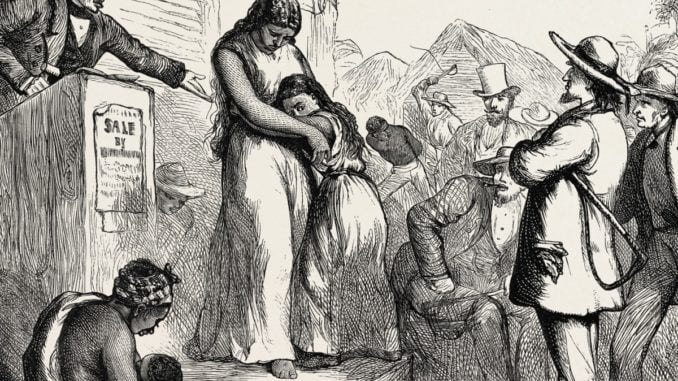
Courtesy of Universal History Archive
Telling only stories of evangelical abolitionism, then, is an exercise in missing the point. As told with excruciating texture by Jemar Tisby in The Color of Compromise, white Christian leaders persistently acted out of racial bigotry. For every evangelical abolitionist from the nineteenth-century, there were a hundred slaveholders and thousands who stood silently by. For every evangelical civil rights activist, there were a hundred resisters and thousands of unhelpful moderates who urged King to “slow down.” The single story of evangelical racial benevolence that we usually hear from evangelical leaders feels really disingenuous after reading Tisby.
I hate to come down hard on leaders trying to move their tradition away from toxic aspects of evangelical culture. I like that many now speak of the importance of recovering themes of marginality, pilgrimage, and lament that they say have always pervaded their sacred texts. I like that many missionaries, humanitarian workers, pastors, and evangelical professors say that they live in a new global age that requires a missiology of peace and a posture of submission, not a reassertion of Pax Americana.
But there are significant limits to this kind of usable history. First, innocent narratives allow evangelicals to blame particular historic choices for their sins and avoid deeper questions of identity. They might acknowledge that a nineteenth-century cotton planter chose to purchase slaves—or that a Southern Baptist explained away his opposition to the civil rights movement because he was nice to the black sharecropper in the back of his land. But it’s worth considering what caused these choices in the first place. Perhaps white evangelicals’ recalcitrance on race, perhaps their inadequate definition of racism as a white person being mean to a black person was less the result of a historical choice than a problem with evangelical identity itself. If Michael Emerson and Christian Smith are right, the evangelical cultural toolkit, especially the tool of hyper-individualism, is to blame. And it needs to be discarded—or at least balanced by attention to collective sin embedded in economic structures, national identities, and cultural sensibilities. In short, blaming individuals of the past rather than collective traits is an innocent reading of history that prevents evangelicals from truly pursuing racial justice. Indeed, the evangelical toolkit—especially the individualistic way it explains the world—seems designed to do precisely the opposite: to maintain unjust systems.
Second, reading history innocently ignores the very text that evangelicals hold sacred. Scripture emphasizes lament as much as celebration. Yet evangelicals, notes Soong Chan Rah in Prophetic Lament, pass quickly by the funeral dirges of Lamentations to joyful songs in the Psalms. Justo González writes, “Innocent history is a selective forgetfulness of a more realistic memory. . . . If we read biblical history in an innocent way, we will highlight that King David was a man after God’s heart, but we will never mention anything about his sins of adultery and murder, and thus we will not learn from his mistakes.” Juan Martinez, a professor at Fuller Seminary, agrees, joking that “Latinos are one-point Calvinists” because they have experienced the depravity of humanity. Indeed, all Christian history is a story about broken people.
Instead of trumpeting white successes, says González, evangelicals should listen carefully to marginalized voices. In The Changing Shape of Church History, he maintains that “responsible remembrance,” that is, listening to voices that have been oppressed and decentered, “leads to responsible action.” In Mañana: Christian Theology from a Hispanic Perspective (1990), he suggests that recentering narratives can set us free from “the crippling imprisonment of what we can grasp and take for granted, the ultimate trivializing of our identity.” Indeed, it can “challenge the dominant group in the United States to remember their immigrant roots, as well as the biblical stance toward immigrants: “When a foreigner resides among you in your land, do not mistreat them. The foreigner residing among you must be treated as your native-born. Love them as yourself, for you were foreigners in Egypt. I am the Lord your God” (Lev. 19:33-34).
Nathan Cartegena offers another biblical example. He notes that in the book of Jeremiah “you’ve got people saying ‘peace, peace, everything’s fine,’ and Jeremiah is like ‘No, not everything’s fine!’ There are those narratives that were designed to blind people to the realities around them.” This sensitivity to history is what Cartegena finds so helpful about critical race theory. He writes, “They’re saying we’ve got to pay attention to the shifts in history and see how differing material conditions and modes of production lead to the production of different legitimizing myths to maintain structural and institutional modes of white supremacy. Because they’re structural and institutional, they lead to people having certain vices of racism — endorsing certain racist ideas and feeling certain racist feelings.”
Erna Kim Hackett gives a more recent example. An innocent reading of the civil rights movement emphasizes the courage of black activists. Writes Hackett, “Which is true, their courage was amazing. But why did they have to be so courageous? What were they facing? The rage, racism, and violence of white people. Rarely is the profound hatred and resistance of white people taught. The evil of white people is downplayed, or minimized, to a few racist exceptions in the South. But white people, all across the United States, resisted any move toward racial justice with fury, rage, and violence. Our history never tells the true story of whiteness.”
This is why Soong-Chan Rah objects to the language of racial reconciliation. He points out that “the idea of RE-conciliation implies within its word structure that you’re going back to something that pre-existed, the idea of being reconciled to a preexisting condition. And that’s problematic, especially for people of color and those who have a history of oppression. What are whites and blacks being reconciled back to? What previous relationship in history are we being reconciled back to? Well, it’s master/slave. That’s the history of the previous relationship between blacks and whites.”
It matters which stories we tell. It’s true that E. Stanley Jones pushed for integration—and that Jonathan Blanchard helped conduct the Underground Railroad. But why were their heroics necessary in the first place? Not answering that question maintains the unjust status quo. Answering that question—that is, telling non-innocent history—gives us a shot at building a more just future.
Previous Post
July 27, 2021
Alvah Hovey and the Northern Baptists
Next Post
July 29, 2021 Why One Ancient Megachurch Pastor Would Like You to Get the Vaccine
Browse Our Archives
Select a Category abolitionism Abortion Abraham Joshua Heschel Abraham Kuyper Abraham Lincoln Academia Activism Adam Renberg Advent Adventist africa African American Religion Agnes Howard Albert Camus American History American Religious History American Revolution American West Anabaptists Ancient History Andrea Turpin Andrei Tarkovsky Anglicanism Annales Ansley Lillian Quiros anti-Catholicism Antisemitism Anxious Bench apologetics Apparitions Arash Azizi Archaeology archives art Artificial Intelligence Asia Asian Americans Augustine Authors Bad Bunny Baptism Baptists Barack Obama Battle of Hastings Benjamin Franklin Bernard-Henri Levy Beth Allison Barr Beth Moore Bethany Mannon Bible Bill Cunningham Billy Graham Black Music Bob Dylan Body Boenhoffer Books Breastfeeding Bruce Springsteen C.S. Lewis Calvinism Cancel Culture Capitalism Carmelites Catholicism Cedric Robinson Cesar Chavez Charismaticism charity Charles Dickens Charles Lindbergh Che Guevara Chicago Children Chinese Christianity Chris Gehrz Christ Christian death Christian Higher Education Christian life Christian Nation Christian Nationalism Christianity Today Christmas Church life Church Practice cinema Civil Religion Civil Rights Movement Civil War civility Classics Climate Change Cold War Colonial Mexico colonialism Comer Communism community complementarianism Conference on Faith and History Congregationalism Conspiracies Conspiracy Conversion Narratives Coronavirus Costa Rica Council of Nicaea Covid-19 Creation Critical Race Theory Crusades Culture culture wars Daniel K. Williams David Barton David Swartz Death Ways death with dignity DEI democracy Democratic Party Devotion Digital Age Diplomacy discipleship diversity Donald Trump Drama Dua Lipa Early Church early modern Early modern Catholicism Easter Eastern Christianity economic exploitation Education elections Elie Wiesel Elizabeth II Elizabeth Taylor emotions Empire Engineering England enslavement Entertainment Episcopal Church Erica Ramirez eschatology Eurocentrism Evangelicalism Evangelicals Exegesis Family Feminism Film Flannery O'Connor folk music Food Foreign Policy founding fathers Franciscans Franciscus Junius fundamentalism Funerals G.K. Chesterton Gender Genocide genre geography George W. Bush George Washington George Whitefield Global Christianity Global church Grief Guadalupe Guest Post guest post gun control gun violence Gustavo Gutierrez Hamid Dabashi Harold John Ockenga Harvest Hate Hawaiian Christianity Healing health care Heather Cox Richardson Hell Heresy Hermeneutics Higher Education Hinduism Hippocratic oath Historical Fiction Historical Methodology Historical Profession Historical Profession Historical Theology Historical Thinking historiography Holidays Holocaust horror movies Human rights Humanitarian Work humanities Hummingbirds Hungary hymns Imago Dei Immigration Injustice Interviews Iran Islam Islamophobia Israel Ivan's Childhood Jacob Randolph James Bratt Janine Giordano Drake Japanese history Japanese Literature Jean Paul Sartre Jesse Miranda Jesus Jesus Christ Jimmy Carter Joan Baez Joan Didion Joanne Freeman João B. Chaves Joao Chaves Joey Cochran John Calvin John Fea John Tillotson John Turner Johnny Cash Jonathan Edwards Jonathan Tran Joseph Smith Josh Howerton Journalism Jr. Judaism Jürgen Moltmann Just War Justice Justin Brierley Karl Barth Katelyn Beaty koi ponds Kris Kristofferson Kristin Kobes Du Mez Latin American Religious History Latino Americans Lectio Divina Leisure Lent Leonard Cohen liberal arts liberalism Liberation Theology Linda Ronstadt Lisa Clark Diller Literature Lou Reed Lynchings Lynneth Miller Renberg Mainline Protestantism Malcolm Foley Marilyn Monroe Maritime history Mark Noll Marriage Martin Luther Martin Luther King Martyrdom Marxism Mary Masih Alinejad mass shootings material culture medieval Christianity Medieval Ethiopia Melissa Borja memory Mennonites Mental Health Mental Illness Methodism Mexican Americans Mexicans Mike Madrid Miles Mullin Min Jin Lee Miscarriage Missionaries Mister Rogers Mitt Romney modernity Monasticism Mormonism Motherhood Mothers of the Church Moving Music Musicals Nadya Williams Nahua Christianity Native Americans Natsume Sōseki New Contributor New England New Year New York Nico Non-Violent Protest Orthodoxy pacifism Paleo Evangelicals Palestinians Parenting Patti Smith Paul Kingsnorth Pedro Calderón de la Barca Pentecostalism Philip Jenkins Phillis Wheatley physician-assisted suicide pilgrimage Pilgrims Piracy pluralism Plutocracy Poetry Politics Pope Francis Pope Leo XIV post-modernism prayer preaching Presbyterians prosperity gospel Protest Public Executions Public history Publishing Puritans purity culture Quakers race Race Massacres Racial Capitalism racial reconciliation racialization Racism Raha Bahloulipour Re-Enchantment reading Reformation Refugees religion and the university religion and war Religious Freedom Religious Nones Religious Pluralism Religious Symbols religious violence Republican Party Revival Rita Coolidge Ritual Roger Williams Roman Catholic church Royalty Russell Moore same-sex marriage Sarah Irving-Stonebraker Scandinavia Science Science and Technology Scopes trial Scriptural Interpretation secularism Selena Quintanilla seminary Seventh-Day Adventists sexual morality Sexuality Sikhs Silence slaveholders theology Slavery Slavoj Zizek social justice Social Media Southern Baptist Convention Southern Religion Spain Spiritual Autobiography Spiritual but not religious Spiritual Discipline Sports Stanley Hauerwas Suffering Summer Camps Sunday Night Odds and Ends Supernatural Supreme Court Syriac Christianity Tal Howard Taylor Swift Teaching Technology Television Thanksgiving The Beatles The Mission theater TheoBros Theology Thomas Dixon Thomas Jefferson Thomas Kidd Thomas Merton Tim Gloege Tim Walz Tom Holland Tourism tradition Tragedy Translation Transnationalism Travel Trump Ukraine Uncategorized Unitarians United Methodist Church US History Vanessa Chan Velvet Underground Verónica A. Gutiérrez Veronica Gutierrez Vikings Violence Virgin Mary Virtue Virtue ethics Visions Voting War WCTU Wendell Berry Westminster Assembly White Evangelicalism Wildfires Winnie the Pooh Witches women Women in Ministry Women's and Gender Studies Work Worship writing Yasunari Kawabata Zena Hitz
Select a Month November 2026 October 2026 September 2026 August 2026 July 2026 June 2026 May 2026 April 2026 March 2026 February 2026 January 2026 December 2025 November 2025 October 2025 September 2025 August 2025 July 2025 June 2025 May 2025 April 2025 March 2025 February 2025 January 2025 December 2024 November 2024 October 2024 September 2024 August 2024 July 2024 June 2024 May 2024 April 2024 March 2024 February 2024 January 2024 December 2023 November 2023 October 2023 September 2023 August 2023 July 2023 June 2023 May 2023 April 2023 March 2023 February 2023 January 2023 December 2022 November 2022 October 2022 September 2022 August 2022 July 2022 June 2022 May 2022 April 2022 March 2022 February 2022 January 2022 December 2021 November 2021 October 2021 September 2021 August 2021 July 2021 June 2021 May 2021 April 2021 March 2021 February 2021 January 2021 December 2020 November 2020 October 2020 September 2020 August 2020 July 2020 June 2020 May 2020 April 2020 March 2020 February 2020 January 2020 December 2019 November 2019 October 2019 September 2019 August 2019 July 2019 June 2019 May 2019 April 2019 March 2019 February 2019 January 2019 December 2018 November 2018 October 2018 September 2018 August 2018 July 2018 June 2018 May 2018 April 2018 March 2018 February 2018 January 2018 December 2017 November 2017 October 2017 September 2017 August 2017 July 2017 June 2017 May 2017 April 2017 March 2017 February 2017 January 2017 December 2016 November 2016 October 2016 September 2016 August 2016 July 2016 June 2016 May 2016 April 2016 March 2016 February 2016 January 2016 December 2015 November 2015 October 2015 September 2015 August 2015 July 2015 June 2015 May 2015 April 2015 March 2015 February 2015 January 2015 December 2014 November 2014 October 2014 September 2014 August 2014 July 2014 June 2014 May 2014 April 2014 March 2014 February 2014 January 2014 December 2013 November 2013 October 2013 September 2013 August 2013 July 2013 June 2013 May 2013 April 2013 March 2013 February 2013 January 2013 December 2012 November 2012 October 2012 September 2012 August 2012 July 2012 June 2012 May 2012
Follow Us!
TAKE THE
Religious Wisdom Quiz
What happened when Peter tried to walk on water?
Select your answer to see how you score.
The Spirit descended upon him He led other disciples out He ran ahead of Jesus He sank when he doubted
Related posts from Anxious Bench
Paris & CT Burn 50 Years After Newsweek's...
Christians Helped Invent Race. Some Now Call It...

What Coffee Reveals About America's Evangelical Varieties

A Casserole is Not a Counterpoint
TRENDING AT PATHEOS Evangelical

God and the Contingency of This World
The great Catholic philosopher Aquinas and the great Lutheran philosopher Leibniz developed...

Pope Francis and The Devil – A Pagan...
According to his private diaries, Pope Francis saw visions of the devil...

Rock N' Roll-- Morphing into/for a New Generation...
Well, should we be grateful, or is rock n' roll just dead? ...

Ansley Gordon Brings Faith and Fresh Stories to...
For screenwriter and actress Ansley Gordon, Christmas has always been about more...

Chris Pratt on Veterans, Faith, “The Way of...
For Chris Pratt, service is not something that ends when a person...

Chapter 5, Sarah: The Quest for Safety in...
Open and Relational Theology & Social Psychology About this series: This series...
view all Evangelical blogs
Ad-Free & Subscriber Log-In Subscription Support
- About Us
- 2026 Calendar
- Videos
- Podcasts
- Library of World Religions
- Faith In Media Tracker
- Advertise With Us
- Write for Us
- Privacy Policy
- Terms of Service
- Do Not Sell My Data
- Contact Us
- Radiant Digital
- Manage Newsletter Subscriptions
- Unsubscribe From Notifications
- Sitemap
Copyright 2008-2026, Patheos, part of the Radiant Digital network of media brands. All rights reserved.
Subscription Support Ad-Free & Subscriber Log-In
Follow Patheos