
BuddhistCatholicContemplativeEvangelicalGeneral ChristianHinduJewishLatter-day SaintMuslimNew VisionsProgressive Christian
Beliefs
- Buddhist
- Catholic
- Contemplative
- Evangelical
- General Christian
- Hindu
- Jewish
- Latter-day Saint
- More Voices
- Muslim
- New Visions
- Pagan
- Progressive Christian
Topics
- Religion News
- Food and Religion
- Sports and Religion
- Religious Art
- Religious Music and Entertainment
- Religious Events
- History and Religion
- Style and Religion
- Politics and Religion
- Women in Religion
- Recreation Outdoors and Religion
- Business Finance and Religion
- Careers Workplace and Religion
- Education and Religion
- Family Parenting and Religion
- Health Fitness and Religion
- Home and Religion
- Relationships and Religion
- Technology and Religion
- Travel and Religion
Columnists
- Buddhist Columnists
- Business Finance and Religion Columnists
- Careers Workplace and Religion Columnists
- Catholic Columnists
- Contemplative Columnists
- Education and Religion Columnists
- Evangelists Columnists
- Family Parenting and Religion Columnists
- General Christian Columnists
- Health Fitness and Religion Columnists
- Hindu Columnists
- History and Religion Columnists
- Home and Religion Columnists
- Jewish Columnists
- More Voices Columnists
- Latter Day Columnists
- Muslim Columnists
- New Visions Columnists
- Nonreligious Columnists
- Pagan Columnists
- Politics and Religion Columnists
- Progressive Columnists
- Recreation Outdoors and Religion Columnists
- Relationships and Religion Columnists
- Religion News Columnists
- Religious Art Columnists
- Religious Events Columnists
- Religious Music and Entertainment Columnists
- Sports and Religion Columnists
- Style and Religion Columnists
- Technology and Religion Columnists
- Travel and Religion Columnists
- Women in Religion Columnists
Resource Library
- 2026 Calendar
- Library of World Religions
- The 100 Most Holy Places on Earth
- Patheos Answers
- Podcasts
- Videos
- Faith Leaders Database
- Anglican Episcopalian
- Bahai
- Baptist
- Buddhism
- Christianity
- Confucianism
- Eastern Orthodoxy
- Hinduism
- Holiness and Pentecostal
- ISKCON
- Islam
- Judaism
- Lutheran
- Methodist
- The Church of Jesus Christ of Latter-day Saints
- New Age
- Paganism
- Presbytarian and Reformed
- Protestantism
- Religion Behind the Scenes
- Roman Catholic
- Scientology
- Shia Islam
- Sikhism
- Sufism
- Sunni Islam
- Taoism
- Zen
- See all religions
Research Tools
 Ad-Free & Subscriber Log-In Subscription Support
Follow Patheos 

- Trending:
- Advent
- |
- Forgiveness
- |
- Thanksgiving
- |
- Election
- |
- Seasonal Holidays
- |
- Marriage

-
About the Authors
- Home
- Evangelical
- Is There a “Cosmopolitan Evangelicalism?”
Is There a “Cosmopolitan Evangelicalism?”
Last updated on: November 18, 2020 at 12:01 am by David Swartz
Is There a “Cosmopolitan Evangelicalism?” 2020-11-16T15:54:21-04:00 David Swartz
Patheos Explore the world's faith through different perspectives on religion and spirituality! Patheos has the views of the prevalent religions and spiritualities of the world.
Dan Hummel is a historian and works at Upper House, a Christian study center on the campus of the University of Wisconsin-Madison. He is author of Covenant Brothers: Evangelicals, Jews, and U.S.-Israeli Relations (University of Pennsylvania Press, 2019). His current project, under contract with Eerdmans, is a history of the rise and fall of dispensationalism from 1800-2020.
***
Is there such a thing as “cosmopolitan evangelicalism,” and is it worth talking about? As a historian of American evangelicalism, I can only recall reading the term a few times—in D. Michael Lindsay’s Faith in the Halls of Power (2008), where he gives it some sociological heft; in Lydia Bean’s The Politics of Evangelical Identity (2014) comparing Canadian and U.S. evangelicals; in the epilogue to David Swartz’s Facing West (2020); and in Charlie Cotherman’s recent history of the Christian study center movement, To Think Christianly (2020).
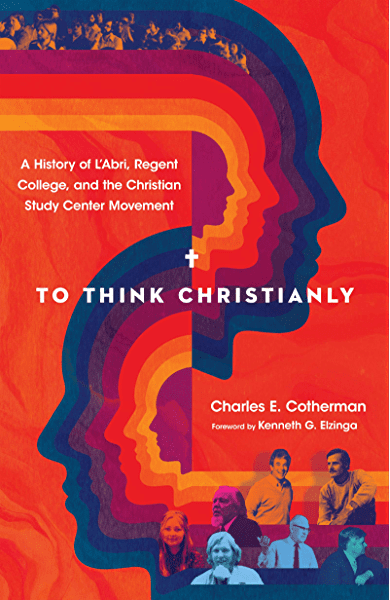 I work at a Christian study center at the University of Wisconsin-Madison, so Cotherman’s reference piqued my interest. Sketching the recent history of study centers, which are mostly located on large R1 campuses (like UW-Madison, University of Minnesota, University of Virginia, University of North Carolina), Cotherman warns that the elite status of these campuses threatens to constrict the reach of the study center movement. “Unless the university-based study center movement expands its scope to include a larger more diverse pool of universities,” he writes, “it will continue to highlight the division between what Michael Lindsay describes as ‘cosmopolitan’ and ‘populist’ evangelicalism” (268).
This distinction, perhaps useful when describing study centers or the “evangelical faculty lounge,” is largely absent from the current conversations of scholars defining white evangelicalism. As the “faculty lounge” metaphor implies, cosmopolitans, where they do exist, are regarded as small in number and meager in influence. The most recent work on evangelicals from Robert P. Jones, Kristen Kobes du Mez, and Andrew Whitehead and Samuel Perry, among many others, speak in unison: the “populists” are defining evangelicalism at the moment and, retrospectively, perhaps they always have. Confidence has been eroded in the “Bebbington Quadrilateral,” which defines evangelical identity on theological terms conducive to how cosmopolitans like to talk about evangelicalism. Instead, white evangelicalism is defined by the decidedly un-cosmopolitan characteristics of Christian nationalism, xenophobia and racism, and cults of unhealthy masculinity.
If we grant for a moment that there is something called “cosmopolitan evangelicalism”—in the faculty offices of Wheaton and Baylor, in the editorial meetings of InterVarsity Press and Christianity Today, and among small study centers in college towns—is it worth talking about? Writers like Michael Gerson have hoped to highlight a cosmopolitan tradition to illustrate that not all evangelicals were or are populists, or that the true evangelicals aren’t represented by figures like Jerry Falwell, Jr. But here again, if we take the lead of recent scholarship, this seems to be an unconvincing argument belied by statistics and the new studies of evangelicalism.
Some days, especially when work at the study center is humming, I think it is self-evident that there is an extensive and underappreciated cosmopolitan network that has significantly influenced key aspects of evangelical discourse and practice. This is especially the case in non-Christian spaces, such as public universities, were dozens or hundreds of faculty and thousands of students identify as evangelical but comprise a small subset of their communities. On these days I tell myself that complaints of cosmopolitan feebleness, usually by cosmopolitans themselves, are no different than the laments of other classes of elites who constantly bemoan the limits of their influence. But on other days the network seems much smaller, its reach more circumscribed, and its future defined by Cotherman’s warning of being too detached and too self-referential.
I’ve gestured towards many of the reasons to minimize or ignore cosmopolitan evangelicalism: the apparent minority views they espouse, their overrepresentation in past accounts of evangelicalism, their numerical inferiority. But what might be the case for defining a relevant cosmopolitan evangelicalism? How would we even define it?
Take my place of work, Upper House. It is part of a longer history of postwar evangelical study centers on American university campuses. Historically, these study centers have been agents of a loosely shared cosmopolitan evangelicalism. They have encouraged pluralism in the tradition of Leslie Newbigin, rather than wage culture wars on university campuses. Contra Jamie K. Smith’s supposition that the “evangelical mind,” where it can be found, is located in confessional bodies, study centers have tended to work outside denominational structures. They have grown rapidly in recent years (Upper House was founded in 2015) and now have a national consortium.
 “Cosmopolitan” does not necessarily mean “liberal” or “progressive.” What cosmopolitan denotes are the priorities and practices of a subculture. Following Lindsay’s schematic, cosmopolitan evangelicals are sociologically distinct (they “travel frequently, are involved in the arts, and live affluent lifestyles”); they possess cultural power (often affiliated with universities, “have greater access to powerful institutions, and the social networks they inhabit are populated by leaders in government, business, and entertainment”); and they eschew large-scale action and mass politics in favor of invited or “exclusive gatherings” or at least ones that bring together “social and professional peers” that have as their aim not immediate conversions but cultural legitimacy and cultivating long term influence (Faith in the Halls of Power, 218-222).

Katharine Hayhoe
Lindsay’s sociological description informs the theological and cultural focus of cosmopolitan evangelicalism, which combines concerns that on their own could be categorized as “liberal” or “conservative” but together make up the distinctive priorities of cosmopolitans. Taking our Upper House programming as an example, we work closely with an organization, Science for the Church, that is advocating for Christian congregations (including evangelicals) to better engage science. A list of UH’s recent speakers includes Katherine Hayhoe, evangelical climate scientist; Kathy Cramer, political scientist here at UW-Madison; Darren Dochuk, historian of evangelicalism and capitalism; and Yale theologian Willie J. Jennings. We have hosted John Inazu to speak on pluralism and religious freedom, and evangelist R. York Moore on, well, evangelism. Last week we hosted Jemar Tisby as a Veritas Forum speaker.
These priorities are rooted in a distinct intellectual backdrop. Cotherman’s history of the Christian study center movement elucidates many of the network influences and nodes, from Regent College in Vancouver, to Intervarsity Christian Fellowship, to scholarly networks of Reformed, Wesleyan, and Anglican varieties. The guiding lights are not Jerry Falwell, Jr., Robert Jeffress, or Paula White, or even The Gospel Coalition or Wayne Grudem. Instead, cosmopolitan evangelicals look to the work of Soong-Chan Rah, N.T. Wright, and Fleming Rutledge; the AND Campaign’s Justin Giboney and Michael Wear, and the new work of Esau McCaulley, Kelly Nikondeha, Marylin McEntyre, among many other disparate voices.
It bears repeating that much of the cosmopolitan activity is to be found outside of partisan or otherwise overtly political discourse. According to the recent fall books issue of Christian Century, two of Zondervan’s best-selling books in 2020 are N.T. Wright’s Collected Essays and Constantine R. Campbell’s Paul and the Hope of Glory, both works of New Testament studies. Eerdmans’ top selling book of 2020 is Lisa M. Bowens’ African American Readings of Paul. Outside of books, ventures like BibleProject attract millions of views (in multiple languages) for each of their videos. The Christian contemporary music world also has its cosmopolitans, from the music of Jon Foreman, Sara Groves, and Sandra McCracken, to the Rabbit Room, a group of Christian artists based in Nashville.
“That’s a nice little network” someone recently told me when I finished listing these names. It was not meant as a compliment. Perhaps drawing the circle beyond the “faculty lounge” to include study centers, independent artists, and a bunch of InterVarsity, Zondervan, Baker Academic, and Eerdmans authors doesn’t change the calculation much. But perhaps it is notable how much of the institutional infrastructure of evangelicalism is run by cosmopolitan types, from those Christian presses, to many of the Christian colleges, universities, and seminaries, to Christianity Today. Organizations like World Vision, the National Association of Evangelicals, Intervarsity Christian Fellowship, and Made to Flourish fall into this category. And plenty of local churches craft identities that, to varying degrees, embrace some form of the above cosmopolitans.
One very crude way to see the cosmopolitan appeal more broadly is to consult an Amazon best seller lists. Of the many relevant subcategories, I checked on the “History of religion and politics” list (where history is defined loosely). Some predictable populist names topped the list, including Phil Robertson’s (of Duck Dynasty fame) Jesus Politics, Mike Huckabee’s The Three C’s that Made America, and David Horowitz’s Dark Agenda. Another striking populist entry is Mark Taylor’s The Trump Prophecies, which taps into the enduring interest in popular eschatology among rank and file evangelicals.
 But books appealing to cosmopolitan evangelicals had a strong showing. Tisby’s The Color of Compromise is fifth, and judged by numbers of reviews easily outperforms the book by Huckabee or books by Eric Metaxas. The new study by Robert P. Jones, White Too Long, is in the top ten, as is du Mez’s Jesus and John Wayne. Du Mez’s book outperforms Al Mohler’s The Gathering Storm, a perhaps more useful comparison because they both were released in June 2020 (and Mohler is a subject in du Mez’s book). Others in the top echelon include Mark Charles and Soong-Chan Rah’s Unsettling Truths, Giboney, Wear, and Chris Butler’s Compassion & Conviction, and Eric Mason’s Woke Church. Tisby’s forthcoming How to Fight Racism is already in the top fifty and does not release until 2021.
This admittedly unrepresentative sample can be explained away. Perhaps cosmopolitan evangelicals are overrepresented among book buyers. Perhaps populists use other means besides Amazon to buy their books. Perhaps this subcategory is not indicative of wider evangelical tastes. Perhaps books are a poor way to judge religious identity.
But perhaps there is something to the list that returns us to the bigger question: is there a coherent cosmopolitan subculture in American evangelicalism worth mentioning? Are these examples—the institutions, the networks, the books—just blips of little consequence, too insignificant to bring to bear on conversations about the definition of evangelicalism, or is there something there? In other words, is cosmopolitan evangelicalism a worthwhile thing to talk about, or is it just a glitch in a populist “matrix,” like the all-encompassing Matrix, to be serve the needs of the system, like the Architect explains to Neo?
The point is not to Pollyannishly search for a respectable and salvageable evangelical identity. It is not to redefine our ways out of historical complicity or to reduce the very real commonalities all white evangelicals share. One question that could emerge from a better appreciation of the scope cosmopolitan evangelicalism is why, given its infrastructure, has it had seemingly minimal effects on large swaths of popular evangelicalism? Another: how old of a phenomenon is cosmopolitan evangelicalism, and is there any sense of historical growth, stagnation, or declension? Whatever the questions, perhaps now more than ever, when it is least convenient to do so, we should think about what “white evangelical” misses in its now widespread usage.
Previous Post

November 17, 2020
Should Evangelicals Fast from Politics?
Next Post

November 19, 2020 Generosity for Our Own Good
Browse Our Archives
Select a Category abolitionism Abortion Abraham Joshua Heschel Abraham Kuyper Abraham Lincoln Academia Activism Adam Renberg Advent Adventist africa African American Religion Agnes Howard Albert Camus American History American Religious History American Revolution American West Anabaptists Ancient History Andrea Turpin Andrei Tarkovsky Anglicanism Annales Ansley Lillian Quiros anti-Catholicism Antisemitism Anxious Bench apologetics Apparitions Arash Azizi Archaeology archives art Artificial Intelligence Asia Asian Americans Augustine Authors Bad Bunny Baptism Baptists Barack Obama Battle of Hastings Benjamin Franklin Bernard-Henri Levy Beth Allison Barr Beth Moore Bethany Mannon Bible Bill Cunningham Billy Graham Black Music Bob Dylan Body Boenhoffer Books Breastfeeding Bruce Springsteen C.S. Lewis Calvinism Cancel Culture Capitalism Carmelites Catholicism Cedric Robinson Cesar Chavez Charismaticism charity Charles Dickens Charles Lindbergh Che Guevara Chicago Children Chinese Christianity Chris Gehrz Christ Christian death Christian Higher Education Christian life Christian Nation Christian Nationalism Christianity Today Christmas Church life Church Practice cinema Civil Religion Civil Rights Movement Civil War civility Classics Climate Change Cold War Colonial Mexico colonialism Comer Communism community complementarianism Conference on Faith and History Congregationalism Conspiracies Conspiracy Conversion Narratives Coronavirus Costa Rica Council of Nicaea Covid-19 Creation Critical Race Theory Crusades Culture culture wars Daniel K. Williams David Barton David Swartz Death Ways death with dignity DEI democracy Democratic Party Devotion Digital Age Diplomacy discipleship diversity Donald Trump Drama Dua Lipa Early Church early modern Early modern Catholicism Easter Eastern Christianity economic exploitation Education elections Elie Wiesel Elizabeth II Elizabeth Taylor emotions Empire Engineering England enslavement Entertainment Episcopal Church Erica Ramirez eschatology Eurocentrism Evangelicalism Evangelicals Exegesis Family Feminism Film Flannery O'Connor folk music Food Foreign Policy founding fathers Franciscans Franciscus Junius fundamentalism Funerals G.K. Chesterton Gender Genocide genre geography George W. Bush George Washington George Whitefield Global Christianity Global church Grief Guadalupe Guest Post guest post gun control gun violence Gustavo Gutierrez Hamid Dabashi Harold John Ockenga Harvest Hate Hawaiian Christianity Healing health care Heather Cox Richardson Hell Heresy Hermeneutics Higher Education Hinduism Hippocratic oath Historical Fiction Historical Methodology Historical Profession Historical Profession Historical Theology Historical Thinking historiography Holidays Holocaust horror movies Human rights Humanitarian Work humanities Hummingbirds Hungary hymns Imago Dei Immigration Injustice Interviews Iran Islam Islamophobia Israel Ivan's Childhood Jacob Randolph James Bratt Janine Giordano Drake Japanese history Japanese Literature Jean Paul Sartre Jesse Miranda Jesus Jesus Christ Jimmy Carter Joan Baez Joan Didion Joanne Freeman João B. Chaves Joao Chaves Joey Cochran John Calvin John Fea John Tillotson John Turner Johnny Cash Jonathan Edwards Jonathan Tran Joseph Smith Josh Howerton Journalism Jr. Judaism Jürgen Moltmann Just War Justice Justin Brierley Karl Barth Katelyn Beaty koi ponds Kris Kristofferson Kristin Kobes Du Mez Latin American Religious History Latino Americans Lectio Divina Leisure Lent Leonard Cohen liberal arts liberalism Liberation Theology Linda Ronstadt Lisa Clark Diller Literature Lou Reed Lynchings Lynneth Miller Renberg Mainline Protestantism Malcolm Foley Marilyn Monroe Maritime history Mark Noll Marriage Martin Luther Martin Luther King Martyrdom Marxism Mary Masih Alinejad mass shootings material culture medieval Christianity Medieval Ethiopia Melissa Borja memory Mennonites Mental Health Mental Illness Methodism Mexican Americans Mexicans Mike Madrid Miles Mullin Min Jin Lee Miscarriage Missionaries Mister Rogers Mitt Romney modernity Monasticism Mormonism Motherhood Mothers of the Church Moving Music Musicals Nadya Williams Nahua Christianity Native Americans Natsume Sōseki New Contributor New England New Year New York Nico Non-Violent Protest Orthodoxy pacifism Paleo Evangelicals Palestinians Parenting Patti Smith Paul Kingsnorth Pedro Calderón de la Barca Pentecostalism Philip Jenkins Phillis Wheatley physician-assisted suicide pilgrimage Pilgrims Piracy pluralism Plutocracy Poetry Politics Pope Francis Pope Leo XIV post-modernism prayer preaching Presbyterians prosperity gospel Protest Public Executions Public history Publishing Puritans purity culture Quakers race Race Massacres Racial Capitalism racial reconciliation racialization Racism Raha Bahloulipour Re-Enchantment reading Reformation Refugees religion and the university religion and war Religious Freedom Religious Nones Religious Pluralism Religious Symbols religious violence Republican Party Revival Rita Coolidge Ritual Roger Williams Roman Catholic church Royalty Russell Moore same-sex marriage Sarah Irving-Stonebraker Scandinavia Science Science and Technology Scopes trial Scriptural Interpretation secularism Selena Quintanilla seminary Seventh-Day Adventists sexual morality Sexuality Sikhs Silence slaveholders theology Slavery Slavoj Zizek social justice Social Media Southern Baptist Convention Southern Religion Spain Spiritual Autobiography Spiritual but not religious Spiritual Discipline Sports Stanley Hauerwas Suffering Summer Camps Sunday Night Odds and Ends Supernatural Supreme Court Syriac Christianity Tal Howard Taylor Swift Teaching Technology Television Thanksgiving The Beatles The Mission theater TheoBros Theology Thomas Dixon Thomas Jefferson Thomas Kidd Thomas Merton Tim Gloege Tim Walz Tom Holland Tourism tradition Tragedy Translation Transnationalism Travel Trump Ukraine Uncategorized Unitarians United Methodist Church US History Vanessa Chan Velvet Underground Verónica A. Gutiérrez Veronica Gutierrez Vikings Violence Virgin Mary Virtue Virtue ethics Visions Voting War WCTU Wendell Berry Westminster Assembly White Evangelicalism Wildfires Winnie the Pooh Witches women Women in Ministry Women's and Gender Studies Work Worship writing Yasunari Kawabata Zena Hitz
Select a Month November 2026 October 2026 September 2026 August 2026 July 2026 June 2026 May 2026 April 2026 March 2026 February 2026 January 2026 December 2025 November 2025 October 2025 September 2025 August 2025 July 2025 June 2025 May 2025 April 2025 March 2025 February 2025 January 2025 December 2024 November 2024 October 2024 September 2024 August 2024 July 2024 June 2024 May 2024 April 2024 March 2024 February 2024 January 2024 December 2023 November 2023 October 2023 September 2023 August 2023 July 2023 June 2023 May 2023 April 2023 March 2023 February 2023 January 2023 December 2022 November 2022 October 2022 September 2022 August 2022 July 2022 June 2022 May 2022 April 2022 March 2022 February 2022 January 2022 December 2021 November 2021 October 2021 September 2021 August 2021 July 2021 June 2021 May 2021 April 2021 March 2021 February 2021 January 2021 December 2020 November 2020 October 2020 September 2020 August 2020 July 2020 June 2020 May 2020 April 2020 March 2020 February 2020 January 2020 December 2019 November 2019 October 2019 September 2019 August 2019 July 2019 June 2019 May 2019 April 2019 March 2019 February 2019 January 2019 December 2018 November 2018 October 2018 September 2018 August 2018 July 2018 June 2018 May 2018 April 2018 March 2018 February 2018 January 2018 December 2017 November 2017 October 2017 September 2017 August 2017 July 2017 June 2017 May 2017 April 2017 March 2017 February 2017 January 2017 December 2016 November 2016 October 2016 September 2016 August 2016 July 2016 June 2016 May 2016 April 2016 March 2016 February 2016 January 2016 December 2015 November 2015 October 2015 September 2015 August 2015 July 2015 June 2015 May 2015 April 2015 March 2015 February 2015 January 2015 December 2014 November 2014 October 2014 September 2014 August 2014 July 2014 June 2014 May 2014 April 2014 March 2014 February 2014 January 2014 December 2013 November 2013 October 2013 September 2013 August 2013 July 2013 June 2013 May 2013 April 2013 March 2013 February 2013 January 2013 December 2012 November 2012 October 2012 September 2012 August 2012 July 2012 June 2012 May 2012
Follow Us!
TAKE THE
Religious Wisdom Quiz
Who does Paul describe as his true son in the faith?
Select your answer to see how you score.
Philemon Titus Timothy Onesimus
Related posts from Anxious Bench
Paris & CT Burn 50 Years After Newsweek's...

What Coffee Reveals About America's Evangelical Varieties

A Casserole is Not a Counterpoint

Angelina Grimké's Forgotten Turn to Apocalyptic Faith
TRENDING AT PATHEOS Evangelical

What music feeds you during Advent?
The first day of Advent is coming to a close as I...

John Piper's Definition of "Without Error"
For any of you who may not know, John Piper is a...

In 1943, as a young army recruit in Texas, George M....

How Do We Find Hope In A Crazy...
"Hope is the thing with feathers that perches in the soul, and...

The Adventurous Lectionary – Advent 2 - December...
The Adventurous Lectionary – The Second Sunday of Advent - December 6,...

Prioritizing Jesus This Advent
Miller’s Station UMC| 29 November 2026| Mathew 19:16-27 When we prioritize Jesus,...
view all Evangelical blogs
Ad-Free & Subscriber Log-In Subscription Support
- About Us
- 2026 Calendar
- Videos
- Podcasts
- Library of World Religions
- Faith In Media Tracker
- Advertise With Us
- Write for Us
- Privacy Policy
- Terms of Service
- Do Not Sell My Data
- Contact Us
- Radiant Digital
- Manage Newsletter Subscriptions
- Unsubscribe From Notifications
- Sitemap
Copyright 2008-2026, Patheos, part of the Radiant Digital network of media brands. All rights reserved.
Subscription Support Ad-Free & Subscriber Log-In
Follow Patheos