
BuddhistCatholicContemplativeEvangelicalGeneral ChristianHinduJewishLatter-day SaintMuslimNew VisionsProgressive Christian
Beliefs
- Buddhist
- Catholic
- Contemplative
- Evangelical
- General Christian
- Hindu
- Jewish
- Latter-day Saint
- More Voices
- Muslim
- New Visions
- Pagan
- Progressive Christian
Topics
- Religion News
- Food and Religion
- Sports and Religion
- Religious Art
- Religious Music and Entertainment
- Religious Events
- History and Religion
- Style and Religion
- Politics and Religion
- Women in Religion
- Recreation Outdoors and Religion
- Business Finance and Religion
- Careers Workplace and Religion
- Education and Religion
- Family Parenting and Religion
- Health Fitness and Religion
- Home and Religion
- Relationships and Religion
- Technology and Religion
- Travel and Religion
Columnists
- Buddhist Columnists
- Business Finance and Religion Columnists
- Careers Workplace and Religion Columnists
- Catholic Columnists
- Contemplative Columnists
- Education and Religion Columnists
- Evangelists Columnists
- Family Parenting and Religion Columnists
- General Christian Columnists
- Health Fitness and Religion Columnists
- Hindu Columnists
- History and Religion Columnists
- Home and Religion Columnists
- Jewish Columnists
- More Voices Columnists
- Latter Day Columnists
- Muslim Columnists
- New Visions Columnists
- Nonreligious Columnists
- Pagan Columnists
- Politics and Religion Columnists
- Progressive Columnists
- Recreation Outdoors and Religion Columnists
- Relationships and Religion Columnists
- Religion News Columnists
- Religious Art Columnists
- Religious Events Columnists
- Religious Music and Entertainment Columnists
- Sports and Religion Columnists
- Style and Religion Columnists
- Technology and Religion Columnists
- Travel and Religion Columnists
- Women in Religion Columnists
Resource Library
- 2026 Calendar
- Library of World Religions
- The 100 Most Holy Places on Earth
- Patheos Answers
- Podcasts
- Videos
- Faith Leaders Database
- Anglican Episcopalian
- Bahai
- Baptist
- Buddhism
- Christianity
- Confucianism
- Eastern Orthodoxy
- Hinduism
- Holiness and Pentecostal
- ISKCON
- Islam
- Judaism
- Lutheran
- Methodist
- The Church of Jesus Christ of Latter-day Saints
- New Age
- Paganism
- Presbytarian and Reformed
- Protestantism
- Religion Behind the Scenes
- Roman Catholic
- Scientology
- Shia Islam
- Sikhism
- Sufism
- Sunni Islam
- Taoism
- Zen
- See all religions
Research Tools
 Ad-Free & Subscriber Log-In Subscription Support
Follow Patheos 

- Trending:
- Advent
- |
- Forgiveness
- |
- Thanksgiving
- |
- Election
- |
- Seasonal Holidays
- |
- Marriage

-
About the Authors
- Home
- Evangelical
- Coming Soon: 2020 Must-Reads in Christianity and Politics
Coming Soon: 2020 Must-Reads in Christianity and Politics
Last updated on: December 26, 2019 at 5:34 am by Kristin Du Mez
Coming Soon: 2020 Must-Reads in Christianity and Politics 2019-12-25T23:24:20-04:00 Kristin Du Mez
Patheos Explore the world's faith through different perspectives on religion and spirituality! Patheos has the views of the prevalent religions and spiritualities of the world.
The frenzied commentary around Mark Galli’s Christianity Today editorial has not only revealed widely diverging opinions within the evangelical community about the Trump presidency, but also about about what, if anything, an anti-Trump editorial in the pages of CT portends. Is this merely futile virtue-signaling on the part of a few evangelical elites who are hopelessly out of touch with real evangelicals? Or is this a crack in the dam, unleashing the pent up but until now mostly quiet resistance to Trump among American evangelicals? Or, is this too little, too late from establishment evangelicals who remain blind to the ways in which they themselves have aided and abetted the ideology they now claim to abhor?
Fortunately we have more than opinions to work with in our efforts to answer these questions. In the coming weeks and months, several books will help piece together the puzzle of white evangelical support for Trump and offer American Christians a different way forward.
Four years out from 2016, we’re reaping the literary fruit of a season of disenchantment and reassessment, and 2020 is looking to be a banner year for books at the intersection of religion and American politics.
Our Religious Moment
First off, there are a number of general interest books by scholars and writers that explore aspects of the disruptive religious moment we find ourselves in.
Although technically not a 2020 publication, I’ll start with Chrissy Stroop and Lauren O’Neal’s Empty the Pews: Stories of Leaving the Church, just out with Epiphany Publishing. A leading “exvangelical” voice, Stroop coined the hashtag #EmptyThePews after the 2016 election, and these 21 essays “by those who survived hardline, authoritarian religious ideology and uprooted themselves from the reality-averse churches that ultimately failed to contain their spirits” offer a deeply personal engagement with conservative faith traditions that participants and observers of evangelicalism, Catholicism, and Mormonism will find illuminating and, undoubtedly, provocative.
I had the privilege of reading an advance reading copy of Ruth Everhart’s The #MeToo Reckoning: Facing the Church’s Complicity in Sexual Abuse and Misconduct (IVP, also just out), and here’s what I had t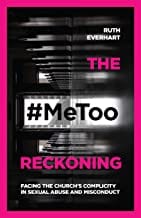 o say: “This is a book for survivors, for churches who have failed victims, for those who seek to mourn with those who mourn, and for those who love justice and endeavor to bring healing and renewal. By weaving together biblical narratives and contemporary stories with her own painful past, Ruth Everhart unflinchingly confronts the culture of silence, shame, and denial that too often characterizes a Christian response to abuse. This is a book of reckoning.”
Jonathan Wilson-Hartgrove, too, has a new book just out, Revolution in Values: Reclaiming Public Faith for the Common Good (IVP), in which he confronts Christians who have “misused Scripture to consolidate power, stoke fears, and defend against enemies,” and offers instead stories that help Christians “rediscover hope for faithful public witness that serves the common good.”
Another timely contribution to the life of the church, Chuck DeGroat’s When Narcissism Comes to Church: Healing Your Community from Emotional and Spiritual Abuse, will be published with IVP this March. Calling out abuse of power in ministry and in church systems is key, but DeGroat goes beyond this to offer steps for repentance and healing. As such, it will serve as an important resource for many churches striving to address abusive systems they are only beginning to identify.
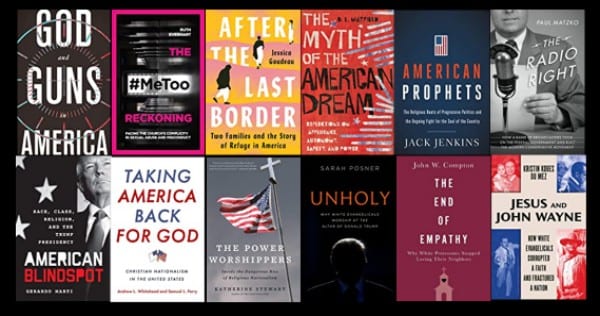
Michael Austin’s God and Guns in America (Eerdmans, May 12), meanwhile, sets its sites on the issue of gun control, asking the question: “What would it look like for Christians to go beyond thoughts and prayers in their response to gun violence?”
Jessica Goudeau’s After the Last Border: Two Families and the Story of Refuge in America (Viking, April 28) offers an intimate look at the lives of two refugee women—a Christian from Myanmar and a Muslim from Syria—both trying to struggle for the American dream. Goudeau situates this “dramatic, character-driven story within a larger history—the evolution of modern refugee resettlement in the United States, beginning with World War II and ending with current closed-door policies.” If Goudeau’s previous writing is any sign, it will be a beautifully crafted and deeply probing narrative.
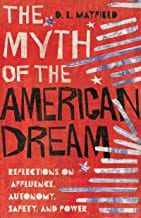 Two other books address the state of American Christianity directly. D. L. Mayfield’s The Myth of the American Dream: Reflections on Affluence, Autonomy, Safety, and Power (IVP, April 14) is, in the words of Ron Sider, “a wonderful mix of captivating personal experiences, biblical teaching, and probing structural analysis,” a challenge to American Christians to rethink Jesus’ command to love our neighbor as ourselves. David Gushee’s After Evangelicalism (Westminster John Knox, August) offers a guide to those disenchanted by the current iteration of conservative evangelicalism but unwilling to empty the pews—to those seeking a religious path forward beyond the ruins of a deconstructed tradition.
Religious But Not Conservative
In light of 2016, much ink has been spilled analyzing, critiquing, and deconstructing conservative religious traditions. This is not about to end (see below). But focusing on conservative religion to the neglect of progressive traditions may end up serving as a self-fulfilling prophecy. L. Benjamin Rolsky’s The Rise and Fall of t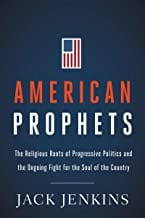 he Religious Left: Politics, Television, and Popular Culture in the 1970s and Beyond (Columbia, October 2019) offers a fascinating cultural study of the religious left. In the coming months, two more books will help swing the conversation to progressive faith traditions and their role in American culture and politics. Jack Jenkins (RNS) is known for his sharp reporting on American religion and for his coverage of progressive Christianity, and his American Prophets: The Religious Roots of Progressive Politics and the Ongoing Fight for the Soul of the Country will be out in April with HarperOne. In September, activist and writer Guthrie Graves-Fitzsimmons’ Just Faith: Reclaiming Progressive Christianity will release with Fortress Press.
White Evangelicals/Christian Nationalism
Still, white evangelicalism remains a topic of fruitful exploration. One book that provides essential background on the history of American evangelicalism is Daniel Vaca’s Evangelicals Incorporated: Books and the Business of Religion in America, published earlier this month by Harvard University Press. Defining evangelicalism as a commercial religion, Vaca offers a fascinating history of evangelical publishing from the 19th century to the present: “Vaca not only illustrates how evangelical ideas, identities, and alliances have developed through commercial activity but also reveals how the production of evangelical identity became a component of modern capitalism.” It’s also a great read that helps make sense of much of the last century of American evangelicalism.
Several key books are also poised to engage evangelical support for Trump more directly. Releasing in the coming days and months, these books address head-on the questions Galli’s editorial raises.
Releasing this week, Gerardo Martí’s American Blindspot: Race, Class, Religion, and the Trump Presidency (Rowman & Littlefield) offers a retrospective on white evangelical support for Trump. I had the privilege of reading an advance copy of Martí’s book, too, and here’s what I had to say: “Martí makes a compelling case that th e election of Donald Trump should not have come as a surprise. Drawing on expansive historical and sociological evidence, he demonstrates that support for Trump reflects longstanding patterns of behavior and deeply entrenched commitments.”
Another highly anticipated sociological take on conservative religious support for Trump is Andrew L. Whitehead and Samuel L. Perry’s Taking America Back for God: Christian Nationalism in the United States (OUP, March 2). Whitehead and Perry have already produced incisive articles disclosing the centrality of Christian nationalism in driving partisan loyalties. As “the first comprehensive empirical analysis of Christian nationalism in the United States,” this book will define the conversation going forward.
 As will the next two books: Katherine Stewart’s The Power Worshippers: Inside the Dangerous Rise of Religious Nationalism (Bloomsbury, March 3) and Sarah Posner’s Unholy: Why White Evangelicals Worship at the Altar of Donald Trump (Random House, May 26). Stewart’s book decenters social and cultural issues to present the Religious Right as a dangerous movement “waging a political war on the norms and institutions of American democracy.” It is a book that “demands that Christian nationalism be taken seriously as a significant threat to the American republic and our democratic freedoms.” Posner’s Unholy provides a similarly grim picture of conservative Christianity, revealing how “race and xenophobia have always been at the movement’s core, and how religion has been used to cloak anxieties about perceived threats to a white, Christian America.”
At this point, I think a word is in order regarding the historiography of American evangelicalism. Until recently, there has been a gap in the literature between popular histories of conservative evangelicalism—books like Michelle Goldberg’s Kingdom Coming: The Rise of Christian Nationalism, Jeff Sharlet’s The Family: The Secret Fundamentalism at the Heart of American Power, and Chris Hedges’ American Fascists: The Christian Right and the War on America—and academic studies of evangelicalism such as George Marsden’s Fundamentalism and American Culture or Molly Worthen’s Apostles of Reason. I think a couple of factors contributed to this gap.
Within the field of religious history, scholars worked to understand religious actors on their own terms and resisted casting aspersions on religious traditions. This was due in part to the influence of methodologies borrowed from ethnography and cultural studies more generally, and it served to distinguish religious history from the occasional sloppy (and disparaging) journalistic account of conservative faith traditions. But this gap was also due in part to the prevalence of evangelicals themselves in the field of American religious history. Many evangelicals writing the histories of evangelicalism still identified with the movement, and many were positioned in a way that enabled them to see the more noble traits of their intellectual and religious tradition while remaining largely shielded from the darker underbelly of the same.
With 2016, the dark underbelly became impossible to ignore, prompting a number of observers—and many evangelicals themselves—to reassess the history of the movement they thought they knew.
A number of books are now poised to bridge this gap. John W. Compton’s The End of Empathy: Why White Protestants Stopped Loving Their Neighbors (OUP, June 1) examines how conservative evangelicals came to oppose government efforts “to promote a more equitable distribution of wealth and political authority.” Lauren Kerby’s Saving History: How White Evangelicals Tour the Nation’s Capital and Redeem a Christian America (UNC, April 13) explores the fascinating world of Christian heritage tourism. And Paul Matzko’s The Radio Right: How a Band of Broadcasters Took on the Federal Government and Built the Modern Conservative Movement (OUP, May 1) traces the history of media echo chambers by telling the story of conservative radio—a story in which fundamentalist Christians played a leading role.
My own Jesus and John Wayne: How White Evangelicals Corrupted a Faith and Fractured a Nation (June 23) fits into this category as well. 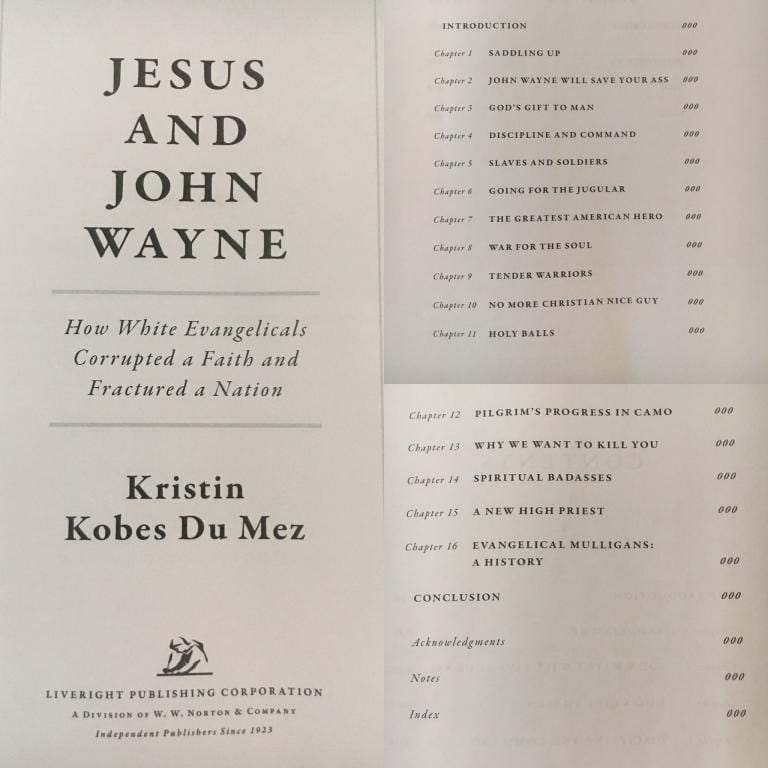 As the chapter titles attest, the book offers an entertaining and at times startling examination of evangelical popular culture and politics, revealing how a commitment to white patriarchal authority wielded in defense of Christian nationalism resides at the heart of American evangelical identity. It traces how a Christian warrior masculinity inspired culture warriors at home and an aggressive foreign policy abroad, finding expression in a celebration of guns and law enforcement of strong men and strong walls, authoritarian leadership, and the belief that the ends justify any means. Although critics like to decry the hypocrisy of evangelicals who support Trump, Jesus and John Wayne makes clear that the affinities run deep. Moreover, these affinities bind together the “respectable” and extreme corners of evangelicalism far more securely than many establishment evangelicals would care to admit. With a cast of characters ranging from Oliver North, Mel Gibson, and the Duck Dynasty clan to Eric Metaxas, John Piper, and James Dobson, the book refuses to distinguish evangelicalism as a cultural and political movement from a more proper, theological tradition. Instead, it examines the networks and alliances that define evangelicalism today as a God-and-country faith—as a cultural, religious, and political movement.
Evangelicals in Global Context
American evangelicals, meanwhile, like to point to the fact that evangelicalism exists beyond American borders. Even so, American evangelical influence transcends those borders. Two highly anticipated books will provide critical insight into evangelical global engagement: David Swartz’s Facing West: American Evangelicals in an Age of World Christianity (OUP, April) and Lauren Turek’s To Bring the Good News to All Nations: Evangelical Influence on Human Rights and U.S. Foreign Relations (Cornell, May). Both promise to be essential reading.
A few more suggestions…
After a bit of a lull early in the year, the Eerdmans religious biography series comes back strong with Doug Foster on Alexander Campbell in June, followed by Paul Harvey on Howard Thurman, Arlin Migliazzo on Henrietta Mears, and Catharine Randall on Gerard Manley Hopkins. Having had an early look at Migliazzo’s book on Mears, I’m particularly interested in how attention to Mears refines our understanding of twentieth-century American evangelicalism.
Finally, a shoutout to forthcoming books from my fellow Anxious Bench bloggers. In addition to David Swartz’s Facing West, look for Philip Jenkins’ Fertility and Faith: The Demographic Revolution and the Transformation of World Religions (Baylor), Tal Howard’s The Idea of Tradition in the Late Modern World (Cascade), and Agnes Howard’s Showing: What Pregnancy Tells Us about Being Human (Eerdmans).

Timed to the 400th anniversary of the Plymouth Colony, John G. Turner’s They Knew They Were Pilgrims: Plymouth Colony and the Contest for American Liberty (Yale, April ) will help ensure that our commemorations are historically accurate. The story he tells is neither of otherworldly saints nor extraordinary sinners, but one that is “entertaining, erudite, and wonderfully human.”
*Even as I write this, I am acutely aware that this list will inevitably be missing other essential reads. Please add additional books you’re looking forward to (including your own!) in the comments section below.

About Kristin Kobes Du Mez
Kristin Kobes Du Mez is chair of the History Department at Calvin University. Follower her on Facebook and Twitter @kkdumez. You can read more about the author here.
Previous Post
December 25, 2019
God's Christmas Gift To Women
Next Post

December 27, 2019 Of Greeks, Gods, Buddhas, and Graven Images
Browse Our Archives
Select a Category abolitionism Abortion Abraham Joshua Heschel Abraham Kuyper Abraham Lincoln Academia Activism Adam Renberg Advent Adventist africa African American Religion Agnes Howard Albert Camus American History American Religious History American Revolution American West Anabaptists Ancient History Andrea Turpin Andrei Tarkovsky Anglicanism Annales Ansley Lillian Quiros anti-Catholicism Antisemitism Anxious Bench apologetics Apparitions Arash Azizi Archaeology archives art Artificial Intelligence Asia Asian Americans Augustine Authors Bad Bunny Baptism Baptists Barack Obama Battle of Hastings Benjamin Franklin Bernard-Henri Levy Beth Allison Barr Beth Moore Bethany Mannon Bible Bill Cunningham Billy Graham Black Music Bob Dylan Body Boenhoffer Books Breastfeeding Bruce Springsteen C.S. Lewis Calvinism Cancel Culture Capitalism Carmelites Catholicism Cedric Robinson Cesar Chavez Charismaticism charity Charles Dickens Charles Lindbergh Che Guevara Chicago Children Chinese Christianity Chris Gehrz Christ Christian death Christian Higher Education Christian life Christian Nation Christian Nationalism Christianity Today Christmas Church life Church Practice cinema Civil Religion Civil Rights Movement Civil War civility Classics Climate Change Cold War Colonial Mexico colonialism Comer Communism community complementarianism Conference on Faith and History Congregationalism Conspiracies Conspiracy Conversion Narratives Coronavirus Costa Rica Council of Nicaea Covid-19 Creation Critical Race Theory Crusades Culture culture wars Daniel K. Williams David Barton David Swartz Death Ways death with dignity DEI democracy Democratic Party Devotion Digital Age Diplomacy discipleship diversity Donald Trump Drama Dua Lipa Early Church early modern Early modern Catholicism Easter Eastern Christianity economic exploitation Education elections Elie Wiesel Elizabeth II Elizabeth Taylor emotions Empire Engineering England enslavement Entertainment Episcopal Church Erica Ramirez eschatology Eurocentrism Evangelicalism Evangelicals Exegesis Family Feminism Film Flannery O'Connor folk music Food Foreign Policy founding fathers Franciscans Franciscus Junius fundamentalism Funerals G.K. Chesterton Gender Genocide genre geography George W. Bush George Washington George Whitefield Global Christianity Global church Grief Guadalupe guest post Guest Post gun control gun violence Gustavo Gutierrez Hamid Dabashi Harold John Ockenga Harvest Hate Hawaiian Christianity Healing health care Heather Cox Richardson Hell Heresy Hermeneutics Higher Education Hinduism Hippocratic oath Historical Fiction Historical Methodology Historical Profession Historical Profession Historical Theology Historical Thinking historiography Holidays Holocaust horror movies Human rights Humanitarian Work humanities Hummingbirds Hungary hymns Imago Dei Immigration Injustice Interviews Iran Islam Islamophobia Israel Ivan's Childhood Jacob Randolph James Bratt Janine Giordano Drake Japanese history Japanese Literature Jean Paul Sartre Jesse Miranda Jesus Jesus Christ Jimmy Carter Joan Baez Joan Didion Joanne Freeman João B. Chaves Joao Chaves Joey Cochran John Calvin John Fea John Tillotson John Turner Johnny Cash Jonathan Edwards Jonathan Tran Joseph Smith Josh Howerton Journalism Jr. Judaism Jürgen Moltmann Just War Justice Justin Brierley Karl Barth Katelyn Beaty koi ponds Kris Kristofferson Kristin Kobes Du Mez Latin American Religious History Latino Americans Lectio Divina Leisure Lent Leonard Cohen liberal arts liberalism Liberation Theology Linda Ronstadt Lisa Clark Diller Literature Lou Reed Lynchings Lynneth Miller Renberg Mainline Protestantism Malcolm Foley Marilyn Monroe Maritime history Mark Noll Marriage Martin Luther Martin Luther King Martyrdom Marxism Mary Masih Alinejad mass shootings material culture medieval Christianity Medieval Ethiopia Melissa Borja memory Mennonites Mental Health Mental Illness Methodism Mexican Americans Mexicans Mike Madrid Miles Mullin Min Jin Lee Miscarriage Missionaries Mister Rogers Mitt Romney modernity Monasticism Mormonism Motherhood Mothers of the Church Moving Music Musicals Nadya Williams Nahua Christianity Native Americans Natsume Sōseki New Contributor New England New Year New York Nico Non-Violent Protest Orthodoxy pacifism Paleo Evangelicals Palestinians Parenting Patti Smith Paul Kingsnorth Pedro Calderón de la Barca Pentecostalism Philip Jenkins Phillis Wheatley physician-assisted suicide pilgrimage Pilgrims Piracy pluralism Plutocracy Poetry Politics Pope Francis Pope Leo XIV post-modernism prayer preaching Presbyterians prosperity gospel Protest Public Executions Public history Publishing Puritans purity culture Quakers race Race Massacres Racial Capitalism racial reconciliation racialization Racism Raha Bahloulipour Re-Enchantment reading Reformation Refugees religion and the university religion and war Religious Freedom Religious Nones Religious Pluralism Religious Symbols religious violence Republican Party Revival Rita Coolidge Ritual Roger Williams Roman Catholic church Royalty Russell Moore same-sex marriage Sarah Irving-Stonebraker Scandinavia Science Science and Technology Scopes trial Scriptural Interpretation secularism Selena Quintanilla seminary Seventh-Day Adventists sexual morality Sexuality Sikhs Silence slaveholders theology Slavery Slavoj Zizek social justice Social Media Southern Baptist Convention Southern Religion Spain Spiritual Autobiography Spiritual but not religious Spiritual Discipline Sports Stanley Hauerwas Suffering Summer Camps Sunday Night Odds and Ends Supernatural Supreme Court Syriac Christianity Tal Howard Taylor Swift Teaching Technology Television Thanksgiving The Beatles The Mission theater TheoBros Theology Thomas Dixon Thomas Jefferson Thomas Kidd Thomas Merton Tim Gloege Tim Walz Tom Holland Tourism tradition Tragedy Translation Transnationalism Travel Trump Ukraine Uncategorized Unitarians United Methodist Church US History Vanessa Chan Velvet Underground Verónica A. Gutiérrez Veronica Gutierrez Vikings Violence Virgin Mary Virtue Virtue ethics Visions Voting War WCTU Wendell Berry Westminster Assembly White Evangelicalism Wildfires Winnie the Pooh Witches women Women in Ministry Women's and Gender Studies Work Worship writing Yasunari Kawabata Zena Hitz
Select a Month November 2026 October 2026 September 2026 August 2026 July 2026 June 2026 May 2026 April 2026 March 2026 February 2026 January 2026 December 2025 November 2025 October 2025 September 2025 August 2025 July 2025 June 2025 May 2025 April 2025 March 2025 February 2025 January 2025 December 2024 November 2024 October 2024 September 2024 August 2024 July 2024 June 2024 May 2024 April 2024 March 2024 February 2024 January 2024 December 2023 November 2023 October 2023 September 2023 August 2023 July 2023 June 2023 May 2023 April 2023 March 2023 February 2023 January 2023 December 2022 November 2022 October 2022 September 2022 August 2022 July 2022 June 2022 May 2022 April 2022 March 2022 February 2022 January 2022 December 2021 November 2021 October 2021 September 2021 August 2021 July 2021 June 2021 May 2021 April 2021 March 2021 February 2021 January 2021 December 2020 November 2020 October 2020 September 2020 August 2020 July 2020 June 2020 May 2020 April 2020 March 2020 February 2020 January 2020 December 2019 November 2019 October 2019 September 2019 August 2019 July 2019 June 2019 May 2019 April 2019 March 2019 February 2019 January 2019 December 2018 November 2018 October 2018 September 2018 August 2018 July 2018 June 2018 May 2018 April 2018 March 2018 February 2018 January 2018 December 2017 November 2017 October 2017 September 2017 August 2017 July 2017 June 2017 May 2017 April 2017 March 2017 February 2017 January 2017 December 2016 November 2016 October 2016 September 2016 August 2016 July 2016 June 2016 May 2016 April 2016 March 2016 February 2016 January 2016 December 2015 November 2015 October 2015 September 2015 August 2015 July 2015 June 2015 May 2015 April 2015 March 2015 February 2015 January 2015 December 2014 November 2014 October 2014 September 2014 August 2014 July 2014 June 2014 May 2014 April 2014 March 2014 February 2014 January 2014 December 2013 November 2013 October 2013 September 2013 August 2013 July 2013 June 2013 May 2013 April 2013 March 2013 February 2013 January 2013 December 2012 November 2012 October 2012 September 2012 August 2012 July 2012 June 2012 May 2012
Follow Us!
TAKE THE
Religious Wisdom Quiz
What does "Eden" mean in Hebrew?
Select your answer to see how you score.
Delight Paradise Peace Gift
Related posts from Anxious Bench
Constantine Wasn’t the Only Ruler to Convert
Paris & CT Burn 50 Years After Newsweek's...

What Coffee Reveals About America's Evangelical Varieties

A Casserole is Not a Counterpoint
TRENDING AT PATHEOS Evangelical

A Modest Proposal for President Trump
Trump should just quit the loser Republicans who failed him so badly...

Jesus is Coming with Glory and Power
https://www.youtube.com/watch?v=_lt60EDHOQ4&list=RD_lt60EDHOQ4&start_radio=1

The Late Francis Frangipane & the Failure Too...
I learned today that another one of my heroes has gone to...

Thomas Paine, the Smiths, the apostles in England,...
I'm pleased to announce that the Becoming Brigham Black Friday Sale,...

CatholicTV Series: Six Black Catholics on Path to...
WATERTOWN, Mass., November 9, 2026 – In recognition of Black Catholic History...

New Advent Journal Invites Catholics to Be Pilgrims
Florissant, MO, November 16, 2026— What if Advent were more than a...
view all Evangelical blogs
Ad-Free & Subscriber Log-In Subscription Support
- About Us
- 2026 Calendar
- Videos
- Podcasts
- Library of World Religions
- Faith In Media Tracker
- Advertise With Us
- Write for Us
- Privacy Policy
- Terms of Service
- Do Not Sell My Data
- Contact Us
- Radiant Digital
- Manage Newsletter Subscriptions
- Unsubscribe From Notifications
- Sitemap
Copyright 2008-2026, Patheos, part of the Radiant Digital network of media brands. All rights reserved.
Subscription Support Ad-Free & Subscriber Log-In
Follow Patheos