
BuddhistCatholicContemplativeEvangelicalGeneral ChristianHinduJewishLatter-day SaintMuslimNew VisionsProgressive Christian
Beliefs
- Buddhist
- Catholic
- Contemplative
- Evangelical
- General Christian
- Hindu
- Jewish
- Latter-day Saint
- More Voices
- Muslim
- New Visions
- Pagan
- Progressive Christian
Topics
- Religion News
- Food and Religion
- Sports and Religion
- Religious Art
- Religious Music and Entertainment
- Religious Events
- History and Religion
- Style and Religion
- Politics and Religion
- Women in Religion
- Recreation Outdoors and Religion
- Business Finance and Religion
- Careers Workplace and Religion
- Education and Religion
- Family Parenting and Religion
- Health Fitness and Religion
- Home and Religion
- Relationships and Religion
- Technology and Religion
- Travel and Religion
Columnists
- Buddhist Columnists
- Business Finance and Religion Columnists
- Careers Workplace and Religion Columnists
- Catholic Columnists
- Contemplative Columnists
- Education and Religion Columnists
- Evangelists Columnists
- Family Parenting and Religion Columnists
- General Christian Columnists
- Health Fitness and Religion Columnists
- Hindu Columnists
- History and Religion Columnists
- Home and Religion Columnists
- Jewish Columnists
- More Voices Columnists
- Latter Day Columnists
- Muslim Columnists
- New Visions Columnists
- Nonreligious Columnists
- Pagan Columnists
- Politics and Religion Columnists
- Progressive Columnists
- Recreation Outdoors and Religion Columnists
- Relationships and Religion Columnists
- Religion News Columnists
- Religious Art Columnists
- Religious Events Columnists
- Religious Music and Entertainment Columnists
- Sports and Religion Columnists
- Style and Religion Columnists
- Technology and Religion Columnists
- Travel and Religion Columnists
- Women in Religion Columnists
Resource Library
- 2026 Calendar
- Library of World Religions
- The 100 Most Holy Places on Earth
- Patheos Answers
- Podcasts
- Videos
- Faith Leaders Database
- Anglican Episcopalian
- Bahai
- Baptist
- Buddhism
- Christianity
- Confucianism
- Eastern Orthodoxy
- Hinduism
- Holiness and Pentecostal
- ISKCON
- Islam
- Judaism
- Lutheran
- Methodist
- The Church of Jesus Christ of Latter-day Saints
- New Age
- Paganism
- Presbytarian and Reformed
- Protestantism
- Religion Behind the Scenes
- Roman Catholic
- Scientology
- Shia Islam
- Sikhism
- Sufism
- Sunni Islam
- Taoism
- Zen
- See all religions
Research Tools
 Ad-Free & Subscriber Log-In Subscription Support
Follow Patheos 

- Trending:
- Advent
- |
- Forgiveness
- |
- Thanksgiving
- |
- Election
- |
- Seasonal Holidays
- |
- Marriage

-
About the Authors
- Home
- Evangelical
- God’s Internationalists: An Interview with David King about the History of World Vision
God’s Internationalists: An Interview with David King about the History of World Vision
Last updated on: June 5, 2019 at 12:48 am by David Swartz
God’s Internationalists: An Interview with David King about the History of World Vision 2019-06-05T00:48:22-04:00 David Swartz
Patheos Explore the world's faith through different perspectives on religion and spirituality! Patheos has the views of the prevalent religions and spiritualities of the world.
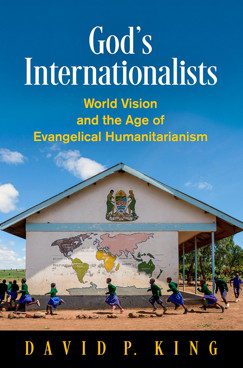
I’m pleased to invite David King to the Anxious Bench. David is the Karen Lake Buttrey Director of the Lake Institute on Faith and Giving as well as Assistant Professor of Philanthropic Studies within the Indiana University Lilly Family School of Philanthropy. Trained as an American religious historian, his research interests broadly include exploring the practices of twentieth-century American and global faith communities as well as more specifically investigating how the religious identity of faith-based nonprofits shapes their motivations, rhetoric, and practice. He is the author of the recent book from University of Pennsylvania Press, God’s Internationalists: World Vision and the Age of Evangelical Humanitarianism, tracing the almost seventy year history of World Vision, the world’s largest Christian humanitarian organization. This book is the focus of our conversation today. –David
***
David Swartz: What is the thesis of your book?
David King: In chronicling the organizational transformation of World Vision from 1950 to the present, God’s Internationalists tells the story of how a small missionary agency grew to become the world’s largest Christian humanitarian organization. In the process, I am making the case that American evangelicals changed in the ways they saw themselves and their world in the period following World War II. To make this point, I am seeking to place the recent history of American evangelicalism in transnational perspective—exploring evangelicalism not only as a force in politics and popular culture but also the field of international relief and development. Chronicling the evolution of World Vision’s practices, theology, rhetoric, and organizational structure, I hope to demonstrate how the organization rearticulated and retained its Christian identity even as it expanded beyond a narrow American evangelical subculture. In so doing, I seek to offer a distinctive angle on the history of religious humanitarianism that makes sense of the dramatic growth in evangelical global social engagement over the past few decades.
 Chapter Two is intriguingly entitled “Opening Americans’ Eyes to a New World.” What “new world” did American evangelicals start to see?
Chapter two chronicles World Vision’s development in the 1950s. After the end of World War II, Cold War politics fanned the initial flames of the burgeoning international engagement of post–World War II evangelicals. Even as the United States was becoming a global superpower, so was American evangelicalism. World Vision emerged to respond to the Korean War and an abundance of war orphans that founder Bob Pierce soon supported through popularizing child sponsorship. Of course, American evangelicals were not unaware of the larger world, having strongly supported global missions for over a century, and so this was not entirely new to be clear. At the same time, this was a new focus – seeking to reclaim their role as the mainstream American faith, winning the world for Christ and America, and spreading the gospel alongside democracy and capitalism.
In the wake of World War II, America’s leading evangelist Billy Graham served as adviser to U.S. presidents, and many new evangelicals like Bob Pierce followed in his footsteps, reemerging from a self-imposed separatism with a renewed interest in influencing popular culture and the political mainstream. But even as evangelicals began to seek out such influence, they were routinely discouraged. Few wielded equal political influence behind closed doors at policy gatherings in places such as Washington, D.C. or Geneva, Switzerland. American evangelicals themselves did not always agree on the proper role for humanitarianism or political action in their work. Nor did they all agree how best to engage the government in shaping policy, receiving federal funding, and working across faith lines. Many of the established aid agencies (religious and secular) denied evangelicals a seat at the table, questioning their methods, motives, and expertise as naive and underdeveloped.
At the same time, evangelicals’ reengagement at home and abroad gave many the opportunity to see the world and their role in it differently as they redefined their approaches to missions and faith-based humanitarianism by establishing new nongovernmental organizations, receiving broad-based funding, and adopting professional relief and development principles. This same global engagement forced them to reframe their own identities at home as they reflected upon what it meant to be American and evangelical in an increasingly global world. The result would be not only debates over evangelism and social action but also full-fledged support for religious, democratic, and economic freedom fighting against atheistic communism on the global stage. A few decades later, by the late 1970s, evangelical agencies would grow in influence as the broader field of global development came to appreciate their size, experience, and expertise. Their relationship with the state and the global church, however, were still up for debate.
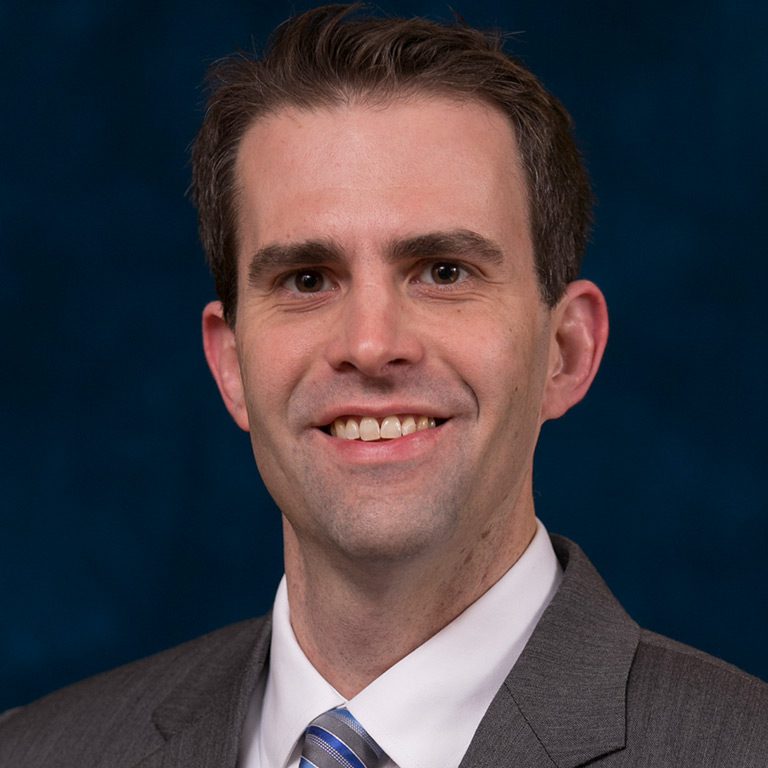
David King
Does World Vision currently fit better in the religious right or the evangelical left? What about in the 1970s or the 1950s? Or is this just a bad question?
Like other faith-based humanitarian agencies, World Vision had to make sense of its religious identity as it grew, shifted operations, and adopted new funding streams. So, officially, World Vision defines itself as a Christian organization, but in the U.S., I still label it as evangelical. Its history and current context as well its vernacular and organizational networks demonstrate that its operates out of an evangelical ethos. To be clear, World Vision International is a federated organization that operates in almost 100 countries. Representatives from the various countries and regions come together to govern the larger World Vision International (WVI), but funding, program initiatives, and governance of each office is distinct, and World Vision offices can look very different depending on the political and cultural context of each country. WVUS is by far the largest, and still remains extremely influential within WVI, but it represents no more than half of WVI’s annual revenue and does not nor cannot dictate policy for WVI. World Vision’s religious makeup is quite different in different countries. In some Latin American countries or the Philippines, that might mean a predominantly Catholic staff. In Eastern Europe, a majority may be Orthodox. In some African country offices, the staff is overwhelmingly Pentecostal. In some more secularized western countries such as Australia or the U.K., the faith component may be less explicit. This diversity and global context has an impact on World Vision U.S. too. WVUS is not only responding to its context in America, but it is in touch with the broader diversity of World Vision internationally as it works among other humanitarian organizations and among local communities.
So to try to answer your question (it’s not a bad one, just complicated), I want to argue that while evangelicals rarely agreed upon a single vision for their movement, they invested the term “evangelicalism” with various meanings through defining, maintaining, and transgressing a number of definitional boundaries. The power of the term for me is exactly in how individuals and organizations have continued to debate what it means and how it effects organizations’ beliefs and practices. Boundary disputes often led to internal squabbles as to who counted as an evangelical, but they also led evangelicals to define themselves in contrast to others across the theological spectrum, from fundamentalists and the Protestant mainline to Catholics and secularists.
In the 1950s, under their founder Bob Pierce, they would have clearly fit as a conservative evangelical agency. Pierce would use both evangelical and fundamentalist labels to describe himself. At the same time, however, he was chastised by the NAE for “cooperative evangelism” – working with those outside the firm boundaries of American evangelicalism in his ministry abroad.
 By the 1970s, if politics and theology further divided evangelicals at home, World Vision attempted to position itself above the fray. Its second president, Stan Mooneyham grew to deplore his fellow evangelicals’ penchant for rigid categories. He argued that the world was gray: “one man’s evangelical may be another man’s liberal.” After spending most of his year in war-torn Southeast Asia, Mooneyham found typical American evangelical disputes petty. While American evangelicals remained World Vision’s base (their donors, staff, and networks were firmly rooted in the movement), the more time they spent outside the West, the more they recognized that the global outlook of American evangelicalism was not adequate to make sense of what they were experiencing. Evangelicals’ debates over God and country said more about domestic debates at home than they did the role of faith in action abroad.
Among the movement’s leaders, World Vision sought to position itself as the mainstream within a new global evangelicalism. After the 1974 Lausanne Congress, it believed it found relative support across the theological spectrum, avoiding the developing “culture wars” by resisting labels as a part of the evangelical left (Ron Sider, Jim Wallis) as well from the developing Christian Right (Jerry Falwell, Pat Robertson). They felt they could achieve consensus around evangelicals’ willingness to support individual children in need.
Yet, World Vision’s success is even more evident at the popular level beyond labels. I think WVUS would like to think that a question of religious right or left – even in the age of Trump – is one that they can sidestep. They would clearly not follow the same outright political tactics that Franklin Graham of Samaritan’s Purse has used in recent years (interesting point: World Vision and Samaritan’s Purse were both founded by the same man, Bob Pierce, which I develop in the book). At the same time, I believe World Vision for instance would not hesitate to advocate for the marginalized against political viewpoints that seek to shut down borders to refugees and immigrants. World Vision’s donor constituency still overwhelming identifies as broadly evangelical, but the popular reception of the organization’s message continues to offer many American Christians a way to participate in a trusted brand of religious humanitarianism.
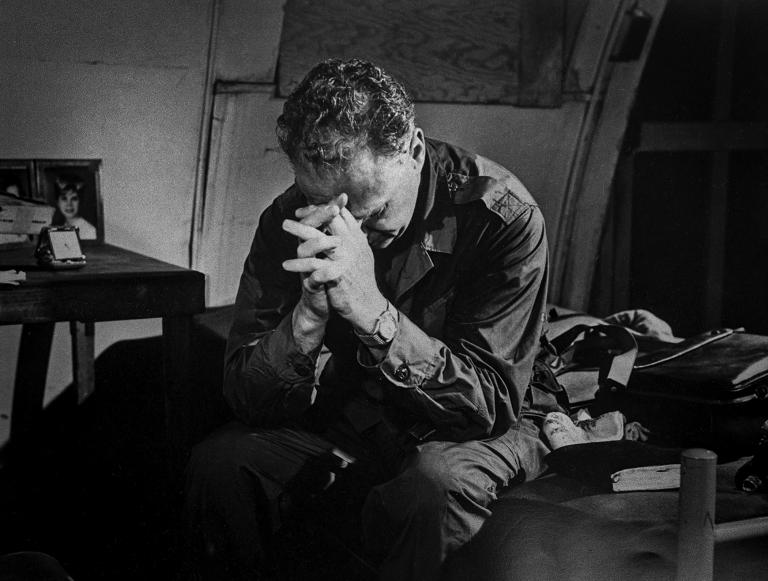
Bob Pierce in prayer during Korean travels in the 1950s.” © World Vision, Inc. 2011. All rights reserved.
Would you have liked to work for Bob Pierce?
No doubt Pierce was persuasive and passionate. Few could refuse his compelling story from the frontlines of heartache around the world whether in war torn Korea, Vietnam, or the Soviet Union. Key for Pierce was his own commitment and sacrifice. It may have cost him his health and his family, but it would be hard to say no to Pierce’s compelling ask because he practiced what he preached. Yet, he also asked for absolute loyalty from those he trusted. Like many entrepreneurs with a singular focus, he would not settle for anything less than complete control and lots of sacrifice. It would be easy to say yes; it would be difficult to sustain long-term. I believe that is what many in World Vision experienced.
What would Pierce think about how World Vision has evolved in the forty years after his death?
Even by the late 1960s as World Vision grew, it could not be managed in the same way Pierce had started – encountering need all over the world, committing whatever resources he had in his pocket, and often giving his word he would return with more as soon as he could. World Vision was no longer a start-up; it was a large-scale NGO with bureaucracies, budgets, and regulations. That wasn’t Pierce’s forte. Perhaps Pierce would be glad that World Vision has still maintained its commitment to children at the heart of its mission. Overall, however, I believe he would be worried that World Vision had professionalized too much – taking government funding, working in large-scale development, and straying from strict evangelism. World Vision will now talk about its work much more holistically – including forms of witness when appropriate but abiding by humanitarian codes of conduct in other contexts forbidding proselytization. Generally, World Vision along with many other faith-based international NGOs has raised a much more complex and interesting conversation about the relationship of religion in the study and practice of relief and development.
What led you to World Vision as a research subject?
In college, I lived for several months in Gaza. As a white middle-class Protestant kid from the South, it was a life-changing experience to live in the Middle East in a Muslim majority culture. I have always been interested in working across cultures in my vocation generally and in my research specifically. And when exploring research topics, I was intrigued by World Vision. While the project started as a dissertation, it grew from there to explore how these major faith-based NGOs are in many ways taking the role once occupied by western missionaries. That transition, which I felt has been underexplored, was important to me. At the same time, I was eager to help reshape the narrative of American religious history (American evangelicalism specifically) through a transnational lens.
Finally, I was fascinated by the growth of the organization. It would be tempting to see World Vision’s transformation as another example of secularization – a small, narrow organization encountering modernity and subordinating its religious identity to secular methods in order to flourish. Yet, such a narrative would be far too simplistic. The reality is that an organization like World Vision functions within multiple fields often simultaneously. For example, World Vision has operated within an American evangelical subculture, a collection of missionary agencies, a global evangelicalism, large-scale fund-raising nonprofit organizations, and a secular development INGO network. Religious identity is rarely static. Throughout the history of World Vision, it was precisely the rearticulation of its religious identity that contributed in surprising ways to the evolving self-definition of the organization. The question then for became less whether World Vision as a development organization is Christian, but how it is Christian. The religious identity of faith-based philanthropies and the religious motivations of their various donor constituencies are only two of many forces that define these agencies. How does religion function in religiously motivated relief and development? That became a key question I grew excited to explore.
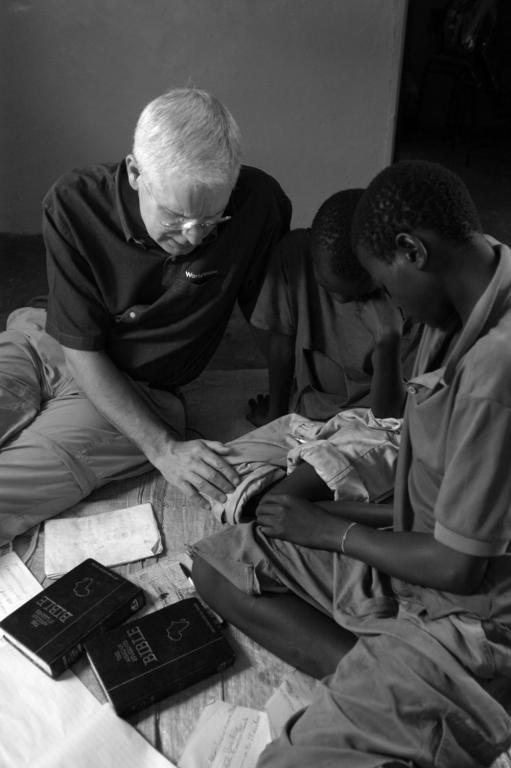
Rich Stearns, WVUS President recently retired at end of 2018, prays with kids participating in World Vision’s programs. © World Vision, Inc. 2011. All rights reserved.
What is at stake here? If you were to write a “Concluding Unscientific Postscript” that was more normative than descriptive, what would you say?
Sprouting from a fertile evangelical subculture and expanding throughout the height of what historian Steven P. Miller has called the “age of evangelicalism,” World Vision modeled an evangelical cultural style even if it did not necessitate a singular theological or political position. I would argue along with Miller that “the recent history of American evangelicalism looks different—and, in many respects, a lot more interesting—when it is not solely about evangelicals themselves.” One issue at stake in my mind is how we continue to write the history of American evangelicalism. The first point I would want to make is that such history must be written with a global perspective (attending to the global imaginaries of Americans if not actual travel and idea exchange). Second, is to question what is the point of such research in defining a category that either seems too nebulous to define or is already too prescriptively predetermined (who is in or out) to remain flexible. For me more as a cultural style than theological category, what may be emerging is something different, broader, unpredictable, and uncertain. While not in the business or predictions, I do feel certain that whatever emerges will extend beyond what labeling voters in election exit polls or focusing on the pastors standing beside political figures on the dais can capture.
Over the past half century, evangelicals have moved into the public square, but they have occupied different corners, addressed a variety of issues, and spoken in multiple dialects. While it is impossible to understand twenty-first-century evangelicalism without politics, the political dimension is only part of the evangelical ethos. The landscape continues to evolve, but global issues remain front and center. Despite ongoing uncertainty on evangelicalism’s future and the complexities of individuals’ and institutions’ religious identities and practices, as more American Christians embrace a global vision, perhaps a new form of practical ecumenism may lead to transcending or transgressing past theological and political boundary markers. And perhaps upstart religious relief agencies and established faith-based nonprofits like World Vision may lead the way.
Finally, in an era where interreligious diversity is a refrain that both faith-based and secular organizations cannot avoid as we are seeking ways to combat rising religious hatred, rebuild civil discourse, and foster renewed trust in our democracy, I believe attuning to institutions and networks (whether congregations, faith-based NGOs, or local civic groups) is an important site for research. Often it is in the trenches of communities – local or global – where this work is being done, and both scholars and practitioners would do well to focus some of our attention here in order to apply some of what we may be learning to the difficulties of the current moment.
What is the most difficult part of writing for you? What about your favorite part?
Let’s take my favorite part first. It starts with digging into archives and doing oral interviews. But my real favorite part is putting the puzzle together. I am an outliner. I like to take what I have discovered and build an argument, thinking where the narrative is taking me, seeing how it all fits together and what we can learn as a result. Then I really enjoy the story-telling aspect of writing. That’s why at the core, I am an historian.
The hardest part these days is making time. I do not find it easy to write in short chunks of time. I need at least a few hours or ideally half a day to find momentum. In my current job, writing days like that are harder to come by and have to be scheduled and protected.
As the director of the Lake Institute on Faith & Giving at IUPUI, you don’t hold a typical academic post. What is the Lake Institute about?
Lake Institute on Faith & Giving is housed within the Indiana University Lilly Family School of Philanthropy at IUPUI. While my faculty role has me working with our masters and doctoral students – teaching classes on religion and philanthropy, ethics, and international development, the majority of my time is directing the work of Lake Institute. For over fifteen years, our work seeks to foster research, education and public conversation on the dynamic relationship between faith and giving. We undertake major research projects such as the National Study of Congregations’ Economic Practices as well as support scholars exploring this field through projects such as our dissertation fellowship or research convenings. The bulk of our time, however, is translating research into practice. Our Insights newsletter reaches over 4500 subscribers every two weeks to share the latest research and best practices on issues related to faith and giving. Our educational programming such as the Executive Certificate in Religious Fundraising works with clergy, nonprofit executive directors, and fundraisers for religious higher education in the unique challenges of leading and funding religious organizations. Finally, we foster public conversation by bringing scholars and practitioners together through lectures, seminars, and ongoing conversations to help consider what the pressing issues in this field might be now as well as into the future.
With a foot in both worlds – faculty member and administrator – its challenging to find the right balance, but for me it is a great fit. My vocation leads me to be both scholar and practitioner, and in this role I constantly get to engage both passions. Most days, we are serving to build bridges between research and practice. With both audiences in mind, I believe it makes me a better writer and communicator. I’ll confess, it is not the exact role I might have imagined filling during my seminars in graduate school, but it has turned out to be a wonderful place for me. I am grateful for the chance to share a bit about Lake, and am so grateful, David, for your questions and asking me to share a bit about God’s Internationalists here on the Anxious Bench blog.
Previous Post

June 4, 2019
Yes, Evangelicalism Can Be Irenic
Next Post

June 6, 2019 The FBI, Martin Luther King, Jr., and Historians
Browse Our Archives
Select a Category abolitionism Abortion Abraham Joshua Heschel Abraham Kuyper Abraham Lincoln Academia Activism Adam Renberg Advent Adventist africa African American Religion Agnes Howard Albert Camus American History American Religious History American Revolution American West Anabaptists Ancient History Andrea Turpin Andrei Tarkovsky Anglicanism Annales Ansley Lillian Quiros anti-Catholicism Antisemitism Anxious Bench apologetics Apparitions Arash Azizi Archaeology archives art Artificial Intelligence Asia Asian Americans Augustine Authors Bad Bunny Baptism Baptists Barack Obama Battle of Hastings Benjamin Franklin Bernard-Henri Levy Beth Allison Barr Beth Moore Bethany Mannon Bible Bill Cunningham Billy Graham Black Music Bob Dylan Body Boenhoffer Books Breastfeeding Bruce Springsteen C.S. Lewis Calvinism Cancel Culture Capitalism Carmelites Catholicism Cedric Robinson Cesar Chavez Charismaticism charity Charles Dickens Charles Lindbergh Che Guevara Chicago Children Chinese Christianity Chris Gehrz Christ Christian death Christian Higher Education Christian life Christian Nation Christian Nationalism Christianity Today Christmas Church life Church Practice cinema Civil Religion Civil Rights Movement Civil War civility Classics Climate Change Cold War Colonial Mexico colonialism Comer Communism community complementarianism Conference on Faith and History Congregationalism Conspiracies Conspiracy Conversion Narratives Coronavirus Costa Rica Council of Nicaea Covid-19 Creation Critical Race Theory Crusades Culture culture wars Daniel K. Williams David Barton David Swartz Death Ways death with dignity DEI democracy Democratic Party Devotion Digital Age Diplomacy discipleship diversity Donald Trump Drama Dua Lipa Early Church early modern Early modern Catholicism Easter Eastern Christianity economic exploitation Education elections Elie Wiesel Elizabeth II Elizabeth Taylor emotions Empire Engineering England enslavement Entertainment Episcopal Church Erica Ramirez eschatology Eurocentrism Evangelicalism Evangelicals Exegesis Family Feminism Film Flannery O'Connor folk music Food Foreign Policy founding fathers Franciscans Franciscus Junius fundamentalism Funerals G.K. Chesterton Gender Genocide genre geography George W. Bush George Washington George Whitefield Global Christianity Global church Grief Guadalupe Guest Post guest post gun control gun violence Gustavo Gutierrez Hamid Dabashi Harold John Ockenga Harvest Hate Hawaiian Christianity Healing health care Heather Cox Richardson Hell Heresy Hermeneutics Higher Education Hinduism Hippocratic oath Historical Fiction Historical Methodology Historical Profession Historical Profession Historical Theology Historical Thinking historiography Holidays Holocaust horror movies Human rights Humanitarian Work humanities Hummingbirds Hungary hymns Imago Dei Immigration Injustice Interviews Iran Islam Islamophobia Israel Ivan's Childhood Jacob Randolph James Bratt Janine Giordano Drake Japanese history Japanese Literature Jean Paul Sartre Jesse Miranda Jesus Jesus Christ Jimmy Carter Joan Baez Joan Didion Joanne Freeman João B. Chaves Joao Chaves Joey Cochran John Calvin John Fea John Tillotson John Turner Johnny Cash Jonathan Edwards Jonathan Tran Joseph Smith Josh Howerton Journalism Jr. Judaism Jürgen Moltmann Just War Justice Justin Brierley Karl Barth Katelyn Beaty koi ponds Kris Kristofferson Kristin Kobes Du Mez Latin American Religious History Latino Americans Lectio Divina Leisure Lent Leonard Cohen liberal arts liberalism Liberation Theology Linda Ronstadt Lisa Clark Diller Literature Lou Reed Lynchings Lynneth Miller Renberg Mainline Protestantism Malcolm Foley Marilyn Monroe Maritime history Mark Noll Marriage Martin Luther Martin Luther King Martyrdom Marxism Mary Masih Alinejad mass shootings material culture medieval Christianity Medieval Ethiopia Melissa Borja memory Mennonites Mental Health Mental Illness Methodism Mexican Americans Mexicans Mike Madrid Miles Mullin Min Jin Lee Miscarriage Missionaries Mister Rogers Mitt Romney modernity Monasticism Mormonism Motherhood Mothers of the Church Moving Music Musicals Nadya Williams Nahua Christianity Native Americans Natsume Sōseki New Contributor New England New Year New York Nico Non-Violent Protest Orthodoxy pacifism Paleo Evangelicals Palestinians Parenting Patti Smith Paul Kingsnorth Pedro Calderón de la Barca Pentecostalism Philip Jenkins Phillis Wheatley physician-assisted suicide pilgrimage Pilgrims Piracy pluralism Plutocracy Poetry Politics Pope Francis Pope Leo XIV post-modernism prayer preaching Presbyterians prosperity gospel Protest Public Executions Public history Publishing Puritans purity culture Quakers race Race Massacres Racial Capitalism racial reconciliation racialization Racism Raha Bahloulipour Re-Enchantment reading Reformation Refugees religion and the university religion and war Religious Freedom Religious Nones Religious Pluralism Religious Symbols religious violence Republican Party Revival Rita Coolidge Ritual Roger Williams Roman Catholic church Royalty Russell Moore same-sex marriage Sarah Irving-Stonebraker Scandinavia Science Science and Technology Scopes trial Scriptural Interpretation secularism Selena Quintanilla seminary Seventh-Day Adventists sexual morality Sexuality Sikhs Silence slaveholders theology Slavery Slavoj Zizek social justice Social Media Southern Baptist Convention Southern Religion Spain Spiritual Autobiography Spiritual but not religious Spiritual Discipline Sports Stanley Hauerwas Suffering Summer Camps Sunday Night Odds and Ends Supernatural Supreme Court Syriac Christianity Tal Howard Taylor Swift Teaching Technology Television Thanksgiving The Beatles The Mission theater TheoBros Theology Thomas Dixon Thomas Jefferson Thomas Kidd Thomas Merton Tim Gloege Tim Walz Tom Holland Tourism tradition Tragedy Translation Transnationalism Travel Trump Ukraine Uncategorized Unitarians United Methodist Church US History Vanessa Chan Velvet Underground Verónica A. Gutiérrez Veronica Gutierrez Vikings Violence Virgin Mary Virtue Virtue ethics Visions Voting War WCTU Wendell Berry Westminster Assembly White Evangelicalism Wildfires Winnie the Pooh Witches women Women in Ministry Women's and Gender Studies Work Worship writing Yasunari Kawabata Zena Hitz
Select a Month November 2026 October 2026 September 2026 August 2026 July 2026 June 2026 May 2026 April 2026 March 2026 February 2026 January 2026 December 2025 November 2025 October 2025 September 2025 August 2025 July 2025 June 2025 May 2025 April 2025 March 2025 February 2025 January 2025 December 2024 November 2024 October 2024 September 2024 August 2024 July 2024 June 2024 May 2024 April 2024 March 2024 February 2024 January 2024 December 2023 November 2023 October 2023 September 2023 August 2023 July 2023 June 2023 May 2023 April 2023 March 2023 February 2023 January 2023 December 2022 November 2022 October 2022 September 2022 August 2022 July 2022 June 2022 May 2022 April 2022 March 2022 February 2022 January 2022 December 2021 November 2021 October 2021 September 2021 August 2021 July 2021 June 2021 May 2021 April 2021 March 2021 February 2021 January 2021 December 2020 November 2020 October 2020 September 2020 August 2020 July 2020 June 2020 May 2020 April 2020 March 2020 February 2020 January 2020 December 2019 November 2019 October 2019 September 2019 August 2019 July 2019 June 2019 May 2019 April 2019 March 2019 February 2019 January 2019 December 2018 November 2018 October 2018 September 2018 August 2018 July 2018 June 2018 May 2018 April 2018 March 2018 February 2018 January 2018 December 2017 November 2017 October 2017 September 2017 August 2017 July 2017 June 2017 May 2017 April 2017 March 2017 February 2017 January 2017 December 2016 November 2016 October 2016 September 2016 August 2016 July 2016 June 2016 May 2016 April 2016 March 2016 February 2016 January 2016 December 2015 November 2015 October 2015 September 2015 August 2015 July 2015 June 2015 May 2015 April 2015 March 2015 February 2015 January 2015 December 2014 November 2014 October 2014 September 2014 August 2014 July 2014 June 2014 May 2014 April 2014 March 2014 February 2014 January 2014 December 2013 November 2013 October 2013 September 2013 August 2013 July 2013 June 2013 May 2013 April 2013 March 2013 February 2013 January 2013 December 2012 November 2012 October 2012 September 2012 August 2012 July 2012 June 2012 May 2012
Follow Us!
TAKE THE
Religious Wisdom Quiz
What happened when Peter tried to walk on water?
Select your answer to see how you score.
The Spirit descended upon him He led other disciples out He ran ahead of Jesus He sank when he doubted
Related posts from Anxious Bench
Paris & CT Burn 50 Years After Newsweek's...

What Coffee Reveals About America's Evangelical Varieties

A Casserole is Not a Counterpoint

Angelina Grimké's Forgotten Turn to Apocalyptic Faith
TRENDING AT PATHEOS Evangelical

God and the Contingency of This World
The great Catholic philosopher Aquinas and the great Lutheran philosopher Leibniz developed...

Pope Francis and The Devil – A Pagan...
According to his private diaries, Pope Francis saw visions of the devil...

Rock N' Roll-- Morphing into/for a New Generation...
Well, should we be grateful, or is rock n' roll just dead? ...

Ansley Gordon Brings Faith and Fresh Stories to...
For screenwriter and actress Ansley Gordon, Christmas has always been about more...

Chris Pratt on Veterans, Faith, “The Way of...
For Chris Pratt, service is not something that ends when a person...

Chapter 5, Sarah: The Quest for Safety in...
Open and Relational Theology & Social Psychology About this series: This series...
view all Evangelical blogs
Ad-Free & Subscriber Log-In Subscription Support
- About Us
- 2026 Calendar
- Videos
- Podcasts
- Library of World Religions
- Faith In Media Tracker
- Advertise With Us
- Write for Us
- Privacy Policy
- Terms of Service
- Do Not Sell My Data
- Contact Us
- Radiant Digital
- Manage Newsletter Subscriptions
- Unsubscribe From Notifications
- Sitemap
Copyright 2008-2026, Patheos, part of the Radiant Digital network of media brands. All rights reserved.
Subscription Support Ad-Free & Subscriber Log-In
Follow Patheos