
BuddhistCatholicContemplativeEvangelicalGeneral ChristianHinduJewishLatter-day SaintMuslimNew VisionsProgressive Christian
Beliefs
- Buddhist
- Catholic
- Contemplative
- Evangelical
- General Christian
- Hindu
- Jewish
- Latter-day Saint
- More Voices
- Muslim
- New Visions
- Pagan
- Progressive Christian
Topics
- Religion News
- Food and Religion
- Sports and Religion
- Religious Art
- Religious Music and Entertainment
- Religious Events
- History and Religion
- Style and Religion
- Politics and Religion
- Women in Religion
- Recreation Outdoors and Religion
- Business Finance and Religion
- Careers Workplace and Religion
- Education and Religion
- Family Parenting and Religion
- Health Fitness and Religion
- Home and Religion
- Relationships and Religion
- Technology and Religion
- Travel and Religion
Columnists
- Buddhist Columnists
- Business Finance and Religion Columnists
- Careers Workplace and Religion Columnists
- Catholic Columnists
- Contemplative Columnists
- Education and Religion Columnists
- Evangelists Columnists
- Family Parenting and Religion Columnists
- General Christian Columnists
- Health Fitness and Religion Columnists
- Hindu Columnists
- History and Religion Columnists
- Home and Religion Columnists
- Jewish Columnists
- More Voices Columnists
- Latter Day Columnists
- Muslim Columnists
- New Visions Columnists
- Nonreligious Columnists
- Pagan Columnists
- Politics and Religion Columnists
- Progressive Columnists
- Recreation Outdoors and Religion Columnists
- Relationships and Religion Columnists
- Religion News Columnists
- Religious Art Columnists
- Religious Events Columnists
- Religious Music and Entertainment Columnists
- Sports and Religion Columnists
- Style and Religion Columnists
- Technology and Religion Columnists
- Travel and Religion Columnists
- Women in Religion Columnists
Resource Library
- 2026 Calendar
- Library of World Religions
- The 100 Most Holy Places on Earth
- Patheos Answers
- Podcasts
- Videos
- Faith Leaders Database
- Anglican Episcopalian
- Bahai
- Baptist
- Buddhism
- Christianity
- Confucianism
- Eastern Orthodoxy
- Hinduism
- Holiness and Pentecostal
- ISKCON
- Islam
- Judaism
- Lutheran
- Methodist
- The Church of Jesus Christ of Latter-day Saints
- New Age
- Paganism
- Presbytarian and Reformed
- Protestantism
- Religion Behind the Scenes
- Roman Catholic
- Scientology
- Shia Islam
- Sikhism
- Sufism
- Sunni Islam
- Taoism
- Zen
- See all religions
Research Tools
 Ad-Free & Subscriber Log-In Subscription Support
Follow Patheos 

- Trending:
- Advent
- |
- Forgiveness
- |
- Thanksgiving
- |
- Election
- |
- Seasonal Holidays
- |
- Marriage

-
About the Authors
- Home
- Evangelical
- Cracks In The Foundation: Why American Evangelical Christianity Soured
Cracks In The Foundation: Why American Evangelical Christianity Soured
Last updated on: June 20, 2019 at 4:15 pm by David Swartz
Cracks In The Foundation: Why American Evangelical Christianity Soured 2019-06-20T16:15:35-04:00 David Swartz
Patheos Explore the world's faith through different perspectives on religion and spirituality! Patheos has the views of the prevalent religions and spiritualities of the world.
I’m pleased to welcome Chuck Redfern to the Anxious Bench. Charles Redfern is a minister, writer, and activist, with an MDiv from Gordon Conwell Theological Seminary and an ordination from the American Baptist Churches, USA. He’s served several New England churches and now lives in Connecticut with his wife of 31 years and next door to his son, daughter-in-law, grandson, and their golden retriever.
–David
***
It’s time for evangelical myth busting.
I say that as the not-so-secret secret unravels: White American Evangelical Christianity has plunged into a theological, spiritual, and moral abyss. Many claiming the evangelical label laud an obviously decadent president while jettisoning the movement’s time-honored convictions: Lifeway Research found that majorities believe the Holy Spirit is an impersonal force, that Jesus was a created being, and that family worship is an acceptable swap for regular church attendance.
So much for that ol’ time religion.
Two questions hover over discussions among the movement’s thinkers and academics: What went wrong and what’s the remedy? An inevitable third question flows from the second: Should we fight to preserve the evangelical tag (for which Richard Mouw compellingly argues in Restless Faith: Holding Evangelical Beliefs in a World of Contested Labels), or must we abandon it as too sullied? Perhaps a frustrated Russell Moore was right in 2016: “In many ways the word itself is at the moment subverting the gospel of Jesus Christ.”
This calamity rings deeply personal. I gladly pinned on the evangelical badge in the early 1980s as liberation’s insignia. The term signaled a more ecumenical, gracious, and intellectually viable species of back-to-the-Bible Christian, far more generous than “fundamentalist.” As Dallas Theological Seminary’s Daniel Wallace put it, “One of the hallmark differences between a fundamentalist and an evangelical is willingness to dialog over the issues. A fundamentalist condemns; an evangelical thinks.” Evangelicalism encompassed Anglicans, Methodists, Baptists, Presbyterians, Congregationalists, Pentecostals, Wesleyans, Calvinists, Lutherans, and others. They agreed to disagree on non-essentials and could even lean to the political left. In fact, scholars such as Timothy Smith, Donald Dayton, and David Moberg found that Wesleyan-oriented nineteenth-century evangelicals pushed for reform. They advocated abolitionism; they intentionally dwelled in slums and befriended the poor; they were the first to ordain women.

Chuck Redfern
Now? Not so much.
I’ve culled the literature as I’ve pondered those three questions, re-reading Smith and Dayton and familiarizing myself with Mouw, Timothy Keller, Molly Worthen, Roger Olson, the late Stanley Grenz, and others. Especially helpful was Gary Dorrien’s The Remaking of Evangelical Theology, still relevant even though it was published in 1998. Dorrien is a rare find: He’s not an evangelical (he characterized himself as a “dialectical theologian”) but he viewed the tribe with respect, even affection. He read the full breadth of its intellectuals – from Edward J. Carnell to Carl Henry to Bernard Ramm to Donald Bloesch to David Wells to Clark Pinnock to Dayton and Grenz and Olson and beyond. He knows innovative ideas thrive and that the movement pulsates with brain power.
Through Dorrien’s sympathetic eyes, I saw that we evangelicals have nestled into a cozy myth. By “myth,” I don’t mean a “lie” or “false story.” I mean a foundational narrative recited by a group’s members. This particular myth is laced with truth and it’s sincerely told, but it’s been rinsed of awkward particulars. Fact is, today’s turmoil can be traced to the heart of the mid-twentieth century evangelical resurgence, long before the rise of Jerry Falwall, Pat Robertson, and James Dobson. We must face a sober reality when answering the first question (“what went wrong?”). Our well-meaning twentieth-century protagonists, it turns out, were flawed. They weren’t villains and we needn’t spill snark, but we must grasp the full story as we search for a cure.
The story we tell ourselves
The whitewashed narrative goes something like this: An intellectually vibrant and politically neutral evangelicalism resurged in the mid-twentieth century under the leadership of Harold Ockenga (1905-1985), Carl Henry (1913-2003), Billy Graham (1918-2018) and others. Edward J. Carnell (1919-1967) played a role, so did L. Nelson Bell (1894-1973). Oil magnate J. Howard Pew (1882-1971) footed many of the bills. Evangelical Christianity – encompassing a high view of the Bible, a focus on the atoning work of Christ, the need for conversion, and the Gospel’s public demonstration and proclamation – dominated 19th-century American Protestantism but wilted under the assault of theological Liberalism, which – evangelicals claim – yielded far too much to skeptical Modernism. That century’s evangelicalism dissolved into anti-intellectual and separatist fundamentalism in the twentieth century’s early decades. Ockenga and others began calling themselves “neo-evangelicals” and “new evangelicals” in the early 1940’s and led the way out of fundamentalist myopia (the “neo” and “new” were soon dropped). They helped established California’s Fuller Theological Seminary, founded the National Association of Evangelicals – which knit Wesleyans, Dispensationalists, Calvinists, and Pentecostals together in a single alliance – and launched Christianity Today under Henry’s editorship. Alas, politicized right-wing Christianity overtook enlightened evangelicalism and spoiled everything.
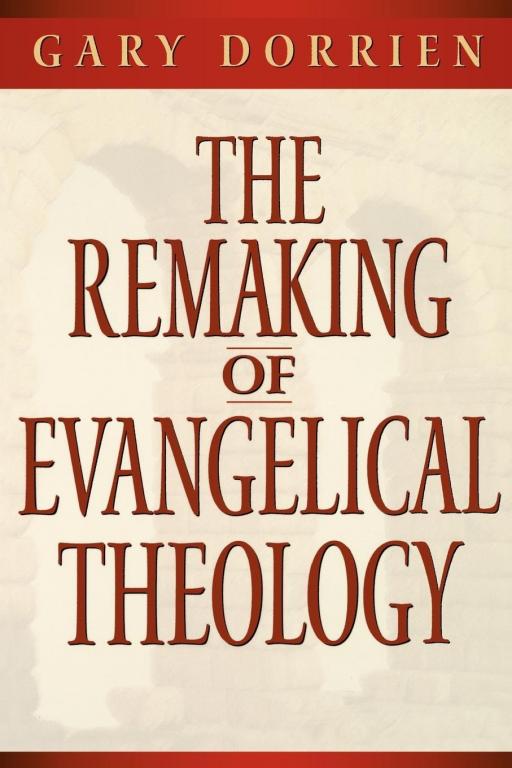 The actuality: That rendering is overly simplistic. The resurgence, a pale flicker of the previous century’s dynamism, limped under the weight of its own theological and cultural insularity. Its leaders, admirable as they were, never fully shed the fundamentalism from which they purportedly emerged. George Marsden captured their ethos in a book title: Reforming Fundamentalism: Fuller Theological Seminary and the New Evangelicalism. The movement’s founders didn’t really establish a distinctive, post-fundamentalist evangelicalism. Carnell, who followed Ockenga as the school’s president, journeyed the furthest in that first generation. Alas, his contribution fell victim to his debilitating clinical depression and early death.
Molly Worthen may have been right when she wrote: “Scratch a neo-evangelical and underneath you would likely find a fundamentalist who still preferred the comforts of purity to the risks of free inquiry and collaboration.”
We see the movement’s theological parochialism in its exaltation of the nineteenth-century Old Princeton theologians (most notably: Archibald Alexander, the gregarious Charles Hodge and the more austere Benjamin Breckinridge Warfield). Their cerebral, categorical brand of Calvinism reigned over Princeton Theological Seminary before the school’s Presbyterian overseers reorganized it in 1929, whereupon some faculty members bolted under the leadership of John Gresham Machen and founded Westminster Theological Seminary near Philadelphia.
It should be said: Charles Hodge and B.B. Warfield, especially, are now favorite targets for supposedly advanced twenty-first-century intellects seeking nineteenth-century whipping boys, which is a pity. We miss their attributes: They sought to be fair to their opponents while exercising scholarly and intellectual rigor. Mark Noll says they fare well when compared to their century’s peers.
Nevertheless, Dorrien was insightful: “The Princeton theology was a form of Reformed orthodoxy that rarely quoted Calvin.” Its adherents eschewed religious experience and lobbed critical shells into the era’s revivals (they didn’t like altar calls or all that messy emotionalism). They followed the Protestant scholasticism of Francis Turretin (1623-1687), who lived a generation after the great Reformer and denounced anything wandering from his version of orthodoxy – as Moses Amyraut (1596-1664) discovered when he tried to fine-tune Calvin’s determinism. Turretin enforced a rigid doctrine of meticulous biblical inerrancy (the entire Bible crumbles upon the discovery of a single discrepancy): God, he claimed, dictated the Scriptures and even inspired the Old Testament’s Hebrew vowel points. Princeton used Turretin’s Institutes as its theological textbook until Hodge’s Systematic Theology replaced it. Warfield, perhaps inerrancy’s most eloquent and sophisticated advocate of the era, pruned the doctrine of the dictation theory and the need for divinely-inspired vowel points, which were actually added centuries after the texts were written. He and A.A. Hodge (the son of the venerable Charles) argued for more nuance in a landmark 1881 essay: Inerrancy applied only to the original autographs; the Bible’s human authors rounded their numbers, employed hyperbole, and wrote in different literary forms. Warfield even allowed that the theory of evolution may be harmonized with the Genesis creation stories. Still, the Princeton theologians were far stricter than either Martin Luther or John Calvin, who invoked inerrancy but didn’t sweat the incongruities inevitable in a book compilation written and collated over a span of centuries.
The resurgence’s leaders argued for Warfield-like inerrancy, which made for awkwardness: Wesleyans either qualified the term or didn’t use it; international evangelicals viewed the doctrine as an American eccentricity. Many agreed with Scottish theologian James Orr (1844-1913), a friend of Warfield’s and contributor to The Fundamentals, a series of booklets foundational to fundamentalism: “It is urged, e.g., that unless we can demonstrate what is called the ‘inerrancy’ of the Biblical record, down even to its minutest details, the whole edifice of belief in revealed religion falls to the ground. This, on the face of it, is a most suicidal position for any defender of revelation to take up.”
Henry and Ockenga, fortunately, plied the term with grace. Both honored non-inerrantist British scholars such as F.F. Bruce and I. Howard Marshal, and Ockenga remained on Fuller’s board after the seminary rewrote its statement of faith and jettisoned the term. So did Billy Graham. Others expanded or qualified inerrancy; still others agreed with Orr and favored infallibility, a broader term allowing space for inconsequential inconsistencies.
But then came Harold Lindsell, who weaponized meticulous inerrancy in 1976 in his incendiary The Battle For The Bible. Lindsell slashed and burned where others deliberated and debated. He even re-enforced fundamentalism’s false dichotomy between care for the poor and evangelism: “As men retreat from inerrancy, they lose any vital interest in evangelism and missions. Their zeal for finishing the job of world evangelization is replaced by socio-political-economic concerns” (19th century evangelists saw no such clash). Inerrancy was now a doctrinal Maginot Line: “I do not for one moment concede … that in a technical sense anyone can claim the evangelical badge once he has abandoned inerrancy.”
Warfield’s nuance evaporated in Lindsell’s hands. The word was now synonymous with scientific precision, forced harmonies and strained explanations (two examples: Lindsell scrambled to explain inexact math in 2 Chronicles 4:2; his harmonization efforts forced him to conclude that the cock crowed six times after Peter denied Christ). Despite bad reviews and criticism from even fellow inerrantists, Lindsell got his wish. Inerrancy evolved into an American evangelical shibboleth, perhaps a password: Whisper it and you’re in the club. Alternative descriptions of the Bible’s veracity – such as arguments for its overall truthfulness, sufficiency, historicity, and authority – were often dismissed as steps toward the slippery slope. Perhaps because of that, subsequent authors strained to maintain the word while expanding its meaning. Indeed, Dan Geoffrey Kent said it eventually sheltered seven definitions, most hinging on authorial intent (if a given author did not intend specificity, then there’s no error). That allows me to sign one of my ordaining denomination’s statement of faith.
Among lay people, however, the word usually conveys scientific precision.
The Straightjacket Tightens
The near-canonization of meticulous inerrancy dovetailed with in-creeping, strict Calvinistic hegemony on all fronts, with an unspoken covenant encircling the movement. Dorrien described it well: “For many years, most of these groups implicitly ceded the right of intellectual leadership to a more cultured and credentialed Reformed establishment. The right to speak for evangelicalism was presumed to belong to Puritan-rooted Baptists such as Henry, Carnell, Billy Graham, and to Calvinists such as (Gordon) Clark, (Cornelius) Van Til, and Berkouer. The existence of other evangelical groups was generally acknowledged, but so was the leadership role of the evangelical establishment.” It’s as if Warfield’s gaze lingers over those bratty Arminians, Pentecostals, and evangelicals rooted in seventeenth-century Pietism, with frowns galore over the followers of Donald Bloesch and Bernard Ramm (they admired Karl Barth) as well as Roger Olson and the late Stanley Grenz. Self-appointed gatekeepers patrol the doctrinal perimeter. The widely-respected Donald A. Carson, for example, has leveled incredible accusations: He questioned Grenz’s evangelical credentials, suspected N.T. Wright of universalism (which Wright fervently denied) and hinted that the Vineyard Christian Fellowship – now a member of the National Association of Evangelicals – may not even be Christian.
The resurgence’s parochialism fanned from its theology into politics. Ockenga sympathized with the libertarianism of his teacher, John Gresham Machen, who saw socialism under every rock. George Marsden says Ockenga and his associates “were Republicans of the sort who supported Robert A. Taft.” True, Billy Graham was a registered Democrat and “a vocal opponent of segregation,” as Eliza Griswold writes. She explained, “Graham fought against cultural strictures and made room for a broad swath of political views. Throughout the nineteen-fifties, he pushed for an agenda that was often as inclusive as that of the political left.” And true, Carl Henry would sign the 1973 Chicago Declaration of Evangelical Social Concern, which summoned the faithful to social justice (although he didn’t exactly ooze enthusiasm; he said he joined the conference because “it seemed better to attend and strive for a balanced position than to simply accommodate a one-sided outcome”). But, at least at the outset, neo-evangelicals were even wary of the moderate-to-liberal Eisenhower Republicans. That doesn’t render them evil, but they unwittingly plowed the soil for the unanticipated Religious Right.
Their insularity grew ominous in their response to one of America’s great moral struggles. Donald Dayton, a Wesleyan scholar, writes that Christianity Today panned the civil rights movement in the 1960’s. Its editors defended “voluntary segregation,” leveled socialism charges against Martin Luther King, Jr.’s call for integration, condemned demonstrations and civil disobedience, and labelled the 1963 March on Washington a “mob spectacle.” They also scorned interracial marriage and hailed Mississippi when the state’s leaders blocked James Meredith from attending its university.
Dayton adds: “The journal, of course, altered its position on most of these issues, but only in response to a reversal of popular consensus or official national policy.”
I hereby squirm. If only the magazine’s writers emulated one of their icons: Warfield called for ending segregation as early as 1887 and condemned racist America as a “wicked caste” society. Instead, they followed Machen, whose bigotry was revealed in a recently-discovered letter to his mother. More information softens the blow even as it breeds confusion. Henry once said this: “Evangelicals stand openly and firmly for racial equality, human freedom, and all forms of social justice throughout the world.” And this: “The gospel resounds with good news for the needy and oppressed. It conveys assurance that injustice, repression, exploitation, discrimination, and poverty are dated and doomed, that no one is forced to accept the crush of evil powers as finally determinative for his or her existence.” He commended Lyndon Johnson in a hand-written note on magazine stationary: The president’s signature on civil rights legislation marked the chief executive’s “finest hour.” And it seems some magazine writers were, indeed, enthusiastic for civil rights: Frank Gaebelein joined the Selma marchers while covering the event, which drew criticism. Henry explained: “Our unwritten code was that reporters of an event should not become public partisans.” Most professional US journalists would agree.
So wherefore the racial insensitivity? Maybe we’re seeing the invisible hand of the magazine’s executive editor, L. Nelson Bell. Bell (1894-1973), Billy Graham’s father-in-law. The kindly physician explained the Gospel to his patients while he was a medical missionary in China from 1916 to 1941. He often prayed for them. He returned to the United States before the Pearl Harbor bombing and, in 1942, founded the Southern Presbyterian Journal, which purportedly defended theological orthodoxy against the modernist tide. Kenneth Taylor describes the Journal’s stance in another arena: “Paternalistic Journalers professed to love African Americans and to want only the best for them. Integration, the writers insisted, was cruel, and segregation was kind. Thus, social separation was consistent with the Golden Rule, ‘to do unto others as you want others to do unto you.’ In 1947 Bell wrote without irony that he was ‘ashamed at the intolerance, the discrimination, and the humiliations which have been heaped on them [blacks] by the white race’ while he defended segregation.”
Henry’s autobiography illuminates Bell’s concealed role at the magazine and in the movement at large. Bell was supposedly Henry’s subordinate, but he secured Pew’s funding, sat on the publication’s board of directors and, it seems, helped usher Henry’s exit. Bell’s job titles downplayed his influence. Sean Michael Lucas inadvertently underscores his stealth in a laudatory article entitled, “Vastly Underrated Leader in 20th-Century Evangelicalism: The Life and Legacy of L. Nelson Bell.” Bell was listed as the Southern Presbyterian Journal’s associate editor, but he was really “the mainspring.” He “wrote more than anyone else, solicited articles, committed financial resources, and guided the policy of the board of directors.”
Lucas pinpointed Bell’s flaw amid the praise: “He represented both the deep longing for revival and the passion for evangelism that has characterized the movement at its best. He also served as an example of the marriage of religious and social conservatism that has sometimes undercut evangelicalism’s gospel mission.”
Perhaps that last sentence describes neo-evangelicalism as a whole. Religious and social conservatism were already betrothed, awaiting the wedding over which Falwell, Dobson, and Robertson presided. Today’s moral, theological, and spiritual calamity shows that the subsequent marriage was abusive: The social conservatism beat back the theological conservatism and now dominates.
A New Movement
So reality, it seems, is more enigmatic than the myth. There were cracks in the foundation. What to do?
Item One on the checklist: Resist snark. The mid-century neo-evangelicals were not villains. They were good men (and “men” they were: this was a white males club, with shirts and ties required). They were pious in the best sense, and they withstood unbridled attacks from the irascible Carl McIntire (1906-2002), head of the fundamentalist American Council of Christian Churches. McIntire’s acrimony embittered Carnell, who blasted fundamentalists in The Case for Orthodox Theology, published in 1959. Fundamentalism, he said, was “orthodoxy gone cultic.” He saw serious flaws in Machen, usually a neo-evangelical protagonist, and peered into the possibility of a distinctive, post-fundamentalist evangelicalism.
Alas, the attacks fed his depression and crippled him.
But most early neo-evangelicals fit Marsden’s characterization. They were “reformed fundamentalists.” Other adjectives help us understand their underlying assumptions and motivations: They were graceful and kind fundamentalists, fundamentalists who longed for their brothers and sisters to emerge from their separatist cocoons, engage the culture, and nurture biblical renewal in mainline denominations. They appreciated those in different evangelical traditions (Wesley’s portrait hung on Ockenga’s wall and he welcomed Pentecostals into the National Association of Evangelicals; Henry, while Reformed, mingled among Wesleyans and spoke at their schools). And, yes, they were flawed fundamentalists. They were lamentably blind to racism, at least at first. I struggle with that and I can’t minimize it. But I also take it as a warning: To which great evil am I blind?
Resisting snark and villainization opens us to Item Two’s opportunities: Recovering a gracious, biblical orthodoxy. I sympathize with Richard Mouw, who cordially argues for the evangelical label’s perpetuation and for the preservation of the wider tradition’s teaching (Mouw anchors himself in a broader, more ecumenical stream of Reformed theology). I’m all for preserving a broader evangelicalism, but it seems best to shelve the label for now. Like it or not, “evangelical” conjures Donald Trump’s image, not our Lord’s. And maybe – while we’re at it – we’ll seize the opportunity: Shifting terms may allow us to take advantage of the shifted terrain. Vatican II narrowed the Protestant-Catholic gap and pathways are opening vis-à-vis Eastern Orthodoxy. Maybe it’s time to try on Thomas C. Oden’s “Classical Christianity,” which preserves the creedal faith while engaging that wider fellowship. The new movement need not be strictly Protestant.
But Item Three ranks as the most vital. I discovered it on July 6, 1973, when I fell in love with Jesus and gave my life to him. I knew nothing about theological tribes or snarling factions. I was just a sloppy Jesus freak, gladly “born again” (the in-vogue term back then). I longed to live in intimacy with Christ and follow him and be like him. That’s why I drank the Scriptures and gobbled Christian literature and attended two Sunday services and a mid-week Bible study and daily prayer meetings. And that’s why I helped establish an inner-city coffee house and led a slew of people to Christ (yeah: I used Bill Bright’s Four Spiritual Laws; so arrest me). I even stopped snapping at my parents.
Perhaps the solution to our present crisis is easier and more profound that we thought. We need to fall in love with Jesus again, which involves less Twitter sniping and more time on our knees. The labels will take care of themselves.
Previous Post

June 18, 2019
What Southern Baptists Can Learn From Canadian Baptists......
Next Post

June 20, 2019 The City-State of Boston
Browse Our Archives
Select a Category abolitionism Abortion Abraham Joshua Heschel Abraham Kuyper Abraham Lincoln Academia Activism Adam Renberg Advent Adventist africa African American Religion Agnes Howard Albert Camus American History American Religious History American Revolution American West Anabaptists Ancient History Andrea Turpin Andrei Tarkovsky Anglicanism Annales Ansley Lillian Quiros anti-Catholicism Antisemitism Anxious Bench apologetics Apparitions Arash Azizi Archaeology archives art Artificial Intelligence Asia Asian Americans Augustine Authors Bad Bunny Baptism Baptists Barack Obama Battle of Hastings Benjamin Franklin Bernard-Henri Levy Beth Allison Barr Beth Moore Bethany Mannon Bible Bill Cunningham Billy Graham Black Music Bob Dylan Body Boenhoffer Books Breastfeeding Bruce Springsteen C.S. Lewis Calvinism Cancel Culture Capitalism Carmelites Catholicism Cedric Robinson Cesar Chavez Charismaticism charity Charles Dickens Charles Lindbergh Che Guevara Chicago Children Chinese Christianity Chris Gehrz Christ Christian death Christian Higher Education Christian life Christian Nation Christian Nationalism Christianity Today Christmas Church life Church Practice cinema Civil Religion Civil Rights Movement Civil War civility Classics Climate Change Cold War Colonial Mexico colonialism Comer Communism community complementarianism Conference on Faith and History Congregationalism Conspiracies Conspiracy Conversion Narratives Coronavirus Costa Rica Council of Nicaea Covid-19 Creation Critical Race Theory Crusades Culture culture wars Daniel K. Williams David Barton David Swartz Death Ways death with dignity DEI democracy Democratic Party Devotion Digital Age Diplomacy discipleship diversity Donald Trump Drama Dua Lipa Early Church early modern Early modern Catholicism Easter Eastern Christianity economic exploitation Education elections Elie Wiesel Elizabeth II Elizabeth Taylor emotions Empire Engineering England enslavement Entertainment Episcopal Church Erica Ramirez eschatology Eurocentrism Evangelicalism Evangelicals Exegesis Family Feminism Film Flannery O'Connor folk music Food Foreign Policy founding fathers Franciscans Franciscus Junius fundamentalism Funerals G.K. Chesterton Gender Genocide genre geography George W. Bush George Washington George Whitefield Global Christianity Global church Grief Guadalupe Guest Post guest post gun control gun violence Gustavo Gutierrez Hamid Dabashi Harold John Ockenga Harvest Hate Hawaiian Christianity Healing health care Heather Cox Richardson Hell Heresy Hermeneutics Higher Education Hinduism Hippocratic oath Historical Fiction Historical Methodology Historical Profession Historical Profession Historical Theology Historical Thinking historiography Holidays Holocaust horror movies Human rights Humanitarian Work humanities Hummingbirds Hungary hymns Imago Dei Immigration Injustice Interviews Iran Islam Islamophobia Israel Ivan's Childhood Jacob Randolph James Bratt Janine Giordano Drake Japanese history Japanese Literature Jean Paul Sartre Jesse Miranda Jesus Jesus Christ Jimmy Carter Joan Baez Joan Didion Joanne Freeman João B. Chaves Joao Chaves Joey Cochran John Calvin John Fea John Tillotson John Turner Johnny Cash Jonathan Edwards Jonathan Tran Joseph Smith Josh Howerton Journalism Jr. Judaism Jürgen Moltmann Just War Justice Justin Brierley Karl Barth Katelyn Beaty koi ponds Kris Kristofferson Kristin Kobes Du Mez Latin American Religious History Latino Americans Lectio Divina Leisure Lent Leonard Cohen liberal arts liberalism Liberation Theology Linda Ronstadt Lisa Clark Diller Literature Lou Reed Lynchings Lynneth Miller Renberg Mainline Protestantism Malcolm Foley Marilyn Monroe Maritime history Mark Noll Marriage Martin Luther Martin Luther King Martyrdom Marxism Mary Masih Alinejad mass shootings material culture medieval Christianity Medieval Ethiopia Melissa Borja memory Mennonites Mental Health Mental Illness Methodism Mexican Americans Mexicans Mike Madrid Miles Mullin Min Jin Lee Miscarriage Missionaries Mister Rogers Mitt Romney modernity Monasticism Mormonism Motherhood Mothers of the Church Moving Music Musicals Nadya Williams Nahua Christianity Native Americans Natsume Sōseki New Contributor New England New Year New York Nico Non-Violent Protest Orthodoxy pacifism Paleo Evangelicals Palestinians Parenting Patti Smith Paul Kingsnorth Pedro Calderón de la Barca Pentecostalism Philip Jenkins Phillis Wheatley physician-assisted suicide pilgrimage Pilgrims Piracy pluralism Plutocracy Poetry Politics Pope Francis Pope Leo XIV post-modernism prayer preaching Presbyterians prosperity gospel Protest Public Executions Public history Publishing Puritans purity culture Quakers race Race Massacres Racial Capitalism racial reconciliation racialization Racism Raha Bahloulipour Re-Enchantment reading Reformation Refugees religion and the university religion and war Religious Freedom Religious Nones Religious Pluralism Religious Symbols religious violence Republican Party Revival Rita Coolidge Ritual Roger Williams Roman Catholic church Royalty Russell Moore same-sex marriage Sarah Irving-Stonebraker Scandinavia Science Science and Technology Scopes trial Scriptural Interpretation secularism Selena Quintanilla seminary Seventh-Day Adventists sexual morality Sexuality Sikhs Silence slaveholders theology Slavery Slavoj Zizek social justice Social Media Southern Baptist Convention Southern Religion Spain Spiritual Autobiography Spiritual but not religious Spiritual Discipline Sports Stanley Hauerwas Suffering Summer Camps Sunday Night Odds and Ends Supernatural Supreme Court Syriac Christianity Tal Howard Taylor Swift Teaching Technology Television Thanksgiving The Beatles The Mission theater TheoBros Theology Thomas Dixon Thomas Jefferson Thomas Kidd Thomas Merton Tim Gloege Tim Walz Tom Holland Tourism tradition Tragedy Translation Transnationalism Travel Trump Ukraine Uncategorized Unitarians United Methodist Church US History Vanessa Chan Velvet Underground Verónica A. Gutiérrez Veronica Gutierrez Vikings Violence Virgin Mary Virtue Virtue ethics Visions Voting War WCTU Wendell Berry Westminster Assembly White Evangelicalism Wildfires Winnie the Pooh Witches women Women in Ministry Women's and Gender Studies Work Worship writing Yasunari Kawabata Zena Hitz
Select a Month November 2026 October 2026 September 2026 August 2026 July 2026 June 2026 May 2026 April 2026 March 2026 February 2026 January 2026 December 2025 November 2025 October 2025 September 2025 August 2025 July 2025 June 2025 May 2025 April 2025 March 2025 February 2025 January 2025 December 2024 November 2024 October 2024 September 2024 August 2024 July 2024 June 2024 May 2024 April 2024 March 2024 February 2024 January 2024 December 2023 November 2023 October 2023 September 2023 August 2023 July 2023 June 2023 May 2023 April 2023 March 2023 February 2023 January 2023 December 2022 November 2022 October 2022 September 2022 August 2022 July 2022 June 2022 May 2022 April 2022 March 2022 February 2022 January 2022 December 2021 November 2021 October 2021 September 2021 August 2021 July 2021 June 2021 May 2021 April 2021 March 2021 February 2021 January 2021 December 2020 November 2020 October 2020 September 2020 August 2020 July 2020 June 2020 May 2020 April 2020 March 2020 February 2020 January 2020 December 2019 November 2019 October 2019 September 2019 August 2019 July 2019 June 2019 May 2019 April 2019 March 2019 February 2019 January 2019 December 2018 November 2018 October 2018 September 2018 August 2018 July 2018 June 2018 May 2018 April 2018 March 2018 February 2018 January 2018 December 2017 November 2017 October 2017 September 2017 August 2017 July 2017 June 2017 May 2017 April 2017 March 2017 February 2017 January 2017 December 2016 November 2016 October 2016 September 2016 August 2016 July 2016 June 2016 May 2016 April 2016 March 2016 February 2016 January 2016 December 2015 November 2015 October 2015 September 2015 August 2015 July 2015 June 2015 May 2015 April 2015 March 2015 February 2015 January 2015 December 2014 November 2014 October 2014 September 2014 August 2014 July 2014 June 2014 May 2014 April 2014 March 2014 February 2014 January 2014 December 2013 November 2013 October 2013 September 2013 August 2013 July 2013 June 2013 May 2013 April 2013 March 2013 February 2013 January 2013 December 2012 November 2012 October 2012 September 2012 August 2012 July 2012 June 2012 May 2012
Follow Us!
TAKE THE
Religious Wisdom Quiz
Who was Noah's father?
Select your answer to see how you score.
Enoch Lamech Seth Abel
Related posts from Anxious Bench
Paris & CT Burn 50 Years After Newsweek's...

What Coffee Reveals About America's Evangelical Varieties

A Casserole is Not a Counterpoint
Angelina Grimké's Forgotten Turn to Apocalyptic Faith
TRENDING AT PATHEOS Evangelical

God and the Contingency of This World
The great Catholic philosopher Aquinas and the great Lutheran philosopher Leibniz developed...

Pope Francis and The Devil – A Pagan...
According to his private diaries, Pope Francis saw visions of the devil...

Rock N' Roll-- Morphing into/for a New Generation...
Well, should we be grateful, or is rock n' roll just dead? ...

Ansley Gordon Brings Faith and Fresh Stories to...
For screenwriter and actress Ansley Gordon, Christmas has always been about more...

Chris Pratt on Veterans, Faith, “The Way of...
For Chris Pratt, service is not something that ends when a person...

Chapter 5, Sarah: The Quest for Safety in...
Open and Relational Theology & Social Psychology About this series: This series...
view all Evangelical blogs
Ad-Free & Subscriber Log-In Subscription Support
- About Us
- 2026 Calendar
- Videos
- Podcasts
- Library of World Religions
- Faith In Media Tracker
- Advertise With Us
- Write for Us
- Privacy Policy
- Terms of Service
- Do Not Sell My Data
- Contact Us
- Radiant Digital
- Manage Newsletter Subscriptions
- Unsubscribe From Notifications
- Sitemap
Copyright 2008-2026, Patheos, part of the Radiant Digital network of media brands. All rights reserved.
Subscription Support Ad-Free & Subscriber Log-In
Follow Patheos