
BuddhistCatholicContemplativeEvangelicalGeneral ChristianHinduJewishLatter-day SaintMuslimNew VisionsProgressive Christian
Beliefs
- Buddhist
- Catholic
- Contemplative
- Evangelical
- General Christian
- Hindu
- Jewish
- Latter-day Saint
- More Voices
- Muslim
- New Visions
- Pagan
- Progressive Christian
Topics
- Religion News
- Food and Religion
- Sports and Religion
- Religious Art
- Religious Music and Entertainment
- Religious Events
- History and Religion
- Style and Religion
- Politics and Religion
- Women in Religion
- Recreation Outdoors and Religion
- Business Finance and Religion
- Careers Workplace and Religion
- Education and Religion
- Family Parenting and Religion
- Health Fitness and Religion
- Home and Religion
- Relationships and Religion
- Technology and Religion
- Travel and Religion
Columnists
- Buddhist Columnists
- Business Finance and Religion Columnists
- Careers Workplace and Religion Columnists
- Catholic Columnists
- Contemplative Columnists
- Education and Religion Columnists
- Evangelists Columnists
- Family Parenting and Religion Columnists
- General Christian Columnists
- Health Fitness and Religion Columnists
- Hindu Columnists
- History and Religion Columnists
- Home and Religion Columnists
- Jewish Columnists
- More Voices Columnists
- Latter Day Columnists
- Muslim Columnists
- New Visions Columnists
- Nonreligious Columnists
- Pagan Columnists
- Politics and Religion Columnists
- Progressive Columnists
- Recreation Outdoors and Religion Columnists
- Relationships and Religion Columnists
- Religion News Columnists
- Religious Art Columnists
- Religious Events Columnists
- Religious Music and Entertainment Columnists
- Sports and Religion Columnists
- Style and Religion Columnists
- Technology and Religion Columnists
- Travel and Religion Columnists
- Women in Religion Columnists
Resource Library
- 2026 Calendar
- Library of World Religions
- The 100 Most Holy Places on Earth
- Patheos Answers
- Podcasts
- Videos
- Faith Leaders Database
- Anglican Episcopalian
- Bahai
- Baptist
- Buddhism
- Christianity
- Confucianism
- Eastern Orthodoxy
- Hinduism
- Holiness and Pentecostal
- ISKCON
- Islam
- Judaism
- Lutheran
- Methodist
- The Church of Jesus Christ of Latter-day Saints
- New Age
- Paganism
- Presbytarian and Reformed
- Protestantism
- Religion Behind the Scenes
- Roman Catholic
- Scientology
- Shia Islam
- Sikhism
- Sufism
- Sunni Islam
- Taoism
- Zen
- See all religions
Research Tools
 Ad-Free & Subscriber Log-In Subscription Support
Follow Patheos 

- Trending:
- Advent
- |
- Forgiveness
- |
- Thanksgiving
- |
- Election
- |
- Seasonal Holidays
- |
- Marriage

-
About the Authors
- Home
- Evangelical
- Muskrat Feasts and the Food Politics of Lent
Muskrat Feasts and the Food Politics of Lent
Last updated on: March 7, 2019 at 4:20 pm by Melissa Borja
Muskrat Feasts and the Food Politics of Lent 2019-03-07T16:20:28-04:00 Melissa Borja
Patheos Explore the world's faith through different perspectives on religion and spirituality! Patheos has the views of the prevalent religions and spiritualities of the world.
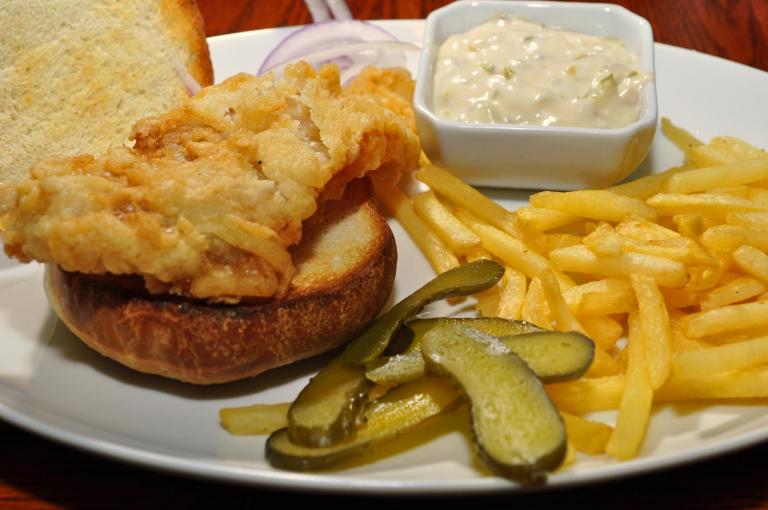
Fried fish sandwich with french fries, coleslaw, and tartar sauce: standard fish fry fare (Wikimedia Commons)
In the upper Midwest, Lent is not simply a season for fasting—it’s a season for fish fries. While they’re supposed to be solemn days of self-denial and sacrifice, Lenten Fridays have provided the opportunity for people to gather together for festive events that offer a delicious diversion from the dreariness of the late winter months. In many cities, local newspapers publish the times and places of all the fish fries in the area, and beginning at mid-afternoon, an ambitious (devout?) Catholic could do a circuit of all the fish fries hosted at churches, schools, American Legion Posts, Knights of Columbus Halls, and Moose Lodges, so long as she is armed with a good pair of elastic-waist-banded pants and a robust appetite for perch, walleye, hush puppies, tater tots, French fries, coleslaw, green bean casserole, and salad (with ranch dressing, of course—#Midwest). The food served at a good fish fry is so divine that, as the Milwaukee Journal Sentinel declared, it “will make you forget whatever you’re giving up for Lent.”
Friday fish fries were such a fixture of my childhood that it never occurred to me that there could be any other way to observe Lent until I moved to New York City and began teaching at the College of Staten Island. My first year, when I was teaching a seminar about religion and immigration, I casually asked my students, many of whom were Italian American Catholics, where I could find the best Lenten fish fries on the island. My question literally caused them to laugh out loud. “Professor, we don’t eat fried fish on Fridays during Lent,” they said. “We eat cheese pizza!” They weren’t joking. Observing Lent by eating cheese pizza is such an important local tradition that the borough newspaper, the Staten Island Advance, recently ran a story featuring several popular pizzerias that area Catholics frequent during Lent. “It’s a lot more busy on Friday nights during the Lenten season, the volume really picks up,” George Mallon explained to the Advance. Mallon, the manager of Denino’s Pizzeria and Tavern in Port Richmond, noted that his restaurant sees twenty percent more people on Lenten Fridays, and they do brisk business selling cheese pizza with vegetarian toppings. The Ursini family, for example, enjoyed their cheese pizza with peppers and onions, and they told the Advance about their family’s 15-year tradition of observing Lent at Lee’s Tavern in Dongan Hills, another Staten Island pizzeria. Paul Ursini confessed that it was “hard going without the sausage.” However, he emphasized that abstaining from meat was an important practice. “We celebrate religion and have to follow the guidelines,” he said.

The Captain America P-51 Pizza car parked in front of the original Goodfella’s Pizza in Staten Island after winning the World’s Best Pizza (Wikimedia Commons)
Like Paul Ursini, the Italian American Catholic students in my seminar at the College of Staten Island took the matter of celebrating religion and following the guidelines of their faith very seriously. For this reason, they were shocked by a National Public Radio story that I shared with them about how Catholics in other regions of the United States observe Lenten Fridays by eating muskrats, which live in the water and are therefore considered by some people to be seafood. While my students found my description of church fish fries to be quaint and “weird,” they considered muskrat feasts to be “wrong.” “Muskrat is meat!” they insisted. “Those Catholics are cheating!” To be sure, official statements from church officials indicate that they agree with my students that muskrat is, indeed, a type of meat. At the same time, though, Catholic leaders have been somewhat accommodating of the local custom—or at least they have a sense of humor about it. In southeastern Michigan, where eating muskrat is a tradition, the local lore is that a nineteenth century bishop offered a special dispensation to area Catholics to eat muskrat on Lenten Fridays. And according to a March 2006 article in the Wall Street Journal, one bishop, when asked about whether it was acceptable to eat muskrat during Lent, responded that anybody who ate the rodent for supper was “doing penance worthy of the greatest saints.”
What has most intrigued me about discussions of Lenten food traditions is not simply the revelation that there are a wide variety of interpretations, practices, and customs—it’s that these differences provoke such strong feelings. That my students used the word “cheating” to describe the tradition of eating muskrat is particularly curious to me. Cheating involves breaking rules and acting dishonestly in order to achieve something desirable. In truth, my students conveyed no desire to eat muskrat. Quite the opposite: they expressed revulsion at the idea, and they didn’t actually feel that their strict interpretation of the rules cheated them out of a muskrat meal because they didn’t want a muskrat meal in the first place.
I think that something else is at stake in the debate about eating muskrat during Lent, both for the practitioners and the critics of this tradition, and it’s not really about what gets to count as meat. More fundamentally, this Lenten Friday food custom reveals the uncomfortable truth that while the Catholic Church is renowned for its rules, religious practices vary considerably on the ground, and people make different choices about how to interpret and adhere to their religious obligations. Concern about “Cafeteria Catholics,” it turns out, can touch on issues beyond abortion and birth control—it can cause controversy over choices made in a literal cafeteria.
The unease about eating muskrat during Lent also centers on matters of community and belonging. Lenten muskrat dinners are proud, public rituals that offer a communal expression of a distinctive ethnic and regional culture. At the same time, this practice—and its people—have disturbed middle-class Catholics, who take pride in their respectable religiosity. Eating muskrat, in their view, is simply not good taste. Ultimately, the debate about Lenten muskrat dinners is about more than what Catholics eat on Friday night—it’s about ethnic and religious identity and the politics of proclaiming it, policing it, and presenting it to the consuming public.

Ondatra zibethicus, commonly known as the muskrat (Wikimedia Commons)
“The Muskrat Frenchman”
The Lenten custom of eating muskrat is well established in my home state of Michigan. Although the practice is commonly associated with “downriver” communities such as Wyandotte, friends and family recall encountering muskrat feasts as far south as Monroe and as far north as Bay City. The custom is popular enough that demand in Michigan outweighs supply. National Public Radio reports that Michiganders’ appetite for muskrat has diminished the local muskrat population to the point that muskrats are now brought in from Ohio.
Many Michiganders remain unfamiliar with this Lenten tradition, though, and perhaps this should not come as a surprise. In addition to being a controversial interpretation of church rules on fasting and abstinence, eating muskrat during Lent is a tradition associated with a long-overlooked cultural group known as the “Muskrat French,” also called the Mushrat French, which are a community of French Canadians who have lived in the vicinity of the Detroit River and Lake St. Clair since the eighteenth century. In his 2014 article in The Michigan Historical Review, James LaForest traces the history of Muskrat French people and their distinctive regional culture.
He argues that, beginning in the eighteenth century, the British and Americans in the region were suspicious of the Muskrat French, in part because they had close “cultural and familial ties with the Indians.” By the nineteenth century, these Detroit River French communities continued to be seen as “inferior and untrustworthy,” and newsmedia depicted the group as “an exotic, marsh-dwelling tribe whose language was unintelligible both in English or French.” LaForest shares this description of Detroit River French Canadians from a New York Sun article published in 1899:
The muskrat Frenchman is to be found dwelling in the flats along the Detroit River. In stature he is small, in complexion like to his native mud, in habits simple and uncleanly, in appetite satisfying himself with roast ‘muskrat shtuff wix onyan,’ washed down with whiskey little better than raw alcohol. In imagination he is wild, vivid, fanciful, extravagant.
The Sun article continues on to describe a scene in which a Muskrat Frenchman played cards in a saloon in the company of “unkempt, unwashed” fellow Frenchmen. According to LaForest, these negative depictions persisted through the 1920s.
Perceptions of this community began to change in early twentieth century, however, when Detroit River French Canadians made efforts to claim and celebrate their cultural identity. Muskrat feasts played a particularly important part in these public displays of cultural heritage. LaForest writes,
At a 1906 carnival sponsored by the Monroe Yacht Club, muskrat was served and proved to be popular with the local population. Public muskrat dinners were held throughout the following century to great fanfare. They became events that attracted ‘Old Frenchmen’ from throughout the Midwest, who journeyed to take part in cultural celebrations. Some of the festivities included up to 4000 guests, ‘high-class barkeepers of Detroit,’ and a vaudeville show as entertainment.
Today’s Lenten muskrat dinners must thus be seen in this historical context, as a positive performance of both ethnic and religious identity and as an expression of cultural pride by the French Canadian people of the Detroit River region.

Ondatra zibethicus, commonly known as the muskrat (Wikimedia Commons)
“Nuclear power does not rile these people up. Muskrats do.”
Over the course of the twentieth century, muskrat dinners became popular community events that were associated with an improvement in the status of the Muskrat French. Nonetheless, these muskrat feasts, especially when conducted on Friday during Lent, would eventual provoke controversy.
In the late 1980s, southeast Michigan’s Lenten muskrat tradition captured national attention when Michigan public health officials attempted to restrict the sale of muskrat meat only to state-approved and inspected sources. State health officials justified the proposed measure as a matter of public safety, but the absence of inspection procedures or approved sources meant that the rules could effectively amount to a ban. The public protested vigorously in response. “I’ve never seen so many people upset about an issue,” said State Representative Jerry Bartnick to the New York Times. “We had almost 500 people at the courthouse for hearings on muskrat legislation.” Dennis Au of the Monroe County Historical Museum noted that, in contrast, only a few people showed up to protest a nuclear electric station. “Nuclear power does not rile these people up,” Au said. “Muskrats do.”
In a victory for the pro-muskrat crowd, the state health officials eventually backed down, and the proud local tradition of eating muskrat, so deeply tied to the cultural identities of the Muskrat French and the southeast Michigan region, ultimately prevailed. One restaurant owner, John Kolakowski, expressed relief at the decision and excitement about the continuation of his booming business. “On a normal Friday we’ll do about 80 muskrat meals,” Kolakowski said to the Times. “I’m gearing up to serve 180 on Good Friday.”
A few years later, though, another controversy about muskrat feasts arose in neighboring Wisconsin, and with a very different outcome. As the Milwaukee Sentinel reported in May 1993, the ACT, the standardized test used for college applications, included a reading comprehension passage about how Catholics in southeastern Michigan eat muskrat during Lent. The reading passage prompted Catholics in Wisconsin to write incensed letters to Governor Tommy Thompson, himself a devout Catholic. Responding to his constituents’ outcry, Thompson wrote an official letter to the President of American College Testing, Richard Ferguson, in which he complained about what he considered to be an offensive misrepresentation of Catholic beliefs. Catholics understand that muskrats are forbidden to eat on Fridays during Lent, Thompson insisted, because Catholics know that muskrats are not fish. Furthermore, Thompson argued that the reading passage was harmful because it could undermine the Catholic faith of impressionable teenagers. “The passage may also cause some young Catholics to question the validity of tenets of their own faith,” he wrote. “This is especially likely when these erroneous ideas are encountered under conditions where time is short, test takers are not able to study the information carefully, and there are no facts available to balance these unusual notions.” He urged the ACT to “improve the process of review for cultural sensitivity.”
Thompson’s efforts were, at first glance, an effort to ensure that Catholics adhere properly to church teachings and to prevent their backsliding into improper, non-Catholic practices. However, when interpreted in light of the broader history of Lenten muskrat traditions and their connection to the marginalized Muskrat French community, Thompson’s arguments reinforced the long-standing view of Detroit River French Canadians as wild, primitive, inferior people whose way of life pose a danger to true, civilized Catholics. Thompson was not only policing practices, but, indirectly, policing the boundaries of who gets to claim being a real Catholic.
Ultimately, a comparison of the controversies in Michigan and Wisconsin reveals how the identity politics of eating muskrat varied according to context. In Michigan, the Lenten tradition of eating muskrat is a proud expression of ethnic and regional identity, and when the muskrat custom was threatened, the people rose up to protect it and demanded that the state government withdraw its proposed regulations. In contrast, Catholics in Wisconsin saw the Lenten muskrat tradition as a threat to their faith and a stain on the public image of American Catholics, and as a result, they demanded that their state government prevent the ACT from including readings about it. Seeing themselves as the protectors of authentic Catholicism, Thompson and other Wisconsin Catholics sought to distance themselves from practices and people they considered less legitimate, less civilized, and less Catholic. These actions are perhaps not surprising. If the Muskrat French worried about preserving their identity, so, too, did Wisconsin Catholics worry about protecting their identity and social position as true, respectable Catholics.

Lining up for a fish fry at Autumn Daze fall festival at the St. Helena Catholic Church and School (Wikimedia Commons)
Like the Christmas season, the weeks leading up to Easter are rich with food traditions for Catholics, especially for people whose religious identities are so intertwined with their ethnic and regional identities. There are fish fries in the church basements and cheese pies at the neighborhood pizzerias. There are sugar-sprinkled, jelly-filled Polish paczki for the days before Ash Wednesday. There are squishy, fluorescent Peeps that aren’t necessarily religious, or even food, but which are pretty to see in the drugstore aisles anyway. And there are Lenten feasts of muskrat, deep-fried or served in corn, and sometimes accompanied by beaver, another water mammal with debated status as Friday-friendly fare. The irony, of course, is that while Lent is supposed to be a holy period of prayer and penance when Christians are expected to abstain from food, food remains a central part of the traditions and practices of this season.
As multi-sensory emblems of identity, these food choices broadcast to the world who people are, what communities they belong to, and what values they hold. And when certain food customs—eating muskrat, for example—cross boundaries and cause controversy, the event speaks important truths about who people are, and who they want to be. There are rules, and there are real-life choices, and the distance between these two things are what makes religious life in America so rich and so complex.
Previous Post

March 6, 2019
"Let Me Be A Woman" Revised? Elisabeth Elliot and Beth Moore
Next Post

March 8, 2019 Boole, Science, and Faith
Browse Our Archives
Select a Category abolitionism Abortion Abraham Joshua Heschel Abraham Kuyper Abraham Lincoln Academia Activism Adam Renberg Advent Adventist africa African American Religion Agnes Howard Albert Camus American History American Religious History American Revolution American West Anabaptists Ancient History Andrea Turpin Andrei Tarkovsky Anglicanism Annales Ansley Lillian Quiros anti-Catholicism Antisemitism Anxious Bench apologetics Apparitions Arash Azizi Archaeology archives art Artificial Intelligence Asia Asian Americans Augustine Authors Bad Bunny Baptism Baptists Barack Obama Battle of Hastings Benjamin Franklin Bernard-Henri Levy Beth Allison Barr Beth Moore Bethany Mannon Bible Bill Cunningham Billy Graham Black Music Bob Dylan Body Boenhoffer Books Breastfeeding Bruce Springsteen C.S. Lewis Calvinism Cancel Culture Capitalism Carmelites Catholicism Cedric Robinson Cesar Chavez Charismaticism charity Charles Dickens Charles Lindbergh Che Guevara Chicago Children Chinese Christianity Chris Gehrz Christ Christian death Christian Higher Education Christian life Christian Nation Christian Nationalism Christianity Today Christmas Church life Church Practice cinema Civil Religion Civil Rights Movement Civil War civility Classics Climate Change Cold War Colonial Mexico colonialism Comer Communism community complementarianism Conference on Faith and History Congregationalism Conspiracies Conspiracy Conversion Narratives Coronavirus Costa Rica Council of Nicaea Covid-19 Creation Critical Race Theory Crusades Culture culture wars Daniel K. Williams David Barton David Swartz Death Ways death with dignity DEI democracy Democratic Party Devotion Digital Age Diplomacy discipleship diversity Donald Trump Drama Dua Lipa Early Church early modern Early modern Catholicism Easter Eastern Christianity economic exploitation Education elections Elie Wiesel Elizabeth II Elizabeth Taylor emotions Empire Engineering England enslavement Entertainment Episcopal Church Erica Ramirez eschatology Eurocentrism Evangelicalism Evangelicals Exegesis Family Feminism Film Flannery O'Connor folk music Food Foreign Policy founding fathers Franciscans Franciscus Junius fundamentalism Funerals G.K. Chesterton Gender Genocide genre geography George W. Bush George Washington George Whitefield Global Christianity Global church Grief Guadalupe guest post Guest Post gun control gun violence Gustavo Gutierrez Hamid Dabashi Harold John Ockenga Harvest Hate Hawaiian Christianity Healing health care Heather Cox Richardson Hell Heresy Hermeneutics Higher Education Hinduism Hippocratic oath Historical Fiction Historical Methodology Historical Profession Historical Profession Historical Theology Historical Thinking historiography Holidays Holocaust horror movies Human rights Humanitarian Work humanities Hummingbirds Hungary hymns Imago Dei Immigration Injustice Interviews Iran Islam Islamophobia Israel Ivan's Childhood Jacob Randolph James Bratt Janine Giordano Drake Japanese history Japanese Literature Jean Paul Sartre Jesse Miranda Jesus Jesus Christ Jimmy Carter Joan Baez Joan Didion Joanne Freeman João B. Chaves Joao Chaves Joey Cochran John Calvin John Fea John Tillotson John Turner Johnny Cash Jonathan Edwards Jonathan Tran Joseph Smith Josh Howerton Journalism Jr. Judaism Jürgen Moltmann Just War Justice Justin Brierley Karl Barth Katelyn Beaty koi ponds Kris Kristofferson Kristin Kobes Du Mez Latin American Religious History Latino Americans Lectio Divina Leisure Lent Leonard Cohen liberal arts liberalism Liberation Theology Linda Ronstadt Lisa Clark Diller Literature Lou Reed Lynchings Lynneth Miller Renberg Mainline Protestantism Malcolm Foley Marilyn Monroe Maritime history Mark Noll Marriage Martin Luther Martin Luther King Martyrdom Marxism Mary Masih Alinejad mass shootings material culture medieval Christianity Medieval Ethiopia Melissa Borja memory Mennonites Mental Health Mental Illness Methodism Mexican Americans Mexicans Mike Madrid Miles Mullin Min Jin Lee Miscarriage Missionaries Mister Rogers Mitt Romney modernity Monasticism Mormonism Motherhood Mothers of the Church Moving Music Musicals Nadya Williams Nahua Christianity Native Americans Natsume Sōseki New Contributor New England New Year New York Nico Non-Violent Protest Orthodoxy pacifism Paleo Evangelicals Palestinians Parenting Patti Smith Paul Kingsnorth Pedro Calderón de la Barca Pentecostalism Philip Jenkins Phillis Wheatley physician-assisted suicide pilgrimage Pilgrims Piracy pluralism Plutocracy Poetry Politics Pope Francis Pope Leo XIV post-modernism prayer preaching Presbyterians prosperity gospel Protest Public Executions Public history Publishing Puritans purity culture Quakers race Race Massacres Racial Capitalism racial reconciliation racialization Racism Raha Bahloulipour Re-Enchantment reading Reformation Refugees religion and the university religion and war Religious Freedom Religious Nones Religious Pluralism Religious Symbols religious violence Republican Party Revival Rita Coolidge Ritual Roger Williams Roman Catholic church Royalty Russell Moore same-sex marriage Sarah Irving-Stonebraker Scandinavia Science Science and Technology Scopes trial Scriptural Interpretation secularism Selena Quintanilla seminary Seventh-Day Adventists sexual morality Sexuality Sikhs Silence slaveholders theology Slavery Slavoj Zizek social justice Social Media Southern Baptist Convention Southern Religion Spain Spiritual Autobiography Spiritual but not religious Spiritual Discipline Sports Stanley Hauerwas Suffering Summer Camps Sunday Night Odds and Ends Supernatural Supreme Court Syriac Christianity Tal Howard Taylor Swift Teaching Technology Television Thanksgiving The Beatles The Mission theater TheoBros Theology Thomas Dixon Thomas Jefferson Thomas Kidd Thomas Merton Tim Gloege Tim Walz Tom Holland Tourism tradition Tragedy Translation Transnationalism Travel Trump Ukraine Uncategorized Unitarians United Methodist Church US History Vanessa Chan Velvet Underground Verónica A. Gutiérrez Veronica Gutierrez Vikings Violence Virgin Mary Virtue Virtue ethics Visions Voting War WCTU Wendell Berry Westminster Assembly White Evangelicalism Wildfires Winnie the Pooh Witches women Women in Ministry Women's and Gender Studies Work Worship writing Yasunari Kawabata Zena Hitz
Select a Month November 2026 October 2026 September 2026 August 2026 July 2026 June 2026 May 2026 April 2026 March 2026 February 2026 January 2026 December 2025 November 2025 October 2025 September 2025 August 2025 July 2025 June 2025 May 2025 April 2025 March 2025 February 2025 January 2025 December 2024 November 2024 October 2024 September 2024 August 2024 July 2024 June 2024 May 2024 April 2024 March 2024 February 2024 January 2024 December 2023 November 2023 October 2023 September 2023 August 2023 July 2023 June 2023 May 2023 April 2023 March 2023 February 2023 January 2023 December 2022 November 2022 October 2022 September 2022 August 2022 July 2022 June 2022 May 2022 April 2022 March 2022 February 2022 January 2022 December 2021 November 2021 October 2021 September 2021 August 2021 July 2021 June 2021 May 2021 April 2021 March 2021 February 2021 January 2021 December 2020 November 2020 October 2020 September 2020 August 2020 July 2020 June 2020 May 2020 April 2020 March 2020 February 2020 January 2020 December 2019 November 2019 October 2019 September 2019 August 2019 July 2019 June 2019 May 2019 April 2019 March 2019 February 2019 January 2019 December 2018 November 2018 October 2018 September 2018 August 2018 July 2018 June 2018 May 2018 April 2018 March 2018 February 2018 January 2018 December 2017 November 2017 October 2017 September 2017 August 2017 July 2017 June 2017 May 2017 April 2017 March 2017 February 2017 January 2017 December 2016 November 2016 October 2016 September 2016 August 2016 July 2016 June 2016 May 2016 April 2016 March 2016 February 2016 January 2016 December 2015 November 2015 October 2015 September 2015 August 2015 July 2015 June 2015 May 2015 April 2015 March 2015 February 2015 January 2015 December 2014 November 2014 October 2014 September 2014 August 2014 July 2014 June 2014 May 2014 April 2014 March 2014 February 2014 January 2014 December 2013 November 2013 October 2013 September 2013 August 2013 July 2013 June 2013 May 2013 April 2013 March 2013 February 2013 January 2013 December 2012 November 2012 October 2012 September 2012 August 2012 July 2012 June 2012 May 2012
Follow Us!
TAKE THE
Religious Wisdom Quiz
What did Jesus say to calm the storm?
Select your answer to see how you score.
"Peace, be still!" "Cease, wind!" "Do not be afraid." "Let there be calm."
Related posts from Anxious Bench
Constantine Wasn’t the Only Ruler to Convert
Guadalupe's Pilgrim Image Visits Our Parish School

How Modern Citizenship Debates Echo the Reformation

The Sunday School Democrats: Carter and Talarico
TRENDING AT PATHEOS Evangelical

Thomas Paine, the Smiths, the apostles in England,...
I'm pleased to announce that the Becoming Brigham Black Friday Sale,...

CatholicTV Series: Six Black Catholics on Path to...
WATERTOWN, Mass., November 9, 2026 – In recognition of Black Catholic History...

New Advent Journal Invites Catholics to Be Pilgrims
Florissant, MO, November 16, 2026— What if Advent were more than a...

INNER CIRCLE: John's Quantum Gospel
INTRODUCTION In this next Inner Circle series, which I anticipate will...

"Three B's" of My Apologetics Ministry (+ VIDEO)
In early December 2026 (less than a week from the time...

James Ishmael Ford's books on Zen
James Ishmael Ford's Official Website provides the most complete annotated list of...
view all Evangelical blogs
Ad-Free & Subscriber Log-In Subscription Support
- About Us
- 2026 Calendar
- Videos
- Podcasts
- Library of World Religions
- Faith In Media Tracker
- Advertise With Us
- Write for Us
- Privacy Policy
- Terms of Service
- Do Not Sell My Data
- Contact Us
- Radiant Digital
- Manage Newsletter Subscriptions
- Unsubscribe From Notifications
- Sitemap
Copyright 2008-2026, Patheos, part of the Radiant Digital network of media brands. All rights reserved.
Subscription Support Ad-Free & Subscriber Log-In
Follow Patheos