
BuddhistCatholicContemplativeEvangelicalGeneral ChristianHinduJewishLatter-day SaintMuslimNew VisionsProgressive Christian
Beliefs
- Buddhist
- Catholic
- Contemplative
- Evangelical
- General Christian
- Hindu
- Jewish
- Latter-day Saint
- More Voices
- Muslim
- New Visions
- Pagan
- Progressive Christian
Topics
- Religion News
- Food and Religion
- Sports and Religion
- Religious Art
- Religious Music and Entertainment
- Religious Events
- History and Religion
- Style and Religion
- Politics and Religion
- Women in Religion
- Recreation Outdoors and Religion
- Business Finance and Religion
- Careers Workplace and Religion
- Education and Religion
- Family Parenting and Religion
- Health Fitness and Religion
- Home and Religion
- Relationships and Religion
- Technology and Religion
- Travel and Religion
Columnists
- Buddhist Columnists
- Business Finance and Religion Columnists
- Careers Workplace and Religion Columnists
- Catholic Columnists
- Contemplative Columnists
- Education and Religion Columnists
- Evangelists Columnists
- Family Parenting and Religion Columnists
- General Christian Columnists
- Health Fitness and Religion Columnists
- Hindu Columnists
- History and Religion Columnists
- Home and Religion Columnists
- Jewish Columnists
- More Voices Columnists
- Latter Day Columnists
- Muslim Columnists
- New Visions Columnists
- Nonreligious Columnists
- Pagan Columnists
- Politics and Religion Columnists
- Progressive Columnists
- Recreation Outdoors and Religion Columnists
- Relationships and Religion Columnists
- Religion News Columnists
- Religious Art Columnists
- Religious Events Columnists
- Religious Music and Entertainment Columnists
- Sports and Religion Columnists
- Style and Religion Columnists
- Technology and Religion Columnists
- Travel and Religion Columnists
- Women in Religion Columnists
Resource Library
- 2026 Calendar
- Library of World Religions
- The 100 Most Holy Places on Earth
- Patheos Answers
- Podcasts
- Videos
- Faith Leaders Database
- Anglican Episcopalian
- Bahai
- Baptist
- Buddhism
- Christianity
- Confucianism
- Eastern Orthodoxy
- Hinduism
- Holiness and Pentecostal
- ISKCON
- Islam
- Judaism
- Lutheran
- Methodist
- The Church of Jesus Christ of Latter-day Saints
- New Age
- Paganism
- Presbytarian and Reformed
- Protestantism
- Religion Behind the Scenes
- Roman Catholic
- Scientology
- Shia Islam
- Sikhism
- Sufism
- Sunni Islam
- Taoism
- Zen
- See all religions
Research Tools
 Ad-Free & Subscriber Log-In Subscription Support
Ad-Free & Subscriber Log-In Subscription Support
Follow Patheos 

- Trending:
- Forgiveness
- |
- Marriage
- |
- Consciousness
- |
- Death Penalty
- |
- Election
- |
- Halloween

-
About the Authors
- Home
- Evangelical
- 12 Books by Women You Should Read This Year
12 Books by Women You Should Read This Year
Last updated on: January 15, 2019 at 4:08 am by Chris Gehrz
12 Books by Women You Should Read This Year 2019-01-15T04:08:42-04:00 Chris Gehrz
Patheos Explore the world's faith through different perspectives on religion and spirituality! Patheos has the views of the prevalent religions and spiritualities of the world.
To its credit, Patheos encourages those who read blog posts also to read books. But last month Beth noticed that women were absent from recent Patheos Book Club selections aimed at this particular channel’s readers:
https://twitter.com/bethallisonbarr/status/1077970365740187648
Hopefully, it’s just a blip; Patheos has previously featured women like Debra Hirsch, Carolyn Custis James, and Janet Wehr. But seeing so many books by men prompted Beth, Kristin, and me to put together our own book club for 2019: 12 recent, forthcoming, or classic books by women that we’d love to see Patheos Evangelical readers read.
(Rather than including Amazon links on this list, I’d encourage you to buy from Byron Borger, proprietor of what our friend John Fea recently called “The Best Christian Bookstore in America.”)
Anna Akhmatova, The Complete Poems of Anna Akhmatova, trans. Judith Hemschemeyer (Canongate, 2000).
 I’ve written my share of this post from hostels in London and Paris, where I’m leading a World War I travel course that includes several days on the former Western Front. Unfortunately, that focus means that I didn’t assign my students some of the first haunted works by a young poet who wanted to become nothing less than a 20th century version of Pushkin. “Low, low hangs the empty sky,” wrote Anna Akhmatova in July 1914, “And a praying voice quietly intones: / ‘They are wounding your sacred body, / They are casting lots for your robes.'” It’s an early example of how this Orthodox poet drew on biblical and liturgical language to wrestle with doubt and suffering.
Perhaps her greatest such work is an extended “Requiem” written over three decades of Stalin’s oppression. (The translator’s preface notes that when Akhmatova was expelled from the Union of Soviet Writers, she was disparaged as the “half-nun, half-harlot.”) Written from the point of view of Akhmatova’s fellow political prisoners, Requiem‘s dedication seems oddly appropriate to our own dispiriting time: “We rose as if for an early service, / Trudged through the savaged capital / And met there, more lifeless than the dead; / The sun is lower and the Neva mistier, / But hope keeps singing from afar.” Such poems “aren’t rosy,” singer-songwriter and Akhmatova admirer Iris Dement says, “but she doesn’t succumb to despair or bitterness either. She’s in the fight and yet manages to hold fast to love and truth.” (Chris)
Amy Collier Artman, The Miracle Lady: Kathryn Kuhlman and the Transformation of Charismatic Christianity (Eerdmans, coming March 2019)
Artman’s book about one of the most famous faith healers of the 20th century is still a couple months away from publication. But listening to her talk about Kuhlman last fall at our Conference on Faith and History session on non-traditional spiritual biographies hooked my interest. Here’s the Eerdmans description:
On October 15, 1974, Johnny Carson welcomed his next guest on The Tonight Show with these words: “I imagine there are very few people who are not aware of Kathryn Kuhlman. She probably, along with Billy Graham, is one of the best-known ministers or preachers in the country.” But while many people today recognize Billy Graham, not many remember Kathryn Kuhlman (1907–1976), who preached faith and miracles to countless people over the fifty-five years of her ministry and became one of the most important figures in the rise of charismatic Christianity.
In The Miracle Lady Amy Collier Artman tells the story of Kuhlman’s life and, in the process, relates the larger story of charismatic Christianity, particularly how it moved from the fringes of American society to the mainstream. Tracing her remarkable career as a media-savvy preacher and fleshing out her unconventional character, Artman also shows how Kuhlman skillfully navigated the oppressive structures, rules, and landmines that surrounded female religious leaders in her conservative circles.
Given how men writing about men have dominated this corner of the publishing market, it’s good to see The Miracle Lady join a series that includes biographies by Nancy Koester (Harriet Beecher Stowe) and Edith Blumhofer (Fanny Crosby). (Chris)
Kate Bowler, Everything Happens for a Reason: And Other Lies I’ve Loved (Random House, 2018).
Nearly every person of faith will, at one time or another, come to a place where their faith is tested. Often, it is tragedy that sparks a crisis of faith—a crisis that is perhaps especially acute for those who have, wittingly or not, imbibed the teachings of the prosperity gospel. Here is where Kate Bowler can instruct us like no other. Diagnosed with stage 4 cancer, Kate also happens to be the foremost historian of the prosperity gospel. She is also a stunningly beautiful writer, and beautiful human being. Here’s what I wrote in a reflection on Kate’s book last year at The Anxious Bench:
As a religious historian, I ought to have been drawn to Kate’s reflections on the prosperity gospel, to how her expertise in that tradition shaped her own encounter with catastrophe. And it’s true that her scholarly background brings depth and unique insight to this book.
But in truth, I really just wanted to listen to Kate talk. I’m not sure if her reflections on life and death are more profound because she knows everything there is to know about the prosperity gospel, or if she wrote such a powerful book about the prosperity gospel because she has a depth of insight, because she has a heart for what it is to be human. I think, perhaps, the latter. (Kristin)
Austin Channing Brown, I’m Still Here: Black Dignity in a World Made for Whiteness (Convergent Books, 2018).
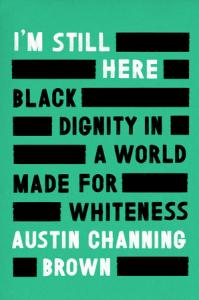 Austin Channing Brown doesn’t pull any punches in her memoir of growing up and coming of age as a black girl in majority-white schools, churches, and organizations. For black Christians who have walked a similar path, and for white Christians who have sought to address “racial justice” and achieve greater “diversity,” Austin provides a roadmap of the frustrations and the possibilities she encountered. As her publisher puts it: “For readers who have engaged with America’s legacy on race through the writing of Ta-Nehisi Coates and Michael Eric Dyson, I’m Still Here is an illuminating look at how white, middle-class, Evangelicalism has participated in an era of rising racial hostility, inviting the reader to confront apathy, recognize God’s ongoing work in the world, and discover how blackness–if we let it–can save us all.” (Kristin)
Lynne Hybels, Nice Girls Don’t Change the World (Zondervan, 2005).
This book changed my life when I first read it in 2009. I, like Lynne Hybels, was a nice Christian girl who did (most) things right. Like Lynne Hybels, I too was absolutely miserable while trying to force myself into the expected role for Christian women. Her book opened my eyes to the possibility of “biblical womanhood” as a myth. It is heart wrenching, especially in light of what we now know about her marriage to Bill Hybels. But her story still can help us better understand the plight faced by so many, many evangelical women today, and—most importantly—her journey still gives us hope. As she writes, “Never doubt that a community of thoughtful, committed women, filled with the power and love of God, using gifts they have identified and developed, and pursuing passions planted in them by God—never doubt that these women can change the world.” (Beth)
Margery Kempe, The Book of Margery Kempe, trans. Liz Herbert McAvoy (Boydell and Brewer, 2003).
I often wonder what John Piper would do with Margery Kempe. When the Archbishop of York (the second most important ecclesiastical position in England) demanded that she stop teaching and preaching, Margery Kempe looked him in the face and said, “No.” She explained that it was because “I think the Gospel gives me leave to speak of God.” And she got away with it. Confronting Margery, a fifteenth-century English woman, forces us to question modern ideas about biblical womanhood. While I think it is great to read the unabridged version of Margery Kempe (like the Penguin edition), I actually think it might be better for those new to medieval Christianity to start with McAvoy’s abridged version. Margery is absolutely exasperating, but she is also absolutely invested in following Jesus and doesn’t let her husband, family, or even priest get in the way. (Beth)
Linda Kay Klein, Pure: Inside the Evangelical Movement That Shamed a Generation of Young Women and How I Broke Free (Touchstone, 2018).
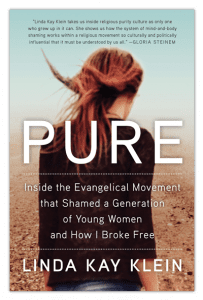 For evangelicals who grew up in the purity movement, for parents who taught their kids “purity” and sent them to churches and youth groups that reinforced this message, for those who have left evangelicalism and those who have stayed, Linda Kay Klein’s book will speak to you. As an insider to the movement, Klein writes from personal experience. But she also brings academic expertise to the subject of evangelical teachings on sex and gender. Having conducted dozens of interviews, she is able to go beyond the limitations of memoir to speak to the broader purity movement and its ongoing repercussions. It is a painful read, but a challenge that the evangelical church must reckon with. (Kristin)
Danielle L. McGuire, At the Dark End of the Street: Black Women, Rape, and Resistance—a New History of the Civil Rights Movement from Rosa Parks to the Rise of Black Power (Knopf, 2010).
This book is a must-read for all Americans. I assigned McGuire’s book in an intro course on women’s history last fall, and I have never had students more engaged with a book. McGuire tells the brutal story of the sexual violence black women have long endured at the hands of white men, and how their resistance to that violence sparked the civil rights movement. Filled with gripping stories and based on prodigious research, McGuire’s book is a tour-de-force. Why does this book make the list for evangelicals in particular? At a time when the white evangelical church is struggling to come to terms with its own legacy of racial injustice and proliferation of abuse, this is essential reading. Add to that the fact that the majority of white Southerners in this narrative were, of course, white Christians—indeed, white evangelicals. From #MeToo to police violence to mass incarceration, this book will open one’s eyes to the ways in which the past continues to haunt the present. (Kristin)
Dorothy L. Sayers, Are Women Human? (Eerdmans, 2005; 1971 first printing).
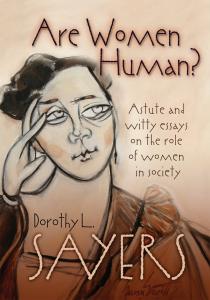 Mystery writer, medieval scholar, theologian, Christian apologist, playwright, and the almost Inkling everyone forgets, Dorothy L. Sayers was one of the first women to graduate from Oxford University. She was a scholar, writer, and Christian apologist just like C.S. Lewis, but instead of teaching at university and writing books in her spare time, she earned her family’s daily bread through her pen. A feminist thread runs through many of her works (just check out Gaudy Night), but it is only in these essays that she confronts the woman question head on.
Her argument is both simple and profound: women are human, just like men. Her proof of this absolute equality is even more profound — that Jesus died for women too. “Perhaps it is no wonder that the women were first at the Cradle and last at the Cross,” she wrote. “They had never known a man like this Man… A Prophet and teacher who never nagged at them, never flattered or coaxed or patronized…who took their questions and arguments seriously; who never mapped out their sphere for them, never urged them to be feminine or jeered at them for being female; who had no axe to grind and no uneasy male dignity to defend; who took them as he found them and was completely unselfconscious.” At less than 70 pages, this book won’t take much time to read, and it could very well change your attitude toward women. (Beth)
Theoloqui (theoloqui.net)
I’m cheating on my own premise here by including a group blog in place of a book… but this lets me recommend to your attention a diverse group of several more women instead of just one. Theoloqui started in 2015 with eight women connected to my home denomination, the Evangelical Covenant Church, reflecting on our six core theological affirmations. Always thoughtful and thought-provoking, the writers often challenged me to think anew about words and phrases that I used too easily or triumphantly. After a hiatus, Theoloqui returned in November with a new series of responses to the #MeToo movement. So especially if you’ve resonated with recent posts from Kristin and Beth on misogyny and sexual abuse in the church, let me encourage you to add Theoloqui to your reading list. (Chris)
Larissa Tracy, Women of the Gilte Legende: A Selection of Middle English Saints Lives (D.S. Brewer, 2012).
This is an inexpensive and excellent introduction to the world of European medieval women. Instead of the Proverbs 31 Woman and the silent, submissive wives of 1 Timothy 2 and 1 Corinthians, medieval Christians were regaled with a very different set of female exemplars. From holy transvestites to penitent prostitutes and mothers who abandon their children for God, these women were defiant, tenacious, wise, pious, and, confident; they were preachers, teachers, evangelists, and—above all—dedicated to serving God. Their stories remind us how big the Christian world really is and provides us with a much broader perspective on what it means to be a Christian woman. It is also short and a lot of fun. (Beth)
Lauren Winner, The Dangers of Christian Practice: On Wayward Gifts, Characteristic Damage, and Sin (Yale University Press, 2018)
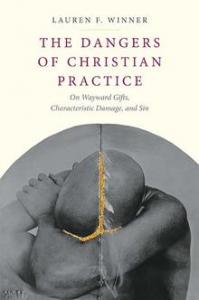 After debuting with the unforgettable spiritual memoir Girl Meets God, historian Lauren Winner next wrote about the spiritual disciplines in Mudhouse Sabbath. But while that short book mostly celebrated the benefits of Jewish and Christian practices, Winner’s newest work warns of the dangers that can inhere to them. Starting with a survey of how supposed desecration of the Host led to anti-Semitic violence in medieval Europe and continuing with the prayers of slave-owning women, Winner considers “not primarily a practice’s propensity for fostering holiness (there are plenty such accounts) but rather a practice’s propensity for violence, for curvature, for being exploited for the perpetuation of damage rather than received for its redress.” She writes in that way about Eucharist, prayer, and baptism “because I love them, and a lover wishes, in her rare mature moments, to know the truth of the object of her love, rather than to know only her wished-for, projected fantasy.”
It’s not an easy read — a synthesis of theology, philosophy, and history rather than a spiritual memoir or devotional meditation — but worth pondering if, like me, you’re one of those Christians who thinks that what we do in following Jesus matters at least as much as what we believe. Winner is primarily responding to postliberal theology, but I found it interesting to read The Dangers of Christian Practice in light of some of Kristin’s posts about evangelicalism: to what extent are the more problematic (even “toxic”) aspects of evangelical Christianity “characteristic damages” of its practices, rather than incidental to them? (Chris)
Honorable Mentions: Lisa Bitel, Landscape with Two Saints: How Genovefa of Paris and Brigit of Kildare Built Christianity in Barbarian Europe (Oxford University Press, 2009); Michelle Obama, Becoming (Crown, 2018); Karen Swallow Prior, On Reading Well: Finding the Good Life Through Great Books (Brazos Press, 2018); April Vinding, Triptych (Wipf & Stock, 2016).
Previous Post

January 11, 2019
Remembering Gary Knoppers (1956-2018)
Browse Our Archives
Select a Category abolitionism Abortion Abraham Joshua Heschel Abraham Kuyper Abraham Lincoln Academia Activism Adam Renberg Advent Adventist africa African American Religion Agnes Howard Albert Camus American History American Religious History American Revolution American West Anabaptists Ancient History Andrea Turpin Andrei Tarkovsky Anglicanism Annales Ansley Lillian Quiros anti-Catholicism Antisemitism Anxious Bench apologetics Apparitions Arash Azizi Archaeology archives art Artificial Intelligence Asia Asian Americans Augustine Authors Bad Bunny Baptism Baptists Barack Obama Battle of Hastings Benjamin Franklin Bernard-Henri Levy Beth Allison Barr Beth Moore Bethany Mannon Bible Bill Cunningham Billy Graham Black Music Bob Dylan Body Boenhoffer Books Breastfeeding Bruce Springsteen C.S. Lewis Calvinism Cancel Culture Capitalism Carmelites Catholicism Cedric Robinson Cesar Chavez Charismaticism charity Charles Dickens Charles Lindbergh Che Guevara Chicago Children Chinese Christianity Chris Gehrz Christ Christian death Christian Higher Education Christian life Christian Nation Christian Nationalism Christianity Today Christmas Church life Church Practice cinema Civil Religion Civil Rights Movement Civil War civility Classics Climate Change Cold War Colonial Mexico colonialism Comer Communism community complementarianism Conference on Faith and History Congregationalism Conspiracies Conspiracy Conversion Narratives Coronavirus Costa Rica Council of Nicaea Covid-19 Creation Critical Race Theory Crusades Culture culture wars Daniel K. Williams David Barton David Swartz Death Ways death with dignity DEI democracy Democratic Party Devotion Digital Age Diplomacy discipleship diversity Donald Trump Drama Dua Lipa Early Church early modern Early modern Catholicism Easter Eastern Christianity economic exploitation Education elections Elie Wiesel Elizabeth II Elizabeth Taylor emotions Empire Engineering England enslavement Entertainment Episcopal Church Erica Ramirez eschatology Eurocentrism Evangelicalism Evangelicals Exegesis Family Feminism Film Flannery O'Connor folk music Food Foreign Policy founding fathers Franciscans Franciscus Junius fundamentalism Funerals G.K. Chesterton Gender Genocide genre geography George W. Bush George Washington George Whitefield Global Christianity Global church Grief Guadalupe guest post Guest Post gun control gun violence Gustavo Gutierrez Hamid Dabashi Harold John Ockenga Harvest Hate Hawaiian Christianity Healing health care Heather Cox Richardson Hell Heresy Hermeneutics Higher Education Hinduism Hippocratic oath Historical Fiction Historical Methodology Historical Profession Historical Profession Historical Theology Historical Thinking historiography Holidays Holocaust horror movies Human rights Humanitarian Work humanities Hummingbirds Hungary hymns Imago Dei Immigration Injustice Interviews Iran Islam Islamophobia Israel Ivan's Childhood Jacob Randolph James Bratt Janine Giordano Drake Japanese history Japanese Literature Jean Paul Sartre Jesse Miranda Jesus Jesus Christ Jimmy Carter Joan Baez Joan Didion Joanne Freeman João B. Chaves Joao Chaves Joey Cochran John Calvin John Fea John Tillotson John Turner Johnny Cash Jonathan Edwards Jonathan Tran Joseph Smith Josh Howerton Journalism Jr. Judaism Jürgen Moltmann Just War Justice Justin Brierley Karl Barth Katelyn Beaty koi ponds Kris Kristofferson Kristin Kobes Du Mez Latin American Religious History Latino Americans Lectio Divina Leisure Lent Leonard Cohen liberal arts liberalism Liberation Theology Linda Ronstadt Lisa Clark Diller Literature Lou Reed Lynchings Lynneth Miller Renberg Mainline Protestantism Malcolm Foley Marilyn Monroe Maritime history Mark Noll Marriage Martin Luther Martin Luther King Martyrdom Marxism Mary Masih Alinejad mass shootings material culture medieval Christianity Medieval Ethiopia Melissa Borja memory Mennonites Mental Health Mental Illness Methodism Mexican Americans Mexicans Mike Madrid Miles Mullin Min Jin Lee Miscarriage Missionaries Mister Rogers Mitt Romney modernity Monasticism Mormonism Motherhood Mothers of the Church Moving Music Musicals Nadya Williams Nahua Christianity Native Americans Natsume Sōseki New Contributor New England New Year New York Nico Non-Violent Protest Orthodoxy pacifism Paleo Evangelicals Palestinians Parenting Patti Smith Paul Kingsnorth Pedro Calderón de la Barca Pentecostalism Philip Jenkins Phillis Wheatley physician-assisted suicide pilgrimage Pilgrims pluralism Plutocracy Poetry Politics Pope Francis Pope Leo XIV post-modernism prayer preaching Presbyterians prosperity gospel Protest Public history Publishing Puritans purity culture Quakers race Race Massacres Racial Capitalism racial reconciliation racialization Racism Raha Bahloulipour Re-Enchantment reading Reformation Refugees religion and the university religion and war Religious Freedom Religious Nones Religious Pluralism Religious Symbols religious violence Republican Party Revival Rita Coolidge Ritual Roger Williams Roman Catholic church Royalty Russell Moore same-sex marriage Sarah Irving-Stonebraker Scandinavia Science Science and Technology Scopes trial Scriptural Interpretation secularism Selena Quintanilla seminary Seventh-Day Adventists sexual morality Sexuality Sikhs Silence slaveholders theology Slavery Slavoj Zizek social justice Social Media Southern Baptist Convention Southern Religion Spain Spiritual Autobiography Spiritual but not religious Spiritual Discipline Sports Stanley Hauerwas Suffering Summer Camps Sunday Night Odds and Ends Supernatural Supreme Court Syriac Christianity Tal Howard Taylor Swift Teaching Technology Television Thanksgiving The Beatles The Mission theater TheoBros Theology Thomas Dixon Thomas Jefferson Thomas Kidd Thomas Merton Tim Gloege Tim Walz Tom Holland Tourism tradition Tragedy Translation Transnationalism Travel Trump Ukraine Uncategorized Unitarians United Methodist Church US History Vanessa Chan Velvet Underground Verónica A. Gutiérrez Veronica Gutierrez Vikings Violence Virgin Mary Virtue Virtue ethics Visions Voting War WCTU Wendell Berry Westminster Assembly White Evangelicalism Wildfires Winnie the Pooh Witches women Women in Ministry Women's and Gender Studies Work Worship writing Yasunari Kawabata Zena Hitz
Select a Month October 2026 September 2026 August 2026 July 2026 June 2026 May 2026 April 2026 March 2026 February 2026 January 2026 December 2025 November 2025 October 2025 September 2025 August 2025 July 2025 June 2025 May 2025 April 2025 March 2025 February 2025 January 2025 December 2024 November 2024 October 2024 September 2024 August 2024 July 2024 June 2024 May 2024 April 2024 March 2024 February 2024 January 2024 December 2023 November 2023 October 2023 September 2023 August 2023 July 2023 June 2023 May 2023 April 2023 March 2023 February 2023 January 2023 December 2022 November 2022 October 2022 September 2022 August 2022 July 2022 June 2022 May 2022 April 2022 March 2022 February 2022 January 2022 December 2021 November 2021 October 2021 September 2021 August 2021 July 2021 June 2021 May 2021 April 2021 March 2021 February 2021 January 2021 December 2020 November 2020 October 2020 September 2020 August 2020 July 2020 June 2020 May 2020 April 2020 March 2020 February 2020 January 2020 December 2019 November 2019 October 2019 September 2019 August 2019 July 2019 June 2019 May 2019 April 2019 March 2019 February 2019 January 2019 December 2018 November 2018 October 2018 September 2018 August 2018 July 2018 June 2018 May 2018 April 2018 March 2018 February 2018 January 2018 December 2017 November 2017 October 2017 September 2017 August 2017 July 2017 June 2017 May 2017 April 2017 March 2017 February 2017 January 2017 December 2016 November 2016 October 2016 September 2016 August 2016 July 2016 June 2016 May 2016 April 2016 March 2016 February 2016 January 2016 December 2015 November 2015 October 2015 September 2015 August 2015 July 2015 June 2015 May 2015 April 2015 March 2015 February 2015 January 2015 December 2014 November 2014 October 2014 September 2014 August 2014 July 2014 June 2014 May 2014 April 2014 March 2014 February 2014 January 2014 December 2013 November 2013 October 2013 September 2013 August 2013 July 2013 June 2013 May 2013 April 2013 March 2013 February 2013 January 2013 December 2012 November 2012 October 2012 September 2012 August 2012 July 2012 June 2012 May 2012
Follow Us!
TAKE THE
Religious Wisdom Quiz
How many times does Jesus perform a miracle in the Gospel of John?
Select your answer to see how you score.
7 12 10 5
Related posts from Anxious Bench
Marilyn Monroe and the Life of the Mind

History as Christian Discipleship

Updating the Readings: Recent Books on Women and...
TRENDING AT PATHEOS Evangelical

The Sermon on the Mount, Part I: Matthew...
The Sermon on the Mount, Part I (Matthew 4:12-5:12) St. Matthew moves...

What's up from Crossway: Reviewing some of their latest A few weeks...

Janie Learns the Way of the Cross: A...
Teaching children about Jesus' Passion can be challenging. Many parents and educators...

Looking For Good Catholic Writing - October 2026
He alone extends the heavens, and he walks upon the waves of...

In "Irreplaceable," our book on vocation and technology, Trevor Sutton and I...

I was strolling through the top floor of the brand new Parthenon...
view all Evangelical blogs
Ad-Free & Subscriber Log-In Subscription Support
- About Us
- 2026 Calendar
- Videos
- Podcasts
- Library of World Religions
- Faith In Media Tracker
- Advertise With Us
- Write for Us
- Privacy Policy
- Terms of Service
- Do Not Sell My Data
- Contact Us
- Radiant Digital
- Manage Newsletter Subscriptions
- Unsubscribe From Notifications
- Sitemap
Copyright 2008-2026, Patheos. All rights reserved.
Subscription Support Ad-Free & Subscriber Log-In
Follow Patheos