
BuddhistCatholicContemplativeEvangelicalGeneral ChristianHinduJewishLatter-day SaintMuslimNew VisionsProgressive Christian
Beliefs
- Buddhist
- Catholic
- Contemplative
- Evangelical
- General Christian
- Hindu
- Jewish
- Latter-day Saint
- More Voices
- Muslim
- New Visions
- Pagan
- Progressive Christian
Topics
- Religion News
- Food and Religion
- Sports and Religion
- Religious Art
- Religious Music and Entertainment
- Religious Events
- History and Religion
- Style and Religion
- Politics and Religion
- Women in Religion
- Recreation Outdoors and Religion
- Business Finance and Religion
- Careers Workplace and Religion
- Education and Religion
- Family Parenting and Religion
- Health Fitness and Religion
- Home and Religion
- Relationships and Religion
- Technology and Religion
- Travel and Religion
Columnists
- Buddhist Columnists
- Business Finance and Religion Columnists
- Careers Workplace and Religion Columnists
- Catholic Columnists
- Contemplative Columnists
- Education and Religion Columnists
- Evangelists Columnists
- Family Parenting and Religion Columnists
- General Christian Columnists
- Health Fitness and Religion Columnists
- Hindu Columnists
- History and Religion Columnists
- Home and Religion Columnists
- Jewish Columnists
- More Voices Columnists
- Latter Day Columnists
- Muslim Columnists
- New Visions Columnists
- Nonreligious Columnists
- Pagan Columnists
- Politics and Religion Columnists
- Progressive Columnists
- Recreation Outdoors and Religion Columnists
- Relationships and Religion Columnists
- Religion News Columnists
- Religious Art Columnists
- Religious Events Columnists
- Religious Music and Entertainment Columnists
- Sports and Religion Columnists
- Style and Religion Columnists
- Technology and Religion Columnists
- Travel and Religion Columnists
- Women in Religion Columnists
Resource Library
- 2026 Calendar
- Library of World Religions
- The 100 Most Holy Places on Earth
- Patheos Answers
- Podcasts
- Videos
- Faith Leaders Database
- Anglican Episcopalian
- Bahai
- Baptist
- Buddhism
- Christianity
- Confucianism
- Eastern Orthodoxy
- Hinduism
- Holiness and Pentecostal
- ISKCON
- Islam
- Judaism
- Lutheran
- Methodist
- The Church of Jesus Christ of Latter-day Saints
- New Age
- Paganism
- Presbytarian and Reformed
- Protestantism
- Religion Behind the Scenes
- Roman Catholic
- Scientology
- Shia Islam
- Sikhism
- Sufism
- Sunni Islam
- Taoism
- Zen
- See all religions
Research Tools
 Ad-Free & Subscriber Log-In Subscription Support
Follow Patheos 

- Trending:
- Advent
- |
- Forgiveness
- |
- Thanksgiving
- |
- Election
- |
- Seasonal Holidays
- |
- Marriage

-
About the Authors
- Home
- Evangelical
- Mandates from the Masses and the Call to Courageous Christian Scholarship
Mandates from the Masses and the Call to Courageous Christian Scholarship
Last updated on: February 5, 2017 at 8:52 pm by Kristin Du Mez
Mandates from the Masses and the Call to Courageous Christian Scholarship 2017-02-05T20:52:18-04:00 Kristin Du Mez
Patheos Explore the world's faith through different perspectives on religion and spirituality! Patheos has the views of the prevalent religions and spiritualities of the world.
 Today’s guest post comes to us from Scott Culpepper, Associate Professor of History at Dordt College in Sioux Center, Iowa. Culpepper teaches courses on the early modern Atlantic World and Religion in American Culture. He holds a Ph.D. from Baylor University and is the author of Francis Johnson and the English Separatist Influence (Mercer, 2011).
I am pausing to reflect on the fickle fate of kings as I prepare to unleash the French Revolution in my undergraduate civilization class. January anniversaries present an interesting study in both the pomp and fragility of power. Few occasions can compete with American presidential inaugurations for extravagant displays of pomp and circumstance. All regular presidential inaugurations since Franklin D. Roosevelt’s second inauguration in 1937 have taken place in January. Another looms on the horizon in just two days.
On the other side of the coin, January plays host to the anniversaries of two lethal royal downfalls. In 1793, Louis XVI of France faced a revolutionary court beginning on January 20. The wheels moved swiftly in his case. By January 21, his royal head joined the growing pile shaved by the “national razor.” A century and a half before his death, Charles I of England also faced accusations of treason against his people, a novel concept at a time when many Europeans still believed that the person of the king and the identity of the state were synonymous. Charles met the executioner’s ax on January 30, 1649. The masses giveth and the masses taketh away, or at least those who claim to speak on their behalf give and take away in their name.
The great political scientist Dennis the Constitutional Peasant was convinced that the masses were models of sound judgment and virtue. He delights each new generation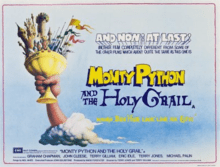 of Dordt College students in my introductory undergraduate classes each fall as I play his famous clip from the cinematic medieval chronicle Monty Python and the Holy Grail. Michael Palin’s Dennis deflates Graham Chapman’s King Arthur by informing him that, “Supreme Executive power derives from a mandate from the masses not from some farcical aquatic ceremony.” Dennis’ comically anachronistic anarcho-syndicalist communism rejects the notion that the Lady of the Lake can bestow divine favor on Arthur without the support of the people. Americans have tended to believe mandates from the masses have authority as well, though our history has demonstrated more than once that the masses can be misguided.
We live in strange times. A man whose unlikely elevation to the highest office in the land is being attributed by some to an electoral uprising of the masses against the establishment will be inaugurated president of the United States this Friday. Yet it is somewhat unclear who these masses really are. If one looks at the tally of the popular vote, the movement that propelled Donald Trump to the presidency represents more of a vocal minority than the majority of Americans. This observation gains even more credibility in light of the large number of people who voted for a third party or chose not to vote at all.
Masses or not, this segment of the population has captured national attention. Among their ranks are many who identify as Christians. Despite the claims of Trump and his supporters to be fighting for Christian ideals, their posture, rhetoric, and emphases cut against the grain of many fundamental values that Christian scholars embrace and seek to propagate.
Christian scholars across the spectrum of theological traditions share a common commitment to fostering intellectual and spiritual maturity, rationality, integrity, and humility in our students, the church and in our cultures. The Trump presidential campaign and transition phase descended to the level of rejecting in both words and very public deeds each of these fundamental ideals. Careful consideration of facts, disciplined analysis of sources, and respectful treatment of other human beings assumed the position of secondary considerations as people rushed to express their angst over the perceived failures of the amorphous “establishment” by elevating a man to power who cares for none of these things. Those of us who invest our lives daily in advocating the alternative stand at best as an inconvenience and at worse as an impediment that must be undermined or removed.
The services Christian scholars render seldom rank high in popularity contests. Christian historians know that the typical evangelical is much more likely to read duck dude Willie Robertson’s American Hunter: How Legendary Hunters Shaped America, a popular book crafted in punchy prose by his ghostwriter William Dale, than any of the excellent works of historical scholarship by trained Christian historians such as John Fea or Thomas Kidd. Christian leaders produce searing indictments of reality television and a shallow mainstream culture while much that passes for popular Christian culture is no more than a baptized reflection of that same culture. As Gregory Wolfe, writer and Senior Fellow at the Institute for Catholic Thought and Culture, recently tweeted, “Future historian: ‘American Christianity in the 21st century produced God’s Not Dead 2 but could not sustain Books & Culture.’”
Some have attributed the lack of stronger scholarly influence over Christian popular culture to a problem with evangelical scholars. Comments abound about the need for Christian scholars to curb a supposed tendency towards arrogance or putting on airs. In the blustery rural Southern Baptist culture of my youth, pastors never tired of ridiculing the stereotypical arrogant academic with “more degrees than a thermometer” but little in the way of spiritual or common sense. When I was a young pastor fresh from my undergraduate classes in Greek, I can remember a deacon warning me about using too much of that Greek in sermons because it might make people think I considered myself above them.
Having served eleven years in various staff positions teaching and preaching at the congregational level, it still amazes me how often I am dismissed by fellow Christians as a product of the ivory tower just because my primary arena of service is now a classroom rather than a pulpit. It is as if all the years of walking with real people through their real struggles is somehow negated by the prejudiced view that scholars must not understand the real world. Such biases should be taken seriously and answered kindly, but they should never shame us into being timid about the vocation to which we are called.
Those who remind Christian scholars to avoid the temptation of arrogance do us all a good service. It is a potential pitfall for all of us. But the more I interact with various Christian traditions in the United States, the more I am convinced that the problem is not how we are saying what we are saying. It is what we are saying.
Christian scholars are indeed a subversive influence. Critics are right in labeling us a subversive influence if what they mean is that we subvert the subordination of facts to falsehoods calculated to sway popular opinion, the substitution of shallow shibboleths for deeper reflection, and the sacrifice of principle on the profane altar of political expediency. And there will be a greater need for us to keep on subverting these things with all the energy we can muster in the age of Trump.
The times call for renewed conviction, creativity and courage on the part of Christian scholars. The masses may not know they need us, but they need us. The endorsement of popular influence as a virtue in the framing of our American republic was predicated on the hope that education and character formation would equip people to exercise their rights intelligently. No one is better prepared than Christian scholars and the institutions they serve to provide this kind of education infused with serious attention to character formation.
In a time when forces abound that pressure Christian scholars to adopt a posture of compliance to fit in, we need more than ever to stand up and stand out unapologetically. All clouds pass in time. When they do, a new generation will build on either the ruins or the foundations of the past. That generation sits in our classrooms today. We have the opportunity to model something very different from what they are seeing on the national stage in both church and state. May Christian scholars in the age of Trump have the courage to give the masses what benefits them rather than what has been mandated in their name.
Previous Post

January 17, 2017
Seeking God in The Holocaust
Next Post

January 19, 2017 The Desecration of Indian Corpses
Browse Our Archives
Select a Category abolitionism Abortion Abraham Joshua Heschel Abraham Kuyper Abraham Lincoln Academia Activism Adam Renberg Advent Adventist africa African American Religion Agnes Howard Albert Camus American History American Religious History American Revolution American West Anabaptists Ancient History Andrea Turpin Andrei Tarkovsky Anglicanism Annales Ansley Lillian Quiros anti-Catholicism Antisemitism Anxious Bench apologetics Apparitions Arash Azizi Archaeology archives art Artificial Intelligence Asia Asian Americans Augustine Authors Bad Bunny Baptism Baptists Barack Obama Battle of Hastings Benjamin Franklin Bernard-Henri Levy Beth Allison Barr Beth Moore Bethany Mannon Bible Bill Cunningham Billy Graham Black Music Bob Dylan Body Boenhoffer Books Breastfeeding Bruce Springsteen C.S. Lewis Calvinism Cancel Culture Capitalism Carmelites Catholicism Cedric Robinson Cesar Chavez Charismaticism charity Charles Dickens Charles Lindbergh Che Guevara Chicago Children Chinese Christianity Chris Gehrz Christ Christian death Christian Higher Education Christian life Christian Nation Christian Nationalism Christianity Today Christmas Church life Church Practice cinema Civil Religion Civil Rights Movement Civil War civility Classics Climate Change Cold War Colonial Mexico colonialism Comer Communism community complementarianism Conference on Faith and History Congregationalism Conspiracies Conspiracy Conversion Narratives Coronavirus Costa Rica Council of Nicaea Covid-19 Creation Critical Race Theory Crusades Culture culture wars Daniel K. Williams David Barton David Swartz Death Ways death with dignity DEI democracy Democratic Party Devotion Digital Age Diplomacy discipleship diversity Donald Trump Drama Dua Lipa Early Church early modern Early modern Catholicism Easter Eastern Christianity economic exploitation Education elections Elie Wiesel Elizabeth II Elizabeth Taylor emotions Empire Engineering England enslavement Entertainment Episcopal Church Erica Ramirez eschatology Eurocentrism Evangelicalism Evangelicals Exegesis Family Feminism Film Flannery O'Connor folk music Food Foreign Policy founding fathers Franciscans Franciscus Junius fundamentalism Funerals G.K. Chesterton Gender Genocide genre geography George W. Bush George Washington George Whitefield Global Christianity Global church Grief Guadalupe Guest Post guest post gun control gun violence Gustavo Gutierrez Hamid Dabashi Harold John Ockenga Harvest Hate Hawaiian Christianity Healing health care Heather Cox Richardson Hell Heresy Hermeneutics Higher Education Hinduism Hippocratic oath Historical Fiction Historical Methodology Historical Profession Historical Profession Historical Theology Historical Thinking historiography Holidays Holocaust horror movies Human rights Humanitarian Work humanities Hummingbirds Hungary hymns Imago Dei Immigration Injustice Interviews Iran Islam Islamophobia Israel Ivan's Childhood Jacob Randolph James Bratt Janine Giordano Drake Japanese history Japanese Literature Jean Paul Sartre Jesse Miranda Jesus Jesus Christ Jimmy Carter Joan Baez Joan Didion Joanne Freeman João B. Chaves Joao Chaves Joey Cochran John Calvin John Fea John Tillotson John Turner Johnny Cash Jonathan Edwards Jonathan Tran Joseph Smith Josh Howerton Journalism Jr. Judaism Jürgen Moltmann Just War Justice Justin Brierley Karl Barth Katelyn Beaty koi ponds Kris Kristofferson Kristin Kobes Du Mez Latin American Religious History Latino Americans Lectio Divina Leisure Lent Leonard Cohen liberal arts liberalism Liberation Theology Linda Ronstadt Lisa Clark Diller Literature Lou Reed Lynchings Lynneth Miller Renberg Mainline Protestantism Malcolm Foley Marilyn Monroe Maritime history Mark Noll Marriage Martin Luther Martin Luther King Martyrdom Marxism Mary Masih Alinejad mass shootings material culture medieval Christianity Medieval Ethiopia Melissa Borja memory Mennonites Mental Health Mental Illness Methodism Mexican Americans Mexicans Mike Madrid Miles Mullin Min Jin Lee Miscarriage Missionaries Mister Rogers Mitt Romney modernity Monasticism Mormonism Motherhood Mothers of the Church Moving Music Musicals Nadya Williams Nahua Christianity Native Americans Natsume Sōseki New Contributor New England New Year New York Nico Non-Violent Protest Orthodoxy pacifism Paleo Evangelicals Palestinians Parenting Patti Smith Paul Kingsnorth Pedro Calderón de la Barca Pentecostalism Philip Jenkins Phillis Wheatley physician-assisted suicide pilgrimage Pilgrims Piracy pluralism Plutocracy Poetry Politics Pope Francis Pope Leo XIV post-modernism prayer preaching Presbyterians prosperity gospel Protest Public Executions Public history Publishing Puritans purity culture Quakers race Race Massacres Racial Capitalism racial reconciliation racialization Racism Raha Bahloulipour Re-Enchantment reading Reformation Refugees religion and the university religion and war Religious Freedom Religious Nones Religious Pluralism Religious Symbols religious violence Republican Party Revival Rita Coolidge Ritual Roger Williams Roman Catholic church Royalty Russell Moore same-sex marriage Sarah Irving-Stonebraker Scandinavia Science Science and Technology Scopes trial Scriptural Interpretation secularism Selena Quintanilla seminary Seventh-Day Adventists sexual morality Sexuality Sikhs Silence slaveholders theology Slavery Slavoj Zizek social justice Social Media Southern Baptist Convention Southern Religion Spain Spiritual Autobiography Spiritual but not religious Spiritual Discipline Sports Stanley Hauerwas Suffering Summer Camps Sunday Night Odds and Ends Supernatural Supreme Court Syriac Christianity Tal Howard Taylor Swift Teaching Technology Television Thanksgiving The Beatles The Mission theater TheoBros Theology Thomas Dixon Thomas Jefferson Thomas Kidd Thomas Merton Tim Gloege Tim Walz Tom Holland Tourism tradition Tragedy Translation Transnationalism Travel Trump Ukraine Uncategorized Unitarians United Methodist Church US History Vanessa Chan Velvet Underground Verónica A. Gutiérrez Veronica Gutierrez Vikings Violence Virgin Mary Virtue Virtue ethics Visions Voting War WCTU Wendell Berry Westminster Assembly White Evangelicalism Wildfires Winnie the Pooh Witches women Women in Ministry Women's and Gender Studies Work Worship writing Yasunari Kawabata Zena Hitz
Select a Month November 2026 October 2026 September 2026 August 2026 July 2026 June 2026 May 2026 April 2026 March 2026 February 2026 January 2026 December 2025 November 2025 October 2025 September 2025 August 2025 July 2025 June 2025 May 2025 April 2025 March 2025 February 2025 January 2025 December 2024 November 2024 October 2024 September 2024 August 2024 July 2024 June 2024 May 2024 April 2024 March 2024 February 2024 January 2024 December 2023 November 2023 October 2023 September 2023 August 2023 July 2023 June 2023 May 2023 April 2023 March 2023 February 2023 January 2023 December 2022 November 2022 October 2022 September 2022 August 2022 July 2022 June 2022 May 2022 April 2022 March 2022 February 2022 January 2022 December 2021 November 2021 October 2021 September 2021 August 2021 July 2021 June 2021 May 2021 April 2021 March 2021 February 2021 January 2021 December 2020 November 2020 October 2020 September 2020 August 2020 July 2020 June 2020 May 2020 April 2020 March 2020 February 2020 January 2020 December 2019 November 2019 October 2019 September 2019 August 2019 July 2019 June 2019 May 2019 April 2019 March 2019 February 2019 January 2019 December 2018 November 2018 October 2018 September 2018 August 2018 July 2018 June 2018 May 2018 April 2018 March 2018 February 2018 January 2018 December 2017 November 2017 October 2017 September 2017 August 2017 July 2017 June 2017 May 2017 April 2017 March 2017 February 2017 January 2017 December 2016 November 2016 October 2016 September 2016 August 2016 July 2016 June 2016 May 2016 April 2016 March 2016 February 2016 January 2016 December 2015 November 2015 October 2015 September 2015 August 2015 July 2015 June 2015 May 2015 April 2015 March 2015 February 2015 January 2015 December 2014 November 2014 October 2014 September 2014 August 2014 July 2014 June 2014 May 2014 April 2014 March 2014 February 2014 January 2014 December 2013 November 2013 October 2013 September 2013 August 2013 July 2013 June 2013 May 2013 April 2013 March 2013 February 2013 January 2013 December 2012 November 2012 October 2012 September 2012 August 2012 July 2012 June 2012 May 2012
Follow Us!
TAKE THE
Religious Wisdom Quiz
What city was the Apostle Paul imprisoned in for two years?
Select your answer to see how you score.
Jerusalem Rome Corinth Ephesus
Related posts from Anxious Bench
John Calvin: Pastor. Theologian. Immigrant Nuisance?
How Modern Citizenship Debates Echo the Reformation
Corrupting the Youth? What Universities Are Really For

Emulating Odysseus? Ancient History and Modern Politics
TRENDING AT PATHEOS Evangelical

In 1939, President Franklin D. Roosevelt moved Thanksgiving from November 30 to...

Reasons for Restraint: Ricardo Gonzalez, Florida and Dec...
The Morning of January 3 I begin with the dead. On the...

I published this column for Thanksgiving 2012 in the Deseret News....

For many years, Catholicism has been caught up in division over the...

'Statements of Faith' never get shorter
Nothing demonstrates a conservative commitment to faith and faithfulness like a "statement...

Michele's Reviews - Future Grace by John Piper
In God's Place, at God's Pace, by Future Grace Impatience is...
view all Evangelical blogs
Ad-Free & Subscriber Log-In Subscription Support
- About Us
- 2026 Calendar
- Videos
- Podcasts
- Library of World Religions
- Faith In Media Tracker
- Advertise With Us
- Write for Us
- Privacy Policy
- Terms of Service
- Do Not Sell My Data
- Contact Us
- Radiant Digital
- Manage Newsletter Subscriptions
- Unsubscribe From Notifications
- Sitemap
Copyright 2008-2026, Patheos, part of the Radiant Digital network of media brands. All rights reserved.
Subscription Support Ad-Free & Subscriber Log-In
Follow Patheos