
BuddhistCatholicContemplativeEvangelicalGeneral ChristianHinduJewishLatter-day SaintMuslimNew VisionsProgressive Christian
Beliefs
- Buddhist
- Catholic
- Contemplative
- Evangelical
- General Christian
- Hindu
- Jewish
- Latter-day Saint
- More Voices
- Muslim
- New Visions
- Pagan
- Progressive Christian
Topics
- Religion News
- Food and Religion
- Sports and Religion
- Religious Art
- Religious Music and Entertainment
- Religious Events
- History and Religion
- Style and Religion
- Politics and Religion
- Women in Religion
- Recreation Outdoors and Religion
- Business Finance and Religion
- Careers Workplace and Religion
- Education and Religion
- Family Parenting and Religion
- Health Fitness and Religion
- Home and Religion
- Relationships and Religion
- Technology and Religion
- Travel and Religion
Columnists
- Buddhist Columnists
- Business Finance and Religion Columnists
- Careers Workplace and Religion Columnists
- Catholic Columnists
- Contemplative Columnists
- Education and Religion Columnists
- Evangelists Columnists
- Family Parenting and Religion Columnists
- General Christian Columnists
- Health Fitness and Religion Columnists
- Hindu Columnists
- History and Religion Columnists
- Home and Religion Columnists
- Jewish Columnists
- More Voices Columnists
- Latter Day Columnists
- Muslim Columnists
- New Visions Columnists
- Nonreligious Columnists
- Pagan Columnists
- Politics and Religion Columnists
- Progressive Columnists
- Recreation Outdoors and Religion Columnists
- Relationships and Religion Columnists
- Religion News Columnists
- Religious Art Columnists
- Religious Events Columnists
- Religious Music and Entertainment Columnists
- Sports and Religion Columnists
- Style and Religion Columnists
- Technology and Religion Columnists
- Travel and Religion Columnists
- Women in Religion Columnists
Resource Library
- 2026 Calendar
- Library of World Religions
- The 100 Most Holy Places on Earth
- Patheos Answers
- Podcasts
- Videos
- Faith Leaders Database
- Anglican Episcopalian
- Bahai
- Baptist
- Buddhism
- Christianity
- Confucianism
- Eastern Orthodoxy
- Hinduism
- Holiness and Pentecostal
- ISKCON
- Islam
- Judaism
- Lutheran
- Methodist
- The Church of Jesus Christ of Latter-day Saints
- New Age
- Paganism
- Presbytarian and Reformed
- Protestantism
- Religion Behind the Scenes
- Roman Catholic
- Scientology
- Shia Islam
- Sikhism
- Sufism
- Sunni Islam
- Taoism
- Zen
- See all religions
Research Tools
 Ad-Free & Subscriber Log-In Subscription Support
Ad-Free & Subscriber Log-In Subscription Support
Follow Patheos 

- Trending:
- Forgiveness
- |
- Marriage
- |
- Consciousness
- |
- Death Penalty
- |
- Election
- |
- Halloween

- Home
- More Voices
- Religious Art
- Pleasure, Pain, and the Edge of Emotion: Lars von Trier
Pleasure, Pain, and the Edge of Emotion: Lars von Trier
Last updated on: June 12, 2025 at 9:51 am by Melissa Ingoldsby
Pleasure, Pain, and the Edge of Emotion: Lars von Trier 2025-06-12T09:51:45-04:00 Melissa Ingoldsby
Patheos Explore the world's faith through different perspectives on religion and spirituality! Patheos has the views of the prevalent religions and spiritualities of the world.
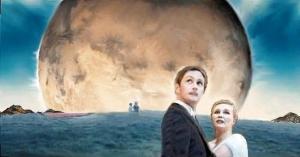
Dialogue des mondes, la sentence. Yatrides métaphore vision 2011. Reminiscent synoptic concept as Lars Von Trier’s Melancholia: The intimate couple before the inevitable collision in new catoptrical opposite planes, through close, medium and far levels, as remanent yatrides works from 1979 (“Le crépuscule des planètes”) to 2008 (“Le temps dilaté”) Wikimedia Commons.
The palatable difference between pleasure and pain
“Perhaps the only difference between me and other people was that I’ve always demanded more from the sunset; more spectacular colors when the sun hit the horizon. That’s perhaps my only sin.”
That is coming from Joe, the main protagonist of Lars Von Trier’s Nymphomaniac, who was just saved from a savage beating by a man who is listening to hear her recount every single sordid detail of her erotic experiences, down to the lastgritty detail.
The man who saved her is asexual, and therefore, is in his own mind without judgment and can listen to her story without much in the way of preconceived notions about her behavior.
Her behavior is self indulgent, cruel (toward herself and sometimes others), and innovative in her own detriment to find pleasure. She has a period of time where she cannot have pleasure, but ends up with Jerome, where she finds something similar to it anyway. She doesn’t believe love is real, but that it is merely, lust, with jealously added, and several times throughout the films two parts, we see a connection between her intense pleasure and feeling nothing at all.
The brutality of death and its consequences of grief
A particularly difficult scene where her father dies in violent spasms and in despair for his wife who is terrified of hospitals, (and refuses to be there, causing Joe to resent her mother), we get a scene where her father then dies—-and she immediately becomes sexually aroused. It’s a palpable sense of gripping pain, and she follows it up by expressing that she is then numb with depression afterwards. This isn’t just a random event, as Joe finds herself at one point making intense and passionate love with Jerome. In an unmistakably odd coincidence, to which afterwards, she is incredibly distraught emotionally when she realizes she cannot feel anything anymore.
The savage and intense beatings with a man called K are of her own accord, which become routine in her resolve to reclaim her orgasms. These haphazard and dangerous elements culminate in her losing her relationship with Jerome and putting her son that they have together in danger by leaving him alone to see K once again.
The “Depression” Trilogy
This deep, pitting despair, to me was painful to watch— yet I had to finish it. It was in two parts, almost split down the middle, like a metaphorical axing of the viewer’s heart. Lars Von Trier doesn’t make films for us to enjoy, he gives us something scathing, raw, and over the top, but ultimately it drives something inside that we all sometimes have felt—-that empty pit of sorrow that is either self created or melded from your own experiences and relationships. This film represented, to me, a glimpse of how it feels to live life under a cloak of sensory overload, and I think it feels as suffocating as it feels exhilarating—as it feels terrifying.
This was a part of a “depression” trilogy that Von Trier created. I only saw Nyphomaniac and Melancholia.
Melancholia is a genius expression of extreme depression represented by extreme behavior. We sometimes do crazy things out of sheer exhaustion, out of sheer desperation, and this movie shows us this is true. It’s almost a bipolar episode wrapped up in two parts, one in manic form with the wedding with “Justine,” and the depression part with, “Claire,” and it shows the juxtaposition of both of these in clear contrast, yet they merge somewhere to show they do indeed share something: pain.
I have not seen Anti-Christ yet, but plan to, as these all meld together in complete form to show a anthology of pain that completes the director’s vision.
A perhaps more lighthearted and satirical example of grief in media: David Firth
In the general vein of mental atrophy and dissociating mental illness, we have the fascinating online platform of Fat-pie.com—wherein lies the animations of David Firth.
His work has been largely based online, through YouTube, Newgrounds and his own website, Fat-pie.com, and though his works are also largely obscure, they have a definite following with those who know of him. His animation style is choppy, crackly, warm, and has the impression to me of a broken and cracked TV screen that only emits white noise and screeches every so often. But, I dearly love it. The dark and surreal nature of his subject matter often intermixed with comedy and drama leaves viewers feel disgusted at times, disoriented, yet oddly, at times, relieved and calmed.
David Firth shows us without telling us with exposition how mental illness feels. He gives us color and sound to show loss and betrayal, and anger and hatred—-not words and fancy set up scenes between characters. It may seem sloppy, short, and weird, but to people who deal with feeling desperately lonely, or depressed, or confused, it hits the mark quite well.

Salad Fingers knitted on a bag in 2008, referencing the 2nd episode of Salad Fingers (Wikipedia Commons)
To pair these movies of Lars Von Trier (the depression trilogy) with the various works of David Firth’s animation shorts, can elevate your experience with multiple levels of expression and perspectives—-with just the right dose of terror and existential philosophy/angst.
Check out David Firth here:
More Voices
Previous Post

February 1, 2025
Faith, Mystery, and the Supernatural in Lynch’s world
Recent Comments
Browse Our Archives
Select a Category 2024 Paris Olympics Angels and demons Anti-heroes in media Artistic spiritualty Bojack Horseman Book of Job (Bibical scripture) Catholic Christian books Christian Films Christian Gaming for Children Christian imagery in art Christian Online Gaming Christian paintings Christianity Christmas movies David Lynch Faith and Mental Health Faith in film family Family Holiday films Fellini Roma French culture French Impressionist art French landscape Gender roles in film gender studies Good Omens Gospel messages in music Gospel music Grief Grief in media Hanukkah healing Healing in music Historical fictional horror film Horror movie soundtracks Impressionist art Jazz Lars Von Trier Life of Pi Live art installation Love Mental Health awareness mental illness modern Christian book adaptations into film Morality Mortality movie Nativity scene Nina Simone Notre-Dame Cathderal of Paris Nymphomaniac Olympics Personal faith Poetry Pop culture religious art religious art in Catholicism Religious entertainment Religious explorations Religious gender roles religious imagery in film Religious music Renaissance art sacrifice Seasonal Holidays self-image in media social commentary South Park Spiritual art Spiritual Poetry Spirituality spirituality in books Spirituality in film Surrealist film trauma Uncategorized Verses in self-image
Select a Month May 2025 February 2025 October 2024 August 2024 June 2024 May 2024 March 2024 February 2024 December 2023 November 2023 October 2023 September 2023 August 2023 July 2023 June 2023 May 2023
Follow Us!
TAKE THE
Religious Wisdom Quiz
What did Jesus use to heal deaf man?
Select your answer to see how you score.
Water Mud Oil Fingers in ears
Related posts from An Exhibition of Art History

Entertainment
Faith, Mystery, and the Supernatural in Lynch’s world

Entertainment
Plagues and Panic: how art can keep us...

Entertainment
Layers that make up an art installation :...

Entertainment
Did Pi Find God? A introspection on The...
TRENDING AT PATHEOS Religious Art

"Les Diabolique" and Transgression
Alongside something like Arrival, Vertigo, or Charade, Les Diaboliques is a...

"The Plague Dogs" and Mortality
So, flashback to the late 70s, early 80s. Walt Disney Studios is...

With the recent and highly successful release of Christopher Nolan’s epic film,...

"L'avventura" and Human Weakness
Today's piece is going to be a little different for a few...

I first want to apologize for not posting or writing anything. I'm...

I've engaged in the multi-year project of reading through the Church Fathers,...
view all Religious Art blogs
What Are Your Thoughts?leave a comment
Ad-Free & Subscriber Log-In Subscription Support
- About Us
- 2026 Calendar
- Videos
- Podcasts
- Library of World Religions
- Faith In Media Tracker
- Advertise With Us
- Write for Us
- Privacy Policy
- Terms of Service
- Do Not Sell My Data
- Contact Us
- Radiant Digital
- Manage Newsletter Subscriptions
- Unsubscribe From Notifications
- Sitemap
Copyright 2008-2026, Patheos. All rights reserved.
Subscription Support Ad-Free & Subscriber Log-In
Follow Patheos