
BuddhistCatholicContemplativeEvangelicalGeneral ChristianHinduJewishLatter-day SaintMuslimNew VisionsProgressive Christian
Beliefs
- Buddhist
- Catholic
- Contemplative
- Evangelical
- General Christian
- Hindu
- Jewish
- Latter-day Saint
- More Voices
- Muslim
- New Visions
- Pagan
- Progressive Christian
Topics
- Religion News
- Food and Religion
- Sports and Religion
- Religious Art
- Religious Music and Entertainment
- Religious Events
- History and Religion
- Style and Religion
- Politics and Religion
- Women in Religion
- Recreation Outdoors and Religion
- Business Finance and Religion
- Careers Workplace and Religion
- Education and Religion
- Family Parenting and Religion
- Health Fitness and Religion
- Home and Religion
- Relationships and Religion
- Technology and Religion
- Travel and Religion
Columnists
- Buddhist Columnists
- Business Finance and Religion Columnists
- Careers Workplace and Religion Columnists
- Catholic Columnists
- Contemplative Columnists
- Education and Religion Columnists
- Evangelists Columnists
- Family Parenting and Religion Columnists
- General Christian Columnists
- Health Fitness and Religion Columnists
- Hindu Columnists
- History and Religion Columnists
- Home and Religion Columnists
- Jewish Columnists
- More Voices Columnists
- Latter Day Columnists
- Muslim Columnists
- New Visions Columnists
- Nonreligious Columnists
- Pagan Columnists
- Politics and Religion Columnists
- Progressive Columnists
- Recreation Outdoors and Religion Columnists
- Relationships and Religion Columnists
- Religion News Columnists
- Religious Art Columnists
- Religious Events Columnists
- Religious Music and Entertainment Columnists
- Sports and Religion Columnists
- Style and Religion Columnists
- Technology and Religion Columnists
- Travel and Religion Columnists
- Women in Religion Columnists
Resource Library
- 2026 Calendar
- Library of World Religions
- The 100 Most Holy Places on Earth
- Patheos Answers
- Podcasts
- Videos
- Faith Leaders Database
- Anglican Episcopalian
- Bahai
- Baptist
- Buddhism
- Christianity
- Confucianism
- Eastern Orthodoxy
- Hinduism
- Holiness and Pentecostal
- ISKCON
- Islam
- Judaism
- Lutheran
- Methodist
- The Church of Jesus Christ of Latter-day Saints
- New Age
- Paganism
- Presbytarian and Reformed
- Protestantism
- Religion Behind the Scenes
- Roman Catholic
- Scientology
- Shia Islam
- Sikhism
- Sufism
- Sunni Islam
- Taoism
- Zen
- See all religions
Research Tools
 Ad-Free & Subscriber Log-In Subscription Support
Ad-Free & Subscriber Log-In Subscription Support
Follow Patheos 

- Trending:
- Forgiveness
- |
- Marriage
- |
- Consciousness
- |
- Death Penalty
- |
- Election
- |
- Halloween

- Home
- Progressive Christian
- Religious Art
- Anti-heroes in Media: a strong case for morality
Anti-heroes in Media: a strong case for morality
Last updated on: October 12, 2023 at 2:09 pm by Melissa Ingoldsby
Anti-heroes in Media: a strong case for morality 2023-10-12T14:09:49-04:00 Melissa Ingoldsby
Patheos Explore the world's faith through different perspectives on religion and spirituality! Patheos has the views of the prevalent religions and spiritualities of the world.
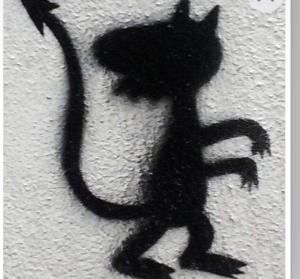
Street-art Luci – Clermont-Ferrand.jpg
Street art of Luci, character of the TV show Disenchantment, at Clermont-Ferrand, Auvergne, France. Wikimedia Commons
Disenchantment and the representation of morality
I never thought that an adult animation show could make me seriously ponder religion, God and morality. I am happy to relay, however, that Matt Groening, the creator of the prolific long-running show The Simpsons and the more science fiction animated series Futurama, has done just that. In his new 2018 series, Disenchantment, he creates a world of a mix of steampunk and medieval kingdom in a crazy and innovative way.
The Disenchantment logo, Wikimedia Commons
The first idea that was bewildering yet exciting was the character of Luci. Luci is a demon. Well, a personal demon, to be exact. He was assigned in a place called Maru to be Bean’s(the main character who is to be queen) personal demon, and he also comes from hell. I’m sure at this point you are wondering, how does this seemingly dark and brooding character have anything to do with God?
A lot, actually.
Popular Representations of demons in mainstream media
I would go out on a limb here as I’m sure most of the readers here on Patheos might be perplexed as to why I am making a case of positive morality for a demon character in an animated adult show. And yes, in the majority of media, demons have been represented as evil and damaging in media. Take a look at the brilliant film, The Exorcist (1973), and its impact on how the media and Hollywood portrays hellish demons usurping innocent lives through possession. We all have grown up with the same notion that demons are extensions of the Devil and not to be touched or understood.
However, in Disenchantment, the role of a demon being “assigned” to a human takes on a emotionally visceral and climatic journey of identity, morality and self-sacrifice. Luci turns into a surprisingly sharp example of what it means to love without conditions, to sacrifice yourself without personal gain and to employ the deep-rooted empathy of forgiveness and trust when it comes down to the toughest decisions. According to Heroes Wiki, this is the derivation of Luci’s name:
“The name Luci is evocative of Lucifer, meaning “light-bearer” which is one of the name’s associated with the Devil. Whilst an apparent contraction of Lucifer, the name Luci could derive from Lucius, which itself comes from the Latin lux meaning “light”. His name is ambiguous and paradoxical much like Satan’s: it is perhaps a nod to his shadow-like visage, or his role in guiding Bean to her destiny.”
Anti-hero with a strong moral fiber
The story lands Luci in his journey with his friends Bean and Elfo in the middle of moral predicaments that truly help one appreciate the changes and get down to the nitty-gritty of true reformation and selflessness. He becomes an anti-hero with sinner’s traits: greed, anger, lust, murderous and of chaotic and salacious intent. This is truly an innovative idea as we can see a character of almost no moral standard and deplorable intent turn into what, in my opinion, feels like one of the most noble and truly honorable arcs in TV adult animation history.
We see the progression of these sorts of chaotic mishaps Luci perpetuates with Bean, taking the easy way out of hard situations and taking in vices of alcohol, sex and drugs to catapult the integral plot into motion. However, Luci has an intense loyalty toward Elfo and Bean. Whenever Bean is upset or hurt, he comforts her and sticks up for her as well. When a friend is severely or mortality in danger, he often risks his own life and his title of being a higher ranking demon to save his friends, on more than one occasion. He loses his rank, immortality and parking space, cheekily enough…all of the perks and benefits of being a demon just so his friends are safe from harm, and alive and well.
Luci interacts with God himself, a perfect luminous figure with his face obscured, only realized by a ever-glowing burst of ethereal light and booming voice. In the end, it was Luci who was showing his friends Bean and Elfo to their destiny, but Luci also was led, sometimes in mixed up and strange ways, to his perfect destiny of total forgiveness and reformation in the eyes of God.
I feel that in terms of spirituality and consciousness of moral values and judgment, Disenchantment showcases a strong case of a typecasted, “evil” character turning good for the right reasons without personal gain, all for the good of others and the saving of their mortal soul through God. I hope you check out this series and enjoy it as I did, it was truly a marvel of innovation in terms of characters that have rich inner lives and complicated patterns of morality and choices.
Progressive Christian
General Christian

About Melissa Ingoldsby
Melissa Ingoldsby is a 32 year old author for Resurgence Novels of her debut horror drama I am Bexley. She lives in the STL region and is avid reader of mystery, romance and horror, a cinema fan and part time writer for Vocal and has many self published books on Amazon. You can read more about the author here.
Previous Post

October 5, 2023
The Scientific Link of Spirituality and Mental Health
Next Post
October 18, 2023 The Banksy Copycat: a historical fiction
Recent Comments
Browse Our Archives
Select a Category 2024 Paris Olympics Angels and demons Anti-heroes in media Artistic spiritualty Bojack Horseman Book of Job (Bibical scripture) Catholic Christian books Christian Films Christian Gaming for Children Christian imagery in art Christian Online Gaming Christian paintings Christianity Christmas movies David Lynch Faith and Mental Health Faith in film family Family Holiday films Fellini Roma French culture French Impressionist art French landscape Gender roles in film gender studies Good Omens Gospel messages in music Gospel music Grief Grief in media Hanukkah healing Healing in music Historical fictional horror film Horror movie soundtracks Impressionist art Jazz Lars Von Trier Life of Pi Live art installation Love Mental Health awareness mental illness modern Christian book adaptations into film Morality Mortality movie Nativity scene Nina Simone Notre-Dame Cathderal of Paris Nymphomaniac Olympics Personal faith Poetry Pop culture religious art religious art in Catholicism Religious entertainment Religious explorations Religious gender roles religious imagery in film Religious music Renaissance art sacrifice Seasonal Holidays self-image in media social commentary South Park Spiritual art Spiritual Poetry Spirituality spirituality in books Spirituality in film Surrealist film trauma Uncategorized Verses in self-image
Select a Month May 2025 February 2025 October 2024 August 2024 June 2024 May 2024 March 2024 February 2024 December 2023 November 2023 October 2023 September 2023 August 2023 July 2023 June 2023 May 2023
Follow Us!
TAKE THE
Religious Wisdom Quiz
Which harvest festival is also called the Feast of Booths?
Select your answer to see how you score.
Sukkot Purim Passover Hanukkah
Related posts from An Exhibition of Art History
Entertainment
Your journey as a dying star; spirituality in...
Entertainment
How horror film soundtracks highlight the fragility of...

Entertainment
What is a hero? What it means to...

Entertainment
The Scientific Link of Spirituality and Mental Health
TRENDING AT PATHEOS Religious Art

"Les Diabolique" and Transgression
Alongside something like Arrival, Vertigo, or Charade, Les Diaboliques is a...

"The Plague Dogs" and Mortality
So, flashback to the late 70s, early 80s. Walt Disney Studios is...

With the recent and highly successful release of Christopher Nolan’s epic film,...

"L'avventura" and Human Weakness
Today's piece is going to be a little different for a few...

I first want to apologize for not posting or writing anything. I'm...

I've engaged in the multi-year project of reading through the Church Fathers,...
view all Religious Art blogs
What Are Your Thoughts?leave a comment
Ad-Free & Subscriber Log-In Subscription Support
- About Us
- 2026 Calendar
- Videos
- Podcasts
- Library of World Religions
- Faith In Media Tracker
- Advertise With Us
- Write for Us
- Privacy Policy
- Terms of Service
- Do Not Sell My Data
- Contact Us
- Radiant Digital
- Manage Newsletter Subscriptions
- Unsubscribe From Notifications
- Sitemap
Copyright 2008-2026, Patheos. All rights reserved.
Subscription Support Ad-Free & Subscriber Log-In
Follow Patheos