
BuddhistCatholicContemplativeEvangelicalGeneral ChristianHinduJewishLatter-day SaintMuslimNew VisionsProgressive Christian
Beliefs
- Buddhist
- Catholic
- Contemplative
- Evangelical
- General Christian
- Hindu
- Jewish
- Latter-day Saint
- More Voices
- Muslim
- New Visions
- Pagan
- Progressive Christian
Topics
- Religion News
- Food and Religion
- Sports and Religion
- Religious Art
- Religious Music and Entertainment
- Religious Events
- History and Religion
- Style and Religion
- Politics and Religion
- Women in Religion
- Recreation Outdoors and Religion
- Business Finance and Religion
- Careers Workplace and Religion
- Education and Religion
- Family Parenting and Religion
- Health Fitness and Religion
- Home and Religion
- Relationships and Religion
- Technology and Religion
- Travel and Religion
Columnists
- Buddhist Columnists
- Business Finance and Religion Columnists
- Careers Workplace and Religion Columnists
- Catholic Columnists
- Contemplative Columnists
- Education and Religion Columnists
- Evangelists Columnists
- Family Parenting and Religion Columnists
- General Christian Columnists
- Health Fitness and Religion Columnists
- Hindu Columnists
- History and Religion Columnists
- Home and Religion Columnists
- Jewish Columnists
- More Voices Columnists
- Latter Day Columnists
- Muslim Columnists
- New Visions Columnists
- Nonreligious Columnists
- Pagan Columnists
- Politics and Religion Columnists
- Progressive Columnists
- Recreation Outdoors and Religion Columnists
- Relationships and Religion Columnists
- Religion News Columnists
- Religious Art Columnists
- Religious Events Columnists
- Religious Music and Entertainment Columnists
- Sports and Religion Columnists
- Style and Religion Columnists
- Technology and Religion Columnists
- Travel and Religion Columnists
- Women in Religion Columnists
Resource Library
- 2026 Calendar
- Library of World Religions
- The 100 Most Holy Places on Earth
- Patheos Answers
- Podcasts
- Videos
- Faith Leaders Database
- Anglican Episcopalian
- Bahai
- Baptist
- Buddhism
- Christianity
- Confucianism
- Eastern Orthodoxy
- Hinduism
- Holiness and Pentecostal
- ISKCON
- Islam
- Judaism
- Lutheran
- Methodist
- The Church of Jesus Christ of Latter-day Saints
- New Age
- Paganism
- Presbytarian and Reformed
- Protestantism
- Religion Behind the Scenes
- Roman Catholic
- Scientology
- Shia Islam
- Sikhism
- Sufism
- Sunni Islam
- Taoism
- Zen
- See all religions
Research Tools
 Ad-Free & Subscriber Log-In Subscription Support
Ad-Free & Subscriber Log-In Subscription Support
Follow Patheos 

- Trending:
- Forgiveness
- |
- Marriage
- |
- Consciousness
- |
- Death Penalty
- |
- Election
- |
- Halloween
 Andy Gill
- Home
- Progressive Christian
- “How do we call people in even as we call them out?”
“How do we call people in even as we call them out?”
Last updated on: May 6, 2016 at 6:12 pm by Andy Gill
“How do we call people in even as we call them out?” 2016-05-06T18:12:57-05:00 Andy Gill
Patheos Explore the world's faith through different perspectives on religion and spirituality! Patheos has the views of the prevalent religions and spiritualities of the world.
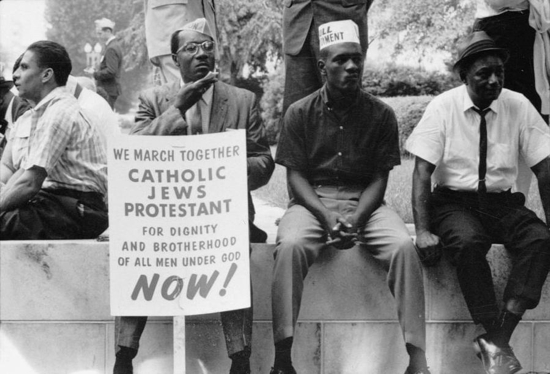
I recently lost yet another a white friend over “the issue of race.” It was after repeatedly confronting him in regards to his consistent use of the “n-word.” He wasn’t the first close friend I’ve lost, but I’m determined for him to be one of the last, as after these repeated instances, I’m relearning who I should be surrounding myself with.
But this situation, it makes me wonder if within our social media day and age, where each and everyone of us has a differing voice and inevitably differing opinion (on issues such as race relations, gun control, foreign policy, and/or Christmas trees [or the lack thereof] on their coffee cups) if the vast majority of us are not facing the loss or schism found within so many of our close relationships.
“Michael Brown’s death didn’t cause a divide between you and the people in your social networks. It simply revealed one. Use the information you’re getting to decide which relationships you value.” – JENÉE DESMOND-HARRIS
Our culture and online environment has become increasingly erratic and our lives, at least in the states, that much more medicated and unstable. In light of all of this the question I’ve been asking myself as of recently is one posed by Pramila Jayapal, in a recent article posted not too long ago, “How do we call people in even as we call them out?”
My immediate reaction to this question is to wonder out loud whether or not this is even realistically rational to ask.
I ask this because, I’ve been accused by virtually every privileged person in my life of “calling people out incorrectly…” Usually they don’t explain, but the few that do go on to say that it’s my tone, the way in which I word things, or the timing in which I bring these topics up (as if there is any correct tone, wording, or correct time for me to interrupt their comfortability).
To be fair, I think many times, they’re right to an extent.
But, I’ve come to realize that, the people that were in my life, were not able to be called out, because they were unwilling to listen to me. It’s not all on them, neither is it all on me, but I’ve found that, as an adult, it was and is my responsibility to curate my own healthy community. In other words, they needed to go, and the conversation was not worth having (for either of us).
For instance, when I confronted my friend, admittedly, my reaction was visceral; I was triggered and enraged by his outright denial and overall ignorant insensitivity. I was hurt, as I had deemed him as an ally, and even more so, I had trusted him as a friend… that was safe. But, the hard truth was that I was naïve, having ignored obvious red flags (i.e. his consistent use of the n-word when drinking, and that he was always drinking). And that it was completely irrational for me to believe that we’d have a constructive conversation about his consistent use of this divisive term.
Again, it’s learning from this, and realizing that in certain seasons of life, we shouldn’t be friends with certain types of people. After all, “is it not better to light a candle than it is to curse the darkness [1]?”
To go back to the question Pramila poses, I believe it to be essential, as I believe that unity is a necessity within the pursuit of an all-around just society. But, I think what might be a better, or rather, a more preliminary question is the inverse of what Pramila is asking, that being, “How do we identify the right and the safest people to call in, that will then be willing and abled, to be called out?”
It’s tough, for many of us, to find these when we haven’t ever experienced them. It’s even tougher to break a cycle of surrounding oneself with toxic people. Not that one is attracted to abuse, but rather their drawn to what’s always been familiar.
I’m admittedly still figuring these out and always going to be tweaking these as I go on. Either way, I’ve noticed a few things in which have helped me identify and find healthier relationships and an overall better life…
- The first is simply finding a safe space. We, I believe, to a large extent, have the ability to create the environment in which we experience… Acknowledge and identify the safe, stable, mature people around you, while ridding your life of those that aren’t. Many times, this means leaving, the space your currently in, this can be the hardest, yet most necessary, thing to do in your entire life.
- The hardest one for me is to look in the mirror, and ask whether or not I am safe for them (the person I disagree with)? It’s not just about you or I, but it also comes down to our own maturity, humility, and what’s best for any given community. Are we humble and mature enough to take on a differing perspective in which we might adamantly disagree with? Are we in control enough to be able to take on a differing perspective and use our minds to strategize in order to create a safe space for the both of you to agree…?
- The cheesiest, and most cliche is to stay positive. Not the kind in which the book “The Secret” is talking about. But the kind of positivity in which allows you the energy to keep going, while enabling you to continue rebuilding. It’s easy to get caught in the cycle of pure negativity.
- And the last is to merely ask these questions: 1) Will the conversation be productive? 2) Is it worth it? 3) What is your motivation? And 4) How can you make this a positive interaction for the both of you…?
So, how do we call people in even as we call them out? For most of us, as “progressive Christians” dealing with not-so-progressive environments (especially during the holidays), the simple and hard cut answer is, “Don’t,” because you they won’t hear you, you won’t hear them, and it won’t be productive – it will most likely only show it self as hurtful. But, the good news is that our world is bigger than our former evangelical bubble, that there are non-authoritarian, inclusively accepting, people out there. And, to be fair if you’re on the opposite end of the spectrum there are also your kind of demographic out there too!
I think that once many of us have found this sense of stability and safety in an environment we trust, our lives are then much more abled to constructively and effectively confront the injustice within our world. Because, lets be honest, not all of us have this privilege of constructing or reconstructing a safe community. I think that once we do this, it’s then our job to spread this, and invite others into this…
[If you enjoyed this article check out my recent interview with Deborah Jian Lee on “Rescuing Jesus: How People of Color, Women and Queer Christians are Reclaiming Evangelicalism” – and you can subscribe to the blog here]
[1]Eleanor Roosevelt quote.
"How do we call people in even as we call them out?"
Previous Post

May 4, 2016
Yellowface: Are Asians Being #WhiteWashedOut (A lesson on perspective)?
Next Post

May 10, 2016 The Implications Of Minimum Wage Laws On Youth Pastors And Youth Workers
Browse Our Archives
Select a Category Book Reviews Books Buzzfeed Christian Church Church Culture Dating Dechurched eXvangelical Guest Post Humor Inspirational Justice LGBTQ Life Marriage Media Millennials Mini Post Monday Money Podcast Politics Race Reason Relationships Science Sex Socioeconomic Theology Theology Uncategorized Video Wednesday Youth Ministry
Select a Month June 2020 March 2020 April 2019 March 2019 February 2019 January 2019 December 2018 November 2018 October 2018 September 2018 August 2018 July 2018 June 2018 May 2018 April 2018 March 2018 February 2018 January 2018 December 2017 November 2017 October 2017 September 2017 August 2017 July 2017 June 2017 May 2017 April 2017 March 2017 February 2017 December 2016 November 2016 October 2016 September 2016 August 2016 July 2016 June 2016 May 2016 April 2016 March 2016 February 2016 January 2016 December 2015 August 2015 July 2015 June 2015 May 2015 April 2015 March 2015 February 2015 January 2015 December 2014 November 2014 October 2014 September 2014 August 2014 July 2014 June 2014 May 2014 April 2014 February 2014 January 2014 December 2013 November 2013 October 2013 September 2013 August 2013 July 2013 June 2013 May 2013 January 2013 December 2012 August 2012 July 2012 June 2012 May 2012 April 2012 March 2012 February 2012 January 2012 December 2011 November 2011 October 2011 September 2011 August 2011 July 2011 June 2011 May 2011
Follow Us!
TAKE THE
Religious Wisdom Quiz
What mountain was the site of Elijah's showdown with Baal's prophets?
Select your answer to see how you score.
Mount Hermon Mount Carmel Mount Tabor Mount Sinai
Support this
Column


Related posts from Andy Gill
Trump Pushing for $1.2 Trillion to Give Cash...
Is White Supremacy Hiding Behind the Guise of...

Things More Likely to Kill You Than an...

TRENDING AT PATHEOS Progressive Christian

What Being a Modern-Day Apostle Means to Me
In my last column, I discussed the ins and outs of modern-day...

Did Ancient China Once Worship the God of...
Across human history, a common thread weaves through the origins of the...

Love Your Neighbor – Including Earth-Kin: Lev. 19,...
God’s command to love your neighbor means acting in an ethical and...

Lead a Church Study of “Jesus and Lao...
Guest writer Jack Thomas (The Irreverent Reverend) reflects on leading his church...

Pastoral Wisdom for Responding to Sermon Pushback
Getting sermon pushback on your social justice sermon? Learn practical, Proverbs-based strategies...

Principles for Understanding the Apostolic Ministry Today
Whenever people discover that my formal ministry title is "apostle," as in...
view all Progressive Christian blogs
Ad-Free & Subscriber Log-In Subscription Support
- About Us
- 2026 Calendar
- Videos
- Podcasts
- Library of World Religions
- Faith In Media Tracker
- Advertise With Us
- Write for Us
- Privacy Policy
- Terms of Service
- Do Not Sell My Data
- Contact Us
- Radiant Digital
- Manage Newsletter Subscriptions
- Unsubscribe From Notifications
- Sitemap
Copyright 2008-2026, Patheos. All rights reserved.
Subscription Support Ad-Free & Subscriber Log-In
Follow Patheos