
BuddhistCatholicContemplativeEvangelicalGeneral ChristianHinduJewishLatter-day SaintMuslimNew VisionsProgressive Christian
Beliefs
- Buddhist
- Catholic
- Contemplative
- Evangelical
- General Christian
- Hindu
- Jewish
- Latter-day Saint
- More Voices
- Muslim
- New Visions
- Pagan
- Progressive Christian
Topics
- Religion News
- Food and Religion
- Sports and Religion
- Religious Art
- Religious Music and Entertainment
- Religious Events
- History and Religion
- Style and Religion
- Politics and Religion
- Women in Religion
- Recreation Outdoors and Religion
- Business Finance and Religion
- Careers Workplace and Religion
- Education and Religion
- Family Parenting and Religion
- Health Fitness and Religion
- Home and Religion
- Relationships and Religion
- Technology and Religion
- Travel and Religion
Columnists
- Buddhist Columnists
- Business Finance and Religion Columnists
- Careers Workplace and Religion Columnists
- Catholic Columnists
- Contemplative Columnists
- Education and Religion Columnists
- Evangelists Columnists
- Family Parenting and Religion Columnists
- General Christian Columnists
- Health Fitness and Religion Columnists
- Hindu Columnists
- History and Religion Columnists
- Home and Religion Columnists
- Jewish Columnists
- More Voices Columnists
- Latter Day Columnists
- Muslim Columnists
- New Visions Columnists
- Nonreligious Columnists
- Pagan Columnists
- Politics and Religion Columnists
- Progressive Columnists
- Recreation Outdoors and Religion Columnists
- Relationships and Religion Columnists
- Religion News Columnists
- Religious Art Columnists
- Religious Events Columnists
- Religious Music and Entertainment Columnists
- Sports and Religion Columnists
- Style and Religion Columnists
- Technology and Religion Columnists
- Travel and Religion Columnists
- Women in Religion Columnists
Resource Library
- 2026 Calendar
- Library of World Religions
- The 100 Most Holy Places on Earth
- Patheos Answers
- Podcasts
- Videos
- Faith Leaders Database
- Anglican Episcopalian
- Bahai
- Baptist
- Buddhism
- Christianity
- Confucianism
- Eastern Orthodoxy
- Hinduism
- Holiness and Pentecostal
- ISKCON
- Islam
- Judaism
- Lutheran
- Methodist
- The Church of Jesus Christ of Latter-day Saints
- New Age
- Paganism
- Presbytarian and Reformed
- Protestantism
- Religion Behind the Scenes
- Roman Catholic
- Scientology
- Shia Islam
- Sikhism
- Sufism
- Sunni Islam
- Taoism
- Zen
- See all religions
Research Tools
 Ad-Free & Subscriber Log-In Subscription Support
Ad-Free & Subscriber Log-In Subscription Support
Follow Patheos 

- Trending:
- Forgiveness
- |
- Marriage
- |
- Consciousness
- |
- Death Penalty
- |
- Election
- |
- Halloween
 Andy Gill
- Home
- Progressive Christian
- Equitable Unity in the American Church: How Can We Better Empower People of Color?
Equitable Unity in the American Church: How Can We Better Empower People of Color?
Last updated on: December 18, 2017 at 7:39 am by Andy Gill
Equitable Unity in the American Church: How Can We Better Empower People of Color? 2017-12-18T07:39:29-05:00 Andy Gill
Patheos Explore the world's faith through different perspectives on religion and spirituality! Patheos has the views of the prevalent religions and spiritualities of the world.
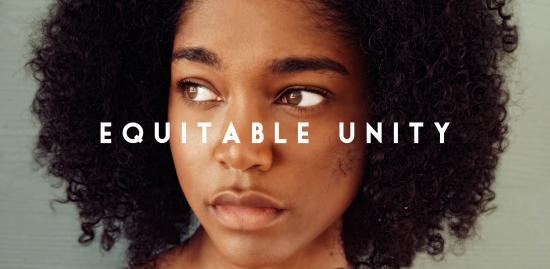
Welcoming a stranger into your home and allowing them to shift things around in order that they’ll also feel as if it’s their home… this is never an easy thing to do. While knowing, remembering and understanding Christ never called us to do only what’s easy or most comfortable.
If a Church is Gospel-centered and it’s not centered the oppressed person, it’s safe to say your church is not centered on the gospel.
Martin Luther King Jr. is famously known for saying “…the most pervasive mistake I have made was in believing that because our cause was just, we could be sure that the white ministers of the South, once their Christian consciences were challenged, would rise to our aid. I felt that white ministers would take our cause to the white power structure. I ended up, of course, chastened and disillusioned. As our movement unfolded, and direct appeals were made to white ministers, most folded their hands—and some even took stands against us.”
I’m unsure much has changed since he spoke these direct, honest, and very necessary words in 1965. This was just 3 years before he was assassinated in 1968…
No Longer Chastened and Disillusioned…
These two words haunt me as I’m returning back to the Church; mainly because these two words were why I left the Church in the first place: chastened and disillusioned…
While, over the course of too many years, I’ve learned to differentiate between the leaders that want equitable unity (i.e. an empowerment of the oppressed, disenfranchised, and the poor and the powerless) and the leaders that need to be convinced that the pursuit of equitable unity is not just good, but, it’s an inseparable part of Christ’s call for us as the Church.
The former will see you as a problem needed to be fixed and [re]indoctrinated; whereas, the latter will see you as one bringing a solution to a problem that needs to be fixed.
“But immediately Jesus spoke to them, saying, ‘Take heart; it is I. Do not be afraid.'”
Personally, I can say from recent experience, the Church I’ve been with is wholeheartedly pursuing this “empowerment of the Other [1].”
More Like “Hopeful and, I mean, It’s Happening…”
But, as of recently, I’ve been more than encouraged to see this rapid progression towards racial inclusion and the diversification of our country; our church (at large), however slow to catch up, is seemingly just now getting that, in order to survive, racial inclusion (on all levels) must happen.
Looking through the evangelical media I’m seeing more and more conservative/moderate white-evangelicals empowering fellow “evangelicals of color.”
Ed Stetzer has utilized his blog as a means of primarily giving voice to POC by allowing them to seemingly take over the entire space; John Piper [yes, has much inner work to do] has financially funded men such as Lecrae [yes, again, I know they’ve fallen out] and publicly backed the #BlackLivesMatter Movement; Carl Lentz, has vocalized endlessly for the oppressed; Intervarsity has intentionally made their stage predominantly POC…
NPR recently cited that, “Millennials make up 27 percent of the total minority population, 38 percent of voting age minorities, and a whopping 43 percent of primary working age minorities.” There have been no generations that have been more openly inclusive before ours.
The good news, in this regard, it’s endless!
The Million Dollar Question: Are We Willing to Endure the Risk of Diversifying?
Oddly and ironically enough, when it comes to racial reconciliation the Evangelical mega-Church is seemingly making more headway in this realm than us as progressives are. Diversification, in my opinion, this goes both ways; while, at the same time, Churches or denominations in power (i.e. churches/denominations that are financially set for the next century)… the question remains:
Are we willing to give voice to those we don’t know?
Are we willing to endure the discomfort of being around someone that is wholly different? To befriend someone without dehumanizing them…? To not just simply have them be used as a face or a present POC’s body, but, one who is welcomed and therefore allowed the safety to freely express their differing opinions, complaints, praises… and, to then, be taken seriously; to be heard; to be a key part of our decision making…
As Raymond Chang expresses so well, “One of the primary reasons they [POC] left was because they felt as though they weren’t considered in the shaping of the church. Instead, they felt like they were put in a siloed enclave that felt more like a guesthouse instead of an integral part of the main home.”
If your church isn’t reflective of your surrounding area then you might have an issue having to do with race, economic-classism, etc.
This [that is, diversification], I feel is the most simple, basic, and… yet one of the absolute hardest thing the American Church has faced as of yet… although, in my opinion, it’s not whether or not we’re willing to endure the risk of diversification, rather, it’s the invert of this question:
Are we willing to endure the risk of not diversifying…?
It’s About Belonging…
It’s the fear of losing this sense of belonging at the cost of welcoming others who haven’t previously been made to feel as if they belong; similarly, for myself, it’s the fear of never experiencing what it feels like to fully belong without condition…
Welcoming a stranger into your home and allowing them to shift things around in order that they’ll also feel as if it’s their home… this is never an easy thing to do. While knowing, remembering and understanding Christ never called us to do only what’s easy or most comfortable.
It’s remembering that the church, although is, in fact, a home… it is not the sole belonging to one individual, homogenous congregation, or denomination. It’s Christ’s Church built for all… We’re merely temporary keepers called to keep Christ’s mission actively intact.
In my opinion, if a pastor, lay-leader, conference organizers are unwilling to make the necessary adjustments to include oppressed persons and therefore diversify their congregation(s) they’re unfit [however temporarily] to be a leader.
I think Mars Hill is a prime example of what needs to happen when ego’s dilute the Gospel: it needs to be either redirected, reformed, immediately re-structured or just altogether shut down.
“This mass exodus of congregants seen within American Churches is more than a wake up call for non-marginalized evangelicals, it’s a turning point for marginalized communities of all kinds, creeds, genders, shapes, sizes, and colors; it’s an opportunity to unify as one despite the aforementioned disunity in our ‘churches.'”
– Raymond Chang
Grace on Grace on Grace…
Not the sociopathic form of grace that simply absolves guilt for unquestionable wrongdoing(s). The type of grace I’m referring to is the empowering yet, costly form of grace that understands we’re faulted/imperfect humans yet give us the energy to simultaneously acknowledge our mistakes while not being paralyzed with shame or guilt.
It starts with a willingness and it’s carried through by grace; a grace that will fill in the rest by creating a humble heart that actively listens and forgives not just others but oneself when inevitable missteps happen; it’s the kind of grace that negates shame from mishaps and inspires one to stay the course…
(Check back on Monday for the second part of this post)
[1] If you’re in Philly, ever, hit me up as I know a handful of Churches effectively making these changes!
[if you enjoyed this post head over and check out my Facebook Page to follow along with other and future “-ish”]
How Can We Better Empower People of Color?
Previous Post
December 1, 2017
Hillsong and The End of Evangelicalism
Next Post
December 13, 2017 Revolution of Niceness: Differentiating Between Good and Nice
Browse Our Archives
Select a Category Book Reviews Books Buzzfeed Christian Church Church Culture Dating Dechurched eXvangelical Guest Post Humor Inspirational Justice LGBTQ Life Marriage Media Millennials Mini Post Monday Money Podcast Politics Race Reason Relationships Science Sex Socioeconomic Theology Theology Uncategorized Video Wednesday Youth Ministry
Select a Month June 2020 March 2020 April 2019 March 2019 February 2019 January 2019 December 2018 November 2018 October 2018 September 2018 August 2018 July 2018 June 2018 May 2018 April 2018 March 2018 February 2018 January 2018 December 2017 November 2017 October 2017 September 2017 August 2017 July 2017 June 2017 May 2017 April 2017 March 2017 February 2017 December 2016 November 2016 October 2016 September 2016 August 2016 July 2016 June 2016 May 2016 April 2016 March 2016 February 2016 January 2016 December 2015 August 2015 July 2015 June 2015 May 2015 April 2015 March 2015 February 2015 January 2015 December 2014 November 2014 October 2014 September 2014 August 2014 July 2014 June 2014 May 2014 April 2014 February 2014 January 2014 December 2013 November 2013 October 2013 September 2013 August 2013 July 2013 June 2013 May 2013 January 2013 December 2012 August 2012 July 2012 June 2012 May 2012 April 2012 March 2012 February 2012 January 2012 December 2011 November 2011 October 2011 September 2011 August 2011 July 2011 June 2011 May 2011
Follow Us!
TAKE THE
Religious Wisdom Quiz
This shortest book in the Old Testament prophesies judgment on Edom for violence against Judah. How many verses does it contain?
Select your answer to see how you score.
21 verses 15 verses 12 verses 30 verses
Support this
Column


Related posts from Andy Gill

If You Feel Hopeless Then, Watch This Movie...
Trump Pushing for $1.2 Trillion to Give Cash...

A Short Cut to Reconciling One’s Cognitive Dissonance...

The Evangelical Concept of Hell Was Actually Invented...
TRENDING AT PATHEOS Progressive Christian

What Being a Modern-Day Apostle Means to Me
In my last column, I discussed the ins and outs of modern-day...

Did Ancient China Once Worship the God of...
Across human history, a common thread weaves through the origins of the...

Love Your Neighbor – Including Earth-Kin: Lev. 19,...
God’s command to love your neighbor means acting in an ethical and...

Lead a Church Study of “Jesus and Lao...
Guest writer Jack Thomas (The Irreverent Reverend) reflects on leading his church...

Pastoral Wisdom for Responding to Sermon Pushback
Getting sermon pushback on your social justice sermon? Learn practical, Proverbs-based strategies...

Principles for Understanding the Apostolic Ministry Today
Whenever people discover that my formal ministry title is "apostle," as in...
view all Progressive Christian blogs
Ad-Free & Subscriber Log-In Subscription Support
- About Us
- 2026 Calendar
- Videos
- Podcasts
- Library of World Religions
- Faith In Media Tracker
- Advertise With Us
- Write for Us
- Privacy Policy
- Terms of Service
- Do Not Sell My Data
- Contact Us
- Radiant Digital
- Manage Newsletter Subscriptions
- Unsubscribe From Notifications
- Sitemap
Copyright 2008-2026, Patheos. All rights reserved.
Subscription Support Ad-Free & Subscriber Log-In
Follow Patheos