
BuddhistCatholicContemplativeEvangelicalGeneral ChristianHinduJewishLatter-day SaintMuslimNew VisionsProgressive Christian
Beliefs
- Buddhist
- Catholic
- Contemplative
- Evangelical
- General Christian
- Hindu
- Jewish
- Latter-day Saint
- More Voices
- Muslim
- New Visions
- Pagan
- Progressive Christian
Topics
- Religion News
- Food and Religion
- Sports and Religion
- Religious Art
- Religious Music and Entertainment
- Religious Events
- History and Religion
- Style and Religion
- Politics and Religion
- Women in Religion
- Recreation Outdoors and Religion
- Business Finance and Religion
- Careers Workplace and Religion
- Education and Religion
- Family Parenting and Religion
- Health Fitness and Religion
- Home and Religion
- Relationships and Religion
- Technology and Religion
- Travel and Religion
Columnists
- Buddhist Columnists
- Business Finance and Religion Columnists
- Careers Workplace and Religion Columnists
- Catholic Columnists
- Contemplative Columnists
- Education and Religion Columnists
- Evangelists Columnists
- Family Parenting and Religion Columnists
- General Christian Columnists
- Health Fitness and Religion Columnists
- Hindu Columnists
- History and Religion Columnists
- Home and Religion Columnists
- Jewish Columnists
- More Voices Columnists
- Latter Day Columnists
- Muslim Columnists
- New Visions Columnists
- Nonreligious Columnists
- Pagan Columnists
- Politics and Religion Columnists
- Progressive Columnists
- Recreation Outdoors and Religion Columnists
- Relationships and Religion Columnists
- Religion News Columnists
- Religious Art Columnists
- Religious Events Columnists
- Religious Music and Entertainment Columnists
- Sports and Religion Columnists
- Style and Religion Columnists
- Technology and Religion Columnists
- Travel and Religion Columnists
- Women in Religion Columnists
Resource Library
- 2026 Calendar
- Library of World Religions
- The 100 Most Holy Places on Earth
- Patheos Answers
- Podcasts
- Videos
- Faith Leaders Database
- Anglican Episcopalian
- Bahai
- Baptist
- Buddhism
- Christianity
- Confucianism
- Eastern Orthodoxy
- Hinduism
- Holiness and Pentecostal
- ISKCON
- Islam
- Judaism
- Lutheran
- Methodist
- The Church of Jesus Christ of Latter-day Saints
- New Age
- Paganism
- Presbytarian and Reformed
- Protestantism
- Religion Behind the Scenes
- Roman Catholic
- Scientology
- Shia Islam
- Sikhism
- Sufism
- Sunni Islam
- Taoism
- Zen
- See all religions
Research Tools
 Ad-Free & Subscriber Log-In Subscription Support
Ad-Free & Subscriber Log-In Subscription Support
Follow Patheos 

- Trending:
- Forgiveness
- |
- Marriage
- |
- Consciousness
- |
- Death Penalty
- |
- Election
- |
- Halloween

- Home
- Evangelical
- Why does the Sermon on the Mount contain hard teachings?
Why does the Sermon on the Mount contain hard teachings?
Last updated on: April 14, 2026 at 8:00 am by Andrew Farley
Why does the Sermon on the Mount contain hard teachings? 2026-01-07T15:49:21-06:00 Andrew Farley
Patheos Explore the world's faith through different perspectives on religion and spirituality! Patheos has the views of the prevalent religions and spiritualities of the world.
Quick Answer: Why does the Sermon on the Mount contain such difficult teachings? The Sermon on the Mount (Matthew 5-7) is often presented as a beautiful passage to inspire spiritual growth in the believer. However, the reality is that in the Sermon on the Mount, Jesus tells His audience to cut off their hands, to pluck out their eyes, and to be perfect like God. In addition, He tells them that looking with lust equals adultery and that anger is the same as murder. Finally, Jesus tells His audience to get right with others before offering their animal sacrifices and that they’ll be answerable to the Sanhedrin – a Jewish council from two thousand years ago. Clearly, there’s a context of Judaism that must be factored into understanding the Sermon on the Mount. Jesus is purposely introducing a perfect and impossible standard (the true spirit of the Law) in order to expose the spiritual slavery and hypocrisy of His Jewish audience. With this in mind, the Sermon on the Mount is not a sweet passage for Christian growth, but instead it serves as “nails in the coffin” of anyone who thinks they can keep the true standard of the Jewish law.
Diving Deeper: While many look to the Sermon on the Mount as the gold standard for Christian living, Jesus makes it clear that His sermon is actually an expansion on the Law (Matthew 5:19).
In the sermon, Jesus tells His audience to cut off their hands and to pluck out their eyes in their fight against sin. In so doing, He is revealing their lack of commitment and the true standard of dedication required to defeat sin in their current state.
*If your right eye causes you to stumble, gouge it out and throw it away. It is better for you to lose one part of your body than for your whole body to be thrown into hell. And if your right hand causes you to stumble, cut it off and throw it away. It is better for you to lose one part of your body than for your whole body to go into hell. (*Matthew 5:29-30)
Notice that Jesus also speaks of Hell here, whereas believers are not in danger of Hell.
Furthermore, in the Sermon on the Mount, Jesus reveals that looking with lust equals adultery and that anger is equal to murder. He tells His audience that their righteousness must surpass that of the Pharisees and that they must be perfect like God (Matthew 5:48).
Interestingly, Jesus informs His audience that they must get right with others before offering their animal sacrifices on the altar. However, New Testament believers do not offer animal sacrifices on altars. The cross of Christ replaced all altars for us, and there are no altars today. Jesus also informs His hearers that if they do not comply with this level of obedience, they will be answerable to the Sanhedrin – a Jewish council from two thousand years ago. Once again, believers today have no relationship to the Sanhedrin and are not accountable to them in any way.
Clearly, there’s a context of Judaism that needs to be considered when interpreting the Sermon on the Mount. Jesus purposely introduces the perfect and impossible standard of the Law in order to expose the hypocrisy of His Jewish audience and their addiction to sin.
In conclusion, the Sermon on the Mount was never intended as an encouraging passage to inspire spiritual growth. Instead, it serves as “nails in the coffin” of anyone who believes they can obey the Law. It is only when we see the true and impossible standard of the Law that we realize our desperate need for God’s grace.
Let’s Make It a Conversation!
1. What have you been taught about the Sermon on the Mount?
2. Review Matthew 5. Where do you see Jesus referencing the Law and raising the bar?
3. Can you see why the standard presented in this sermon is actually impossible? Why or why not?
4. Review Matthew 5. Where do you see Jesus specifically addressing a Jewish audience?
5. Review Matthew 5. Where do you see Jesus threatening punishment in Hell?
6. React to this statement: Jesus’ audience had to see the true spirit of the Law in order to realize their need for God’s grace.
Previous Post

April 7, 2026
Are Christians still under the Ten Commandments?
Next Post
April 21, 2026 What does it mean to be “dead to the Law”?
Recent Comments
"I agree that the believer has a new heart which loves God and loves righteousness. ..."
Do Christians have a deceitfully wicked ..."
""Some of us have even heard that we are to love God more than our ..."
"“Paul was simply presenting his body to Christ because he wanted to do so.” That’s ..."
What are spiritual disciplines?
"I don't know if I've ever used the term, but your point is dangerous heresy, ..."
When did the New Covenant begin?
Browse Our Archives
Select a Category Uncategorized
Select a Month July 2026 June 2026 May 2026 April 2026 March 2026 February 2026 January 2026 December 2025 November 2025 October 2025 September 2025 March 2025 February 2025 January 2025 December 2024 November 2024 October 2024 September 2024 August 2024 July 2024 June 2024 May 2024 April 2024 December 2023 April 2023 March 2023 March 2021 February 2021 January 2021 December 2020 November 2020 October 2020 September 2020 August 2020 July 2020 June 2020 May 2020 April 2020 March 2020 February 2020 January 2020 December 2019 November 2019 October 2019 September 2019 August 2019 July 2019 June 2019 April 2019 February 2019 January 2019 November 2018 September 2018 August 2018 July 2018 June 2018 May 2018 April 2018 February 2018 January 2018 December 2017 November 2017 October 2017 December 2016 November 2016 June 2015 April 2015 March 2015 February 2015 January 2015 December 2014 November 2014 October 2014 August 2014 May 2014 December 2013 October 2013 June 2013 May 2013 April 2013 March 2013
Follow Us!
TAKE THE
Religious Wisdom Quiz
How did Jesus die?
Select your answer to see how you score.
Spearing Crucifixion Stoning Hanging
Related posts from Andrew Farley
What does it mean to be “dead to...
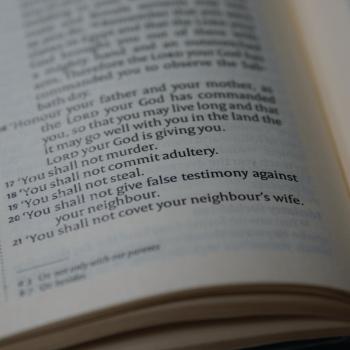
Are Christians still under the Ten Commandments?
Do Christians need to keep the Sabbath?
What is the greatest commandment?
TRENDING AT PATHEOS Evangelical

How the author of the world's best hymn...
I've been working with John Newton for a while now. This makes...

Long before this Lectio Divina, Psalm 130 - the song - started...

What About the Trees? Another Living Parable
After I finished writing the last article about falling leaves as a...

Why Classical Education Is a Conversation, Not a...
Come and Read: Joy in Classical Education When I was a little...

Falling Leaves: A Living Parable on Letting Go
I’ve spent the vast majority of my life in the southeast corner...

Cornell University has received a great deal of negative publicity and intense...
view all Evangelical blogs
What Are Your Thoughts?leave a comment
Ad-Free & Subscriber Log-In Subscription Support
- About Us
- 2026 Calendar
- Videos
- Podcasts
- Library of World Religions
- Faith In Media Tracker
- Advertise With Us
- Write for Us
- Privacy Policy
- Terms of Service
- Do Not Sell My Data
- Contact Us
- Radiant Digital
- Manage Newsletter Subscriptions
- Unsubscribe From Notifications
- Sitemap
Copyright 2008-2026, Patheos. All rights reserved.
Subscription Support Ad-Free & Subscriber Log-In
Follow Patheos