
BuddhistCatholicContemplativeEvangelicalGeneral ChristianHinduJewishLatter-day SaintMuslimNew VisionsProgressive Christian
Beliefs
- Buddhist
- Catholic
- Contemplative
- Evangelical
- General Christian
- Hindu
- Jewish
- Latter-day Saint
- More Voices
- Muslim
- New Visions
- Pagan
- Progressive Christian
Topics
- Religion News
- Food and Religion
- Sports and Religion
- Religious Art
- Religious Music and Entertainment
- Religious Events
- History and Religion
- Style and Religion
- Politics and Religion
- Women in Religion
- Recreation Outdoors and Religion
- Business Finance and Religion
- Careers Workplace and Religion
- Education and Religion
- Family Parenting and Religion
- Health Fitness and Religion
- Home and Religion
- Relationships and Religion
- Technology and Religion
- Travel and Religion
Columnists
- Buddhist Columnists
- Business Finance and Religion Columnists
- Careers Workplace and Religion Columnists
- Catholic Columnists
- Contemplative Columnists
- Education and Religion Columnists
- Evangelists Columnists
- Family Parenting and Religion Columnists
- General Christian Columnists
- Health Fitness and Religion Columnists
- Hindu Columnists
- History and Religion Columnists
- Home and Religion Columnists
- Jewish Columnists
- More Voices Columnists
- Latter Day Columnists
- Muslim Columnists
- New Visions Columnists
- Nonreligious Columnists
- Pagan Columnists
- Politics and Religion Columnists
- Progressive Columnists
- Recreation Outdoors and Religion Columnists
- Relationships and Religion Columnists
- Religion News Columnists
- Religious Art Columnists
- Religious Events Columnists
- Religious Music and Entertainment Columnists
- Sports and Religion Columnists
- Style and Religion Columnists
- Technology and Religion Columnists
- Travel and Religion Columnists
- Women in Religion Columnists
Resource Library
- 2026 Calendar
- Library of World Religions
- The 100 Most Holy Places on Earth
- Patheos Answers
- Podcasts
- Videos
- Faith Leaders Database
- Anglican Episcopalian
- Bahai
- Baptist
- Buddhism
- Christianity
- Confucianism
- Eastern Orthodoxy
- Hinduism
- Holiness and Pentecostal
- ISKCON
- Islam
- Judaism
- Lutheran
- Methodist
- The Church of Jesus Christ of Latter-day Saints
- New Age
- Paganism
- Presbytarian and Reformed
- Protestantism
- Religion Behind the Scenes
- Roman Catholic
- Scientology
- Shia Islam
- Sikhism
- Sufism
- Sunni Islam
- Taoism
- Zen
- See all religions
Research Tools
 Ad-Free & Subscriber Log-In Subscription Support
Ad-Free & Subscriber Log-In Subscription Support
Follow Patheos 

- Trending:
- Forgiveness
- |
- Marriage
- |
- Consciousness
- |
- Death Penalty
- |
- Election
- |
- Halloween

- Home
- Hindu
- History and Religion
- Varanasi: India’s Timeless Spiritual Heart
Varanasi: India’s Timeless Spiritual Heart
Last updated on: May 7, 2025 at 12:33 pm by Shweta Goyal
Varanasi: India’s Timeless Spiritual Heart 2025-05-07T12:33:07+00:00 Shweta Goyal
Patheos Explore the world's faith through different perspectives on religion and spirituality! Patheos has the views of the prevalent religions and spiritualities of the world.
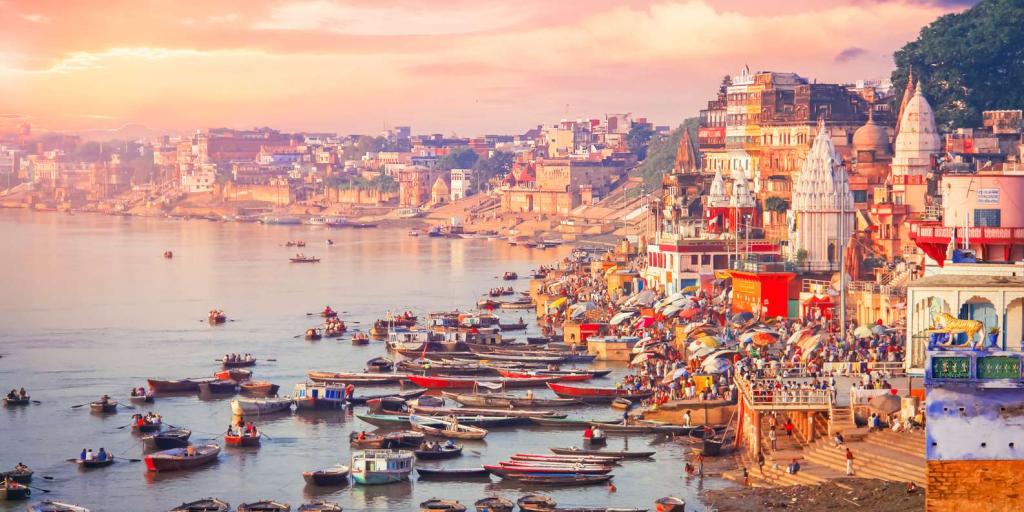
Varanasi: India’s Heart
India is called the holy land, whose sacredness is testified to by the cult of the rivers and mountains where pilgrims worship their gods. It has fascinated people from all over the world who seek wisdom, yoga, and the ultimate goal of salvation. The timeless traditions and sacred sites across this vast country offer a deep connection to ancient philosophies and practices. Among these sacred destinations, Varanasi stands out as a beacon of spiritual energy and enlightenment.
I have always been deeply connected to my spiritual roots, which has fuelled my fascination with our sacred scriptures and the immense wisdom they hold. I have long dreamt of visiting the many pilgrimage sites across India to immerse myself in our rich culture and traditions.
When the opportunity finally came, I didn’t know where to begin. Seeking guidance, I turned to my Acharya ji, who suggested starting my journey in Varanasi.
I asked, “Why Varanasi?” He replied, “Varanasi, the spiritual capital of India, and one of the holiest cities for Hindus, offers a deep dive into Hindu culture, rituals, and philosophy.”
As I stepped into this ancient city, I was immediately captivated by its timeless charm and profound energy.
The Mesmerizing First Glimpse
The moment I arrived; the sight of the sacred Ganges River took my breath away. The ghats, bustling with life and devotion, seemed to hum with a divine energy. Watching people perform their morning rituals at the riverbank—bathing in the holy waters, offering prayers, and chanting mantras—made me feel part of something eternal and sacred. The serenity of the Ganges flowing amidst this activity was both calming and awe-inspiring.
Sunrise Boat Ride
Rising early for a boat ride along the Ganges was one of the highlights of my visit. At dawn, the ghats come alive with activity. People arrive to perform morning prayers, practice yoga, and bathe in the sacred waters. Monks wash themselves before sunrise, while others collect holy water to take back to family members.
Despite its spiritual significance, the Ganges is also one of the world’s most polluted rivers. Sewage and industrial waste are common pollutants, but this does not deter the faith of those who see the river as divine.
The view of the rising sun casting its golden glow over the river was unforgettable. Hundreds of seagulls flew overhead, and boats bustled with domestic and international tourists. It was a magical experience that encapsulated the essence of Varanasi.
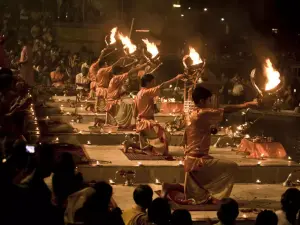
Ganga Arti: Dashashwamedh Ghat
Dashashwamedh Ghat and Ganga Aarti
At the Dashashwamedh Ghat, I witnessed the Ganga Aarti, an unforgettable ritual. The priests performed synchronized movements with glowing lamps, releasing the fragrance of incense into the air, while chants resonated deeply in the atmosphere. The combination of these elements created a captivating and profoundly spiritual experience. As I stood among the crowd, watching the flames illuminate the evening sky, I felt a transcendent connection to the divine, as if I had stepped into a timeless moment.
Experiencing the ceremony from a boat provided an enchanting perspective of the rituals. However, standing close to the stage revealed intricate details and heightened the sense of participation. Lighting a lotus flower candle and letting it drift on the Ganges added a deeply personal and symbolic touch, leaving me with a feeling of serenity and gratitude.
Exploring the Streets and Temples
The narrow alleyways of Varanasi are a treasure trove of sights and sounds. Tiny shops, street food vendors, and wandering cows add to the charm. Over 23,000 temples dot the city, including the famous Kashi Vishwanath Temple and the welcoming Tulsi Manas Temple. Each street corner presents photographic opportunities and a chance to immerse yourself in local life.
Kashi Vishwanath Temple: A Divine Encounter
The visit to the Kashi Vishwanath Temple was truly an unforgettable experience. As I walked through the crowded yet sacred alleys to reach the temple, a sense of anticipation built within me. The temple’s aura was powerful, and standing before the lingam, I felt an overwhelming sense of peace and gratitude. It was as if Lord Shiva himself was present, blessing all those who came to seek him.
The Kashi Vishwanath Temple, often referred to as the Golden Temple, is one of the most renowned temples in Varanasi. Dedicated to Lord Shiva, it was constructed in 1780 by Maharani Ahilyabai Holkar of Indore, the Maratha monarch. This temple holds immense significance in Hinduism as one of the twelve Jyotirlinga temples, where Shiva is believed to have manifested as a column of light. Situated on the western bank of the sacred Ganges River, the temple stands in Varanasi’s Vishwanath Gali and has been a revered site for centuries.
Known as Vishwanatha or Vishweshwara, meaning “Lord of the Universe,” Shiva has been worshiped at this temple as a central figure of devotion. Pilgrims believe that visiting the Kashi Vishwanath Temple and performing ablutions in the Ganges are essential steps on the path to moksha (liberation). Thousands of devotees visit the temple daily, and the numbers swell dramatically during Mahashivaratri, when a grand procession takes place from the Mahamrityunjaya Temple to the Kashi Vishwanath Temple.
Historically, the famous Mughal emperor Akbar permitted the construction of the temple. However, it was later destroyed by Aurangzeb, the sixth Mughal emperor. The temple’s architecture reflects a unique blend of Hindu and Islamic styles, symbolizing the layers of history it has endured. Despite these historical challenges, the temple remains a profound spiritual and cultural landmark, drawing countless visitors from around the world.
The Burning Ghats
Manikarnika Ghat and Harishchandra Ghat are the only two burning ghats in Varanasi, where cremations take place publicly throughout the day and night. Of the two, Manikarnika Ghat holds the highest sanctity, witnessing approximately 100 cremations daily. Bodies are carried on stretchers by family members, dipped into the sacred Ganges to cleanse sins, and then placed on large wood pyres to burn for about three hours. The flames at Manikarnika Ghat have been burning continuously for over 3,500 years and are regarded as sacred.
Initially, witnessing these rituals was overwhelming, but ultimately, it was a deeply peaceful experience. In Varanasi, death is not seen as a taboo but rather as a celebration of life’s journey and its culmination in liberation (moksha). Observing this intimate ritual was a profound privilege that offered unique insights into the Hindu perspective on life and death.
Lessons from the Ghats
Walking along the Ghats, especially Manikarnika Ghat, revealed a profound truth about the cycle of life and death. Watching the cremation ceremonies served as a stark reminder of the transient nature of life and the ultimate goal of liberation. The acceptance, peace, and reverence surrounding these rituals taught me to view life and death as integral parts of the same divine cycle, inspiring a deeper understanding of existence and the spiritual pursuit of moksha.
Sadhus of Varanasi
Varanasi is home to numerous sadhus, or holy men, who renounce worldly possessions and dedicate their lives to spirituality. They often wear orange robes and engage in meditation and yoga. Some cover themselves in ash, while others lead more extreme lifestyles, such as the Naga sadhus, who worship Shiva and cover themselves in ashes of the dead.
Interacting with these spiritual practitioners offered a unique glimpse into their ascetic lives and unwavering devotion.
Varanasi isn’t just a city; it’s a living, breathing tapestry of culture, spirituality, and history. From the ancient ghats to the bustling streets and profound rituals, every moment in Varanasi is an opportunity for reflection and connection. Whether you’re seeking spiritual insight or a deeper understanding of Indian culture, Varanasi offers experiences that will leave an indelible mark on your soul.
Previous Post
November 16, 2024
Forgiveness: The Triumph of Wisdom Over Ego
Next Post
January 20, 2025 The River of Immortality: A Journey to the Mahakumbh
Recent Comments
"Frequent examination of one's conscience has been a time-tested practice recommended and practiced by sages, ..."
We Have Confused Success With Decoration
"Under the weight of the Cross, Jesus fell down three times. And every time He ..."
The Inner Architecture of a Peaceful ..."
"Yoga is much more than mere physical stretching and flexing of one's muscles. It's a ..."
The Inner Architecture of a Peaceful ..."
"After Judeo-Christian religions, I have deep respect for the Vedic traditions in their cultivation of ..."
Conversations with the Devil: Through the ..."
Browse Our Archives
Select a Category Culture forgiveness Identity Inspirational Relationship Religion Religion News Science and Religion Society and Religion Sufism Travel and Religion Uncategorized
Select a Month October 2026 August 2026 July 2026 June 2026 May 2026 April 2026 March 2026 February 2026 January 2026 November 2025 September 2025 August 2025 July 2025 June 2025 May 2025 April 2025 March 2025 February 2025 January 2025 December 2024 November 2024 October 2024 September 2024 July 2024 June 2024 May 2024 April 2024
TAKE THE
Religious Wisdom Quiz
Why was it scandalous for the woman to anoint Jesus' feet with tears?
Select your answer to see how you score.
She was a known sinner She was foreign She was wealthy She was a child
Related posts from Ancient Roots, Modern Fruits

The One Thing You Have Never Seen: Yourself

What Ancient Sanskrit Wisdom Says About Real Success

If the War Was Destined, Why Did Krishna...
When Strength Collapses: Finding the Inner Krishna
TRENDING AT PATHEOS Hindu

How to Make a Decision When You Can't...
Main point: It’s much more valuable to stay close to God so...

Archdiocese Hosts Military Marriage Retreat in Germany
RASTATT, Germany — The transient military lifestyle, with its frequent deployments and...

Nearly every morning, I make the drive to Detroit with my high-school-age...

The Real AI Story Is Adoption Without Trust
Artificial intelligence has crossed a political threshold. It is no longer a...

A new article, written by Jeff Lindsay and Gale L. Pooley,...

Swimfan: Forgotten Aughts Pleasures
This is a recovery effort. In 2002, My Big Fat Greek Wedding...
view all Hindu blogs
What Are Your Thoughts?leave a comment
Ad-Free & Subscriber Log-In Subscription Support
- About Us
- 2026 Calendar
- Videos
- Podcasts
- Library of World Religions
- Faith In Media Tracker
- Advertise With Us
- Write for Us
- Privacy Policy
- Terms of Service
- Do Not Sell My Data
- Contact Us
- Radiant Digital
- Manage Newsletter Subscriptions
- Unsubscribe From Notifications
- Sitemap
Copyright 2008-2026, Patheos. All rights reserved.
Subscription Support Ad-Free & Subscriber Log-In
Follow Patheos