
BuddhistCatholicContemplativeEvangelicalGeneral ChristianHinduJewishLatter-day SaintMuslimNew VisionsProgressive Christian
Beliefs
- Buddhist
- Catholic
- Contemplative
- Evangelical
- General Christian
- Hindu
- Jewish
- Latter-day Saint
- More Voices
- Muslim
- New Visions
- Pagan
- Progressive Christian
Topics
- Religion News
- Food and Religion
- Sports and Religion
- Religious Art
- Religious Music and Entertainment
- Religious Events
- History and Religion
- Style and Religion
- Politics and Religion
- Women in Religion
- Recreation Outdoors and Religion
- Business Finance and Religion
- Careers Workplace and Religion
- Education and Religion
- Family Parenting and Religion
- Health Fitness and Religion
- Home and Religion
- Relationships and Religion
- Technology and Religion
- Travel and Religion
Columnists
- Buddhist Columnists
- Business Finance and Religion Columnists
- Careers Workplace and Religion Columnists
- Catholic Columnists
- Contemplative Columnists
- Education and Religion Columnists
- Evangelists Columnists
- Family Parenting and Religion Columnists
- General Christian Columnists
- Health Fitness and Religion Columnists
- Hindu Columnists
- History and Religion Columnists
- Home and Religion Columnists
- Jewish Columnists
- More Voices Columnists
- Latter Day Columnists
- Muslim Columnists
- New Visions Columnists
- Nonreligious Columnists
- Pagan Columnists
- Politics and Religion Columnists
- Progressive Columnists
- Recreation Outdoors and Religion Columnists
- Relationships and Religion Columnists
- Religion News Columnists
- Religious Art Columnists
- Religious Events Columnists
- Religious Music and Entertainment Columnists
- Sports and Religion Columnists
- Style and Religion Columnists
- Technology and Religion Columnists
- Travel and Religion Columnists
- Women in Religion Columnists
Resource Library
- 2026 Calendar
- Library of World Religions
- The 100 Most Holy Places on Earth
- Patheos Answers
- Podcasts
- Videos
- Faith Leaders Database
- Anglican Episcopalian
- Bahai
- Baptist
- Buddhism
- Christianity
- Confucianism
- Eastern Orthodoxy
- Hinduism
- Holiness and Pentecostal
- ISKCON
- Islam
- Judaism
- Lutheran
- Methodist
- The Church of Jesus Christ of Latter-day Saints
- New Age
- Paganism
- Presbytarian and Reformed
- Protestantism
- Religion Behind the Scenes
- Roman Catholic
- Scientology
- Shia Islam
- Sikhism
- Sufism
- Sunni Islam
- Taoism
- Zen
- See all religions
Research Tools
 Ad-Free & Subscriber Log-In Subscription Support
Ad-Free & Subscriber Log-In Subscription Support
Follow Patheos 

- Trending:
- Forgiveness
- |
- Marriage
- |
- Consciousness
- |
- Death Penalty
- |
- Election
- |
- Halloween
 Anabaptist Revisions
- Home
- Evangelical
- “I Was Hungry”—author interview with Jeremy Everett (1)
“I Was Hungry”—author interview with Jeremy Everett (1)
Last updated on: August 12, 2019 at 7:00 am by David C. Cramer
“I Was Hungry”—author interview with Jeremy Everett (1) 2019-08-09T16:07:46-05:00 David C. Cramer
Patheos Explore the world's faith through different perspectives on religion and spirituality! Patheos has the views of the prevalent religions and spiritualities of the world.
While studying at Baylor University, I had the pleasure of meeting and befriending fellow Baylor Bear and Wacoan, Jeremy Everett. Jeremy is the founder and director of the Texas Hunger Initiative, a project devoted to ending hunger through policy, education, research, community organizing, and community development. He’s a National Commission on Hunger congressional appointee who has testified before congress on how to provide evidence-based solutions for the Supplemental Nutrition Assistance Program. He has worked for international community organizations as a teacher, religious leader, community organizer, fundraiser, and organic farmer. And, most recently, he is author of the brand new book I Was Hungry: Cultivating Common Ground to End an American Crisis (Brazos, 2019). While in Waco, I sat down with Jeremy at his THI office for an interview about his work and the genesis of his book. Below is part 1 of 3 of our interview (edited for length and clarity).*
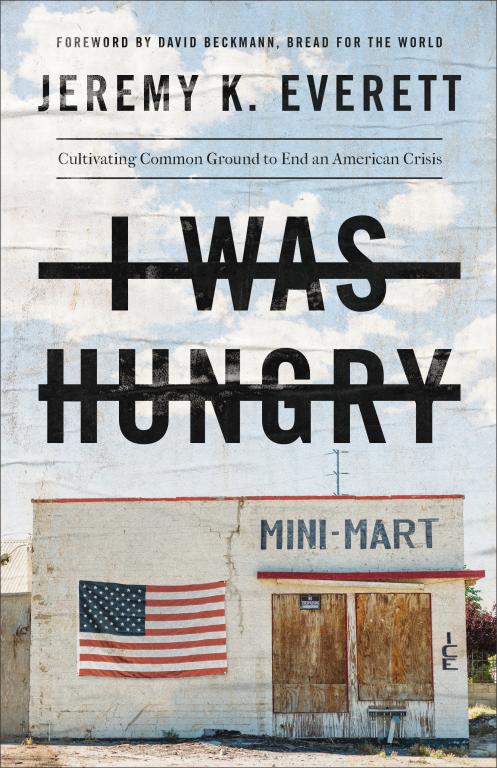
Jeremy Everett, I Was Hungry (Brazos Press, 2019)
DC: Your book I Was Hungry tells the story of your work with Texas Hunger Initiative (THI). For those who haven’t read the book yet, could you explain in a nutshell what THI does?
JE: The Texas Hunger Initiative is all about coordinating local, state, and federal organizations that are working to solve hunger. Most people address hunger-related issues as if they were strictly local. However, after the train-wreck of a response to Hurricane Katrina, we realized the need for better coordination among various levels of government and the private sector.
The Texas Hunger Initiative was created in 2009 to be a research-informed community organizing project with organization on a federal, state, and local level to address the deep systemic causes of hunger and help more people gain access to three healthy meals seven days a week. Historically there has been bipartisan support for the issue of hunger, and so we can bring a variety of people—whether they are Catholics and Baptists or Republicans and Democrats or Baylor Bears and A&M Aggies—around the table to talk about the issue of hunger. And while we’re sitting at the table together, it doesn’t take long to realize that hunger is merely an aspect of poverty. By gathering diverse people to address hunger, we take the first step toward working together to address poverty.
DC: Texas is not necessarily known as the most progressive state, but fighting poverty is sometimes considered a more “progressive” cause. How has the work of THI been received here in the state of Texas?
JE: It’s been received well. A number of us who work with THI are from Texas or from southern conservative states, and we really do believe that people on the local level are what former President George W. Bush called “compassionate conservatives.” They want to do something in their communities. Oftentimes they are volunteering through their congregations. They recognize that addressing hunger and poverty is a part of their faith perspective, but they are uneasy when the federal government tells them how to do it.
It has been important for us to learn and speak the language of the people but also to let the federal and state government understand that, while they do need a seat at the table, that seat must be alongside the local community because people at the local level are closer to the problem. Those are the voices that we need to elevate, particularly those who are living in poverty. But no one sector is strong enough to address the issue on its own. Any time the church says, “We want to address hunger by ourselves,” I point to the reality that in the United States less than 3% of the needed food for food insecure families or families that are at risk for hunger is provided by the charitable sector.
DC: What led you to the realization that hunger couldn’t just be a local issue?
JE: I was doing inner city community development in San Antonio, and we had taken a Mission Center and turned it into a little coffee shop business that was able to leverage some other businesses to come into the neighborhood and help with underemployment. But we had over a 150,000 low-income residents in the neighborhood. While the fifty to one hundred jobs that were created through our economic development efforts represented millions of dollars, that was only a drop in the bucket. While I was in San Antonio, the agency that I was employed by got asked by Homeland Security to develop medical special needs shelters to respond to Hurricane Katrina. What they identified is that there are certain people—people suffering from mental health problems or mothers with infants—who cannot be in a general population shelter with thousands of other people. And so we had smaller shelters all over the city of San Antonio, largely in church gymnasiums with room for around 150 to 250 people.
But the response to Katrina, as we all remember, was an epic train wreck. The congregations, the non-profits, the corporate sector, and the local, state, and federal government were all on different pages. Afterward, Homeland Security began to organize a more coordinated federal, state, and local response to disasters. We were all trained together; all of these different sectors had to learn to speak the same language. We learned a new chain of command and a whole new language of “federal government speak.” (It was all acronyms all the time.) Largely, what we did was organize the resources we currently have.
Fast forward two years, and our response to Hurricanes Gustav and Ike were tremendously different. The shelters we operated had teams of nurses available to us. We had a makeshift ICU in one of the shelters that I ran with a generator and backup generator in case we lost power. We had a full pharmacy in every shelter. We had pharmacists with full pharmacies and doctors in every shelter so we could make sure we were adequately taking care of the people. We had MOUs with airplane, helicopter, and bus companies so that we could get people out of harm’s way as fast as possible as well as have a plan to get people back home. Part of that plan required getting grocery stores open before we sent anyone home because they wouldn’t have anything to eat or drink when they got there. We did all that planning in just a few short years, and it made a tremendous difference. We didn’t put more money into it as a nation; we just organized the resources that we had. THI began out of the realization that the model we used during Gustav and Ike could work for sustained engagement simply by turning that system on its side so that everyone has an equal seat at the table rather than having the federal government solely in charge.
DC: You learned to speak the language of the federal government, but you also brought to the table the language of the seminary. How has your theological training impacted the work that you do?
JE: I had my what I call my Franciscan conversion experience when I was in college studying to be a pastor like many other family members and I came across the story of St. Francis and felt compelled to work on the issue of poverty. I didn’t know what that looked like when I entered seminary, but while in seminary I moved into the inner-city neighborhood and learned the language of “incarnational organizing” that had been popularized by people like John Perkins and the Christian Community Development Association. That made sense to me—the idea of immersing myself in the realities of people experiencing poverty.
Around that same time, I had an opportunity to meet Gustavo Gutiérrez, the father of liberation theology, when one of my professors invited him to campus. At a dinner at the professor’s house, everyone was peppering Father Gutiérrez with questions, but I didn’t have the nerve to speak up. Finally, as we moved from the kitchen to the living room, there was an opportunity where just he and I were walking together. So I asked him a question that had been on my mind for several years: “How do you have solidarity with the poor?” He looked up at me and responded, “Commit your life to their cause.” In order to commit to the cause of the hungry and poor, I’ve had to learn what it takes to address the underlying causes, to understand how money works, how the corporate sector works, how federal and state government works. These aren’t things you’re typically taught in seminary.

*Brazos Press provided me a promotional copy of I Was Hungry for this post.
About David C. Cramer
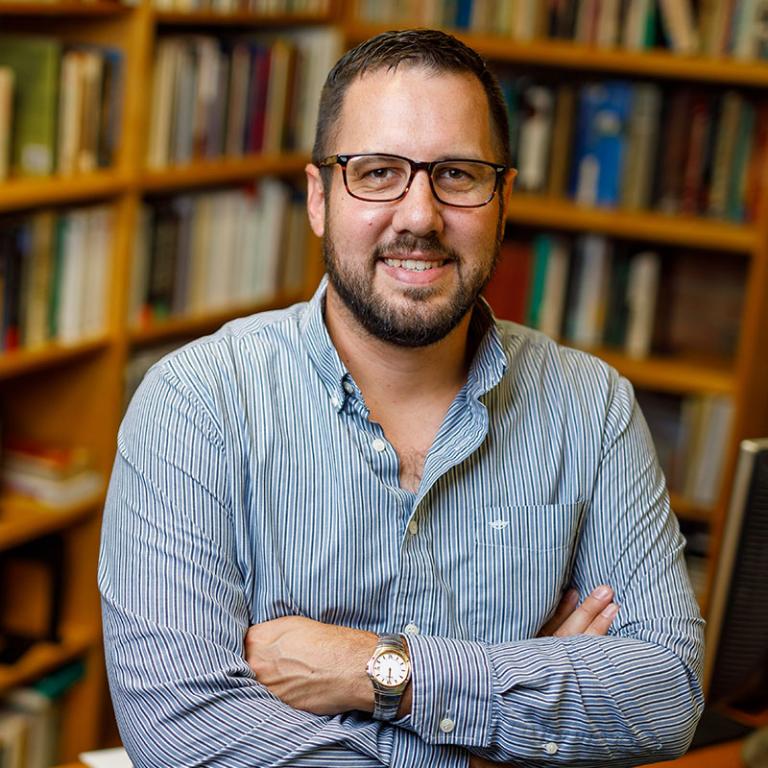
David C. Cramer is teaching pastor at Keller Park Church in South Bend, Indiana, and managing editor at the Institute of Mennonite Studies at Anabaptist Mennonite Biblical Seminary in Elkhart, Indiana. You can read more about the author here.
Previous Post

July 26, 2019
An Open Letter to Planned Parenthood Protestors from a Pro-Life Pastor
Next Post
August 14, 2019 "I Was Hungry"—author interview with Jeremy Everett (2)
Browse Our Archives
Select a Category Anabaptist Ecosystem Blogging Books Current Events Dispatches Evangelicalism Guest Post Interview Mennonite History Nonviolence Rad Women of Scripture Sermon Uncategorized
Select a Month March 2024 November 2023 August 2023 July 2023 April 2023 March 2023 June 2022 May 2022 January 2022 September 2021 August 2021 July 2021 June 2021 May 2021 April 2021 January 2021 December 2020 November 2020 October 2020 August 2020 June 2020 May 2020 February 2020 January 2020 November 2019 September 2019 August 2019 July 2019 June 2019 May 2019 April 2019 March 2019 February 2019 January 2019
Follow Us!
TAKE THE
Religious Wisdom Quiz
What does Paul say he does not do the good he wants to do, but instead does?
Select your answer to see how you score.
What is sinful What displeases God The evil he does not want to do What leads to death
Related posts from Anabaptist Revisions
"I Was Hungry"—author interview with Jeremy Everett (3)
"I Was Hungry"—author interview with Jeremy Everett (2)

Mennonites hold die-in, call Rep. to support ceasefire

Revangelical: Proclaiming the Good News after Deconstruction
TRENDING AT PATHEOS Evangelical

The Problem with False Prophets
Miller’s Station UMC| 10/18/26| Anchor Verse: Jeremiah 23: 1, 9-23 I...

Emotion in Early Christianity by Andrew Crislip
Andrew Crislip’s Emotion in Early Christianity examines an often overlooked dimension of...

16 Spiritual Touchstones for a More Grounded Life
After decades of spiritual study, here are 16 principles I try...

Catholic Evangelization: Sharing Your Faith Every Day
Welcome back to the Graceful Awakening mini-series called, “From Faith to Mission.” ...

The Pillar of the Boatmen: the Ancient Monument...
The Pillar of the Boatmen is a Romano-Gaulish sculpture that dates from...

In one sense walking into Westminster Abbey is like walking down the...
view all Evangelical blogs
Ad-Free & Subscriber Log-In Subscription Support
- About Us
- 2026 Calendar
- Videos
- Podcasts
- Library of World Religions
- Faith In Media Tracker
- Advertise With Us
- Write for Us
- Privacy Policy
- Terms of Service
- Do Not Sell My Data
- Contact Us
- Radiant Digital
- Manage Newsletter Subscriptions
- Unsubscribe From Notifications
- Sitemap
Copyright 2008-2026, Patheos. All rights reserved.
Subscription Support Ad-Free & Subscriber Log-In
Follow Patheos