
BuddhistCatholicContemplativeEvangelicalGeneral ChristianHinduJewishLatter-day SaintMuslimNew VisionsProgressive Christian
Beliefs
- Buddhist
- Catholic
- Contemplative
- Evangelical
- General Christian
- Hindu
- Jewish
- Latter-day Saint
- More Voices
- Muslim
- New Visions
- Pagan
- Progressive Christian
Topics
- Religion News
- Food and Religion
- Sports and Religion
- Religious Art
- Religious Music and Entertainment
- Religious Events
- History and Religion
- Style and Religion
- Politics and Religion
- Women in Religion
- Recreation Outdoors and Religion
- Business Finance and Religion
- Careers Workplace and Religion
- Education and Religion
- Family Parenting and Religion
- Health Fitness and Religion
- Home and Religion
- Relationships and Religion
- Technology and Religion
- Travel and Religion
Columnists
- Buddhist Columnists
- Business Finance and Religion Columnists
- Careers Workplace and Religion Columnists
- Catholic Columnists
- Contemplative Columnists
- Education and Religion Columnists
- Evangelists Columnists
- Family Parenting and Religion Columnists
- General Christian Columnists
- Health Fitness and Religion Columnists
- Hindu Columnists
- History and Religion Columnists
- Home and Religion Columnists
- Jewish Columnists
- More Voices Columnists
- Latter Day Columnists
- Muslim Columnists
- New Visions Columnists
- Nonreligious Columnists
- Pagan Columnists
- Politics and Religion Columnists
- Progressive Columnists
- Recreation Outdoors and Religion Columnists
- Relationships and Religion Columnists
- Religion News Columnists
- Religious Art Columnists
- Religious Events Columnists
- Religious Music and Entertainment Columnists
- Sports and Religion Columnists
- Style and Religion Columnists
- Technology and Religion Columnists
- Travel and Religion Columnists
- Women in Religion Columnists
Resource Library
- 2026 Calendar
- Library of World Religions
- The 100 Most Holy Places on Earth
- Patheos Answers
- Podcasts
- Videos
- Faith Leaders Database
- Anglican Episcopalian
- Bahai
- Baptist
- Buddhism
- Christianity
- Confucianism
- Eastern Orthodoxy
- Hinduism
- Holiness and Pentecostal
- ISKCON
- Islam
- Judaism
- Lutheran
- Methodist
- The Church of Jesus Christ of Latter-day Saints
- New Age
- Paganism
- Presbytarian and Reformed
- Protestantism
- Religion Behind the Scenes
- Roman Catholic
- Scientology
- Shia Islam
- Sikhism
- Sufism
- Sunni Islam
- Taoism
- Zen
- See all religions
Research Tools
 Ad-Free & Subscriber Log-In Subscription Support
Ad-Free & Subscriber Log-In Subscription Support
Follow Patheos 

- Trending:
- Forgiveness
- |
- Marriage
- |
- Consciousness
- |
- Death Penalty
- |
- Election
- |
- Halloween
 Re-Generaci?n
- Home
- Progressive Christian
- Hunting Heresy at Regent University
Hunting Heresy at Regent University
Last updated on: March 13, 2014 at 11:58 am by Arlene Sánchez-Walsh
Hunting Heresy at Regent University 2014-03-13T11:58:20-07:00 Arlene Sánchez-Walsh
Patheos Explore the world's faith through different perspectives on religion and spirituality! Patheos has the views of the prevalent religions and spiritualities of the world.
A few weeks ago, I attended the Renewal Across Americas conference at Regent University. I have been bogged down by grading so this is the first time I have had to write about the many things I learned about life at Regent–The House that Pat Robertson Built.
I have learned much about my chosen profession from watching and talking to many colleagues about their experiences. If I can generalize, the academic life of many in my cohort–is one where roots are rarely planted in one institution for too long.
Which is why I had lunch with my first mentor, Dr. Clayton Drees before the conference began. Clay convinced me over 20 years ago to consider graduate school and even give this academic game a try. The last thing I remember talking to him about over 20 years ago was his new job as an assistant professor at a small liberal arts college in Virginia, he told me that if it worked out for him, he was happy staying there for the long haul. He’s been at the same institution for 22 years and is now the Old Guard in the history department.
Clay was an adjunct for years before he landed in Virginia, doing the same freeway flying that many of us have done throughout LA–where back in the 1990s, there was never a shortage of jobs for folks like us to teach history–U.S surveys, World Civ, and any kind of specialization that we chose. Clay taught a series of classes at Cal State Los Angeles–I took nearly all of them–Heresy in the Medieval World, African Slave Trade, Tudor England, The Reformation–until I ran out of electives. Aside from his command of the material and his enthusiasm for the subjects, I admired him because Clay was nearly completely blind from a severe case of malaria that damaged his eyesight while he was in the Peace Corps in Sierra Leone. He used a large magnifying glass that he kept in his pocket to read and sign documents. He wrote in large block letters with thick black markers–the kind that I still use today. I am now finding it harder to read small print myself and for the first time, I am aware of how I have to zoom documents to about 150 so as not to strain my eyes. Clay adapted to his near blindness, he adapted to life in small town Virginia, he stayed in the first tenure-track job he landed–and seems completely content with his career trajectory. I can’t say that about most of my academic friends.
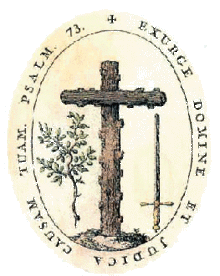 I knew next to nothing about heresy when I took Clay’s class, learning that most, if not all heresy was politically motivated rather than theologically necessary. Before I heard about power dynamics in grad school–I heard that most events of religious drama set up as battles between good (orthodoxy) and evil (heterodoxy) were political set-ups that usually had something to do with securing power and money. As someone who spent most of the early 90s, rummaging through various religious traditions that explored the “big issues” like the perpetual problems of suffering, the fact that orthodoxy did not hold all the answers was comforting to me. People who crowned themselves with the title, “protector of the faith,” often did so to maintain an advantage over their weaker opponents.
Which is why as I spent most of the late 90s and early 2000’s ensconced in one Pentecostal tradition or another–as a participant and observer, I never bought the idea that there was one way to be a Christian. Pentecostalism and evangelicalism had not cornered the market on orthodoxy–they just put more people on the “rack” for their theological insubordination. As I looked closer, these late-night discussions and Sunday sermons were aimed at the culture wars against liberalism, secularism, mainline Protestantism and liberal Catholicism, feminism, and all sorts of other shibboleths. They were also nearly all about maintaining a particular tradition’s way of doing things–which inevitably meant–power and money. Women leading worship while pregnant? Can’t be done, too much of a risk to “men’s piety?” Voting Democrat? Real Christians don’t do that, read the Bible and you’ll see why. Well there are real Christians in other traditions, but they have to believe the way we do for us determine whether they are “saved” or not. Well I don’t think you can be a Catholic and still worship here, you should pray about it and see if God’s calling you to a more “biblically-based” church.
I have heard variations on all these and literally thousands of other “either/or” binaries since I started this work 17 years ago–I didn’t buy into any of it, it never caused me to go into a theological tailspin about what I believed because I did not think that these arguments to become more “orthodox” were particularly compelling. Orthodoxy for many of my evangelical and Pentecostal fellow travelers means lots of things–competing, contradictory, incoherent, unfinished thoughts and arguments from a movement whose glue–piety–requires constant re-application, lest we all fall victim to the ultimate heresy—plunging necklines…
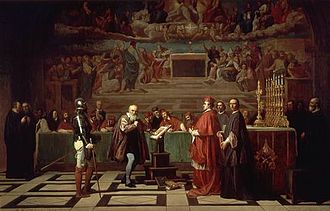 The last line is of course a simplistic reduction of centuries of wars against heresy–like the expanding universe, the earth revolving around the sun, the refusal to fight in wars, women in ministry, and of course the biggest heresy–the disunion and perpetual divisive nature of Christianity–broken into at least 22,000 different denominations and warring factions–all fighting their own battles against the heresy of the day. Only this disunion, division and dislike of other Christians is not viewed as heresy–it is viewed as essential to the maintenance of the only witness that really counts–the maintaining of conformity at all costs.
What Clay Drees taught me, aside from learning to be comfortable in one’s academic skin–was that heresy is the gift that keeps on giving–securing for the powerful, more power, and securing for those on the wrong side of the argument–perpetual marginalization. Or as one of my colleagues once eloquently told me, as he was forced to leave his academic position because of the “taint” of heterodox ideas in his theology–”the ultimate power is the power to exclude.”
Next time, I’ll tell you more about my revealing trip to Regent University– where subversion comes in many discrete forms.
Previous Post
February 20, 2014
Snake-Handling, Vaccines & Science Denial
Next Post

March 19, 2014 Hunting Heresy at Regent University--Part II (Dress Codes)
Browse Our Archives
Select a Category Academia African American Books church life Conspiracy Theories culture Culture wars DOMA Dress Codes Evangelicalism Healing Immigration Latino/a Catholicism Latino/a History Latino/a Religion Mennonites millennials Missions Music Pentecostalism Politics popular culture progressives prophecy Religious Right Religious Violence Uncategorized women
Select a Month February 2015 January 2015 December 2014 October 2014 September 2014 August 2014 July 2014 June 2014 May 2014 April 2014 March 2014 February 2014 January 2014 December 2013 November 2013 October 2013 September 2013 August 2013 July 2013 June 2013 May 2013 April 2013 March 2013 February 2013 January 2013 December 2012 November 2012
Follow Us!
TAKE THE
Religious Wisdom Quiz
"I am the ____ and the truth and the life. No one comes to the Father except through me."
Select your answer to see how you score.
Alpha Omega Word Way
Related posts from Re-Generaci?n
The Tragic Sense of Historical Illiteracy

Latino/a Rehab Ministry embroiled in controversy

What I Learned From Appearing on CSPAN--(hint) you're...
How to Keep Latinos/as in Church?
TRENDING AT PATHEOS Progressive Christian

Why Christians Have a Sacred Duty to Vote:...
The Bible offers strong support for the sacred duty to vote. Here...

What Being a Modern-Day Apostle Means to Me
In my last column, I discussed the ins and outs of modern-day...

Did Ancient China Once Worship the God of...
Across human history, a common thread weaves through the origins of the...

Love Your Neighbor – Including Earth-Kin: Lev. 19,...
God’s command to love your neighbor means acting in an ethical and...

Lead a Church Study of “Jesus and Lao...
Guest writer Jack Thomas (The Irreverent Reverend) reflects on leading his church...

Principles for Understanding the Apostolic Ministry Today
Whenever people discover that my formal ministry title is "apostle," as in...
view all Progressive Christian blogs
Ad-Free & Subscriber Log-In Subscription Support
- About Us
- 2026 Calendar
- Videos
- Podcasts
- Library of World Religions
- Faith In Media Tracker
- Advertise With Us
- Write for Us
- Privacy Policy
- Terms of Service
- Do Not Sell My Data
- Contact Us
- Radiant Digital
- Manage Newsletter Subscriptions
- Unsubscribe From Notifications
- Sitemap
Copyright 2008-2026, Patheos. All rights reserved.
Subscription Support Ad-Free & Subscriber Log-In
Follow Patheos