
BuddhistCatholicContemplativeEvangelicalGeneral ChristianHinduJewishLatter-day SaintMuslimNew VisionsProgressive Christian
Beliefs
- Buddhist
- Catholic
- Contemplative
- Evangelical
- General Christian
- Hindu
- Jewish
- Latter-day Saint
- More Voices
- Muslim
- New Visions
- Pagan
- Progressive Christian
Topics
- Religion News
- Food and Religion
- Sports and Religion
- Religious Art
- Religious Music and Entertainment
- Religious Events
- History and Religion
- Style and Religion
- Politics and Religion
- Women in Religion
- Recreation Outdoors and Religion
- Business Finance and Religion
- Careers Workplace and Religion
- Education and Religion
- Family Parenting and Religion
- Health Fitness and Religion
- Home and Religion
- Relationships and Religion
- Technology and Religion
- Travel and Religion
Columnists
- Buddhist Columnists
- Business Finance and Religion Columnists
- Careers Workplace and Religion Columnists
- Catholic Columnists
- Contemplative Columnists
- Education and Religion Columnists
- Evangelists Columnists
- Family Parenting and Religion Columnists
- General Christian Columnists
- Health Fitness and Religion Columnists
- Hindu Columnists
- History and Religion Columnists
- Home and Religion Columnists
- Jewish Columnists
- More Voices Columnists
- Latter Day Columnists
- Muslim Columnists
- New Visions Columnists
- Nonreligious Columnists
- Pagan Columnists
- Politics and Religion Columnists
- Progressive Columnists
- Recreation Outdoors and Religion Columnists
- Relationships and Religion Columnists
- Religion News Columnists
- Religious Art Columnists
- Religious Events Columnists
- Religious Music and Entertainment Columnists
- Sports and Religion Columnists
- Style and Religion Columnists
- Technology and Religion Columnists
- Travel and Religion Columnists
- Women in Religion Columnists
Resource Library
- 2026 Calendar
- Library of World Religions
- The 100 Most Holy Places on Earth
- Patheos Answers
- Podcasts
- Videos
- Faith Leaders Database
- Anglican Episcopalian
- Bahai
- Baptist
- Buddhism
- Christianity
- Confucianism
- Eastern Orthodoxy
- Hinduism
- Holiness and Pentecostal
- ISKCON
- Islam
- Judaism
- Lutheran
- Methodist
- The Church of Jesus Christ of Latter-day Saints
- New Age
- Paganism
- Presbytarian and Reformed
- Protestantism
- Religion Behind the Scenes
- Roman Catholic
- Scientology
- Shia Islam
- Sikhism
- Sufism
- Sunni Islam
- Taoism
- Zen
- See all religions
Research Tools
 Ad-Free & Subscriber Log-In Subscription Support
Ad-Free & Subscriber Log-In Subscription Support
Follow Patheos 

- Trending:
- Forgiveness
- |
- Marriage
- |
- Consciousness
- |
- Death Penalty
- |
- Election
- |
- Halloween

- Home
- Pagan
- Book review: The Nectar of Pain
Book review: The Nectar of Pain
Last updated on: February 28, 2023 at 9:56 pm by Bader Saab
Book review: The Nectar of Pain 2023-02-28T21:56:59-04:00 Bader Saab
Patheos Explore the world's faith through different perspectives on religion and spirituality! Patheos has the views of the prevalent religions and spiritualities of the world.
I’ve wanted to read a good book of poetry for a long while. I wanted something I could enjoy, relate to, and a beauty of its own. After searching for a while, I found an option in an Arabic poet, a sensible reading I couldn’t put down from beginning to end: The Nectar of Pain, by Najwa Zebian.
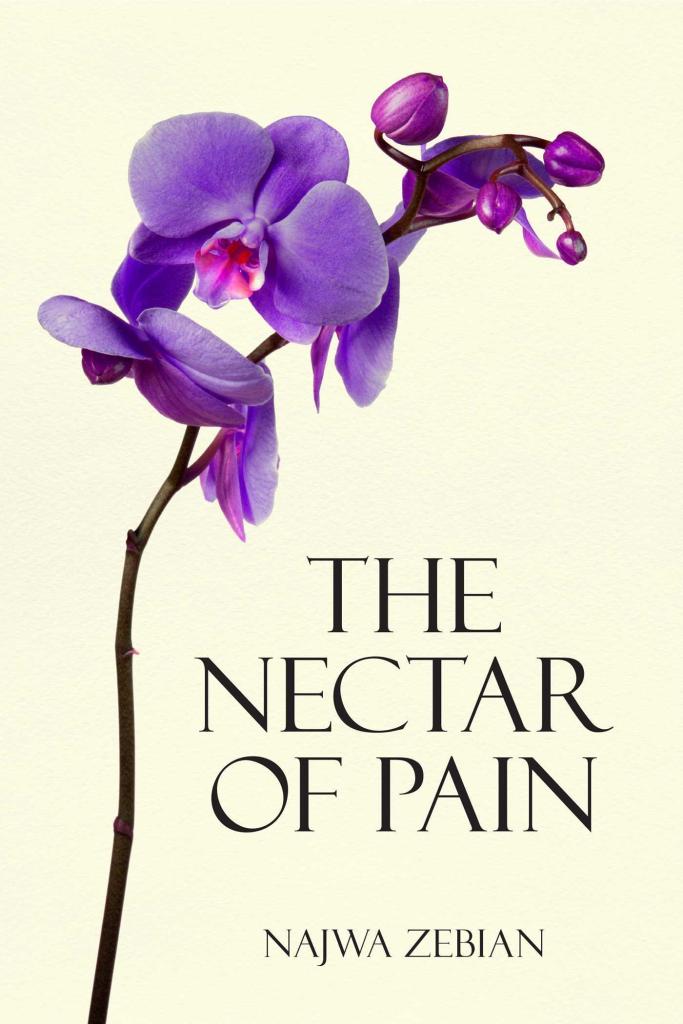
- Format: 320 pages, Paperback
- Published: October 2, 2018 by Andrews McMeel Publishing
- Genres and Tags: Poetry, Self Help, Nonfiction, Romance, Love, Canada, Islam
From Najwa Zebian—celebrated Lebanese-Canadian poet, speaker, and educator—comes a highly personal and moving second collection.
In The Nectar of Pain, Zebian sheds light on the feelings and experiences that emerge from a painful heartbreak. She writes that the process of cleansing oneself of that pain—day by day, hour by hour, and second by second—is the real work of healing.
With uncommon warmth and wisdom, Zebian empowers all who have lost to let go of anger and transform their suffering into the softness, sweetness, and beauty of nectar. She holds her readers by the hand as they heal.
Focused on loss, heartache, disillusion, and a search for healing, Zebian gives simple words to complex feelings and thoughts, sensations that anyone that has gone through a heartbreak has experienced and has found hard to describe. With an incredible awareness of her heart, her mind, her body, and ultimately her whole being, the author shows what it is like to heal.
She doesn’t hold back in The Nectar of Pain, but that doesn’t mean she is vindictive, violent, or remorseful. Contrary to what some might expect, she remains noble, kind, forgiving, while also reclaiming her place as the sole governor of her life, someone who understand that she’s too big to reduce herself to the expectations of someone who can’t appreciate her. And she stays humble all the time.
It sounds ironic, but the poems speak exactly about that. To heal and recognize one’s worthiness doesn’t have to go hand in hand with egocentrism and selfishness. It can be a path of kindness, reclaiming, awakening, lots of tears, lots of pain, but also lots of love and learning.
The language, while simple, describes all those experiences, all those realizations and discoveries, without belittling their depth or sacrificing the beauty they come with. The Nectar of Pain is direct, simple, and attractive by showing how attractive a few words can be. However, some of the poems were so repetitive they took me out of the reading, the same structure in every line, the same words as well, that they broke the spell. It was especially difficult to appreciate them when they were so close to each other. I initially thought that this was because the book was being translated from Arabic to English, but it is not the case.
That put aside, I enjoyed the majority of the book and will definitely look for another another one from this author. Calming, beautiful, and evocative in its simplicity, The Nectar of Pain is a reading to be enjoyed, savored page by page (although I read non-stop until I finished it, I have to confess). You’ll find it spell-binding.
About the Author

Photo taken from Goodreads.
Najwa Zebian is a Lebanese-Canadian author, speaker, and educator. Her passion for language was evident from a young age, as she delved into Arabic poetry and novels. The search for a home–what Najwa describes as a place where the soul and heart feel at peace–was central to her early years. When she arrived in Canada at the age of sixteen, she felt unstable and adrift in an unfamiliar place. Nevertheless, she completed her education, and went on to become a teacher as well as a doctoral candidate in educational leadership. Her first students, a group of young refugees, led her back to her original passion: writing. She began to heal her sixteen-year-old self by writing to heal her students. Since self-publishing her first collection of poetry and prose in 2016, Najwa has become an inspiration to millions of people worldwide. Drawing on her own experiences of displacement, discrimination, and abuse, Najwa uses her words to encourage others to build a home within themselves; to live, love, and create fearlessly.

About Bader Saab
I’m an Arabic witch and journalist, also with a master’s degree in digital research. I have worked as a book reviewer and written about pre-Islamic folklore. You can connect with me by Private Message on Instagram: @saab.bader. You can read more about the author here.
Previous Post
February 22, 2023
Help Syria and Turkey Today
Next Post

April 5, 2023 Back to Poetry
Browse Our Archives
Select a Category Ancestors Book review Books Deities Divination Folklore History news Practice Spirits Uncategorized Wellbeing witchcraft Writing
Select a Month September 2026 July 2026 March 2026 December 2025 November 2025 August 2025 July 2025 June 2025 February 2025 January 2025 September 2024 July 2024 March 2024 February 2024 November 2023 September 2023 July 2023 May 2023 April 2023 February 2023 January 2023 December 2022 November 2022 October 2022 September 2022 July 2022 June 2022 May 2022 April 2022 March 2022 February 2022 January 2022 December 2021 October 2021 September 2021 August 2021 July 2021 June 2021 May 2021 April 2021 March 2021 February 2021 January 2021 December 2020 November 2020 October 2020 September 2020 August 2020
Follow Us!
TAKE THE
Religious Wisdom Quiz
How did the apostles choose Matthias to replace Judas?
Select your answer to see how you score.
By Vote By the Holy Spirit Peter appointed him They cast lots
Related posts from A Modern Day Sha'ir


No More Booklists. Enter the Fake Degree!

TRENDING AT PATHEOS Pagan

When we talk about Greek religion, we often begin with the dodekatheion—the...

I was recently chatting with someone on Instagram. She asked me what...

While there are many people who share their results, the end of...

On July 23, I saw Christopher Nolan's The Odyssey which is Homer’s...

As I write this two big events have just finished up. One...

Restoring the Watershed of Divine Love
Perhaps cooperation is not something we manufacture through legislation, ideology, or moral...
view all Pagan blogs
Ad-Free & Subscriber Log-In Subscription Support
- About Us
- 2026 Calendar
- Videos
- Podcasts
- Library of World Religions
- Faith In Media Tracker
- Advertise With Us
- Write for Us
- Privacy Policy
- Terms of Service
- Do Not Sell My Data
- Contact Us
- Radiant Digital
- Manage Newsletter Subscriptions
- Unsubscribe From Notifications
- Sitemap
Copyright 2008-2026, Patheos. All rights reserved.
Subscription Support Ad-Free & Subscriber Log-In
Follow Patheos