
BuddhistCatholicContemplativeEvangelicalGeneral ChristianHinduJewishLatter-day SaintMuslimNew VisionsProgressive Christian
Beliefs
- Buddhist
- Catholic
- Contemplative
- Evangelical
- General Christian
- Hindu
- Jewish
- Latter-day Saint
- More Voices
- Muslim
- New Visions
- Pagan
- Progressive Christian
Topics
- Religion News
- Food and Religion
- Sports and Religion
- Religious Art
- Religious Music and Entertainment
- Religious Events
- History and Religion
- Style and Religion
- Politics and Religion
- Women in Religion
- Recreation Outdoors and Religion
- Business Finance and Religion
- Careers Workplace and Religion
- Education and Religion
- Family Parenting and Religion
- Health Fitness and Religion
- Home and Religion
- Relationships and Religion
- Technology and Religion
- Travel and Religion
Columnists
- Buddhist Columnists
- Business Finance and Religion Columnists
- Careers Workplace and Religion Columnists
- Catholic Columnists
- Contemplative Columnists
- Education and Religion Columnists
- Evangelists Columnists
- Family Parenting and Religion Columnists
- General Christian Columnists
- Health Fitness and Religion Columnists
- Hindu Columnists
- History and Religion Columnists
- Home and Religion Columnists
- Jewish Columnists
- More Voices Columnists
- Latter Day Columnists
- Muslim Columnists
- New Visions Columnists
- Nonreligious Columnists
- Pagan Columnists
- Politics and Religion Columnists
- Progressive Columnists
- Recreation Outdoors and Religion Columnists
- Relationships and Religion Columnists
- Religion News Columnists
- Religious Art Columnists
- Religious Events Columnists
- Religious Music and Entertainment Columnists
- Sports and Religion Columnists
- Style and Religion Columnists
- Technology and Religion Columnists
- Travel and Religion Columnists
- Women in Religion Columnists
Resource Library
- 2026 Calendar
- Library of World Religions
- The 100 Most Holy Places on Earth
- Patheos Answers
- Podcasts
- Videos
- Faith Leaders Database
- Anglican Episcopalian
- Bahai
- Baptist
- Buddhism
- Christianity
- Confucianism
- Eastern Orthodoxy
- Hinduism
- Holiness and Pentecostal
- ISKCON
- Islam
- Judaism
- Lutheran
- Methodist
- The Church of Jesus Christ of Latter-day Saints
- New Age
- Paganism
- Presbytarian and Reformed
- Protestantism
- Religion Behind the Scenes
- Roman Catholic
- Scientology
- Shia Islam
- Sikhism
- Sufism
- Sunni Islam
- Taoism
- Zen
- See all religions
Research Tools
 Ad-Free & Subscriber Log-In Subscription Support
Follow Patheos 

- Trending:
- Advent
- |
- Forgiveness
- |
- Thanksgiving
- |
- Election
- |
- Seasonal Holidays
- |
- Marriage

- Home
- Pagan
- The Oldest Arabic Poem, or a Possible Prayer?
The Oldest Arabic Poem, or a Possible Prayer?
Last updated on: September 12, 2021 at 9:15 pm by Bader Saab
The Oldest Arabic Poem, or a Possible Prayer? 2021-09-12T21:15:42-04:00 Bader Saab
Patheos Explore the world's faith through different perspectives on religion and spirituality! Patheos has the views of the prevalent religions and spiritualities of the world.
I recently came across an interesting post which linked to the original article about an interesting poem. Ahmad Al-Jallad (2015) shared an extensive analysis of what seems to be the oldest Arabic poem, which describes a battle between the Gods Mot and Ba’al. Although it seems to be simple at first sight, when I read it and learned about the deities it references I had the feeling it was more than just a poem, or at least it could be used as more than that.
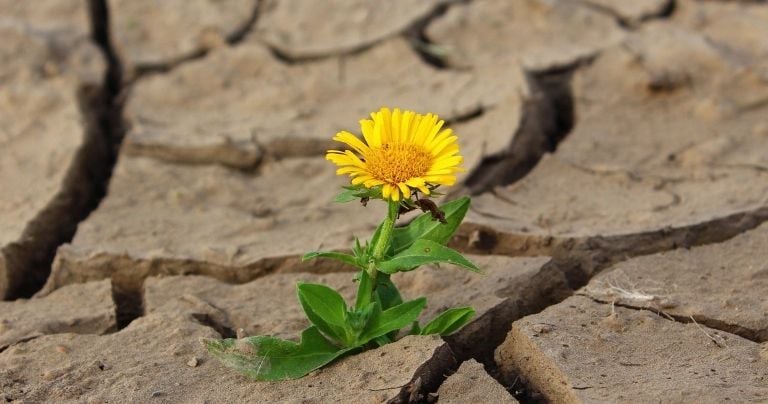
Image by klimkin on Pixabay. Source.
The text, found in Israel, “in the desert 4.5 kmfrom Oboda/Avdat in the Negev, is undated” (Al-Jallad, 2015, p: 5), in a stone, “which express three verses of a votive poem dedicated to the deified Nabataean king, ʿObodah. The interpretation of this text has not been easy, and there remains no consensus as to what exactly it means. Nevertheless, its rhetorical language and poetic register are clear” (Al-Jallad, 2015, p: 6):
l ḥg mt w lẓ ṯrm
f mykn ẖlf lyly -h w ʾwm -h
w h ʾ-bʿl ybt w l h bt w m nm
For pronunciation purposes, the anonymous blog Old European culture (OEC) shared the following version:
ḥagga mōtu wal-lāẓẓu ṯarām
fa-muyakānu layālay-uh wa-ʾaywām-uh
wa-hāʾ baʿalu yabītu wa-lā-hu bāta wa-mā nām
Which translates at:
Mōt has celebrated a feast; the scorner eats
established is the succession of his nights and days
and behold, Baal is cut off; cut off indeed, but not dead
For a full understanding of this poem, it’s useful to read their descriptions in the Encyclopædia Britannica:
Mot, (West Semitic: “Death”) ancient West Semitic god of the dead and of all the powers that opposed life and fertility. He was the favourite son of the god El, and the most prominent enemy of the god Baal, a god of springs, sky, and fertility. Mot was the god of sterility and the master of all barren places. Traditionally, Mot and Baal were perpetually engaged in a seasonal struggle in which Baal, like many similar harvest deities, was annually vanquished and slain. Mot, however, was also annually killed by Baal’s sister Anath, who thus aided Baal’s resurrection.
Baal, god worshipped in many ancient Middle Eastern communities, especially among the Canaanites, who apparently considered him a fertility deity and one of the most important gods in the pantheon. As a Semitic common noun baal (Hebrew baʿal) meant “owner” or “lord,” although it could be used more generally; for example, a baal of wings was a winged creature, and, in the plural, baalim of arrows indicated archers. Yet such fluidity in the use of the term baal did not prevent it from being attached to a god of distinct character. As such, Baal designated the universal god of fertility, and in that capacity his title was Prince, Lord of the Earth. He was also called the Lord of Rain and Dew, the two forms of moisture that were indispensable for fertile soil in Canaan. In Ugaritic and Hebrew, Baal’s epithet as the storm god was He Who Rides on the Clouds. In Phoenician he was called Baal Shamen, Lord of the Heavens. (…) But Baal was not exclusively a fertility god. He was also king of the gods, and, to achieve that position, he was portrayed as seizing the divine kingship from Yamm, the sea god.
Although we get an interesting interpretation on how the attributes of these Gods are related to those of Allah in the Qur’an, and which you can read with more ease in the OEC blog, I find it curious that this poem tells a story in which the fertility God has seemly been conquered by the death god, with the hope He will come back at some point.
For me, it is a poem about hope, remaining positive, and calling on our higher selves, divine spark, or whatever you want to call it, to come upon us and help us when we need it the most. I’ve lost count of how many times I’ve felt helpless, hopeless, forgotten, and desperate for some assistance. This poem reflects that exact feeling, and ends giving the reader the idea that not everything is lost already, that there’s still something that could happen in the meantime.
Also, all humans are scared of death, of changes, we are scared of the unknown and what could happen after this or that. When afraid, it seems like everything is lost already and that we should just accept things the way they are, but here we get some hope, a silver lining that there’s more to be done. In this sense, it also speaks about fears, trauma, wounds, and every kind of damage and pain that could be done to us in a big way.
If you ask me, this can be a perfect prayer or incantation about accepting something bad is happening or just happened, that we are bad, desperate, afraid, needy, but we still refuse to accept there’s nothing we can do, that we still hope things will change for the better and the tables will turn in our favor.
I’ve been through some hard times this year, I’ve been in the past as well, and although I wanted to give up and accept whatever happened, I refused. This poem reflects that feeling perfectly, it gives the impression that someone is asking for some kind of intervention, and I plan to use it with at such when the time comes (hopefully, not soon).
References:
- Al-Jallad, A. (2015). Echoes of the Baal Cycle in a Safaito-Hismaic inscription. Journal of ancient near eastern religions, 15(1), 5-19.
- Britannica, T. Editors of Encyclopaedia (2021, May 23). Baal. Encyclopedia Britannica. https://www.britannica.com/topic/Baal-ancient-deity
- Britannica, T. Editors of Encyclopaedia (2012, May 28). Mot. Encyclopedia Britannica. https://www.britannica.com/topic/Mot

About Bader Saab
I’m an Arabic witch and journalist, also with a master’s degree in digital research. I have worked as a book reviewer and written about pre-Islamic folklore. You can connect with me by Private Message on Instagram: @saab.bader. You can read more about the author here.
Previous Post

August 21, 2021
Afghanistan, or When Light Blinds
Next Post

October 4, 2021 Do the Ancestors Need an Altar?
Browse Our Archives
Select a Category Ancestors Book review Books Deities Divination Folklore History news Practice Spirits Uncategorized Wellbeing witchcraft Writing
Select a Month October 2026 September 2026 July 2026 March 2026 December 2025 November 2025 August 2025 July 2025 June 2025 February 2025 January 2025 September 2024 July 2024 March 2024 February 2024 November 2023 September 2023 July 2023 May 2023 April 2023 February 2023 January 2023 December 2022 November 2022 October 2022 September 2022 July 2022 June 2022 May 2022 April 2022 March 2022 February 2022 January 2022 December 2021 October 2021 September 2021 August 2021 July 2021 June 2021 May 2021 April 2021 March 2021 February 2021 January 2021 December 2020 November 2020 October 2020 September 2020 August 2020
Follow Us!
TAKE THE
Religious Wisdom Quiz
According to Romans, what is the gift of God?
Select your answer to see how you score.
The Holy Spirit Salvation Grace Eternal life in Christ Jesus
Related posts from A Modern Day Sha'ir
Why are younger seekers drawn to Paganism and...


No More Booklists. Enter the Fake Degree!
TRENDING AT PATHEOS Pagan

To help with the upcoming holiday season, I'm introducing the Holiday Helper...

10 years of the Power Sigil & Moving...
Last week while reorganizing my studio space, I found the sketchbook that...

Why are younger seekers drawn to Paganism and...
One of the things I've noticed the most is that I'm far...

When we talk about Greek religion, we often begin with the dodekatheion—the...

I was recently chatting with someone on Instagram. She asked me what...

On July 23, I saw Christopher Nolan's The Odyssey which is Homer’s...
view all Pagan blogs
Ad-Free & Subscriber Log-In Subscription Support
- About Us
- 2026 Calendar
- Videos
- Podcasts
- Library of World Religions
- Faith In Media Tracker
- Advertise With Us
- Write for Us
- Privacy Policy
- Terms of Service
- Do Not Sell My Data
- Contact Us
- Radiant Digital
- Manage Newsletter Subscriptions
- Unsubscribe From Notifications
- Sitemap
Copyright 2008-2026, Patheos, part of the Radiant Digital network of media brands. All rights reserved.
Subscription Support Ad-Free & Subscriber Log-In
Follow Patheos