
BuddhistCatholicContemplativeEvangelicalGeneral ChristianHinduJewishLatter-day SaintMuslimNew VisionsProgressive Christian
Beliefs
- Buddhist
- Catholic
- Contemplative
- Evangelical
- General Christian
- Hindu
- Jewish
- Latter-day Saint
- More Voices
- Muslim
- New Visions
- Pagan
- Progressive Christian
Topics
- Religion News
- Food and Religion
- Sports and Religion
- Religious Art
- Religious Music and Entertainment
- Religious Events
- History and Religion
- Style and Religion
- Politics and Religion
- Women in Religion
- Recreation Outdoors and Religion
- Business Finance and Religion
- Careers Workplace and Religion
- Education and Religion
- Family Parenting and Religion
- Health Fitness and Religion
- Home and Religion
- Relationships and Religion
- Technology and Religion
- Travel and Religion
Columnists
- Buddhist Columnists
- Business Finance and Religion Columnists
- Careers Workplace and Religion Columnists
- Catholic Columnists
- Contemplative Columnists
- Education and Religion Columnists
- Evangelists Columnists
- Family Parenting and Religion Columnists
- General Christian Columnists
- Health Fitness and Religion Columnists
- Hindu Columnists
- History and Religion Columnists
- Home and Religion Columnists
- Jewish Columnists
- More Voices Columnists
- Latter Day Columnists
- Muslim Columnists
- New Visions Columnists
- Nonreligious Columnists
- Pagan Columnists
- Politics and Religion Columnists
- Progressive Columnists
- Recreation Outdoors and Religion Columnists
- Relationships and Religion Columnists
- Religion News Columnists
- Religious Art Columnists
- Religious Events Columnists
- Religious Music and Entertainment Columnists
- Sports and Religion Columnists
- Style and Religion Columnists
- Technology and Religion Columnists
- Travel and Religion Columnists
- Women in Religion Columnists
Resource Library
- 2026 Calendar
- Library of World Religions
- The 100 Most Holy Places on Earth
- Patheos Answers
- Podcasts
- Videos
- Faith Leaders Database
- Anglican Episcopalian
- Bahai
- Baptist
- Buddhism
- Christianity
- Confucianism
- Eastern Orthodoxy
- Hinduism
- Holiness and Pentecostal
- ISKCON
- Islam
- Judaism
- Lutheran
- Methodist
- The Church of Jesus Christ of Latter-day Saints
- New Age
- Paganism
- Presbytarian and Reformed
- Protestantism
- Religion Behind the Scenes
- Roman Catholic
- Scientology
- Shia Islam
- Sikhism
- Sufism
- Sunni Islam
- Taoism
- Zen
- See all religions
Research Tools
 Ad-Free & Subscriber Log-In Subscription Support
Ad-Free & Subscriber Log-In Subscription Support
Follow Patheos 

- Trending:
- Forgiveness
- |
- Marriage
- |
- Consciousness
- |
- Death Penalty
- |
- Election
- |
- Halloween

- Home
- Pagan
- Revisiting Shahmaran: A Guide for Healers and Lovers + Prayer
Revisiting Shahmaran: A Guide for Healers and Lovers + Prayer
Last updated on: February 21, 2021 at 11:33 pm by Bader Saab
Revisiting Shahmaran: A Guide for Healers and Lovers + Prayer 2021-02-21T23:33:48-04:00 Bader Saab
Patheos Explore the world's faith through different perspectives on religion and spirituality! Patheos has the views of the prevalent religions and spiritualities of the world.
A few months ago I wrote a long Instagram post (or long to Instagram anyway) about Shahmaran, a guide for healers, as I concluded in it. However, as time passes and you revisit your writing, I would also add that this figure is also about love. In case you missed it, here it is copypasted:
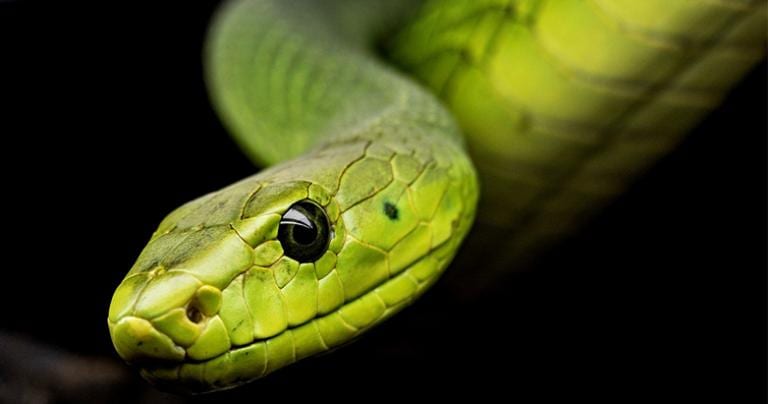
“Snakes have been a symbol of magic and wisdom in several cultures, just as in this case, along with being the bearers of healing knowledge.” Image by Michael Kleinsasser from Pixabay. Cropped.
Shahmaran (Persian: شاهماران Şahmaran, lit. ‘Shah (king) of the Snakes’,) is a mythical creature, half woman and half snake, found with different variations in the folklore of Iran, Anatolia, Iraq, and of the Kurds. The name comes from the Persian words “Shah,” a title used for Persian kings, and “Maran,” which means snakes.
According to one version, the first human Shahmaran encountered was a young man named Camasb, who gets stuck in a cave after he tries to steal honey with a few friends. After they leave him alone in the cave, Camasb decides to explore it and finds a passage to a chamber that looks like a mystical and beautiful garden with thousands of off-white colored snakes and the Shahmaran living together harmoniously.
It is said that Shahmaran and Camasb fell in love and lived in the cave chamber, where the creature taught him about medicines and medicinal herbs. However, Camasb missed living above ground, so he tells his lover he will not share the secret of her living there while he’s away.
Many years pass and the king of the town of Tarsus becomes ill. The vizier discovers the treatment of his condition requires the Shahmaran flesh and so Camasb tells the townspeople where she lives. The legend says that Shahmaran said “blanch me in an earthen dish, give my extract to the vizier, and feed my flesh to the sultan.” When Shahmaran is taken to the town and killed, the king eats her flesh and lives, the vizier drinks the extract and dies, and Camasb drinks the water of Shahmaran, becoming a doctor, by gaining Shahmaran’s wisdom.
I think this myth shows the duality in nature, and I’m very inclined to think that the vizier was plotting against the king (although it may be Disney’s Aladdin influence.) Snakes have been a symbol of magic and wisdom in several cultures, just as in this case, along with being the bearers of healing knowledge. I also like to think about Shahmaran as a healing master, a guide for healers.
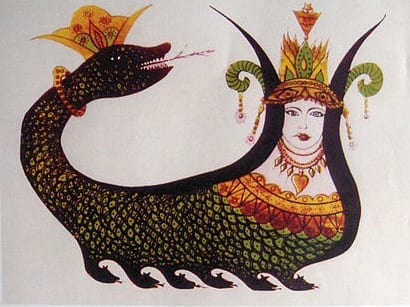
Image taken from Wikimedia Commons.

I also said a bit ago that I got the image of a white snake when I tried to connect with Hilal, the pre-Islamic God of Cycles, Trickery and the Crescent Moon, like the snakes in Shahmaran’s garden, a possible connection I will explore in the future, that is if it turns out not to be a mere coincidence, or maybe that Hilal is also a God of snakes along with Wadd. However, revisiting the myth of this beautiful creature made me see it with different eyes.
Unlike Al-‘Uzza, whose healing seems to be based is love for me, Shahmaran is more about accepting the ultimate sacrifice for our beloved, not because they are more worthy than us, but because we love them enough to give them whatever they need if they are in dire circumstances. I’m sure we can all think about someone who would do that, from a parent, relative, friend, lover, or even a pet.
Shahmaran’s story made me think about all the times someone put my needs before theirs, mostly my parents, but also every time it happened in a relationship, and every time the tables turned and I did it for someone else as well. Rasheed Ogunlaru said that “only love and compassion can bring true and lasting transformation,” and I agree with him.
Like a snake changes skin every now and then to keep growing up because, unlike other animals, there comes a time when their skin doesn’t allow them to get bigger. Although painful, snakes know pain is only temporary, it will not be forever, and many good things can happen before they have to do it again. Love is very similar to this.
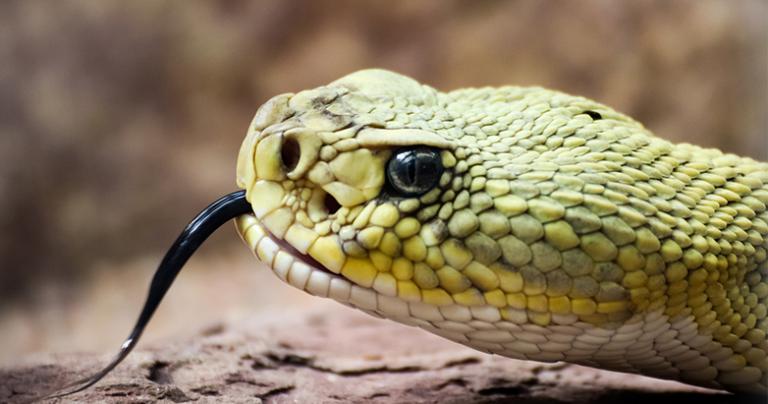
“Snakes have a lot of bad fame, but the more I read about them the more I’m sure they are actually heavily misunderstood.” Image by Cifer88 from Pixabay. Cropped.
No relationship is perfect at the beginning, no love story starts, develops, and ends in the blink of an eye. There are fights, tears, screams, hurt, and much more, but a good relationship can be born from moments like these. Relationships that are worth it ask you to shed your skin, grow more than before, help you in the process, and lead you to a better and brighter version of yourself.
Shahmaran knew her time had to end at one point, and she decided that it would be by love’s hand. She alone decided who she would save and condemn and, of course, the first and biggest winner was her lover. Far from meaning that we should kill ourselves to demonstrate our passion, this story reminds me of how powerful love is and can be, what it can reach when it is real, and how it can change a person if they are the right one.
For me, this is a story of love that teaches about sacrifice, healing, and (why not? Because how else would she know about the vizier?) divination and psychic development. Snakes have a lot of bad fame, but the more I read about them the more I’m sure they are actually heavily misunderstood. In that regard, Shahmaran is also an agent of change and cycles, like Hilal, an advocate of love, like Al-‘Uzza, and an important figure to keep in mind. Regardless of your form of love, if it’s sincere and wholesome, may it be blessed by the King of Snakes.
You who gave it all in the name of love,
You who left your garden for sacrifice,
You who healed and killed with blood,
You who paid the ultimate price,
Bless this bond for all the days to come.

About Bader Saab
I’m an Arabic witch and journalist, also with a master’s degree in digital research. I have worked as a book reviewer and written about pre-Islamic folklore. You can connect with me by Private Message on Instagram: @saab.bader You can read more about the author here.
Previous Post

February 9, 2021
Aladdin, Ali Baba and Simbad. The Orphan Tales.
Next Post

February 21, 2021 Calling for Hubal's Aid in Divination
Browse Our Archives
Select a Category Ancestors Book review Books Deities Divination Folklore History news Practice Spirits Uncategorized Wellbeing witchcraft Writing
Select a Month September 2026 July 2026 March 2026 December 2025 November 2025 August 2025 July 2025 June 2025 February 2025 January 2025 September 2024 July 2024 March 2024 February 2024 November 2023 September 2023 July 2023 May 2023 April 2023 February 2023 January 2023 December 2022 November 2022 October 2022 September 2022 July 2022 June 2022 May 2022 April 2022 March 2022 February 2022 January 2022 December 2021 October 2021 September 2021 August 2021 July 2021 June 2021 May 2021 April 2021 March 2021 February 2021 January 2021 December 2020 November 2020 October 2020 September 2020 August 2020
Follow Us!
TAKE THE
Religious Wisdom Quiz
What was the first plague in Egypt?
Select your answer to see how you score.
Water turned to blood Locusts Darkness Boils
Related posts from A Modern Day Sha'ir


No More Booklists. Enter the Fake Degree!

TRENDING AT PATHEOS Pagan

I was recently chatting with someone on Instagram. She asked me what...

While there are many people who share their results, the end of...

On July 23, I saw Christopher Nolan's The Odyssey which is Homer’s...

As I write this two big events have just finished up. One...

Restoring the Watershed of Divine Love
Perhaps cooperation is not something we manufacture through legislation, ideology, or moral...

Many UUs don’t pray because of bad experiences in a previous religion,...
view all Pagan blogs
Ad-Free & Subscriber Log-In Subscription Support
- About Us
- 2026 Calendar
- Videos
- Podcasts
- Library of World Religions
- Faith In Media Tracker
- Advertise With Us
- Write for Us
- Privacy Policy
- Terms of Service
- Do Not Sell My Data
- Contact Us
- Radiant Digital
- Manage Newsletter Subscriptions
- Unsubscribe From Notifications
- Sitemap
Copyright 2008-2026, Patheos. All rights reserved.
Subscription Support Ad-Free & Subscriber Log-In
Follow Patheos