
BuddhistCatholicContemplativeEvangelicalGeneral ChristianHinduJewishLatter-day SaintMuslimNew VisionsProgressive Christian
Beliefs
- Buddhist
- Catholic
- Contemplative
- Evangelical
- General Christian
- Hindu
- Jewish
- Latter-day Saint
- More Voices
- Muslim
- New Visions
- Pagan
- Progressive Christian
Topics
- Religion News
- Food and Religion
- Sports and Religion
- Religious Art
- Religious Music and Entertainment
- Religious Events
- History and Religion
- Style and Religion
- Politics and Religion
- Women in Religion
- Recreation Outdoors and Religion
- Business Finance and Religion
- Careers Workplace and Religion
- Education and Religion
- Family Parenting and Religion
- Health Fitness and Religion
- Home and Religion
- Relationships and Religion
- Technology and Religion
- Travel and Religion
Columnists
- Buddhist Columnists
- Business Finance and Religion Columnists
- Careers Workplace and Religion Columnists
- Catholic Columnists
- Contemplative Columnists
- Education and Religion Columnists
- Evangelists Columnists
- Family Parenting and Religion Columnists
- General Christian Columnists
- Health Fitness and Religion Columnists
- Hindu Columnists
- History and Religion Columnists
- Home and Religion Columnists
- Jewish Columnists
- More Voices Columnists
- Latter Day Columnists
- Muslim Columnists
- New Visions Columnists
- Nonreligious Columnists
- Pagan Columnists
- Politics and Religion Columnists
- Progressive Columnists
- Recreation Outdoors and Religion Columnists
- Relationships and Religion Columnists
- Religion News Columnists
- Religious Art Columnists
- Religious Events Columnists
- Religious Music and Entertainment Columnists
- Sports and Religion Columnists
- Style and Religion Columnists
- Technology and Religion Columnists
- Travel and Religion Columnists
- Women in Religion Columnists
Resource Library
- 2026 Calendar
- Library of World Religions
- The 100 Most Holy Places on Earth
- Patheos Answers
- Podcasts
- Videos
- Faith Leaders Database
- Anglican Episcopalian
- Bahai
- Baptist
- Buddhism
- Christianity
- Confucianism
- Eastern Orthodoxy
- Hinduism
- Holiness and Pentecostal
- ISKCON
- Islam
- Judaism
- Lutheran
- Methodist
- The Church of Jesus Christ of Latter-day Saints
- New Age
- Paganism
- Presbytarian and Reformed
- Protestantism
- Religion Behind the Scenes
- Roman Catholic
- Scientology
- Shia Islam
- Sikhism
- Sufism
- Sunni Islam
- Taoism
- Zen
- See all religions
Research Tools
 Ad-Free & Subscriber Log-In Subscription Support
Ad-Free & Subscriber Log-In Subscription Support
Follow Patheos 

- Trending:
- Forgiveness
- |
- Marriage
- |
- Consciousness
- |
- Death Penalty
- |
- Election
- |
- Halloween

- Home
- Pagan
- Aladdin, Ali Baba and Simbad. The Orphan Tales.
Aladdin, Ali Baba and Simbad. The Orphan Tales.
Last updated on: February 9, 2021 at 1:09 pm by Bader Saab
Aladdin, Ali Baba and Simbad. The Orphan Tales. 2021-02-09T13:09:12-04:00 Bader Saab
Patheos Explore the world's faith through different perspectives on religion and spirituality! Patheos has the views of the prevalent religions and spiritualities of the world.
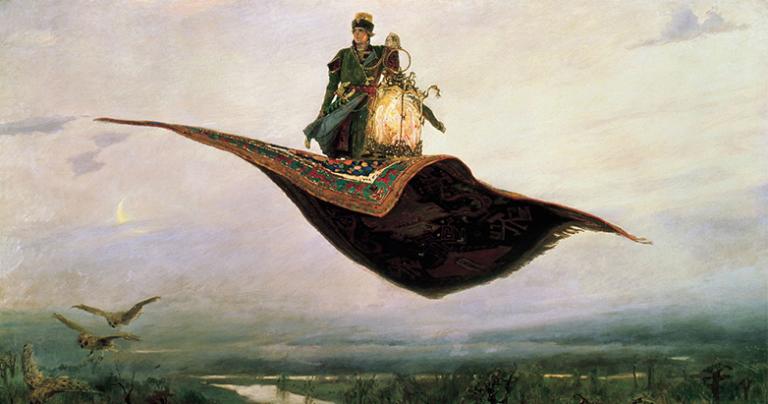
After I got a copy of The 1001 Nights, one of my 7 pre Islamic readings for this 2021, I started learning several things about these tales, confirming many of the things I heard and read in other sources: that the three most famous tales linked to The Arabian Nights are actually not part of it. I’m speaking about Aladdin, Ali Baba and the Forty Thieves, and Sinbad the sailor.
“I cannot help but ask why was it that these three tales, in particular, became so famous instead of any other.” Image by emsquared from Pixabay. Cropped.
I will not say I wasn’t a bit disillusioned to learn that part of my childhood is actually not part of my heritage. Part of me felt I had been lied to, believing that those tales of adventure, magic, and wonder were not actually traditional Arabic Folk tales.
I cannot help but ask why was it that these three tales, in particular, became so famous instead of any other. The figure of Scheherazade is well known, but as far as I have seen, she is simply the story teller, as if her own tale was merely the background for more interesting fiction. I didn’t even know about her sister Dunyazad and King Shahryar, but I could remember every detail of Disney’s 1992 Aladdin animated film, his two direct-to-video sequels, and was very excited to see the 2019 live-action version.
Where do they come from?
Aladdin and Ali Baba were actually written by Hanna Diyab, a Syrian writer and storyteller. Antoine Galland did the first European translation-edition of The 1001 Nights, published in 12 volumes between 1704 and 1717 as Les mille et une nuits, but he met Diyab on 1709 in France, being the source to both tales. However, Galland never gave Diyab the credit, claiming these stories were part of a now-lost original manuscript, which is partly true since Diyab versions of the tales are lost for sure.
Arafat A. Razzaque wrote a complete, detailed guest-post for Ajam Media Collective about this issue, focusing mostly on Aladdin. Instead of summarizing and repeating him, I would rather recommend you read the first and second parts of his writing.
Sinbad is a more elusive figure. I have only been able to find that he was a late addition to Galland’s The 1001 Nights, and it seems plausible to me that he was inspired by the “Tale of the Shipwrecked Sailor”, which would give it a kind of historical value, although there is nothing for sure as far as I can see.
If not folklore, are they valuable?
While they may not be “traditional” tales in the strict sense of the world, called “orphan tales” for not having a real place in the anthology, I could consider them as modern pieces of folklore. Aladdin and Ali Baba are public domain tales written by a Syrian priest, so they may as well reflect the world he lived in, or be seen as his way to honor his roots, to write tales influenced by traditional tales.
Sinbad is a big mystery as I said before, but it also carries some influence and power in it. The protagonist is one of the most well-known figures of Arabic literature, rivaling Aladdin, and has given thousands and one readers dreams about endless oceans and adventures.
These three stories would be a nice addition to The 1001 Nights as an appendix or annex that specified these aspects and clarified their origins. Despite I still feel a little crestfallen about the whole issue, I cannot help but wonder about what I will find in the original tales, and even more, now that I just read about an old manuscript very similar to the Arabian Nights, but with significantly different stories.

About Bader Saab
I’m an Arabic witch and journalist, also with a master’s degree in digital research. I have worked as a book reviewer and written about pre-Islamic folklore. You can read more about the author here.
Previous Post

January 31, 2021
The Al-gharāniq Episode, or the Satanic Verses
Next Post

February 14, 2021 Revisiting Shahmaran: A Guide for Healers and Lovers + Prayer
Browse Our Archives
Select a Category Ancestors Book review Books Deities Divination Folklore History news Practice Spirits Uncategorized Wellbeing witchcraft Writing
Select a Month September 2026 July 2026 March 2026 December 2025 November 2025 August 2025 July 2025 June 2025 February 2025 January 2025 September 2024 July 2024 March 2024 February 2024 November 2023 September 2023 July 2023 May 2023 April 2023 February 2023 January 2023 December 2022 November 2022 October 2022 September 2022 July 2022 June 2022 May 2022 April 2022 March 2022 February 2022 January 2022 December 2021 October 2021 September 2021 August 2021 July 2021 June 2021 May 2021 April 2021 March 2021 February 2021 January 2021 December 2020 November 2020 October 2020 September 2020 August 2020
Follow Us!
TAKE THE
Religious Wisdom Quiz
To whom is the letter of 2 John addressed?
Select your answer to see how you score.
The church at Ephesus The seven churches The chosen lady and her children Gaius
Related posts from A Modern Day Sha'ir

No More Booklists. Enter the Fake Degree!

TRENDING AT PATHEOS Pagan

I was recently chatting with someone on Instagram. She asked me what...

While there are many people who share their results, the end of...

On July 23, I saw Christopher Nolan's The Odyssey which is Homer’s...

As I write this two big events have just finished up. One...

Restoring the Watershed of Divine Love
Perhaps cooperation is not something we manufacture through legislation, ideology, or moral...

Many UUs don’t pray because of bad experiences in a previous religion,...
view all Pagan blogs
Ad-Free & Subscriber Log-In Subscription Support
- About Us
- 2026 Calendar
- Videos
- Podcasts
- Library of World Religions
- Faith In Media Tracker
- Advertise With Us
- Write for Us
- Privacy Policy
- Terms of Service
- Do Not Sell My Data
- Contact Us
- Radiant Digital
- Manage Newsletter Subscriptions
- Unsubscribe From Notifications
- Sitemap
Copyright 2008-2026, Patheos. All rights reserved.
Subscription Support Ad-Free & Subscriber Log-In
Follow Patheos