
BuddhistCatholicContemplativeEvangelicalGeneral ChristianHinduJewishLatter-day SaintMuslimNew VisionsProgressive Christian
Beliefs
- Buddhist
- Catholic
- Contemplative
- Evangelical
- General Christian
- Hindu
- Jewish
- Latter-day Saint
- More Voices
- Muslim
- New Visions
- Pagan
- Progressive Christian
Topics
- Religion News
- Food and Religion
- Sports and Religion
- Religious Art
- Religious Music and Entertainment
- Religious Events
- History and Religion
- Style and Religion
- Politics and Religion
- Women in Religion
- Recreation Outdoors and Religion
- Business Finance and Religion
- Careers Workplace and Religion
- Education and Religion
- Family Parenting and Religion
- Health Fitness and Religion
- Home and Religion
- Relationships and Religion
- Technology and Religion
- Travel and Religion
Columnists
- Buddhist Columnists
- Business Finance and Religion Columnists
- Careers Workplace and Religion Columnists
- Catholic Columnists
- Contemplative Columnists
- Education and Religion Columnists
- Evangelists Columnists
- Family Parenting and Religion Columnists
- General Christian Columnists
- Health Fitness and Religion Columnists
- Hindu Columnists
- History and Religion Columnists
- Home and Religion Columnists
- Jewish Columnists
- More Voices Columnists
- Latter Day Columnists
- Muslim Columnists
- New Visions Columnists
- Nonreligious Columnists
- Pagan Columnists
- Politics and Religion Columnists
- Progressive Columnists
- Recreation Outdoors and Religion Columnists
- Relationships and Religion Columnists
- Religion News Columnists
- Religious Art Columnists
- Religious Events Columnists
- Religious Music and Entertainment Columnists
- Sports and Religion Columnists
- Style and Religion Columnists
- Technology and Religion Columnists
- Travel and Religion Columnists
- Women in Religion Columnists
Resource Library
- 2026 Calendar
- Library of World Religions
- The 100 Most Holy Places on Earth
- Patheos Answers
- Podcasts
- Videos
- Faith Leaders Database
- Anglican Episcopalian
- Bahai
- Baptist
- Buddhism
- Christianity
- Confucianism
- Eastern Orthodoxy
- Hinduism
- Holiness and Pentecostal
- ISKCON
- Islam
- Judaism
- Lutheran
- Methodist
- The Church of Jesus Christ of Latter-day Saints
- New Age
- Paganism
- Presbytarian and Reformed
- Protestantism
- Religion Behind the Scenes
- Roman Catholic
- Scientology
- Shia Islam
- Sikhism
- Sufism
- Sunni Islam
- Taoism
- Zen
- See all religions
Research Tools
 Ad-Free & Subscriber Log-In Subscription Support
Ad-Free & Subscriber Log-In Subscription Support
Follow Patheos 

- Trending:
- Forgiveness
- |
- Marriage
- |
- Consciousness
- |
- Death Penalty
- |
- Election
- |
- Halloween

- Home
- Pagan
- DSD: Hilal, the pre-Islamic God of Cycles, Trickery and the Crescent Moon
DSD: Hilal, the pre-Islamic God of Cycles, Trickery and the Crescent Moon
Last updated on: January 24, 2021 at 10:26 pm by Bader Saab
DSD: Hilal, the pre-Islamic God of Cycles, Trickery and the Crescent Moon 2021-01-24T22:26:59-04:00 Bader Saab
Patheos Explore the world's faith through different perspectives on religion and spirituality! Patheos has the views of the prevalent religions and spiritualities of the world.
The crescent moon is highly respected and important in the Muslim world, something that could date back to pre-Islamic times. The reason is that it was and is still used to determine the religious calendar of the faithful, but could it be possible that it was seen as a God before the times of Muhammad? If you ask me, it is very probable.
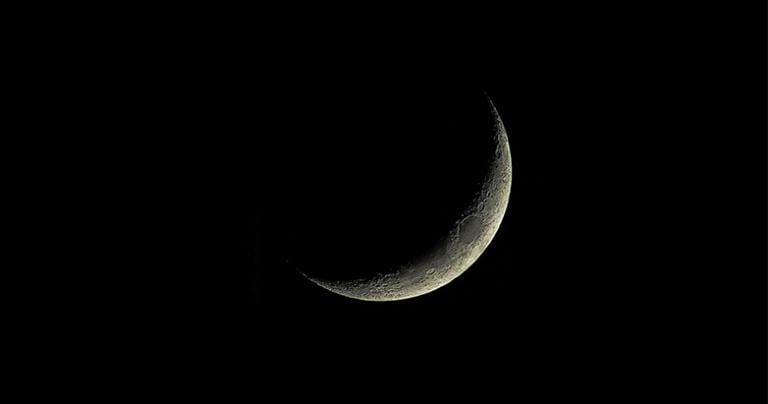
“The crescent moon, the sighting of which is important for the determination of when certain religious duties and practices must take place”. Image by Pexels from Pixabay. Cropped.
Not Much Information
First, it is surprising that there is no mention of Hilal or the Crescent Moon on The Book of Idols, but, even more surprising, is the fact that He is mentioned in the Wikipedia page “List of pre-Islamic Arabian deities” as “a god of the new moon”, even though He’s the only one without attestations either during the Pre-Islamic era or the Islamic tradition according to the same page. On the other hand, the page for Hilal specifies that this word is for “the crescent Moon visible after a new Moon, determining the beginning of a month in the Islamic calendar”.
Esposito, in The Oxford Islamic Studies Online, edited by Esposito, agrees with this idea:
The crescent moon, the sighting of which is important for the determination of when certain religious duties and practices must take place. The Quran says that new moons are “fixed seasons for humankind and for pilgrimage” (2:189)*. The need to determine the precise appearance of the hilal was one of the inducements for Muslim scholars to study astronomy. When it became apparent that sighting the new moon by the naked eye was not exact, some Muslims (primarily Ismailis) argued for calculating (hisab) the appearance of the new moon. The majority of Sunni Muslims have rejected calculation in favor of visual sighting.
The only full description I could find about a God with this name was from Yunajjam (2011):
Hilāl is the Meccan moon god; the deification of the very slender waxing or waning crescent moon which was first visible before and after a new moon, heralding the start of the month of Ramadan: this was a sacred time for the pre-Islamic Arabs of Mecca and the Hijaz, during which they fasted and feasted, and all tribal feuding and misbehavior was forbidden. The influence of the moon god was considered to be beneficial and encourage the growth of date palms: whereas the sun goddess Shams would scorch the ground and cause discomfort, particularly in the high summer of the month of Ramadan, a time when Hilāl was called upon especially. Amulets in the shape of crescent moons were worn to gain the influence by and protection of the moon god by many Semitic cultures.
Hilāl was an important deity of the tribe of Banu Kinanah who lived to the south of Mecca, and the significance of the crescent moon as the marker of the beginning of Ramadan heightened the gods status in the religion of the Arabs of the pre-Islamic Hijaz. The classical Arabic name of the god in his form of the full moon is al-Qamar. Other names for the moon god across the Arabian peninsula include the classical Arabic an-Nayyir (‘The Luminous One’); Sayin (cognate of the Babylonian Sin) to the ancient Hadramites; Kahl to tribe of Kindah; Wadd (‘Platonic love’) to the Minaeans and Warakh (‘Wanderer’) to the Himyarites and Sabaeans. A common act of moon-worship among the Semites was to kiss the hand upon seeing it.
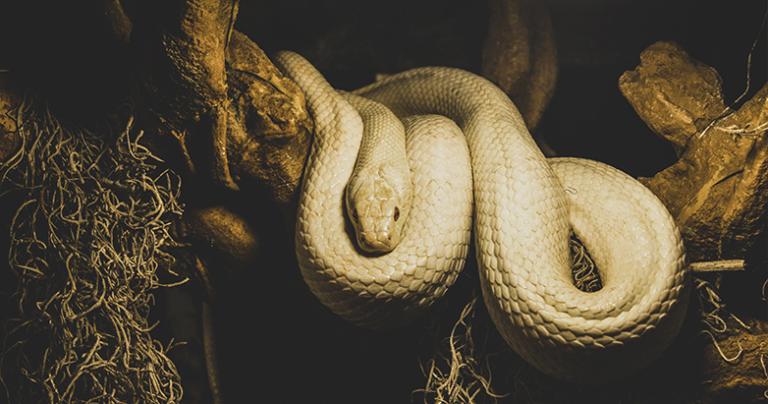
“When I tried to connect with this deity a few days ago, I could only get the image of a white snake and felt His energy was eluding me, like a little child who was hiding on purpose”. Photo by Worldspectrum from Pexels. Cropped.
The Elusive God
While it’s a fact that the Banu Kinanah lived close to the Mecca (Peters, 1994), to include the name of the Ramadan would be incorrect, since it is the name given in the Quran to this month, and the book itself says that God created the moon, among other things, in sura 7:54. What would be correct, in this case, is to use the pre-Islamic name of the month, which would be Nātiq, نَاتِق (an-Naml, K. 1989). If I’m not mistaken, this word could translate either as “naughty” or as “orator”.
When I tried to connect with this deity a few days ago, I could only get the image of a white snake and felt His energy was eluding me, like a little child who was hiding on purpose. I even thought this was some kind of joke. I couldn’t get any other response from Him, but I didn’t get the idea that it had been a failed connection. It makes sense now that I read about all of this.
A deity that governs the months and determines their beginnings and endings shouldn’t be able to be defined, even less if, after asking about “Natiq” to my uncle and aunt, they were unable to tell me what that word means. As I read and worked on this article, I felt I was on the right path, no matter how vague and elusive it all seemed to be at first sight.
When I call for the pre-Islamic Gods, I always get a specific feeling with each name, but Hilal has always been the elusive one, although His always felt good, and I never gave this much thought. Now it all makes perfect sense.
It would be too soon to say anything about the nature of Hilal, but knowing a bit more about Him and what His energy is like, I feel more confident about when I can call for Him, and what for, maybe even how. I have the impression he can be the most playful and restless of the pre-Islamic pantheon so far, but also the one that can help the most when in need of a sudden change. Only time can tell, but meanwhile, I will keep on connecting with Him and see what happens.
* I included a different link for public viewing that doesn’t require registering, and offers several translations of that sura.
References:
- an-Naml, K. 1989. al-Muntakhab min Gharīb Kalām al-ʿArab. El Cairo: Dar Al-Fajr.
- Esposito, J. L. (ed.), “Hilal.” In The Oxford Dictionary of Islam. Oxford Islamic Studies Online.
- Peters, F., 1994. Muhammad And The Origins Of Islam (SUNY Series In Near Eastern Studies). Albany: State University of New York Press.
- Yunajjam (P.V.D), A., 2011. Mythology And Religion Of Pre-Islamic Arabia: Deities, Spirits, Figures And Locations.

About Bader Saab
I’m an Arabic witch and journalist, also with a master’s degree in digital research. I have worked as a book reviewer and written about pre-Islamic folklore. You can read more about the author here.
Previous Post
January 10, 2021
The Nazar: an Arabic Amulet Against the Evil Eye
Next Post

January 24, 2021 Where is the Mercy? White Reflections on Death
Browse Our Archives
Select a Category Ancestors Book review Books Deities Divination Folklore History news Practice Spirits Uncategorized Wellbeing witchcraft Writing
Select a Month September 2026 July 2026 March 2026 December 2025 November 2025 August 2025 July 2025 June 2025 February 2025 January 2025 September 2024 July 2024 March 2024 February 2024 November 2023 September 2023 July 2023 May 2023 April 2023 February 2023 January 2023 December 2022 November 2022 October 2022 September 2022 July 2022 June 2022 May 2022 April 2022 March 2022 February 2022 January 2022 December 2021 October 2021 September 2021 August 2021 July 2021 June 2021 May 2021 April 2021 March 2021 February 2021 January 2021 December 2020 November 2020 October 2020 September 2020 August 2020
Follow Us!
TAKE THE
Religious Wisdom Quiz
I was a scribe skilled in the Law, and I set my heart to study, practice, and teach it. Who am I?
Select your answer to see how you score.
Samuel Solomon Ezra Nehemiah
Related posts from A Modern Day Sha'ir

No More Booklists. Enter the Fake Degree!


Setting a Prayer Corner at Home
TRENDING AT PATHEOS Pagan

I was recently chatting with someone on Instagram. She asked me what...

While there are many people who share their results, the end of...

On July 23, I saw Christopher Nolan's The Odyssey which is Homer’s...

As I write this two big events have just finished up. One...

Restoring the Watershed of Divine Love
Perhaps cooperation is not something we manufacture through legislation, ideology, or moral...

Many UUs don’t pray because of bad experiences in a previous religion,...
view all Pagan blogs
Ad-Free & Subscriber Log-In Subscription Support
- About Us
- 2026 Calendar
- Videos
- Podcasts
- Library of World Religions
- Faith In Media Tracker
- Advertise With Us
- Write for Us
- Privacy Policy
- Terms of Service
- Do Not Sell My Data
- Contact Us
- Radiant Digital
- Manage Newsletter Subscriptions
- Unsubscribe From Notifications
- Sitemap
Copyright 2008-2026, Patheos. All rights reserved.
Subscription Support Ad-Free & Subscriber Log-In
Follow Patheos