
BuddhistCatholicContemplativeEvangelicalGeneral ChristianHinduJewishLatter-day SaintMuslimNew VisionsProgressive Christian
Beliefs
- Buddhist
- Catholic
- Contemplative
- Evangelical
- General Christian
- Hindu
- Jewish
- Latter-day Saint
- More Voices
- Muslim
- New Visions
- Pagan
- Progressive Christian
Topics
- Religion News
- Food and Religion
- Sports and Religion
- Religious Art
- Religious Music and Entertainment
- Religious Events
- History and Religion
- Style and Religion
- Politics and Religion
- Women in Religion
- Recreation Outdoors and Religion
- Business Finance and Religion
- Careers Workplace and Religion
- Education and Religion
- Family Parenting and Religion
- Health Fitness and Religion
- Home and Religion
- Relationships and Religion
- Technology and Religion
- Travel and Religion
Columnists
- Buddhist Columnists
- Business Finance and Religion Columnists
- Careers Workplace and Religion Columnists
- Catholic Columnists
- Contemplative Columnists
- Education and Religion Columnists
- Evangelists Columnists
- Family Parenting and Religion Columnists
- General Christian Columnists
- Health Fitness and Religion Columnists
- Hindu Columnists
- History and Religion Columnists
- Home and Religion Columnists
- Jewish Columnists
- More Voices Columnists
- Latter Day Columnists
- Muslim Columnists
- New Visions Columnists
- Nonreligious Columnists
- Pagan Columnists
- Politics and Religion Columnists
- Progressive Columnists
- Recreation Outdoors and Religion Columnists
- Relationships and Religion Columnists
- Religion News Columnists
- Religious Art Columnists
- Religious Events Columnists
- Religious Music and Entertainment Columnists
- Sports and Religion Columnists
- Style and Religion Columnists
- Technology and Religion Columnists
- Travel and Religion Columnists
- Women in Religion Columnists
Resource Library
- 2026 Calendar
- Library of World Religions
- The 100 Most Holy Places on Earth
- Patheos Answers
- Podcasts
- Videos
- Faith Leaders Database
- Anglican Episcopalian
- Bahai
- Baptist
- Buddhism
- Christianity
- Confucianism
- Eastern Orthodoxy
- Hinduism
- Holiness and Pentecostal
- ISKCON
- Islam
- Judaism
- Lutheran
- Methodist
- The Church of Jesus Christ of Latter-day Saints
- New Age
- Paganism
- Presbytarian and Reformed
- Protestantism
- Religion Behind the Scenes
- Roman Catholic
- Scientology
- Shia Islam
- Sikhism
- Sufism
- Sunni Islam
- Taoism
- Zen
- See all religions
Research Tools
 Ad-Free & Subscriber Log-In Subscription Support
Ad-Free & Subscriber Log-In Subscription Support
Follow Patheos 

- Trending:
- Forgiveness
- |
- Marriage
- |
- Consciousness
- |
- Death Penalty
- |
- Election
- |
- Halloween

- Home
- Pagan
- What’s a Modern Day Sha’ir?
What’s a Modern Day Sha’ir?
Last updated on: November 8, 2020 at 7:30 am by Bader Saab
What’s a Modern Day Sha’ir? 2020-11-07T21:39:27-04:00 Bader Saab
Patheos Explore the world's faith through different perspectives on religion and spirituality! Patheos has the views of the prevalent religions and spiritualities of the world.
I’ve been mentioning this title over and over and it is even part of my column’s name, but what is a sha’ir? What does it mean to be one? What was the role implied in the title? While the origin of the name is unknown, according to Warner et al (1917), the function is crystal clear, and I see it as an important role to play in the modern world.

“The poet (caller sha’ir, a wizard endowed with magic powers) was thought to be inspired by a spirit (jinn, shaytan). The poet defended the honour of his tribe and perpetuated its deeds”. Image by ludovicodealbertis from Pixabay. Cropped.
The short answer
Kuiper (2010, pp: 58-59) gives a very good explanation:
The poet (caller sha’ir, a wizard endowed with magic powers) was thought to be inspired by a spirit (jinn, shaytan). The poet defended the honour of his tribe and perpetuated its deeds. Religious expression was rare in pre-Islamic poetry. In the main it reflects the sense of fatalism that was probably needed if the harsh circumstances of Bedouin life in the desert were to be endured.
This would be the short, simple answer, but I see more here than meets the eye.
First of all, I want to clarify this title is only in masculine form, I would propose the title “sha’ira” as the feminine form, but so far I haven’t found any mention of a “female sha’ir” or a “female poet” in the pre-Islamic world with any similarity, possible due to it being a patriarchal society. The title “naditum” is the closest I could find, but it is still different. It translates as priestesses or servants of the Gods and they tended to be part of the elite, often from royal families in Mesopotamia. Ahmed (1992, pp. 15) explains that:
Women (…) became naditum by being dedicated to the gods in childhood by their fathers. They not only owned property but also had advantages over other women in that they could inherit property “like a son,” their property returning to their patriarchal family on their death. They engaged in business, leased field, and house, bought slaves, entered into contracts, gave loans, and so on.

Illustration. The Book of the Thousand Nights and a Night – Volume 3, Richard Burton, 1885. Source.

About jinn and demons
Although the term Shaitan, or Shaytan, as spelled by Kuiper, was present in the pre-Islamic, it was only used by poets who were in contact with Jews and Christians (El-Zein, 1995). I see this just as a sign of syncretism, perhaps as a way to recognize that they are not perfect and can be either good or evil, just like humans.
However, and as I said before, since their lifespan is longer than a human’s, jinn are regarded as assistants of soothsayers, too, who reveal information from the past and present; ergo, they help with divination. Therefore, a sha’ir was not only responsible of protecting the honor of his tribe and inspiring them in battles, but also had to serve as an oracle or a soothsayer, “a person who predicts the future by magical, intuitive, or more rational means”, as defined by Merriam-Webster.
This reminds me a lot about the power of words and how they can affect the world around us. Also, I’ve always said that rhymes have power and make it easier to remember the words. This also ties to the use of sihr and ruqya, black magic and charms respectively, in the Arabic world. While sihr is considered a dangerous practice that hurts and causes all kinds of evil, ruqya commands jinns and demons to abandon their mischiefs. (Zadeh, 2014).
Abu Unays (2020), a Fitrah Centre writer, explains that:
The Arabic word ruqya (رُقْيَة) linguistically refers to a verbal incantation or chant, uttered or written, to remove unwanted afflictions like possession and sickness. The plural of ruqya is ruqa (رُقَى).
In normal usage, the word is used to refer to the process of expelling jinn from possessed persons, objects and places, and curing evil eye and non-spiritual illnesses and injuries with religious statements, practices and artefacts where medical treatment fails.
The practitioner of ruqya is called Raqi (رَاقِي), the plural of which is Ruqat (رُقَاة).
Considering the nature of the jinn, that they can be good or evil, I see it as a reflection of what how the sha’ir was expected to do for his tribe. They would also need to be a protector, defender, healer, priest, but with abilities to enabled him to attack and hurt his tribe’s enemies. He wouldn’t sugar-coat his magic, and I’m pretty sure they would be both highly respected and feared, but also targeted as important objectives during wars. It would be an active and passive role depending on the tribe’s needs.
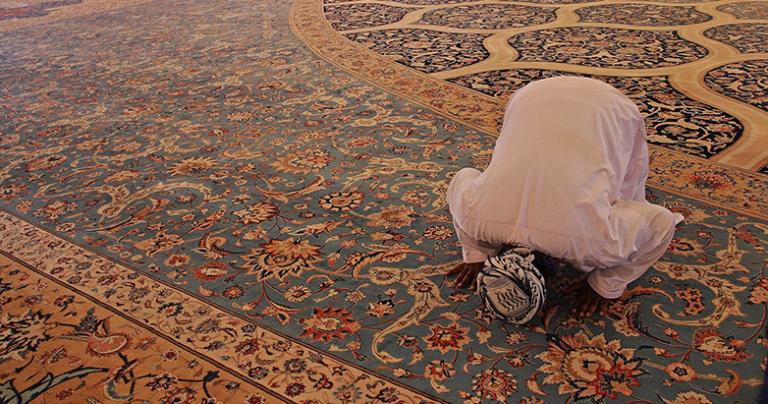
“If the sha’ir was an advisor, healer, priest, protector, soothsayer, warrior, wise man, witch, and intermediary between supernatural beings and his tribe, the role of one in the modern world would be a bit different”. Image by Sharon Ang from Pixabay. Cropped.
A Modern Day Sha’ir?
If the sha’ir was an advisor, healer, priest, protector, soothsayer, warrior, wise man, witch, and intermediary between supernatural beings and his tribe, the role of one in the modern world would be a bit different. While poets also taught rawis (reciters) to learn their poems by heart and to recite them to others (Allen, 2005), I strongly believe the roles of teacher and guide should be added, and make it possible for a woman to become a sha’ira. I’ll take this to the next level: non-binary Arabs should also be able to be sha’irx (I’m not sure if this would be a correct term, though).
Why specifically teacher and guide? Because there is a lot of prejudice toward Arabs. I even heard about a Muslim man who was arrested when someone saw him praying in his office and thought he was a terrorist; he is now terrified of praying, a fundamental part of his religion. Masci (2019) gives good details about this matter:
While ideas about religious liberty and tolerance are central to America’s founding and national story, different religious groups – including Catholics, Jews and Mormons – have suffered discrimination in the United States at various points in history. Today, Americans say some religious groups continue to be discriminated against and disadvantaged, according to an analysis of recent Pew Research Center surveys.
Most American adults (82%) say Muslims are subject to at least some discrimination in the U.S. today, according to a Pew Research Center survey conducted in March – including a majority (56%) who say Muslims are discriminated against a lot.
Among U.S. Muslims themselves, many say they have experienced specific instances of discrimination, including being treated with suspicion, singled out by airport security or called offensive names, according to a 2017 survey of Muslim Americans.
A Modern Day Sha’ir/a/x should be able to educate others about Arab culture, understand it, be able to fight prejudice, bigotry, be there for others and become an agent of change. In short, this needs to be a spiritual, magical, and social role.
I have been an ignorant of my culture, my roots and my history for a long time. People made a lot of fun about me, my family, my culture, my heritage, my roots, and so on. However, I’m changing this within the limits of my possibilities, and I’m proud of what I’ve acomplished so far. From reading and writing about my beliefs to learning about my family’s faith and the history of my country, I’m already the one that can answer some of the questions my cousins have about our heritage. This is just the beginning.
References:
- Abu Unays, 07-07-2020. Ruqya (Part 1): Definition, Validity & Conditions. [online] Fitrah Centre. Accessed 7 November 2020.
- Ahmed, L., 1992. Women and Gender in Islam: Historical Roots of a Modern Debate. New Haven and London: Yale University Press.
- Allen, R., 2005. The Arabic Literary Heritage: The Development of its Genres and Criticism. Cambridge, UK: Cambridge University Press.
- El-Zein, A., 1995. The Evolution Of The Concept Of The Jinn From Pre-Islam To Islam. Ph.D. Georgetown, WA: Georgetown University.
- Kuiper, K., 2010. Islamic Art, Literature, And Culture. Illustrated Edition. New York, NY: Rosen Education Service.
- Masci, D., 2019. Many Americans See Religious Discrimination In U.S. – Especially Against Muslims. [online] Pew Research Center. Accessed 7 November 2020.
- Zadeh, T., 2014. Commanding Demons and Jinn: The Sorcerer in Early Islamic Thought. In: A. Korangy and D. Sheffield, ed., No Tapping around Philology: A Festschrift in Honor of Wheeler McIntosh Thackston Jr.’s 70th Birthday, 1st ed. [online] Wiesbaden: Harrassowitz Verlag, pp. 131–160. Accessed 7 November 2020.

About Bader Saab
I’m an Arabic witch and journalist, also with a master’s degree about to be finished on digital research. I have worked as a book reviewer and written about pre-Islamic folklore. You can read more about the author here.
Previous Post
October 29, 2020
Book review: The Spiritual Poems of Rumi
Next Post

November 15, 2020 On The 1001 Nights
Browse Our Archives
Select a Category Ancestors Book review Books Deities Divination Folklore History news Practice Spirits Uncategorized Wellbeing witchcraft Writing
Select a Month September 2026 July 2026 March 2026 December 2025 November 2025 August 2025 July 2025 June 2025 February 2025 January 2025 September 2024 July 2024 March 2024 February 2024 November 2023 September 2023 July 2023 May 2023 April 2023 February 2023 January 2023 December 2022 November 2022 October 2022 September 2022 July 2022 June 2022 May 2022 April 2022 March 2022 February 2022 January 2022 December 2021 October 2021 September 2021 August 2021 July 2021 June 2021 May 2021 April 2021 March 2021 February 2021 January 2021 December 2020 November 2020 October 2020 September 2020 August 2020
Follow Us!
TAKE THE
Religious Wisdom Quiz
What Christian group follows the "Watchtower" publication?
Select your answer to see how you score.
Jehovah’s Witnesses Baptists Pentecostals Seventh-day Adventists
Related posts from A Modern Day Sha'ir


No More Booklists. Enter the Fake Degree!
TRENDING AT PATHEOS Pagan

I was recently chatting with someone on Instagram. She asked me what...

While there are many people who share their results, the end of...

On July 23, I saw Christopher Nolan's The Odyssey which is Homer’s...

As I write this two big events have just finished up. One...

Restoring the Watershed of Divine Love
Perhaps cooperation is not something we manufacture through legislation, ideology, or moral...

Many UUs don’t pray because of bad experiences in a previous religion,...
view all Pagan blogs
Ad-Free & Subscriber Log-In Subscription Support
- About Us
- 2026 Calendar
- Videos
- Podcasts
- Library of World Religions
- Faith In Media Tracker
- Advertise With Us
- Write for Us
- Privacy Policy
- Terms of Service
- Do Not Sell My Data
- Contact Us
- Radiant Digital
- Manage Newsletter Subscriptions
- Unsubscribe From Notifications
- Sitemap
Copyright 2008-2026, Patheos. All rights reserved.
Subscription Support Ad-Free & Subscriber Log-In
Follow Patheos