
BuddhistCatholicContemplativeEvangelicalGeneral ChristianHinduJewishLatter-day SaintMuslimNew VisionsProgressive Christian
Beliefs
- Buddhist
- Catholic
- Contemplative
- Evangelical
- General Christian
- Hindu
- Jewish
- Latter-day Saint
- More Voices
- Muslim
- New Visions
- Pagan
- Progressive Christian
Topics
- Religion News
- Food and Religion
- Sports and Religion
- Religious Art
- Religious Music and Entertainment
- Religious Events
- History and Religion
- Style and Religion
- Politics and Religion
- Women in Religion
- Recreation Outdoors and Religion
- Business Finance and Religion
- Careers Workplace and Religion
- Education and Religion
- Family Parenting and Religion
- Health Fitness and Religion
- Home and Religion
- Relationships and Religion
- Technology and Religion
- Travel and Religion
Columnists
- Buddhist Columnists
- Business Finance and Religion Columnists
- Careers Workplace and Religion Columnists
- Catholic Columnists
- Contemplative Columnists
- Education and Religion Columnists
- Evangelists Columnists
- Family Parenting and Religion Columnists
- General Christian Columnists
- Health Fitness and Religion Columnists
- Hindu Columnists
- History and Religion Columnists
- Home and Religion Columnists
- Jewish Columnists
- More Voices Columnists
- Latter Day Columnists
- Muslim Columnists
- New Visions Columnists
- Nonreligious Columnists
- Pagan Columnists
- Politics and Religion Columnists
- Progressive Columnists
- Recreation Outdoors and Religion Columnists
- Relationships and Religion Columnists
- Religion News Columnists
- Religious Art Columnists
- Religious Events Columnists
- Religious Music and Entertainment Columnists
- Sports and Religion Columnists
- Style and Religion Columnists
- Technology and Religion Columnists
- Travel and Religion Columnists
- Women in Religion Columnists
Resource Library
- 2026 Calendar
- Library of World Religions
- The 100 Most Holy Places on Earth
- Patheos Answers
- Podcasts
- Videos
- Faith Leaders Database
- Anglican Episcopalian
- Bahai
- Baptist
- Buddhism
- Christianity
- Confucianism
- Eastern Orthodoxy
- Hinduism
- Holiness and Pentecostal
- ISKCON
- Islam
- Judaism
- Lutheran
- Methodist
- The Church of Jesus Christ of Latter-day Saints
- New Age
- Paganism
- Presbytarian and Reformed
- Protestantism
- Religion Behind the Scenes
- Roman Catholic
- Scientology
- Shia Islam
- Sikhism
- Sufism
- Sunni Islam
- Taoism
- Zen
- See all religions
Research Tools
 Ad-Free & Subscriber Log-In Subscription Support
Ad-Free & Subscriber Log-In Subscription Support
Follow Patheos 

- Trending:
- Forgiveness
- |
- Marriage
- |
- Consciousness
- |
- Death Penalty
- |
- Election
- |
- Halloween

- Home
- Pagan
- The Inner Goddess Controversy: Do the Gods Live Inside Us?
The Inner Goddess Controversy: Do the Gods Live Inside Us?
Last updated on: September 23, 2020 at 3:24 pm by Bader Saab
The Inner Goddess Controversy: Do the Gods Live Inside Us? 2020-09-23T15:24:29-04:00 Bader Saab
Patheos Explore the world's faith through different perspectives on religion and spirituality! Patheos has the views of the prevalent religions and spiritualities of the world.
I recently read an article by Astrea about the topic of the Inner Goddess and the idea that the Gods live inside us. It’s a concept that has been around for a while (longer than I think, I’m sure,) and while the idea may have been intended to empower people, mostly women, it certainly created a market that deviates from this purpose. However, I think a bit differently.
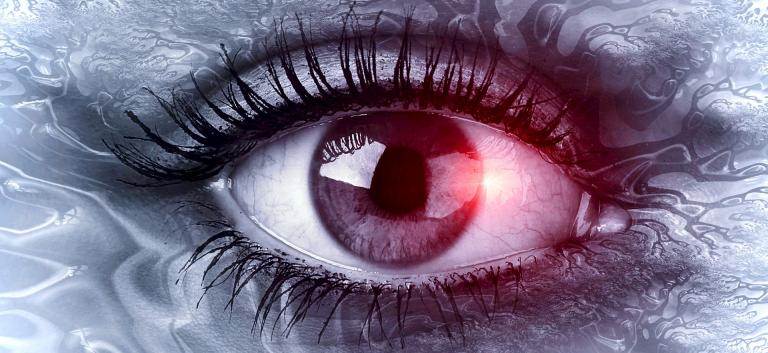
“While we are not our parents, we certainly take a lot of ourselves from them, and this made much sense to me then. It still does, in fact”. Image by Stefan Keller from Pixabay.
A matter of inheritance
When I was a teenager and started to study Magic and Witchcraft, I read the words “Inner Goddess” a lot, and I mean a lot. It was already a solid marker and niche for authors, services, teachers, traditions, and so on. It was more than a movement (or less, depending on how you look at it), it was a calling for sales.
But they never had any bad, repressive meaning for me. While my point of view may be influenced because I’m a man, I never perceived any kind of message about searching for social approval or being perfect according to others’ standards, but quite the opposite. I felt it was about being your truest, most honest self despite whatever (patriarchal) society told (meaning demanded) you to be.
One day, taking a pendulum course, the facilitator said something that stuck with me. He explained that when he was a kid, he reasoned that, if he was a child of God, of the Creator, he had to be a little God, a little Creator. While we are not our parents, we certainly take a lot of ourselves from them, and this made much sense to me then. It still does, in fact.
My Inner God is not a Deity on its own, it’s the part of me that has that Divine spark, that which allows me to create. I’m not channeling any Deity in the process, but taking to the surface my divine self, that part that I connects me directly with the Gods/Goddess/Universe/etc. For me, to free my Inner God (or Goddess, if you will) means to be true to myself. It also means that I am Witch.
Labeling the Gods/Ourselves
Whenever I read about the “Inner Goddess”, and this even applies in some regard to the infamous 50 Shades Saga (but… I read four books, watched the movies, and they are of questionable quality for me), it felt as a calling to free yourself from whichever held you back, whatever it was that made you feel insecure, not enough, little, or less than anyone else. It was a calling to feel empowered by those things that you were born with, to love and accept them, and heal in any way you may need.
While I agree with Astrea when she says that “the women’s reclamation movement is more active than the men’s (and rightfully so)”, I don’t share some of her ideas. Aphrodite, for example, may be the Goddess of love, lust and beauty, but one of Her epithets is Aphrodite Areia, Her warlike aspect, and She has also a side related to nature and gardens.
Athough it’s easy to focus on the first three attributes, the classical ones, I also believe in personal, real relationships with your Deities, for which you need to dwell deeper and research as much as you can about Them. It’s part of our responsibility to question it all. We’ve all made that mistake of thinking we can define the Gods and use certain labels. It makes it easier to understand Them and work with/for Them, but They are not as finite as we like to think.
The same could be said about ourselves. We collect labels and words to describe who we are, but that also could limit our actions. “A man doesn’t do that”, “that’s not how a good girl behaves”, “You’re not a real (insert any word) if do (insert any word)” and so on. It can be exhausting. But a God is limitless. We are beyond far from being a complete Divine being, and yet we can break the mold.
What’s an Inner God/Goddess/Deity, in the end?
I may be biased in this regard, but for me, being connected with my Inner God is about being a Witch. Society left me feeling powerless, dull, grey, and graceless, while Witchcraft helped me reconnect with who I am, who I’ve always been and want to be in the future. Being a Witch gave me back what I thought I had lost. I also agree with Astrea when she said that:
‘A better approach to the “inner goddess” would be to ask yourself what your favorite deity would want for you. For example, Venus may want to you luxuriate in self-care and good food. Athena might want you to create the thing that is in your mind. Still another approach is to listen to your intuition and/or your higher self and find the wisdom there.’
We need more of that! When I think about the Three Daughter of Allah, Manat would definitely want me to respect my roots; Al-Lat would want me to stay true to myself; and Al-‘Uzza would want me to heal myself and help others heal themselves. It is through my own Inner God that I connect and interact with them. It’s the part of me that understands Them the most and that came directly from Them.
This is not about being perfect 24/7. Not even the most advanced machines can do that. Also, where would be the fun in it? We aim for perfection, but we know we’re far from it. It’s part of learning about ourselves, discovering who we are. This is about doing our best and learning from mistakes. Even then Gods make mistakes; let’s not forget, for example, that Zeus thought it would be okay to help Hades force Persephone into a marriage without telling Her mother, Demeter, about it.
The Inner Goddess may be a problematic idea right now, it may be restrictive, plastic and even hypocritical sometimes, but we can still correct what’s wrong. All it needs is some reformulation, putting the right ideas on the front again and clarify what it is (what it should have always been) about. If you can transform your reality, you are a Creator. Therefore, you are Divine (in a way).

About Bader Saab
I’m an Arabic witch and journalist, also with a master’s degree about to be finished on digital research. I have worked as a book reviewer and written about pre-Islamic folklore. You can read more about the author here.
Previous Post

September 21, 2020
Book Review: The Life-Saving Skill of Story
Next Post

September 25, 2020 What Language do the Gods and Ancestors Speak?
Browse Our Archives
Select a Category Ancestors Book review Books Deities Divination Folklore History news Practice Spirits Uncategorized Wellbeing witchcraft Writing
Select a Month September 2026 July 2026 March 2026 December 2025 November 2025 August 2025 July 2025 June 2025 February 2025 January 2025 September 2024 July 2024 March 2024 February 2024 November 2023 September 2023 July 2023 May 2023 April 2023 February 2023 January 2023 December 2022 November 2022 October 2022 September 2022 July 2022 June 2022 May 2022 April 2022 March 2022 February 2022 January 2022 December 2021 October 2021 September 2021 August 2021 July 2021 June 2021 May 2021 April 2021 March 2021 February 2021 January 2021 December 2020 November 2020 October 2020 September 2020 August 2020
Follow Us!
TAKE THE
Religious Wisdom Quiz
Which chapter in Proverbs describes detailed work habits of the ant?
Select your answer to see how you score.
Proverbs 24 Proverbs 6 Proverbs 31 Proverbs 2
Related posts from A Modern Day Sha'ir


Setting a Prayer Corner at Home

TRENDING AT PATHEOS Pagan

I was recently chatting with someone on Instagram. She asked me what...

While there are many people who share their results, the end of...

On July 23, I saw Christopher Nolan's The Odyssey which is Homer’s...

As I write this two big events have just finished up. One...

Restoring the Watershed of Divine Love
Perhaps cooperation is not something we manufacture through legislation, ideology, or moral...

Many UUs don’t pray because of bad experiences in a previous religion,...
view all Pagan blogs
Ad-Free & Subscriber Log-In Subscription Support
- About Us
- 2026 Calendar
- Videos
- Podcasts
- Library of World Religions
- Faith In Media Tracker
- Advertise With Us
- Write for Us
- Privacy Policy
- Terms of Service
- Do Not Sell My Data
- Contact Us
- Radiant Digital
- Manage Newsletter Subscriptions
- Unsubscribe From Notifications
- Sitemap
Copyright 2008-2026, Patheos. All rights reserved.
Subscription Support Ad-Free & Subscriber Log-In
Follow Patheos