
BuddhistCatholicContemplativeEvangelicalGeneral ChristianHinduJewishLatter-day SaintMuslimNew VisionsProgressive Christian
Beliefs
- Buddhist
- Catholic
- Contemplative
- Evangelical
- General Christian
- Hindu
- Jewish
- Latter-day Saint
- More Voices
- Muslim
- New Visions
- Pagan
- Progressive Christian
Topics
- Religion News
- Food and Religion
- Sports and Religion
- Religious Art
- Religious Music and Entertainment
- Religious Events
- History and Religion
- Style and Religion
- Politics and Religion
- Women in Religion
- Recreation Outdoors and Religion
- Business Finance and Religion
- Careers Workplace and Religion
- Education and Religion
- Family Parenting and Religion
- Health Fitness and Religion
- Home and Religion
- Relationships and Religion
- Technology and Religion
- Travel and Religion
Columnists
- Buddhist Columnists
- Business Finance and Religion Columnists
- Careers Workplace and Religion Columnists
- Catholic Columnists
- Contemplative Columnists
- Education and Religion Columnists
- Evangelists Columnists
- Family Parenting and Religion Columnists
- General Christian Columnists
- Health Fitness and Religion Columnists
- Hindu Columnists
- History and Religion Columnists
- Home and Religion Columnists
- Jewish Columnists
- More Voices Columnists
- Latter Day Columnists
- Muslim Columnists
- New Visions Columnists
- Nonreligious Columnists
- Pagan Columnists
- Politics and Religion Columnists
- Progressive Columnists
- Recreation Outdoors and Religion Columnists
- Relationships and Religion Columnists
- Religion News Columnists
- Religious Art Columnists
- Religious Events Columnists
- Religious Music and Entertainment Columnists
- Sports and Religion Columnists
- Style and Religion Columnists
- Technology and Religion Columnists
- Travel and Religion Columnists
- Women in Religion Columnists
Resource Library
- 2026 Calendar
- Library of World Religions
- The 100 Most Holy Places on Earth
- Patheos Answers
- Podcasts
- Videos
- Faith Leaders Database
- Anglican Episcopalian
- Bahai
- Baptist
- Buddhism
- Christianity
- Confucianism
- Eastern Orthodoxy
- Hinduism
- Holiness and Pentecostal
- ISKCON
- Islam
- Judaism
- Lutheran
- Methodist
- The Church of Jesus Christ of Latter-day Saints
- New Age
- Paganism
- Presbytarian and Reformed
- Protestantism
- Religion Behind the Scenes
- Roman Catholic
- Scientology
- Shia Islam
- Sikhism
- Sufism
- Sunni Islam
- Taoism
- Zen
- See all religions
Research Tools
 Ad-Free & Subscriber Log-In Subscription Support
Ad-Free & Subscriber Log-In Subscription Support
Follow Patheos 

- Trending:
- Forgiveness
- |
- Marriage
- |
- Consciousness
- |
- Death Penalty
- |
- Election
- |
- Halloween

- Home
- Pagan
- Jinn: Spirits of Fire and Wilderness
Jinn: Spirits of Fire and Wilderness
Last updated on: October 27, 2020 at 11:31 pm by Bader Saab
Jinn: Spirits of Fire and Wilderness 2020-10-27T23:31:21-04:00 Bader Saab
Patheos Explore the world's faith through different perspectives on religion and spirituality! Patheos has the views of the prevalent religions and spiritualities of the world.
When we were kids, we were amazed by Aladdin’s blue genie voiced by the incredible Robin Williams. Who didn’t want to have those three wishes and make all their dreams come true? We all did, of course. However, when examining history, genies, or more accurately, the jinn, are not that charming, especially in pre-Islamic times.
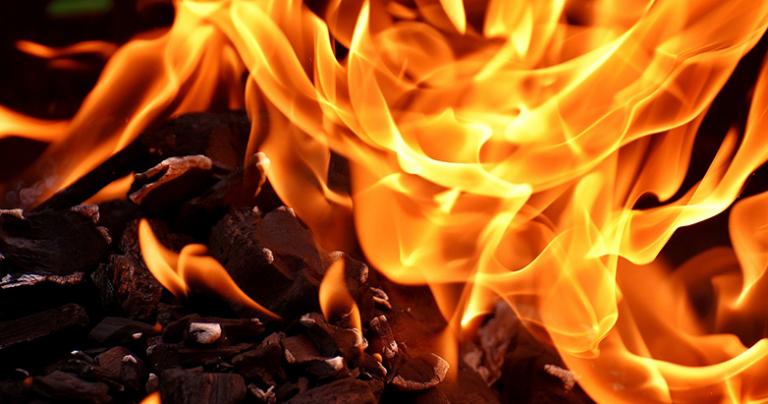
“Jinn is often used as another name for demons, but that’s far from being the case”. Image via Pixabay.
A note of spellings and genders
First, I want to state that pre-Islamic Arabs recognized both male and female versions of these creatures. Depending on the author, you will find different spellings for the same word, so I decided to use the version used by Robert Lebling in his book Legends of the Fire Spirits. (1) The author explains that “jinn” is a plural, while “jinni” is the male singular and “jinniya” a female singular. Although there are many variants, I will use these in this article and the future ones, if I happen to touch the topic of the jinn, for the sake of simplicity.
Although there are many theories about the origin of the word jinn, Irving Zeitlin (2) believes it is derived from the Aramaic ginnaye, which was widely seen in Palmyrene inscriptions and is often translated as “the good and rewarding gods”. The term was used by Christians to denote pagan gods reduced to the status of demons, and was introduced into Arabic folklore only late in the pre-Islamic era.
As an curious fact, the document “Revelations of ʻAbdullah Al-Sayid Muhammad Habib” says that there were also two creatures similar to the jinn: The “hinn,” associated with air, and the “binn”, with water, both said to be extinct according to the document. I encourage the reader to read more about the topic, for it is truly interesting but deviates from the core of this article.
What are the jinn? What do they do?
Jinn (الجن) is often used as another name for demons, but that’s far from being the case. They may be similar, but you can draw the line because jinn can be both evil or good, while genuine demons are exclusively evil (3) and, hence, angels are exclusively good. According to the Quran (55:15), the jinn were created out of marij min nar, which means “a smokeless flame of fire.”
These creatures were seen as spirits of the land in pre-Islamic times, “primordial spirits of the land that functioned as lesser gods beneath the rank of angels who ruled the desert wilderness and desolate places,” in words of ‘Amr-Athtar Yunajjam. They were seen as personification of natural forces, guardians of sacred places, and mediators between gods and humans, and could appear as wild animals, especially snakes, which were sacred to these beings.
When someone thought they had offended a jinn for some reason, usually because they suddenly became ill, they would throw a rock to a bush or body of water thought to be sacred to the jinn. Animal sacrifices and the worshipping of baetyls, idols through which pre-Islamic Arabs believed deities and entities would come in to interact with humans temporarily, were also common forms of honouring jinn.
Witchcraft, or sihr (سِحْر), is often associated with jinn, and so a sorcerer may summon a jinn and force them to carry out orders, usually by the aid of talismans or by satisfying the jinn, thus to make a contract. Since their lifespan is longer than a human’s, jinn are regarded as assistants of soothsayers, too, who reveal information from the past and present.
Notable Jinn
To list all notable jinn would be impossible, but among the most known are the originally ginnaye, the “good and rewarding gods.” The first one is Ashar, a north Arabian war god whose cult was popular near Palmyra in southern Syria, depicted as archer with a bow and quiver seated on a horse. The second is Sa’d, a west Arabian god of good fortune who was worshipped chiefly by the Bedouin tribe of Banu Kinãnah who would visit his idol, a large outcrop of rock on the seashore of Jeddah in the Hijaz, in order to obtain the gods’ blessing.
We also have Azazil (”Strong One of Allah/Il”) which is a lord of the jinn in Arabian and Hebrew mythology to whom goats were sacrificed in order to atone for a major sin committed by a member of the tribe. Azazil was believed to rule over mountainous and rugged desert areas that were inhospitable and were believed to be inhabited by satyr-like jinn known to the Hebrews as the se’irim, of which he was their chief.
Jabal Qaf is a legendary mountain made of green peridot located at the farthest point of the physical universe, said to be inhabited by jinn and other supernatural beings. The mountain is ruled by Jān ibn Jān, the most ancient of the jinn and from whom all jinn are descended. You also have the Seven kings of the Jinn, who rule over the seven days of the week, mentioned by Lebling (2010, p. 87). I’m listing the common name or names first, with others in parentheses; it seems to me those are more informal names, while the common ones are more respectful or carry more power:
- Sunday: Al-Mudhdhahab/ Al-Mudhhib/ Al-Mudhhab; المذهب – The Golden One. (Abu ‘Abdallah Sa’id).
- Monday: Al-Abyaḍ; الابيض – The White One (Murrah al-Abyad Abu al-Harith; Abu an-Nur).
- Tuesday: Al-Aḥmar; الاحمر – The Red One (Abu Mihriz; Abu Ya’qub).
- Wednesday: Būrqān/ Borqaan; بورقان – Two Thunders (Abu al-‘Adja’yb; Al-Aswad).
- Thursday: Shamhuresh; شمهورش (Abu al-Walid; At-Tayyar)
- Friday: Zawba’ah; زوبعة – Cyclone, Whirlwind (Abu Hassan)
- Saturday: Maymun; ميمون – Prosperous (Abu Nuh)
You might also be interested in the Qarin, an unseen creature compared to the jinn. It is the constant spiritual companion of humans. Depending on who you ask, it has either an equal chance of being good or evil, or is a completely benevolent being that acts like the Christian guardian angel, a protector and guide.
How to work with them?
If you are drawn to the jinn, I would recommend you to first have experience working with other deities and know how to cleanse and protect yourself. Remember that these creatures can be equally good and evil. It is also a good idea to work first with other pre-Islamic Arabic entities, Manat being my personal favorite, before getting started with them.
Since they are fire creatures, light a fire in their honour to show them you respect their presence, should they make it known to you, or just to ask them to do so if you believe there is one near to you. Don’t play with the fire or add anything besides wood, just let it be there, and wait for any sign, either in the flames, the smoke, or the ashes. If you get a message asking you to add something else, consult a deity, an oracle, meditate on it, and if you get positive answers, go ahead.
Also, I would suggest the use of sympathetic magic. Since animal sacrifices are out of the question for most of us, why not sculpt animals from clay? It is fun, easy, and no one will ask why you are doing it. Later, when nobody’s looking, throw the sculpture to the fire as a sacrifice to the jinn. As I said before, wait for signs of any kind.
Stones are a good option, too, mostly peridot. Have several common stones forming a pyramid or a grid, and a peridot at the top or center respectively, or have only peridots if you want, to show your respect and wishes to contact the jinn.
Finally, I have to admit that I lack the knowledge of how to make Arabic talismans, but I’m inclined to think that, since beings superior to humans are not represented with human form in the Arabic world, written words should work fine, and if you know their name, then write a poem in the honour of the jinni or jinniya you are trying to work with. As I said in my previous article, use Arabic when possible, and be honest and straightforward.
The jinn left an imprint in the world, anyone can recognize one in a movie, a cartoon, a TV series, but remember that you’re not dealing with a funny, blue-skinned creature that gives you three wishes. If you’re going to work with them, be cautious, do as much research as you can, and always have a major deity on your side.
1. Lebling, Robert. Legends of the Fire Spirits: Jinn and Genies from Arabia to Zanzibar, I.B.Tauris, 2010.
2. Zeitlin, Irving M. The Historical Muhammad. Polity, 2007. pg. 59-60.
3. El-Zein, Amira. Islam, Arabs, and Intelligent World of the Jinn. Syracuse University Press, 2009. pg. 100.
Article originally published in Spiral Nature. Edited.

About Bader Saab
I’m an Arabic witch and journalist, also with a master’s degree about to be finished on digital research. I have worked as a book reviewer and written about pre-Islamic folklore. You can read more about the author here.
Previous Post

September 10, 2020
Al-‘Uzza: The pre-Islamic goddess of War, Protection, and Healing
Next Post

September 15, 2020 Book Review: Shine On
Browse Our Archives
Select a Category Ancestors Book review Books Deities Divination Folklore History news Practice Spirits Uncategorized Wellbeing witchcraft Writing
Select a Month September 2026 July 2026 March 2026 December 2025 November 2025 August 2025 July 2025 June 2025 February 2025 January 2025 September 2024 July 2024 March 2024 February 2024 November 2023 September 2023 July 2023 May 2023 April 2023 February 2023 January 2023 December 2022 November 2022 October 2022 September 2022 July 2022 June 2022 May 2022 April 2022 March 2022 February 2022 January 2022 December 2021 October 2021 September 2021 August 2021 July 2021 June 2021 May 2021 April 2021 March 2021 February 2021 January 2021 December 2020 November 2020 October 2020 September 2020 August 2020
Follow Us!
TAKE THE
Religious Wisdom Quiz
Who was Ruth's second husband?
Select your answer to see how you score.
Elimelech Boaz Chilion Mahlon
Related posts from A Modern Day Sha'ir
No More Booklists. Enter the Fake Degree!

Setting a Prayer Corner at Home

TRENDING AT PATHEOS Pagan

When we talk about Greek religion, we often begin with the dodekatheion—the...

I was recently chatting with someone on Instagram. She asked me what...

While there are many people who share their results, the end of...

On July 23, I saw Christopher Nolan's The Odyssey which is Homer’s...

As I write this two big events have just finished up. One...

Restoring the Watershed of Divine Love
Perhaps cooperation is not something we manufacture through legislation, ideology, or moral...
view all Pagan blogs
Ad-Free & Subscriber Log-In Subscription Support
- About Us
- 2026 Calendar
- Videos
- Podcasts
- Library of World Religions
- Faith In Media Tracker
- Advertise With Us
- Write for Us
- Privacy Policy
- Terms of Service
- Do Not Sell My Data
- Contact Us
- Radiant Digital
- Manage Newsletter Subscriptions
- Unsubscribe From Notifications
- Sitemap
Copyright 2008-2026, Patheos. All rights reserved.
Subscription Support Ad-Free & Subscriber Log-In
Follow Patheos