
BuddhistCatholicContemplativeEvangelicalGeneral ChristianHinduJewishLatter-day SaintMuslimNew VisionsProgressive Christian
Beliefs
- Buddhist
- Catholic
- Contemplative
- Evangelical
- General Christian
- Hindu
- Jewish
- Latter-day Saint
- More Voices
- Muslim
- New Visions
- Pagan
- Progressive Christian
Topics
- Religion News
- Food and Religion
- Sports and Religion
- Religious Art
- Religious Music and Entertainment
- Religious Events
- History and Religion
- Style and Religion
- Politics and Religion
- Women in Religion
- Recreation Outdoors and Religion
- Business Finance and Religion
- Careers Workplace and Religion
- Education and Religion
- Family Parenting and Religion
- Health Fitness and Religion
- Home and Religion
- Relationships and Religion
- Technology and Religion
- Travel and Religion
Columnists
- Buddhist Columnists
- Business Finance and Religion Columnists
- Careers Workplace and Religion Columnists
- Catholic Columnists
- Contemplative Columnists
- Education and Religion Columnists
- Evangelists Columnists
- Family Parenting and Religion Columnists
- General Christian Columnists
- Health Fitness and Religion Columnists
- Hindu Columnists
- History and Religion Columnists
- Home and Religion Columnists
- Jewish Columnists
- More Voices Columnists
- Latter Day Columnists
- Muslim Columnists
- New Visions Columnists
- Nonreligious Columnists
- Pagan Columnists
- Politics and Religion Columnists
- Progressive Columnists
- Recreation Outdoors and Religion Columnists
- Relationships and Religion Columnists
- Religion News Columnists
- Religious Art Columnists
- Religious Events Columnists
- Religious Music and Entertainment Columnists
- Sports and Religion Columnists
- Style and Religion Columnists
- Technology and Religion Columnists
- Travel and Religion Columnists
- Women in Religion Columnists
Resource Library
- 2026 Calendar
- Library of World Religions
- The 100 Most Holy Places on Earth
- Patheos Answers
- Podcasts
- Videos
- Faith Leaders Database
- Anglican Episcopalian
- Bahai
- Baptist
- Buddhism
- Christianity
- Confucianism
- Eastern Orthodoxy
- Hinduism
- Holiness and Pentecostal
- ISKCON
- Islam
- Judaism
- Lutheran
- Methodist
- The Church of Jesus Christ of Latter-day Saints
- New Age
- Paganism
- Presbytarian and Reformed
- Protestantism
- Religion Behind the Scenes
- Roman Catholic
- Scientology
- Shia Islam
- Sikhism
- Sufism
- Sunni Islam
- Taoism
- Zen
- See all religions
Research Tools
 Ad-Free & Subscriber Log-In Subscription Support
Ad-Free & Subscriber Log-In Subscription Support
Follow Patheos 

- Trending:
- Forgiveness
- |
- Marriage
- |
- Consciousness
- |
- Death Penalty
- |
- Election
- |
- Halloween

- Home
- Pagan
- If the Ancestors Don’t Answer, Change their Altar
If the Ancestors Don’t Answer, Change their Altar
Last updated on: May 11, 2023 at 1:20 pm by Bader Saab
If the Ancestors Don’t Answer, Change their Altar 2023-05-11T13:20:57-04:00 Bader Saab
Patheos Explore the world's faith through different perspectives on religion and spirituality! Patheos has the views of the prevalent religions and spiritualities of the world.
I have been honoring my Ancestors for many months already, and I’ve always felt a special connection although I do not share their same fate. I’ve always felt their love, their support, the nearness when I am in the altar I use for them, no matter our differences, the way we see the world/s, and the fact that they would surely have many discussions with me because of my beliefs and opinions. However, a couple of weeks ago, I was sitting there, and felt nothing.
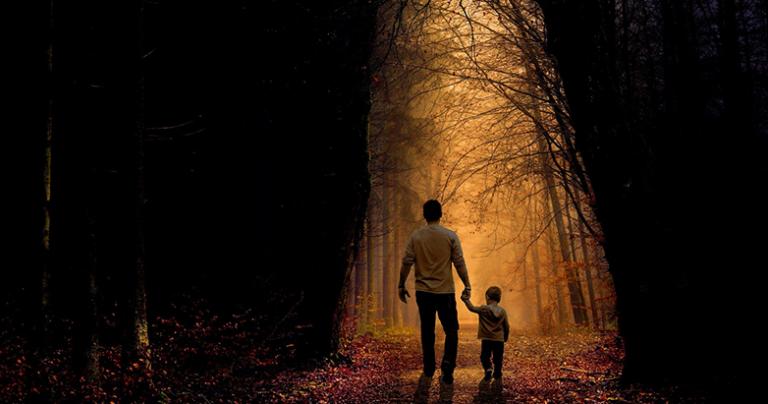
“Several questions popped in my mind. Is this okay? Is this enough? Will they be really happy now with this?” Image via Pixabay
Several nicely arranged things
I was just someone sitting on a chair in front of several nicely arranged things, but there was no energy at all. Thinking that maybe I had had a stressful day and week in general, which I had, and it was affecting my perception, I didn’t pay much attention. My surprise was bigger when this happened again the next day, and the next, and so on for a bit more than a week.
Truth be told, June and July have been difficult months for me and my family, and we haven’t had it easy, so I first thought, again, that this was just a matter of circumstances, numbing my senses. It wouldn’t be the first time, although it was actually the first time it lasted so long. Then I remembered: if that’s the case, then why do I feel so at ease and so connected in my main altar? Tired of not feeling a things, I knew something had to be done, yet I failed to know what.
The answer came that same night. I always do my devotions, prayers, do offerings if I feel the desire or need to do, and so on, in the morning and the nights. When I sat down for the second time, something came to my mind: rearrange the altar. It wasn’t one of my thoughts, wasn’t something I was deciding, but something I was receiving. I took out the offering plate, the clock one of my Ancestors used when alive, the deck of cards I used to talk with the, and left only a simple family tree with my parents, their parents, theirs, and so on as far as my grandma could remember. Yes, I felt, rather than heard.
So… empty
Looking at the altar, now so simple, so… empty, I had mixed feelings. Several questions popped in my mind. Is this okay? Is this enough? Will they be really happy now with this*?* I took a deep breath to silence them. It had been long ago I learned to trust those feelings, no matter how illogical they would seem at first. For a number or reasons I couldn’t it in that altar more than for a few seconds the next days, but when I did there was a change.
With a clear mind and steady breath, I suddenly felt my chest oppressed, the sign that something was about to happen. Deep breath in, deep breath out, and I was in a labyrinth made of stone at night. What? I saw in my mind’s mind where to go, where to turn to the left, the right, saw the labyrinth from above for a second (not enough to see where I was walking to, though, but enough to see I was surrounded by darkness,) and after a minute or so, I saw a desert at twilight. When I arrived, one of my familiars was there, waiting for me, and one of my Ancestors came from behind.
When I looked back, the labyrinth was in ruins. The old stones had crumbled down and the sands were devouring them little by little. However, I felt safe with that spirit I had loved so much while he was alive. We didn’t talk that much, but he smiled, dance and sang a little as he did when I was a child, and my familiar came closer, letting me touch him for a while. Then I felt the urge to come back. I knew he was okay, as all my Ancestors were, so I visualized the door of the room I was in right in the exit of the labyrinth, and opened my eyes when I came in.
No images allowed
I cried a tear or two, the experience still clear in my mind, and couldn’t help but remember what I had been told as a child. Arabs do not believe in images or representations. That’s something that share Islam and the religious minorities derived from them, all at some degree. I was told that I wouldn’t find images in the saints’ tombs or temples, but words and written praises, and even that wasn’t always the case. Sometimes, it would be only mosaics, decorations, and ornamental structures to reflect devotion, faith and worship.
It also was a mistake from my part honoring the pre Islamic Gods and my Ancestors in the same altar. I couldn’t help but smile when I realized that they must be angry with me for putting them in the same place as deities they did not believe in. Before going to the labyrinth, I simply sat down and remained in silence. The images appeared, I saw them like a mess of snapshots and carefully made my way through the corridors as I saw one picture after the other. It was like having a dream within a dream. Having a clear place for them made it much easier for us to connect.
That same day, as I prepared pancakes for breakfast, I couldn’t help but seem some similarities in the process. I had the ingredients, the plate, spoons, and everything I needed in a way that was comfortable for me to use and work with. I only had what I would need, and nothing more. Having an altar was just the same: If you put it there, it’s because you will use it.
It has to look pretty, sure, because you will spend time there and you will want to like it, but follow your intuition to know how to arrange it. The Gods now I’ve changed mine (quoting Katy Parry) “like a girl changes her clothes,” and it has been the right thing to do.
Your needs change, your practice change, and your altar is a reflection of both. It is your direct line with the divine, a garden for your energy to grow and bloom, a mirror for you to know your soul. It is not meant to stay the same for a long time. If you listen carefully, you will know when and how to change it, and like fresh rain for a thirsty plant, the results will show.

About Bader Saab
I’m an Arab witch and journalist, also with a master’s degree in digital research. I have worked as a book reviewer and written about pre-Islamic folklore. You can connect with me by Private Message on Instagram: @saab.bader. You can read more about the author here.
Previous Post

August 29, 2020
Something pre-Islamic this Way Comes?
Next Post
September 7, 2020 How an Arab Witch Honours and Contacts his Ancestors
Browse Our Archives
Select a Category Ancestors Book review Books Deities Divination Folklore History news Practice Spirits Uncategorized Wellbeing witchcraft Writing
Select a Month September 2026 July 2026 March 2026 December 2025 November 2025 August 2025 July 2025 June 2025 February 2025 January 2025 September 2024 July 2024 March 2024 February 2024 November 2023 September 2023 July 2023 May 2023 April 2023 February 2023 January 2023 December 2022 November 2022 October 2022 September 2022 July 2022 June 2022 May 2022 April 2022 March 2022 February 2022 January 2022 December 2021 October 2021 September 2021 August 2021 July 2021 June 2021 May 2021 April 2021 March 2021 February 2021 January 2021 December 2020 November 2020 October 2020 September 2020 August 2020
Follow Us!
TAKE THE
Religious Wisdom Quiz
What language was the New Testament originally written in?
Select your answer to see how you score.
Greek Aramaic Hebrew Latin
Related posts from A Modern Day Sha'ir

Setting a Prayer Corner at Home

Book Review: Liberty Walks Naked
TRENDING AT PATHEOS Pagan

I was recently chatting with someone on Instagram. She asked me what...

While there are many people who share their results, the end of...

On July 23, I saw Christopher Nolan's The Odyssey which is Homer’s...

As I write this two big events have just finished up. One...

Restoring the Watershed of Divine Love
Perhaps cooperation is not something we manufacture through legislation, ideology, or moral...

Many UUs don’t pray because of bad experiences in a previous religion,...
view all Pagan blogs
Ad-Free & Subscriber Log-In Subscription Support
- About Us
- 2026 Calendar
- Videos
- Podcasts
- Library of World Religions
- Faith In Media Tracker
- Advertise With Us
- Write for Us
- Privacy Policy
- Terms of Service
- Do Not Sell My Data
- Contact Us
- Radiant Digital
- Manage Newsletter Subscriptions
- Unsubscribe From Notifications
- Sitemap
Copyright 2008-2026, Patheos. All rights reserved.
Subscription Support Ad-Free & Subscriber Log-In
Follow Patheos