
BuddhistCatholicContemplativeEvangelicalGeneral ChristianHinduJewishLatter-day SaintMuslimNew VisionsProgressive Christian
Beliefs
- Buddhist
- Catholic
- Contemplative
- Evangelical
- General Christian
- Hindu
- Jewish
- Latter-day Saint
- More Voices
- Muslim
- New Visions
- Pagan
- Progressive Christian
Topics
- Religion News
- Food and Religion
- Sports and Religion
- Religious Art
- Religious Music and Entertainment
- Religious Events
- History and Religion
- Style and Religion
- Politics and Religion
- Women in Religion
- Recreation Outdoors and Religion
- Business Finance and Religion
- Careers Workplace and Religion
- Education and Religion
- Family Parenting and Religion
- Health Fitness and Religion
- Home and Religion
- Relationships and Religion
- Technology and Religion
- Travel and Religion
Columnists
- Buddhist Columnists
- Business Finance and Religion Columnists
- Careers Workplace and Religion Columnists
- Catholic Columnists
- Contemplative Columnists
- Education and Religion Columnists
- Evangelists Columnists
- Family Parenting and Religion Columnists
- General Christian Columnists
- Health Fitness and Religion Columnists
- Hindu Columnists
- History and Religion Columnists
- Home and Religion Columnists
- Jewish Columnists
- More Voices Columnists
- Latter Day Columnists
- Muslim Columnists
- New Visions Columnists
- Nonreligious Columnists
- Pagan Columnists
- Politics and Religion Columnists
- Progressive Columnists
- Recreation Outdoors and Religion Columnists
- Relationships and Religion Columnists
- Religion News Columnists
- Religious Art Columnists
- Religious Events Columnists
- Religious Music and Entertainment Columnists
- Sports and Religion Columnists
- Style and Religion Columnists
- Technology and Religion Columnists
- Travel and Religion Columnists
- Women in Religion Columnists
Resource Library
- 2026 Calendar
- Library of World Religions
- The 100 Most Holy Places on Earth
- Patheos Answers
- Podcasts
- Videos
- Faith Leaders Database
- Anglican Episcopalian
- Bahai
- Baptist
- Buddhism
- Christianity
- Confucianism
- Eastern Orthodoxy
- Hinduism
- Holiness and Pentecostal
- ISKCON
- Islam
- Judaism
- Lutheran
- Methodist
- The Church of Jesus Christ of Latter-day Saints
- New Age
- Paganism
- Presbytarian and Reformed
- Protestantism
- Religion Behind the Scenes
- Roman Catholic
- Scientology
- Shia Islam
- Sikhism
- Sufism
- Sunni Islam
- Taoism
- Zen
- See all religions
Research Tools
 Ad-Free & Subscriber Log-In Subscription Support
Ad-Free & Subscriber Log-In Subscription Support
Follow Patheos 

- Trending:
- Forgiveness
- |
- Marriage
- |
- Consciousness
- |
- Death Penalty
- |
- Election
- |
- Halloween

- Home
- Pagan
- How an Arab Witch Honours and Contacts his Ancestors
How an Arab Witch Honours and Contacts his Ancestors
Last updated on: May 26, 2023 at 5:18 pm by Bader Saab
How an Arab Witch Honours and Contacts his Ancestors 2023-05-26T17:18:43-04:00 Bader Saab
Patheos Explore the world's faith through different perspectives on religion and spirituality! Patheos has the views of the prevalent religions and spiritualities of the world.
I highly respect my ancestors, both my Beloved Dead and my Mighty Dead. (1) I don’t usually call their names and ask for their help, but I always try to know who my ancestors were, how they lived, what I can learn from them, and always respect their memory.
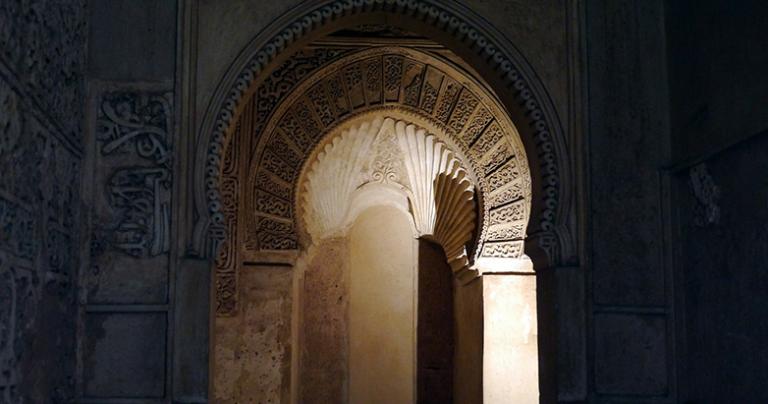
“It was hard at first to honour people who would never approve of witchcraft, yet I felt the need to.” Image via Pixabay.
However, many of my Beloved Dead would not even recognize me as one of their descendants because of their prejudices and their archaic thoughts. Even today, there are people in my family that would stop talking to me if they knew I was a witch, and they too will become my ancestors in time.
While I think many of the ancestors I choose to honour had more interesting lives, and I feel nearer to them because of their work, I cannot deny where I come from. It was hard at first to honour people who would never approve of witchcraft, yet I felt the need to. The problem was, how to do it in a respectful manner I felt comfortable with?
As with many things, the answer came when it had to.
I visited a friend I hadn’t seen in a long time, and she told me how she used to honour her deceased familiars when she lived alone. She had pictures of them all on a small table, and every time she felt the need to, she offered either a candle or a bit of water and told them she loved them and remembered them, and that “now that I see you all together, I ask for your permission to do things differently.”
That was exactly what I needed.
Creating a practice
Days after, while I rearranged my altar, I remembered what she said and decided to put a false crow-skull necklace on it and used the cord to “blindfold” its empty eyes, above which there is an inverted five-pointed star. It helps me to remember there is power in death, transformation, the end before the new beginning, but it is also my key to connect with my ancestors.
Crows and ravens are symbols of death to me, and they are actually considered messenger between the worlds. For me, the inverted pentagram it is a symbol of energy focused on the below, the Underworld, that which is unseen. My family does not like that necklace, and I doubt my ancestors would have wanted to see it, but it fits my practice perfectly. Now I only use it when honouring my ancestors.
If the need arises, and I know the answer can come from those who came before me, I put on my raven necklace, turn off the lights except that of my cellphone, take my vampire-themed tarot deck, sit of the ground facing west, and simply ask for their guidance. If I have something to ask, or don’t understand the message I may get, I use the cards.
Why vampires? Because they live in a limbo, they exist between life and death, light and darkness. I have tried using the cards before when summoning the spirit of my father, and although he didn’t like this spiritual path, he answered the call a couple of times.
Calling on Manat
In order to avoid risk, I always ask Hekate to protect me and guide me, or call for Manat, the Arabic goddess of fate, “one of the so-called Daughters of ALLAH, she is primarily identified with a shrine (now lost) between Mecca and Medina.” (2)
I usually do this with a prayer in Arabic that I wrote specifically for Manat. Also, I have one of these crystals present: quartz to cleanse, white opal to calm, and onyx to absorb negative energy. If possible, I cast a circle with a blade that my dad gave me that has become my athame. Funnily enough, it has a traditional Arabic design.
The other two daughters of Allah, Al-Uzza and Allat, form a highly respected trinity in pre-Islamic beliefs, and coincidentally, along with Manat, they are pretty similar to the Wiccan Triple Goddess.
Allat, for example, “became syncretized with Athena or, according to Herodotus who called her Alilat, with Aphrodite,” and so bears a resemblance to the Mother. While Uzza, according to ‘Amr-Athtar Yunajjam, was seen as a war and healing goddess, and so similar to the Maiden. Allat was also “considered to be a protector of the spirits the dead who dwelt under the earth.” (3).
Respecting signs
However, I also respect the signs I get in the days before I plan to contact my ancestors. This year, two nights before the day I would contact someone from my family, I woke up after a very personal, yet unsettling dream with my deceased grandfather, and I remained dizzy, almost sleepy, for an hour or so. After thinking about it, I realized it was a warning, and that it would be better not to contact anyone, at least not the day I had expected to. Instead, I had a successful necromancy session before Samhain arrived, in which many of my Beloved Dead came and gave encouraging messages.
Also, I modified the Eko Eko Chant, which could have been an Arabic chant to Mal’ak Tawus*, (4) to invoke Allah, his three daughters, and three Gods: Hilal, “the deity of the new moon;” Hubal, a “local tutelary and oracular god;” and Wadd, a “moon god. (…) His sacred animal is the snake.” (5) My version of this chant goes as follows:
Iqwa, iqwa, Az-Zaraq,**
Iqwa, iqwa, Zhamâl-Uka
Eko, eko, Cernunnos,
Eko, eko, Aradia!
Iqwa, iqwa, Ya Al-Uzza,
Iqwa, iqwa, Ya Al-Lat,
Iqwa, iqwa, Ya Manat,
Iqwa, iqwa, Ya Allah!
(Repeat first four lines)
Iqwa, iqwa, Ya Hubal,
Iqwa, iqwa, Ya Hilal,
Iqwa, iqwa, Ya Wadd,
Iqwa, iqwa, Ya Allah!
(Repeat first four lines)
Given the lack of available information, there I still have way more reading to do and so much research in order to incorporate pre-Islamic beliefs in my practice. As a result, I’m still developing a system that I can easily understand and follow. But so far, I am more than pleased with the results, at least concerning my ancestral work and how I honour my roots.
Conclusion
Although I have no control over who my ancestors were and what they thought, I do have control over myself. I ask them to guide me and grant me their wisdom. I try to learn from their mistakes, but under no terms do I let them fight my battles or make my decisions. Theirs was their life and this is mine, and that’s the limit I put between us; it has worked so far.
Although I accept and respect who my ancestors were, what they thought, and what they would say if they were alive by now, I understand theirs was a different time. I also ask them to understand the same in return, just like my friend do. I ask their permission to do things differently, but keep their memory and our culture alive in me.
- In his book The Witch’s Book of Spirits, Devin Hunter explains that the Beloved Dead are our ancestors of blood, while the Mighty Dead are people we decide to honour but that have no blood affiliation with us.
- J. Michael, Dictionary of Gods and Goddesses, 2nd Edition, Facts on File, Inc., 2004.
- A. Yunajjam, “Mythology and religion of pre-Islamic Arabia: Deities, Spirits, Figures and Locations,” Arabian Paganism, 9 November 2011.
- Steven Posch, “Was ‘Eko Eko Azarak’ Originally an Arabic Chant to the Devil?,” Witches and Pagans, 4 November 2016.
- All quotes taken from J Michael, Dictionary of Gods and Goddesses, 2nd Edition, Facts on File, Inc., 2004.
* A Ph.D. in Middle Eastern Studies commented on the name of the angel. In Arabic, the name would be “Malak Tawus” or “Malak Ta’us”, which I have also seen in other sources, but Kurdish “Melekê Tawus” and the more common “Tawusê Melek” are more correct names in terms of grammar.
** The same reader commented that the right form would be “aqwa” rather than “iqwa”. I will keep the original version since it’s the one I have used until now and I have had good results with it, but will do that change in my practice.
Article originally published in Spiral Nature. Slightly edited.

About Bader Saab
I’m an Arab witch and journalist, also with a master’s degree in digital research. I have worked as a book reviewer and written about pre-Islamic folklore. You can connect with me by Private Message on Instagram: @saab.bader. You can read more about the author here.
Previous Post

September 5, 2020
If the Ancestors Don’t Answer, Change their Altar
Next Post
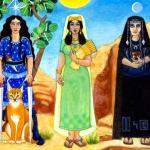
September 8, 2020 Manat: The pre-Islamic Goddess of Time, Fate and Death
Browse Our Archives
Select a Category Ancestors Book review Books Deities Divination Folklore History news Practice Spirits Uncategorized Wellbeing witchcraft Writing
Select a Month September 2026 July 2026 March 2026 December 2025 November 2025 August 2025 July 2025 June 2025 February 2025 January 2025 September 2024 July 2024 March 2024 February 2024 November 2023 September 2023 July 2023 May 2023 April 2023 February 2023 January 2023 December 2022 November 2022 October 2022 September 2022 July 2022 June 2022 May 2022 April 2022 March 2022 February 2022 January 2022 December 2021 October 2021 September 2021 August 2021 July 2021 June 2021 May 2021 April 2021 March 2021 February 2021 January 2021 December 2020 November 2020 October 2020 September 2020 August 2020
Follow Us!
TAKE THE
Religious Wisdom Quiz
What does "do not worry about tomorrow" teach?
Select your answer to see how you score.
Only seek money Worry all the time Ignore everything Trust God for the future
Related posts from A Modern Day Sha'ir
No More Booklists. Enter the Fake Degree!
Setting a Prayer Corner at Home
TRENDING AT PATHEOS Pagan

I was recently chatting with someone on Instagram. She asked me what...

While there are many people who share their results, the end of...

On July 23, I saw Christopher Nolan's The Odyssey which is Homer’s...

As I write this two big events have just finished up. One...

Restoring the Watershed of Divine Love
Perhaps cooperation is not something we manufacture through legislation, ideology, or moral...

Many UUs don’t pray because of bad experiences in a previous religion,...
view all Pagan blogs
Ad-Free & Subscriber Log-In Subscription Support
- About Us
- 2026 Calendar
- Videos
- Podcasts
- Library of World Religions
- Faith In Media Tracker
- Advertise With Us
- Write for Us
- Privacy Policy
- Terms of Service
- Do Not Sell My Data
- Contact Us
- Radiant Digital
- Manage Newsletter Subscriptions
- Unsubscribe From Notifications
- Sitemap
Copyright 2008-2026, Patheos. All rights reserved.
Subscription Support Ad-Free & Subscriber Log-In
Follow Patheos