
BuddhistCatholicContemplativeEvangelicalGeneral ChristianHinduJewishLatter-day SaintMuslimNew VisionsProgressive Christian
Beliefs
- Buddhist
- Catholic
- Contemplative
- Evangelical
- General Christian
- Hindu
- Jewish
- Latter-day Saint
- More Voices
- Muslim
- New Visions
- Pagan
- Progressive Christian
Topics
- Religion News
- Food and Religion
- Sports and Religion
- Religious Art
- Religious Music and Entertainment
- Religious Events
- History and Religion
- Style and Religion
- Politics and Religion
- Women in Religion
- Recreation Outdoors and Religion
- Business Finance and Religion
- Careers Workplace and Religion
- Education and Religion
- Family Parenting and Religion
- Health Fitness and Religion
- Home and Religion
- Relationships and Religion
- Technology and Religion
- Travel and Religion
Columnists
- Buddhist Columnists
- Business Finance and Religion Columnists
- Careers Workplace and Religion Columnists
- Catholic Columnists
- Contemplative Columnists
- Education and Religion Columnists
- Evangelists Columnists
- Family Parenting and Religion Columnists
- General Christian Columnists
- Health Fitness and Religion Columnists
- Hindu Columnists
- History and Religion Columnists
- Home and Religion Columnists
- Jewish Columnists
- More Voices Columnists
- Latter Day Columnists
- Muslim Columnists
- New Visions Columnists
- Nonreligious Columnists
- Pagan Columnists
- Politics and Religion Columnists
- Progressive Columnists
- Recreation Outdoors and Religion Columnists
- Relationships and Religion Columnists
- Religion News Columnists
- Religious Art Columnists
- Religious Events Columnists
- Religious Music and Entertainment Columnists
- Sports and Religion Columnists
- Style and Religion Columnists
- Technology and Religion Columnists
- Travel and Religion Columnists
- Women in Religion Columnists
Resource Library
- 2026 Calendar
- Library of World Religions
- The 100 Most Holy Places on Earth
- Patheos Answers
- Podcasts
- Videos
- Faith Leaders Database
- Anglican Episcopalian
- Bahai
- Baptist
- Buddhism
- Christianity
- Confucianism
- Eastern Orthodoxy
- Hinduism
- Holiness and Pentecostal
- ISKCON
- Islam
- Judaism
- Lutheran
- Methodist
- The Church of Jesus Christ of Latter-day Saints
- New Age
- Paganism
- Presbytarian and Reformed
- Protestantism
- Religion Behind the Scenes
- Roman Catholic
- Scientology
- Shia Islam
- Sikhism
- Sufism
- Sunni Islam
- Taoism
- Zen
- See all religions
Research Tools
 Ad-Free & Subscriber Log-In Subscription Support
Ad-Free & Subscriber Log-In Subscription Support
Follow Patheos 

- Trending:
- Forgiveness
- |
- Marriage
- |
- Consciousness
- |
- Death Penalty
- |
- Election
- |
- Halloween
 American Buddhist Perspectives
- Home
- Buddhist
- Religion News
- For Pride Month: Our 2015 Interview with La Sarmiento on Intersections of Gender, Identity, and Buddhism
For Pride Month: Our 2015 Interview with La Sarmiento on Intersections of Gender, Identity, and Buddhism
Last updated on: June 22, 2021 at 7:17 am by Justin Whitaker
For Pride Month: Our 2015 Interview with La Sarmiento on Intersections of Gender, Identity, and Buddhism 2021-06-22T07:17:23-06:00 Justin Whitaker
Patheos Explore the world's faith through different perspectives on religion and spirituality! Patheos has the views of the prevalent religions and spiritualities of the world.
This year we mark Pride Month with a re-run of an article first published in 2015. Enjoy. Along the way, a wonderful collection of works by trans, genderqueer, and nonbinary practitioners of Buddhism has been published: Transcending: Trans Buddhist Voices (North Atlantic Books 2019).
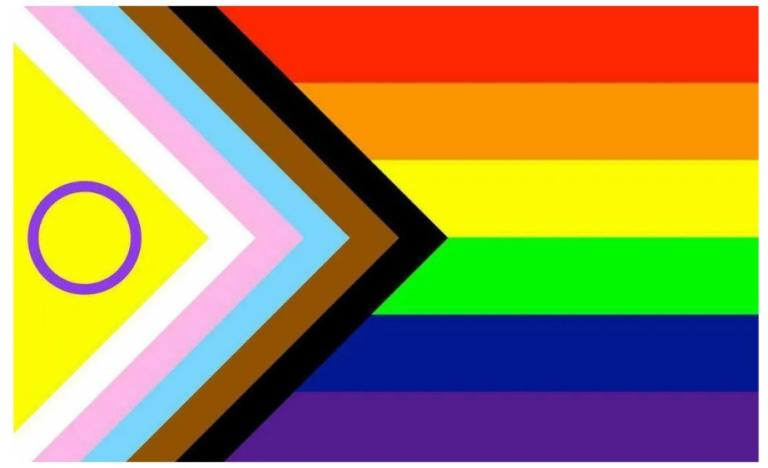
2021 updated Pride Flag
Today I am delighted to introduce readers to La Sarmiento, a long time Vipassana meditator and teacher who will be co-leading a retreat at the Garrison Institute called “Embodying Presence in Our Lives: A Mindfulness Meditation Weekend for Lesbian, Gay, Bisexual, Transgender, Intersex, and Queer Communities” in April along with fellow teachers Madeline Klyne, Eric Kolvig, PhD, and Jacoby Ballard.
Many thanks to Sam Mowe of the Garrison Institute for connecting us and to La for taking the time to do this interview.
~
What is the goal of this mindfulness meditation weekend? How many and what kinds of people do you expect to participate?
There are very few opportunities for the LGBTIQ (Lesbian, Gay, Bisexual, Transgender, Intersex, and Queer) community to practice mindfulness meditation together. Historically, my 2015 Garrison LGBTIQ Retreat co-teacher Eric Kolvig along with lesbian dharma teacher Arinna Weisman pioneered LGBT (the “I” was no yet a part of the acronym) retreats over 20 years ago. A large LGBTQ retreat has been held at the Spirit Rock Meditation Center in Woodacre, CA for many years since. Three years ago, my mentor Larry Yang along with Madeline Klyne offered the first large east coast LGBTIQ retreat at the Garrison Institute in Garrison, NY, and now the Insight Meditation Society in Barre, MA has begun offering an annual LGBTIQ retreat there. The aspiration of such retreats is to create a safe, compassionate, and nurturing space for LGBTIQ yogis to deepen their practice in an environment where who they are and their experiences are reflected by the retreat teachers and where they are surrounded by others who may share similar and diverse experiences of being LGBTIQ in this culture.
We hope to have between 80 – 100 yogis participate, who identify in the continuum of the acronym LGBTIQ from various racial, ethnic, socio-economic, age, religious/spiritual, political, etc… backgrounds.
This is a rather unique retreat in that it has four teachers. Is there a particular reason for having several teachers rather than just one?
The LGBTIQ community is so diverse on many levels. Having four teachers provides an opportunity for members of the retreat sangha to be reflected in some way. It also creates exposure and raises consciousness to the diversity within our own community, which is slowly but surely expanding – especially with regards to gender identity.
What has your experience been as a gender non-conforming person in Buddhism (on a personal and/or community level)?
It’s only been in the past 2-3 years that I have “come out” yet again as a gender non-confirming person. Since the age of five, I was aware that who I felt I was inside did not match my biological sex or physical body, especially as I got older. Growing up in the 70’s, queer consciousness did not go beyond being gay or lesbian. Though at five I also realized that I was attracted to girls and not boys, identifying as a lesbian in my early 20s didn’t resonate either, but it was easier just to go with that label (which was hard enough at that time) than to identify differently. It took me til my early 40s to realize that I did not want to transition to become a man. I so honor and respect my transgender siblings who make the choice to transition, yet for me it didn’t feel quite right either. I’ve always felt somewhere in between.
Personally, it’s been a challenge to come out over and over again. Discerning whether it is safe to do so with family, friends, acquaintances, strangers. It would be great if our culture as a whole just would not assume one’s gender identity to begin with so that the conditioned references regarding the binary (male/female) can slowly be eliminated.
As a dharma teacher and retreat manager, I often come out as genderqueer or gender non-conforming to liberate myself and be my truth as well as to let other transgender yogis know that they are not alone in dominant culture retreats (even LGBTIQ ones). Each time I’ve come out to retreat sanghas or my home sangha, the Insight Meditation Community of Washington (IMCW), I’ve felt seen and accepted in those moments. When it comes to using my pronouns they, their, and them, it’s another story.
That’s an excellent point. I can imagine that a lot of people will have a hard time stepping away from gendered pronouns and using they, their, and them when referring to you in the third person (especially for grammar-sticklers!). Can you say more about why you do this and how it has changed the way people interact with you?
I use the pronouns they, their, and them because I feel that I embody both female and male energies (and everything in between). So technically, it is plural! : ) The gender binary and all associated with it is so deep. It’s the first way we are identified when we’re born. In an interview when celebrity Tina Fey was pregnant, the host asked, “What is the gender of your baby?”. Tina Fey, without missing a beat said, “I won’t know til they go to their senior prom.” There are myriad ways that we project identity on others without knowing how they see themselves.
When I let others know my pronouns, I’m often met with “But that’s not grammatically correct.” I could go into a whole grammar lesson and give examples of how those pronouns are used in the singular, and I choose not to here. What’s most important when a gender non-conforming person asks you to use a certain set of pronouns is to simply use them. No questions asked. It’s about respecting the individual’s need and meeting it. Yes, it’s awkward and uncomfortable to change our language, and it’s been incredibly awkward and uncomfortable to be a gender non-conforming person in a gender binary world! I believe that true inclusion means that we’re going to bump up against the way things have been and to develop, with patience and perseverance, a willingness to change.
There’s a great recent article in Feministing called “How using ‘they’ as a singular pronoun can change the world” that I’ll link to here and at the bottom that explores the grammar issue in further detail.
How has Vipassana meditation impacted your sense of both gender non-conforming and a person of color in this world which privileges the cis-white-male so much?
Vipassana meditation and mindfulness has deepened my practices of patience, acceptance, forgiveness, and compassion. It has allowed me to accept that “it’s like this right now” and that through skillful action and wisdom, we can turn around the suffering that stems from oppression and misused privilege. In all the work I’ve done within dharma communities with regards to issues of diversity and inclusion, what I’ve grown to realize (through much internal and external struggle) is that it is a process, one that takes much time and skillful effort. Vipassana and mindfulness have fostered courage to free my heart and mind to fully examine my internal experience of oppression and how to feel empowered again and again to meet a world of outward oppression.
The teachings of “learning to stay” as Pema Chodron often refers to, as well as getting that my relationship to what is happening will determine my suffering or my freedom have been crucial in my practice of living in a world where injustice and oppression exists. Being open to however life is unfolding and being willing to have my heart broken open over and over again in order to break my own habitual conditioning is my practice. This approach for me is energizing and not draining. (And believe me, I’ve been drained!)
Speaking of this work as a process suggests an at least cautiously optimistic outlook on Western Buddhism becoming more inclusive. What are the biggest hang-ups we as a culture or religion in the West still have? What steps should be taken now and in the future to make the Dhamma more available and inclusive?
I believe that Western Buddhism is slowly becoming inclusive. The biggest hang-ups that we as a culture or “religion” in the West still have is the misinterpretation of the teachings that “We are all one” and that there is “no self”. I believe this to be true in the absolute sense and not so much in the relative or mundane sense. All beings are not treated equally, some have more privileges than others, and many are oppressed by those in power – which in our culture and in Western Buddhism tend to be cisgender, white, straight men. Even within some Buddhist monasteries all over the world, patriarchy exists.
Last year, several Buddhist transgender yogis, including my Garrison LGBTIQ Retreat co-teacher Jacoby Ballard and myself, helped create a document entitled “Developing Trans*Competence: A Guide For Meditation and Retreat Centers” (http://transbuddhists.org/retreat-guide/about-the-guide/) to raise awareness about the issues faced by transgender yogis attending retreats. I wish that this existed when I started practicing 16 years ago as I have often felt uncomfortable using multi-stalled, single-sex bathroom and shower facilities given how frequently I have been questioned for being there.
With regards to steps we can take now and in the future to make the dhamma more available and inclusive, we can start with unabashed self-examination of our conditioned beliefs, stories, traumas, and histories through the practices outlined by the Buddha as well as a greater understanding of our own shadow aspects of our personalities through whatever form of therapy or modality that deepens self-understanding. Creating practice spaces for LGBTIQ, people of color, women, young people, etc…offers a refuge for these groups to feel seen, heard, and respected amongst their peers in a way that may not always happen in dominant culture spaces. I have been the guiding teacher/leader of the IMCW People of Color and LGBTQ sanghas for the past 9 years and have seen how much they have meant to yogis in deepening their efforts in practice within community. Such groups have existed and exist at New York Insight in New York City, the East Bay Meditation Center in Oakland California, and the Cambridge Insight Meditation Center in Massachusetts. Developing more practice spaces for interactive relational dharma so that we can embody and employ wisdom through wise speech and action is also key. In my own experience, I feel it necessary that both the privileged and oppressed practice deep humility and courage to begin to examine and take responsibility for how they enter into and interact in situations/conversations/communities. I have found that having a foundation of relationship based on mutual trust and respect allows folks to hang in there with each other when having the often difficult and challenging conversations regarding diversity and inclusion issues.
Maybe once we’ve learned how to be together in a way that creates unity and honors difference we can then begin to do the work of truly dismantling systems and institutions that prevent us from alleviating the suffering of and cultivating true happiness for all beings everywhere without exception.
~
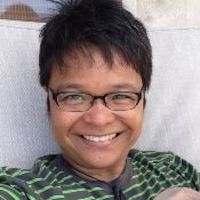
La Sarmiento has been practicing Vipassana meditation and has been a member of IMCW since 1998. La is a graduate of the Community Dharma Leadership IV program sponsored by Spirit Rock Meditation Center and is certified as a Teach .b Mindfulness Teacher with the Mindfulness in Schools Project based in the UK.
Since 2005, La has been the guiding teacher/leader of the IMCW Lesbian, Gay, Bisexual, Transgender, and Questioning (LGBTQ) Sangha and the IMCW People of Color Sangha and more recently they* also co-led the DC Monthly Teen Sangha for youth between 13 – 19 years of age.
For more information on La, check out their website, www.lasarmiento.com.
*La identifies as gender non-conforming and uses the pronouns they, their, and them when being referred to in the third person.
Additional resources:
Interview with the creators of Trans*Buddhists.org, American Buddhist Perspectives, Aug 2014
Sex redefined: The idea of two sexes is simplistic. Biologists now think there is a wider spectrum than that, via Nature, Feb 2015.
How using ‘they’ as a singular pronoun can change the world, via Feministing, Feb 2015.

Browse Our Archives
Select a Category Academia Activism American Buddhism Art Book review Buddhism Buddhism Today Buddhist Ethics Burma/Myanmar China Christianity Commodification Environment Gender Happiness Health Humor India Interfaith Islam Japanese Buddhism Kant Media / News Meditation mindfulness Photography Poetry Politics quicktakes Running Teaching Technology Thailand Theism/Atheism Theravada Tibet Tibetan Buddhism Travels Uncategorized Unitarian Universalism video Western Philosophy Zen
Select a Month June 2021 January 2021 November 2020 August 2020 July 2020 March 2020 January 2020 October 2019 August 2019 June 2019 May 2019 March 2019 February 2019 January 2019 December 2018 November 2018 October 2018 September 2018 August 2018 July 2018 June 2018 May 2018 April 2018 March 2018 February 2018 January 2018 December 2017 November 2017 October 2017 September 2017 August 2017 July 2017 June 2017 May 2017 April 2017 March 2017 February 2017 January 2017 December 2016 November 2016 October 2016 September 2016 August 2016 July 2016 June 2016 May 2016 April 2016 March 2016 February 2016 January 2016 December 2015 November 2015 October 2015 September 2015 August 2015 July 2015 June 2015 May 2015 April 2015 March 2015 February 2015 January 2015 December 2014 November 2014 October 2014 September 2014 August 2014 July 2014 June 2014 May 2014 April 2014 March 2014 February 2014 January 2014 December 2013 November 2013 October 2013 September 2013 August 2013 July 2013 June 2013 May 2013 April 2013 March 2013 February 2013 January 2013 December 2012 November 2012 October 2012 September 2012 August 2012 July 2012 June 2012 May 2012 April 2012 March 2012 February 2012 January 2012 December 2011 November 2011 October 2011 September 2011 August 2011 July 2011 June 2011 May 2011 April 2011 March 2011 February 2011 January 2011 December 2010 November 2010 October 2010 September 2010 August 2010 July 2010 June 2010 May 2010 April 2010 March 2010 February 2010 January 2010 December 2009 November 2009 October 2009 September 2009 August 2009 July 2009 June 2009 May 2009 April 2009 March 2009 February 2009 January 2009 December 2008 November 2008 October 2008 September 2008 August 2008 July 2008 June 2008 May 2008 April 2008 March 2008 September 2007 August 2007 July 2007 June 2007 May 2007 April 2007 March 2007 February 2007 January 2007 December 2006 November 2006 October 2006 September 2006 August 2006 July 2006 June 2006 May 2006 April 2006 March 2006 February 2006 January 2006 December 2005 November 2005 October 2005 September 2005 November 2004 September 2004 August 2004
Follow Us!
TAKE THE
Religious Wisdom Quiz
What kingdom did Isaiah prophesy would take Judah into exile?
Select your answer to see how you score.
Babylon Egypt Assyria Persia
Support this
Column


Related posts from American Buddhist Perspectives

In the rush to return to normal, can...
American Buddhist Perspectives

A Festival of Radical Awakening: Socially Engaged Buddhism...
American Buddhist Perspectives

Shambhala Buddhist Community Faces New Allegations in Chapman...
American Buddhist Perspectives
In Hong Kong, the Bodhisattvas wear Crosses
American Buddhist Perspectives
TRENDING AT PATHEOS Buddhist

On Taking Refuge in the Dharma
(Here I continue the feature of sharing talks and essays by teachers...

(Continuing my intention to share talks and essays by other members of Empty...
The Subtle Art of Bowing: A Dharma Discourse
(This presentation was first offered by my dear friend Dharma Holder Tom...

Internal Family Systems Can Heal you Mentally &...
How IFS Helped Me Stop Fighting Myself Internal Family Systems (IFS) is...

The Bible No One Spoke About: A Family’s...
A mysterious family Bible, unspoken faith, and a journey from curiosity to...

How Uncertainty Can Transform Your Life in 2025
Embracing Uncertainty: A New Year’s Resolution for the Brave As 2025 approaches,...
view all Buddhist blogs
Ad-Free & Subscriber Log-In Subscription Support
- About Us
- 2026 Calendar
- Videos
- Podcasts
- Library of World Religions
- Faith In Media Tracker
- Advertise With Us
- Write for Us
- Privacy Policy
- Terms of Service
- Do Not Sell My Data
- Contact Us
- Radiant Digital
- Manage Newsletter Subscriptions
- Unsubscribe From Notifications
- Sitemap
Copyright 2008-2026, Patheos. All rights reserved.
Subscription Support Ad-Free & Subscriber Log-In
Follow Patheos