
BuddhistCatholicContemplativeEvangelicalGeneral ChristianHinduJewishLatter-day SaintMuslimNew VisionsProgressive Christian
Beliefs
- Buddhist
- Catholic
- Contemplative
- Evangelical
- General Christian
- Hindu
- Jewish
- Latter-day Saint
- More Voices
- Muslim
- New Visions
- Pagan
- Progressive Christian
Topics
- Religion News
- Food and Religion
- Sports and Religion
- Religious Art
- Religious Music and Entertainment
- Religious Events
- History and Religion
- Style and Religion
- Politics and Religion
- Women in Religion
- Recreation Outdoors and Religion
- Business Finance and Religion
- Careers Workplace and Religion
- Education and Religion
- Family Parenting and Religion
- Health Fitness and Religion
- Home and Religion
- Relationships and Religion
- Technology and Religion
- Travel and Religion
Columnists
- Buddhist Columnists
- Business Finance and Religion Columnists
- Careers Workplace and Religion Columnists
- Catholic Columnists
- Contemplative Columnists
- Education and Religion Columnists
- Evangelists Columnists
- Family Parenting and Religion Columnists
- General Christian Columnists
- Health Fitness and Religion Columnists
- Hindu Columnists
- History and Religion Columnists
- Home and Religion Columnists
- Jewish Columnists
- More Voices Columnists
- Latter Day Columnists
- Muslim Columnists
- New Visions Columnists
- Nonreligious Columnists
- Pagan Columnists
- Politics and Religion Columnists
- Progressive Columnists
- Recreation Outdoors and Religion Columnists
- Relationships and Religion Columnists
- Religion News Columnists
- Religious Art Columnists
- Religious Events Columnists
- Religious Music and Entertainment Columnists
- Sports and Religion Columnists
- Style and Religion Columnists
- Technology and Religion Columnists
- Travel and Religion Columnists
- Women in Religion Columnists
Resource Library
- 2026 Calendar
- Library of World Religions
- The 100 Most Holy Places on Earth
- Patheos Answers
- Podcasts
- Videos
- Faith Leaders Database
- Anglican Episcopalian
- Bahai
- Baptist
- Buddhism
- Christianity
- Confucianism
- Eastern Orthodoxy
- Hinduism
- Holiness and Pentecostal
- ISKCON
- Islam
- Judaism
- Lutheran
- Methodist
- The Church of Jesus Christ of Latter-day Saints
- New Age
- Paganism
- Presbytarian and Reformed
- Protestantism
- Religion Behind the Scenes
- Roman Catholic
- Scientology
- Shia Islam
- Sikhism
- Sufism
- Sunni Islam
- Taoism
- Zen
- See all religions
Research Tools
 Ad-Free & Subscriber Log-In Subscription Support
Ad-Free & Subscriber Log-In Subscription Support
Follow Patheos 

- Trending:
- Forgiveness
- |
- Marriage
- |
- Consciousness
- |
- Death Penalty
- |
- Election
- |
- Halloween
 American Buddhist Perspectives
- Home
- Buddhist
- Religion News
- In the rush to return to normal, can we pause instead?
In the rush to return to normal, can we pause instead?
Last updated on: July 19, 2020 at 1:25 am by Justin Whitaker
In the rush to return to normal, can we pause instead? 2020-07-19T01:25:04-06:00 Justin Whitaker
Patheos Explore the world's faith through different perspectives on religion and spirituality! Patheos has the views of the prevalent religions and spiritualities of the world.
It’s mid-July, nearly 6 months since the coronavirus outbreak began taking over front-page news around the world. And we’re a month or so from a major shift in human populations as schools and universities (possibly) reopen with in-person classes: with K-12 schools drawing kids out of homes to mix with other kids and colleges and universities drawing students from across cities, states, and even potentially foreign countries.
I’m seeing a number of colleagues and friends bemoan the current state of things, longing for a return to “normal.” Many are specifically noting the travel they would be doing right now.
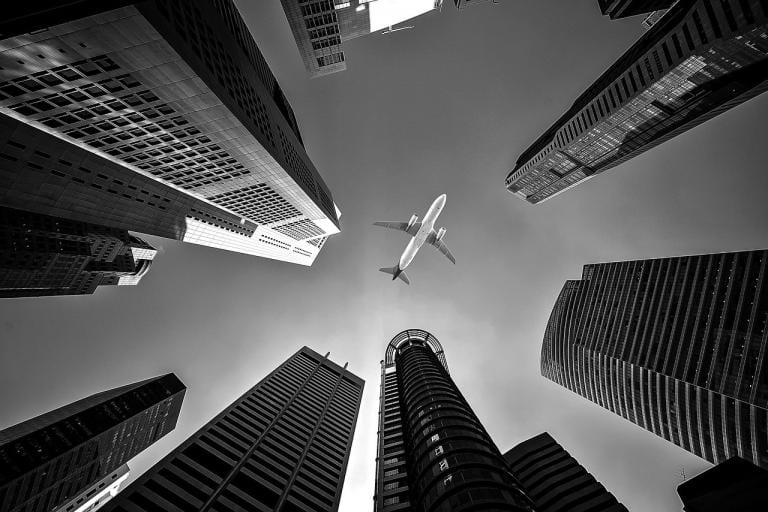
However, as one popular cartoon has illustrated, the COVID-19 pandemic is just one wave of crisis facing humanity. Behind it is a looming financial crisis as governments seek to pay for all of the spending they’ve had to do in the pandemic or have to cut off medical-housing-food-etc benefits they are currently offering. And behind that is the climate crisis: massive wildfires from Brazil to Australia to Siberia signal a quickening pace of climatic instability and some city planners are already making contingency plans for our inaction.
This week, Buddhistdoor Global’s View asks us if we might consider making online life a bit more of a norm, if only to help alleviate the coming two crises after we’ve overcome this first one.
It’s clear that many technophiles have hyped the “disruptive” power of the internet and heralded in this or that “revolution” only to see cutting edge companies and products fall by the wayside as the old order marched forth. It is quite possible, for a while, for a return to the past. 2021 might look a lot like 2017. It might look like 2009. Both are very unlikely given the current status of the COVID-19 pandemic, but I know many people hope and dream that one of these realities will materialize.
However, can we look at the concentrations of wealth that have allowed our “normal” in 2008 or 2017 or today? Are these flows of capital sustainable? Are they beneficial for the most people? Are they even beneficial for those of us who have often been at the receiving end? And I write that as a newly middle-class worker after 20 years of just-getting-by student and adjunct professor life. Passing the buck to the Gates’ and the Bezos’ of the world is easy (and worthy, those guys need to be taxed more!), but even middle-class Americans are sitting on wealth greater than 90% of the world.
Secondly, the environmental cost of our lifestyles: is that sustainable? When I was teaching I loved the fact that my employer would fly me to India or China every year. I also would love more people to have that opportunity. But that desire doesn’t square well with another desire: to see CO2 emissions drop globally. I could pass the buck once more: surely there are people polluting more. But again, as someone with the privilege of flying around the world once a year, I was (am?) part of the top 5-10% of humanity in terms of this particular way to damage the environment.
With that in mind, why not allow this crisis to slow us down and bend us toward a more equitable and environmentally friendly way of life? From academic friends, I have already seen many calls to make more meetings virtual, or at least partly virtual (the major conference in religion, AAR, can see 10,000 people converge from around the world in hotels and conference centers for a few days). In response to COVID-19, that conference has gone 100% online for 2020. Yet there have been calls over the years to make it online (or partly so) to help alleviate the other two crises. Will it?
It seems fair to say that a desire to make everything online now and forever represents a rather extreme view in today’s world. Yet another extreme might be a wish to go back to patterns of consumption and inequality of the past.
Somewhere in the middle lies the wisest path – one which learns from our isolation and virtual lives in 2020 to reshape a future in which we don’t have to travel around the world so often, and others can benefit from our staying home.
The experiences of life in a Buddhist monastery in India or China have been life-changing for me and countless students. However, that life-changing value must be weighed against the levels of privilege needed for most to have it as well as the cost to future generations in ecological damage.
Just how we do this is difficult to know. Non-travel-non-harm initiatives? Stay-home-retreats? Emphasis on the merit of not consuming global-travel?
I’m not sure. But certainly it is an issue on my mind and one I will grapple with and I hope you do too.
Image by Sasin Tipchai from Pixabay

Previous Post

July 5, 2020
A Festival of Radical Awakening: Socially Engaged Buddhism Today
Next Post

August 30, 2020 In strife and uncertainty: let us remember loving-kindness
Browse Our Archives
Select a Category Academia Activism American Buddhism Art Book review Buddhism Buddhism Today Buddhist Ethics Burma/Myanmar China Christianity Commodification Environment Gender Happiness Health Humor India Interfaith Islam Japanese Buddhism Kant Media / News Meditation mindfulness Photography Poetry Politics quicktakes Running Teaching Technology Thailand Theism/Atheism Theravada Tibet Tibetan Buddhism Travels Uncategorized Unitarian Universalism video Western Philosophy Zen
Select a Month June 2021 January 2021 November 2020 August 2020 July 2020 March 2020 January 2020 October 2019 August 2019 June 2019 May 2019 March 2019 February 2019 January 2019 December 2018 November 2018 October 2018 September 2018 August 2018 July 2018 June 2018 May 2018 April 2018 March 2018 February 2018 January 2018 December 2017 November 2017 October 2017 September 2017 August 2017 July 2017 June 2017 May 2017 April 2017 March 2017 February 2017 January 2017 December 2016 November 2016 October 2016 September 2016 August 2016 July 2016 June 2016 May 2016 April 2016 March 2016 February 2016 January 2016 December 2015 November 2015 October 2015 September 2015 August 2015 July 2015 June 2015 May 2015 April 2015 March 2015 February 2015 January 2015 December 2014 November 2014 October 2014 September 2014 August 2014 July 2014 June 2014 May 2014 April 2014 March 2014 February 2014 January 2014 December 2013 November 2013 October 2013 September 2013 August 2013 July 2013 June 2013 May 2013 April 2013 March 2013 February 2013 January 2013 December 2012 November 2012 October 2012 September 2012 August 2012 July 2012 June 2012 May 2012 April 2012 March 2012 February 2012 January 2012 December 2011 November 2011 October 2011 September 2011 August 2011 July 2011 June 2011 May 2011 April 2011 March 2011 February 2011 January 2011 December 2010 November 2010 October 2010 September 2010 August 2010 July 2010 June 2010 May 2010 April 2010 March 2010 February 2010 January 2010 December 2009 November 2009 October 2009 September 2009 August 2009 July 2009 June 2009 May 2009 April 2009 March 2009 February 2009 January 2009 December 2008 November 2008 October 2008 September 2008 August 2008 July 2008 June 2008 May 2008 April 2008 March 2008 September 2007 August 2007 July 2007 June 2007 May 2007 April 2007 March 2007 February 2007 January 2007 December 2006 November 2006 October 2006 September 2006 August 2006 July 2006 June 2006 May 2006 April 2006 March 2006 February 2006 January 2006 December 2005 November 2005 October 2005 September 2005 November 2004 September 2004 August 2004
Follow Us!
TAKE THE
Religious Wisdom Quiz
True or False: The book of Lamentations contains seven chapters.
Select your answer to see how you score.
TRUE FALSE
Support this
Column


Related posts from American Buddhist Perspectives

For Pride Month: Our 2015 Interview with La...
American Buddhist Perspectives

In strife and uncertainty: let us remember loving-kindness
American Buddhist Perspectives

A Festival of Radical Awakening: Socially Engaged Buddhism...
American Buddhist Perspectives

Shambhala Buddhist Community Faces New Allegations in Chapman...
American Buddhist Perspectives
TRENDING AT PATHEOS Buddhist

On Taking Refuge in the Dharma
(Here I continue the feature of sharing talks and essays by teachers...

(Continuing my intention to share talks and essays by other members of Empty...
The Subtle Art of Bowing: A Dharma Discourse
(This presentation was first offered by my dear friend Dharma Holder Tom...

Internal Family Systems Can Heal you Mentally &...
How IFS Helped Me Stop Fighting Myself Internal Family Systems (IFS) is...

The Bible No One Spoke About: A Family’s...
A mysterious family Bible, unspoken faith, and a journey from curiosity to...

How Uncertainty Can Transform Your Life in 2025
Embracing Uncertainty: A New Year’s Resolution for the Brave As 2025 approaches,...
view all Buddhist blogs
Ad-Free & Subscriber Log-In Subscription Support
- About Us
- 2026 Calendar
- Videos
- Podcasts
- Library of World Religions
- Faith In Media Tracker
- Advertise With Us
- Write for Us
- Privacy Policy
- Terms of Service
- Do Not Sell My Data
- Contact Us
- Radiant Digital
- Manage Newsletter Subscriptions
- Unsubscribe From Notifications
- Sitemap
Copyright 2008-2026, Patheos. All rights reserved.
Subscription Support Ad-Free & Subscriber Log-In
Follow Patheos