
BuddhistCatholicContemplativeEvangelicalGeneral ChristianHinduJewishLatter-day SaintMuslimNew VisionsProgressive Christian
Beliefs
- Buddhist
- Catholic
- Contemplative
- Evangelical
- General Christian
- Hindu
- Jewish
- Latter-day Saint
- More Voices
- Muslim
- New Visions
- Pagan
- Progressive Christian
Topics
- Religion News
- Food and Religion
- Sports and Religion
- Religious Art
- Religious Music and Entertainment
- Religious Events
- History and Religion
- Style and Religion
- Politics and Religion
- Women in Religion
- Recreation Outdoors and Religion
- Business Finance and Religion
- Careers Workplace and Religion
- Education and Religion
- Family Parenting and Religion
- Health Fitness and Religion
- Home and Religion
- Relationships and Religion
- Technology and Religion
- Travel and Religion
Columnists
- Buddhist Columnists
- Business Finance and Religion Columnists
- Careers Workplace and Religion Columnists
- Catholic Columnists
- Contemplative Columnists
- Education and Religion Columnists
- Evangelists Columnists
- Family Parenting and Religion Columnists
- General Christian Columnists
- Health Fitness and Religion Columnists
- Hindu Columnists
- History and Religion Columnists
- Home and Religion Columnists
- Jewish Columnists
- More Voices Columnists
- Latter Day Columnists
- Muslim Columnists
- New Visions Columnists
- Nonreligious Columnists
- Pagan Columnists
- Politics and Religion Columnists
- Progressive Columnists
- Recreation Outdoors and Religion Columnists
- Relationships and Religion Columnists
- Religion News Columnists
- Religious Art Columnists
- Religious Events Columnists
- Religious Music and Entertainment Columnists
- Sports and Religion Columnists
- Style and Religion Columnists
- Technology and Religion Columnists
- Travel and Religion Columnists
- Women in Religion Columnists
Resource Library
- 2026 Calendar
- Library of World Religions
- The 100 Most Holy Places on Earth
- Patheos Answers
- Podcasts
- Videos
- Faith Leaders Database
- Anglican Episcopalian
- Bahai
- Baptist
- Buddhism
- Christianity
- Confucianism
- Eastern Orthodoxy
- Hinduism
- Holiness and Pentecostal
- ISKCON
- Islam
- Judaism
- Lutheran
- Methodist
- The Church of Jesus Christ of Latter-day Saints
- New Age
- Paganism
- Presbytarian and Reformed
- Protestantism
- Religion Behind the Scenes
- Roman Catholic
- Scientology
- Shia Islam
- Sikhism
- Sufism
- Sunni Islam
- Taoism
- Zen
- See all religions
Research Tools
 Ad-Free & Subscriber Log-In Subscription Support
Ad-Free & Subscriber Log-In Subscription Support
Follow Patheos 

- Trending:
- Forgiveness
- |
- Marriage
- |
- Consciousness
- |
- Death Penalty
- |
- Election
- |
- Halloween
 American Buddhist Perspectives
- Home
- Buddhist
- Religion News
- The psychedelic drug debate: why Buddhist ethics matters
The psychedelic drug debate: why Buddhist ethics matters
Last updated on: September 21, 2018 at 2:38 am by Justin Whitaker
The psychedelic drug debate: why Buddhist ethics matters 2018-09-21T02:38:53-06:00 Justin Whitaker
Patheos Explore the world's faith through different perspectives on religion and spirituality! Patheos has the views of the prevalent religions and spiritualities of the world.
Last month I covered the revived discussion amongst Buddhists in North America about psychedelic drug use. One fascinating aspect of this work was seeing the various forms of reasoning used by those involved in the debate.
In the study of ethics, forms of reasoning are important.
- If the Buddhists had focused heavily on the intentions of the psychedelic drug users, they might have had what we’d call deontological moral frameworks.
- If the Buddhists had focused on the character development of those involved or resulting in the drug use, they might have had virtue ethics in mind.
- And if the Buddhists had focused on the results or consequences of the drug use, they would have displayed consequentialist modes of thought.
But instead what we have is a complex mixture of modes of thinking. What’s going on? Do Western Buddhists have ethics? Do they simply follow liberal trends mindlessly? Or is something a little more interesting and complex happening?
Here we get some help from Jay Garfield, an expert on… Buddhist ethics. He writes that Buddhist ethics, “represents a distinct moral framework addressed to problem-solving that takes action not to issue from a free will bound by laws, but from a dependently originated, conditioned continuum of causally interdependent psychophysical processes.”
Further:
It takes the relevant consequences of action not to be pleasure and pain conceived of as introspectible experiences of persons, but to be states of sentient continua of genuine suffering, that which conduces to suffering, genuine liberation, or that which conduces to genuine liberation, whether or not those are desired or detested, or experienced as desirable or detestable by the sentient beings imputed on the basis of those continua.
We saw precisely this combination of considerations in the varied arguments around the use of psychedelic drugs: are they done just for pleasure? Do they really lead to dispassion and freedom from suffering? Are the persons involved with them typically otherwise good people? Do people who use psychedelic drugs use the experience to later turn toward a better (Buddhist) life?
These are the kinds of rich philosophical and ethical questions that Western Buddhists actually are asking. This highlights the importance of academic study for not only describing how Buddhists have argued about complex moral issues in the past but also for essentially predicting how Buddhists would reason about a tough moral issue in the future.
Kudos, Jay Garfield.
See Professor Garfield discussing Buddhist ethics at a recent conference:
However, Garfield isn’t alone in his study and exploration of Buddhist ethics.
There are several other influential approaches to Buddhist ethics (which I hope to write about here during my time as a Visiting Lecturer at Hong Kong University over the next 3 months). Foremost among those is Damien Keown’s Aristotelian comparison, which has led to several books and articles, along with a consequentialist approach championed by Mark Siderits, Charles Goodman, and others, which have likewise driven much thought.
Buddhist ethics as Gradualism
Another, somewhat sleepy but influential theory, is that of gradualism: wherein different modes of reasoning, along with expectations and responsibilities, apply at different stages of moral development in the individual. This was first developed by the late Lance Cousins and accepted by Peter Harvey in his influential Introduction to Buddhist Ethics, but it hasn’t been given a great deal of academic discussion that I know about.
Explaining the development of reasoning, we can turn to Bhante Henepola Gunaratana, who writes in his Mindfulness in Plain English:
To understand this relationship more fully, let us propose that there are levels of morality. The lowest level is adherence to a set of
rules and regulations laid down by somebody else. It could be your favorite prophet. It could be the state, the head of your tribe, or a parent. No matter who generates the rules, all you have to do at this level is know the rules and follow them…The next level of morality consists of obeying the same rules even in the absence of somebody who will smack you. You obey because you have internalized the rules. You smack yourself every time you break one. This level requires a bit of mind control. But if your thought pattern is chaotic, your behavior will be chaotic, too. Mental cultivation reduces mental chaos.
There is a third level of morality, which might better be termed as “ethics.” This level is a quantum leap up the scale from the first two levels, a complete shift in orientation. At the level of ethics, a person does not follow hard and fast rules dictated by authority. A person chooses to follow a path dictated by mindfulness, wisdom, and compassion. This level requires real intelligence, and an ability to juggle all the factors in every situation to arrive at a unique, creative, and appropriate response each time. Furthermore, the individual making these decisions needs to have dug him- or herself out of a limited personal viewpoint. The person has to see the entire situation from an objective point of view, giving equal weight to his or her own needs and those of others.
This is just one possible version of gradualism
But the gradualist emphasis here is on the way a person relates to ethics (variously termed) depending on their moral development. You can get a sense of where you or others are at depending, for instance, on the extent of your clinging to rules and rituals.
This model of Buddhist ethics could be used to analyse the various views expressed on psychedelics. Those who focused heavily on rules (is it legal, is it illegal / is it in accordance with Buddhist precepts, bodhisattva vows, etc) might be placed at the lowest level.
In the next level one simply follows the rules (emphasis on the activity of following the rules) and can turn his/her thought to analysing them, their applicability, reasonableness, appropriateness, and so on. It is precisely by following the rules that one is capable of better understanding them and, indeed, questioning them from different angles. It’s like learning to drive: at first we cannot think too much about why certain areas have this or that speed limit or passing rules, we’re too busy just focusing on learning to follow them. After a while we can start asking questions about the reasoning behind the rules.
Third in the psychedelics debate would be those willing to show a real sensitivity to the issue, perhaps recognizing that at first they are attracted to the idea of psychedelics and then, upon reflection, have decided against using or promoting them. Or the opposite, perhaps they initially opposed the idea but, upon reflection and perhaps conversation (as one writer quoted in my article talked about), they’ve opened their understanding to embrace a broader viewpoint in which psychedelics might be a “unique, creative, and appropriate response” to a person’s dukkha (suffering). And just as she brought up use of antidepressants, others elsewhere raised the question of ‘medicines’ and substances that create a spectrum of ‘mind alterations’.
To people at the first level, such sensitivity and openness might seem absurd; “why think for yourself when there are RULES!?” For them, ethics just is following the rules; thinking about or discussing topics like this can thus itself be seen as unethical or promoting unethical behavior.
However, this is very clearly an aspect of Buddhist ethics according to this gradualist approach.
Failing to understand this and other theories of Buddhist ethics, one could easily fail to catch the nuances of this and other debates in Buddhism today.
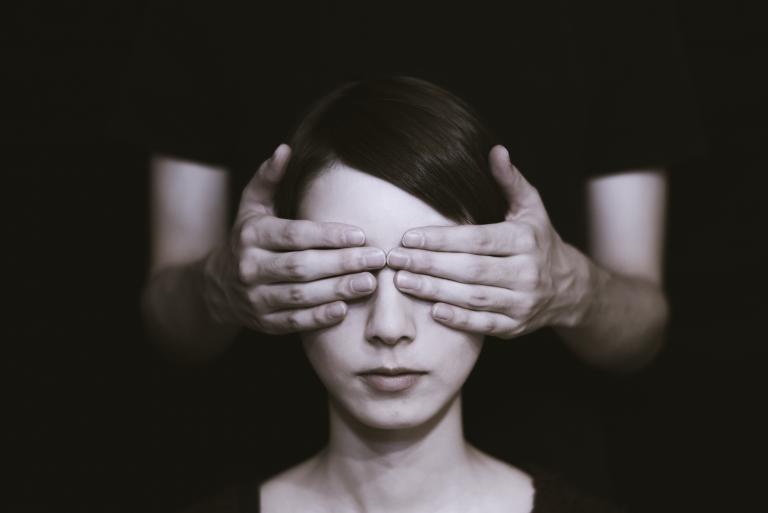
Photo by Ryoji Iwata on Unsplash.


Browse Our Archives
Select a Category Academia Activism American Buddhism Art Book review Buddhism Buddhism Today Buddhist Ethics Burma/Myanmar China Christianity Commodification Environment Gender Happiness Health Humor India Interfaith Islam Japanese Buddhism Kant Media / News Meditation mindfulness Photography Poetry Politics quicktakes Running Teaching Technology Thailand Theism/Atheism Theravada Tibet Tibetan Buddhism Travels Uncategorized Unitarian Universalism video Western Philosophy Zen
Select a Month June 2021 January 2021 November 2020 August 2020 July 2020 March 2020 January 2020 October 2019 August 2019 June 2019 May 2019 March 2019 February 2019 January 2019 December 2018 November 2018 October 2018 September 2018 August 2018 July 2018 June 2018 May 2018 April 2018 March 2018 February 2018 January 2018 December 2017 November 2017 October 2017 September 2017 August 2017 July 2017 June 2017 May 2017 April 2017 March 2017 February 2017 January 2017 December 2016 November 2016 October 2016 September 2016 August 2016 July 2016 June 2016 May 2016 April 2016 March 2016 February 2016 January 2016 December 2015 November 2015 October 2015 September 2015 August 2015 July 2015 June 2015 May 2015 April 2015 March 2015 February 2015 January 2015 December 2014 November 2014 October 2014 September 2014 August 2014 July 2014 June 2014 May 2014 April 2014 March 2014 February 2014 January 2014 December 2013 November 2013 October 2013 September 2013 August 2013 July 2013 June 2013 May 2013 April 2013 March 2013 February 2013 January 2013 December 2012 November 2012 October 2012 September 2012 August 2012 July 2012 June 2012 May 2012 April 2012 March 2012 February 2012 January 2012 December 2011 November 2011 October 2011 September 2011 August 2011 July 2011 June 2011 May 2011 April 2011 March 2011 February 2011 January 2011 December 2010 November 2010 October 2010 September 2010 August 2010 July 2010 June 2010 May 2010 April 2010 March 2010 February 2010 January 2010 December 2009 November 2009 October 2009 September 2009 August 2009 July 2009 June 2009 May 2009 April 2009 March 2009 February 2009 January 2009 December 2008 November 2008 October 2008 September 2008 August 2008 July 2008 June 2008 May 2008 April 2008 March 2008 September 2007 August 2007 July 2007 June 2007 May 2007 April 2007 March 2007 February 2007 January 2007 December 2006 November 2006 October 2006 September 2006 August 2006 July 2006 June 2006 May 2006 April 2006 March 2006 February 2006 January 2006 December 2005 November 2005 October 2005 September 2005 November 2004 September 2004 August 2004
Follow Us!
TAKE THE
Religious Wisdom Quiz
Who carried Jesus' cross after He could no longer?
Select your answer to see how you score.
Pilate Peter John Simon of Cyrene
Support this
Column


Related posts from American Buddhist Perspectives

For Pride Month: Our 2015 Interview with La...
American Buddhist Perspectives

Standing up to Lies: Can America Emerge from...
American Buddhist Perspectives

In strife and uncertainty: let us remember loving-kindness
American Buddhist Perspectives

In the rush to return to normal, can...
American Buddhist Perspectives
TRENDING AT PATHEOS Buddhist

On Taking Refuge in the Dharma
(Here I continue the feature of sharing talks and essays by teachers...

(Continuing my intention to share talks and essays by other members of Empty...
The Subtle Art of Bowing: A Dharma Discourse
(This presentation was first offered by my dear friend Dharma Holder Tom...

Internal Family Systems Can Heal you Mentally &...
How IFS Helped Me Stop Fighting Myself Internal Family Systems (IFS) is...

The Bible No One Spoke About: A Family’s...
A mysterious family Bible, unspoken faith, and a journey from curiosity to...

How Uncertainty Can Transform Your Life in 2025
Embracing Uncertainty: A New Year’s Resolution for the Brave As 2025 approaches,...
view all Buddhist blogs
Ad-Free & Subscriber Log-In Subscription Support
- About Us
- 2026 Calendar
- Videos
- Podcasts
- Library of World Religions
- Faith In Media Tracker
- Advertise With Us
- Write for Us
- Privacy Policy
- Terms of Service
- Do Not Sell My Data
- Contact Us
- Radiant Digital
- Manage Newsletter Subscriptions
- Unsubscribe From Notifications
- Sitemap
Copyright 2008-2026, Patheos. All rights reserved.
Subscription Support Ad-Free & Subscriber Log-In
Follow Patheos