
BuddhistCatholicContemplativeEvangelicalGeneral ChristianHinduJewishLatter-day SaintMuslimNew VisionsProgressive Christian
Beliefs
- Buddhist
- Catholic
- Contemplative
- Evangelical
- General Christian
- Hindu
- Jewish
- Latter-day Saint
- More Voices
- Muslim
- New Visions
- Pagan
- Progressive Christian
Topics
- Religion News
- Food and Religion
- Sports and Religion
- Religious Art
- Religious Music and Entertainment
- Religious Events
- History and Religion
- Style and Religion
- Politics and Religion
- Women in Religion
- Recreation Outdoors and Religion
- Business Finance and Religion
- Careers Workplace and Religion
- Education and Religion
- Family Parenting and Religion
- Health Fitness and Religion
- Home and Religion
- Relationships and Religion
- Technology and Religion
- Travel and Religion
Columnists
- Buddhist Columnists
- Business Finance and Religion Columnists
- Careers Workplace and Religion Columnists
- Catholic Columnists
- Contemplative Columnists
- Education and Religion Columnists
- Evangelists Columnists
- Family Parenting and Religion Columnists
- General Christian Columnists
- Health Fitness and Religion Columnists
- Hindu Columnists
- History and Religion Columnists
- Home and Religion Columnists
- Jewish Columnists
- More Voices Columnists
- Latter Day Columnists
- Muslim Columnists
- New Visions Columnists
- Nonreligious Columnists
- Pagan Columnists
- Politics and Religion Columnists
- Progressive Columnists
- Recreation Outdoors and Religion Columnists
- Relationships and Religion Columnists
- Religion News Columnists
- Religious Art Columnists
- Religious Events Columnists
- Religious Music and Entertainment Columnists
- Sports and Religion Columnists
- Style and Religion Columnists
- Technology and Religion Columnists
- Travel and Religion Columnists
- Women in Religion Columnists
Resource Library
- 2026 Calendar
- Library of World Religions
- The 100 Most Holy Places on Earth
- Patheos Answers
- Podcasts
- Videos
- Faith Leaders Database
- Anglican Episcopalian
- Bahai
- Baptist
- Buddhism
- Christianity
- Confucianism
- Eastern Orthodoxy
- Hinduism
- Holiness and Pentecostal
- ISKCON
- Islam
- Judaism
- Lutheran
- Methodist
- The Church of Jesus Christ of Latter-day Saints
- New Age
- Paganism
- Presbytarian and Reformed
- Protestantism
- Religion Behind the Scenes
- Roman Catholic
- Scientology
- Shia Islam
- Sikhism
- Sufism
- Sunni Islam
- Taoism
- Zen
- See all religions
Research Tools
 Ad-Free & Subscriber Log-In Subscription Support
Ad-Free & Subscriber Log-In Subscription Support
Follow Patheos 

- Trending:
- Forgiveness
- |
- Marriage
- |
- Consciousness
- |
- Death Penalty
- |
- Election
- |
- Halloween
 American Buddhist Perspectives
- Home
- Buddhist
- Religion News
- In a Buddhist nation: another Muslim ‘Catastrophe’ Unfolds
In a Buddhist nation: another Muslim ‘Catastrophe’ Unfolds
Last updated on: May 14, 2018 at 3:54 pm by Justin Whitaker
In a Buddhist nation: another Muslim ‘Catastrophe’ Unfolds 2018-05-14T15:54:31-06:00 Justin Whitaker
Patheos Explore the world's faith through different perspectives on religion and spirituality! Patheos has the views of the prevalent religions and spiritualities of the world.
Tomorrow, May 15, Palestinians and supporters around the world will mark Nakba Day, commemorating the displacement of hundreds of thousands of people in the creation of the state of Israel in 1948. From the UK’s Independent paper, we read:
The convergence of the 70th anniversary of Nakba Day with these contemporary developments is an opportunity to consider its significance in the past, present and future.
The Nakba was the systematic expulsion of Palestinians and destruction of their communities. Over a period of two years, 85 to 90 per cent of Palestinians who had been living in what became the State of Israel were expelled and hundreds of villages were destroyed.
The Nakba fits our understanding of what we now refer to as ethnic cleansing.
And, the article states the destruction and killing continues. Ethnic cleansing, siege, territory theft, apartheid, are all terms gaining increasing currency in describing the situation there. You can read about the little village of Al Walaja, near Jerusalem, which for many represents a microcosm of the greater conflict.
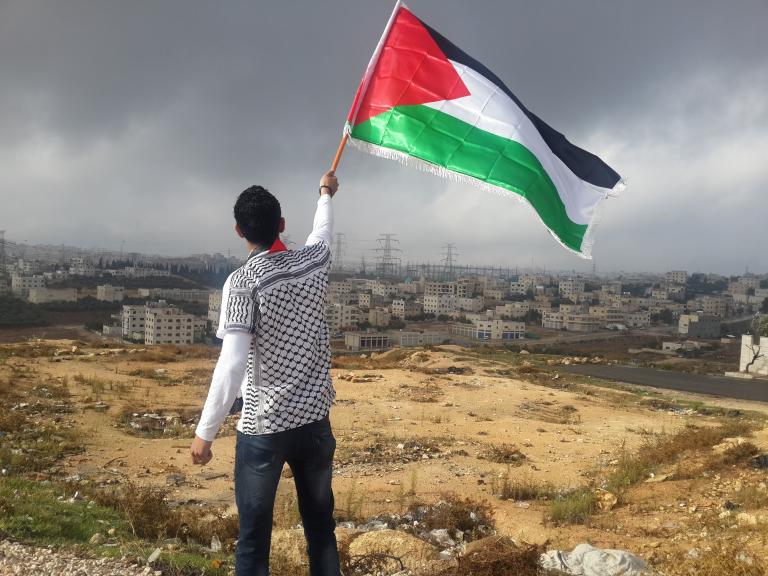
Photo by Ahmed Abu Hameeda on Unsplash
Today the Palestinians have a voice, however often silenced it might be. My Unitarian Universalist Church here in Seattle has its own Palestine-Israel committee devoted to working on peaceful solutions to the conflict. Other organizations and gatherings like this, large and small, dot the map.
Rotate your globe just a few degrees and you will come to eastern Burma and Bangladesh, where a fresh catastrophe is unfolding. This catastrophe has received global news coverage over the last five years, including a number of stories here:
- Americans “Duped,” Burmese “Brainwashed” About Ongoing Violence in Burma / Myanmar MARCH 30, 2018
- Buddhism, Burma, and Politics via Religion Dispatches FEBRUARY 22, 2018
- Join the Buddhists Supporting the Rohingya of Burma FEBRUARY 6, 2018
- The Guardian in Myanmar (Burma) : See and hear for yourself the Buddhist views of Islam SEPTEMBER 14, 2017
- Buddhists could be perpetrating a genocide in Burma (Myanmar) SEPTEMBER 1, 2017
- BREAKING: major earthquake hits India/Burma (Myanmar) region JANUARY 3, 2016
- The Daily Show’s Trevor Noah takes us to Myanmar (Burma) NOVEMBER 13, 2015
- Understanding Buddhist-Muslim relations in Burma (Myanmar) JUNE 16, 2015
Global organizations for human rights have reached out to make the Rohingya a focus of their work, including Unicef USA, Human Rights Watch, the UN Office for Coordination of Humanitarian Affairs, and Buddhist Global Relief.
And while some Buddhist leaders in Burma, who wield significant power, have actively supported the violence against the Rohingya, others have spoken out against it. It is certain, too, that they are at least receptive to foreign criticism for their actions, leading numerous Buddhist leaders around the globe to sign an open letter to leaders condemning the violence. However, Burmese leaders, including Aung San Suu Kyi, have denied the violence, minimized it, or deflected responsibility and will likely continue to do this until global support for the Rohingya reaches a point where they can no longer ignore it.
Writing earlier this month for the Washington Post, Alex Wagner writes that ‘My’ Burma was a lie woven from the nationalist nostalgia of its exiles. The article in full is worth reading, as it draws us into the deconstruction of the lie, allowing a glimpse into both realities, as it were.
It solicits empathy for those still doggedly defending the mythical Buddhist land of peace, while showing how that myth maintains itself even in the face of obvious Buddhist violence. She writes reflectively of the beauty and peace of the country as remembered by her family, but also of the current reality:
Burma, led by both its military and civilians, is engaged in genocide, a systematic slaughter of its Muslim minority. In the past eight months alone, some 14,000 ethnic Rohingya have been killed. Seven hundred thousand have fled a terrifying brutality: babies stabbed to death or tossed alive into fires, grenades thrown through the front doors of homes, mothers gang-raped and slaughtered. Suu Kyi alone could not have stopped this killing, but that is beside the point: She has refused even to acknowledge it.
She goes so far as to call the current crisis “a bloodthirsty campaign – being waged by Buddhists.” Such writing tends to raise the hackles of Burmese nationalists and their supporters, along with a fair number of Western converts who insist that no real Buddhist could commit violence.
That such a bloodthirsty campaign is being waged by Buddhists has sometimes been a source of shock to the rest of the world. But for those of us in the West who had pinned a part of our national identity on Suu Kyi and her struggle, it has prompted introspection: Where did this violent strain of Burmese nationalism come from, and what does it mean for us?
As it turns out, the roots of this particular Burmese intolerance run deep.
She offers a short history of the ethnic divisions of parts of Burma where the Bamar (“ethnic Burmese”) hold power as a majority. Like Syria and Israel-Palestine, as well as neighboring Pakistan-India-Bangladesh, Burma was forged out of Post-WWII colonial map making and retreat. Her concluding words could be written of so many countries, so many periods in human history, a warning of the peril of looking away and a plea to take the lessons of Burma now to heart:
Here, then, is the rot on the underside of our Burmese story, a decay that attends any truthful accounting of a place and people. No country can merely be the province of frangipani blossoms and golden light, after all. If there is something to learn from this mournful episode, it is the danger that we, as a society, repeat these horrors and injustices, decade after decade, when we construct identities that are too rooted in simplicity, too reliant on nostalgia, too ready to embrace heroes who stand atop pedestals fashioned from lies.
How very true, in Burma as in Israel and so many other places.
Enjoy reading this blog?
Click to support independent coverage of Buddhism as a patron.

Previous Post

May 9, 2018
Buddha's advice for busy times, a layperson's Buddhist ethics
Next Post

May 30, 2018 The Secret is In the Open: Shambhala Sexual Abuse Discussed on CBC Radio
Browse Our Archives
Select a Category Academia Activism American Buddhism Art Book review Buddhism Buddhism Today Buddhist Ethics Burma/Myanmar China Christianity Commodification Environment Gender Happiness Health Humor India Interfaith Islam Japanese Buddhism Kant Media / News Meditation mindfulness Photography Poetry Politics quicktakes Running Teaching Technology Thailand Theism/Atheism Theravada Tibet Tibetan Buddhism Travels Uncategorized Unitarian Universalism video Western Philosophy Zen
Select a Month June 2021 January 2021 November 2020 August 2020 July 2020 March 2020 January 2020 October 2019 August 2019 June 2019 May 2019 March 2019 February 2019 January 2019 December 2018 November 2018 October 2018 September 2018 August 2018 July 2018 June 2018 May 2018 April 2018 March 2018 February 2018 January 2018 December 2017 November 2017 October 2017 September 2017 August 2017 July 2017 June 2017 May 2017 April 2017 March 2017 February 2017 January 2017 December 2016 November 2016 October 2016 September 2016 August 2016 July 2016 June 2016 May 2016 April 2016 March 2016 February 2016 January 2016 December 2015 November 2015 October 2015 September 2015 August 2015 July 2015 June 2015 May 2015 April 2015 March 2015 February 2015 January 2015 December 2014 November 2014 October 2014 September 2014 August 2014 July 2014 June 2014 May 2014 April 2014 March 2014 February 2014 January 2014 December 2013 November 2013 October 2013 September 2013 August 2013 July 2013 June 2013 May 2013 April 2013 March 2013 February 2013 January 2013 December 2012 November 2012 October 2012 September 2012 August 2012 July 2012 June 2012 May 2012 April 2012 March 2012 February 2012 January 2012 December 2011 November 2011 October 2011 September 2011 August 2011 July 2011 June 2011 May 2011 April 2011 March 2011 February 2011 January 2011 December 2010 November 2010 October 2010 September 2010 August 2010 July 2010 June 2010 May 2010 April 2010 March 2010 February 2010 January 2010 December 2009 November 2009 October 2009 September 2009 August 2009 July 2009 June 2009 May 2009 April 2009 March 2009 February 2009 January 2009 December 2008 November 2008 October 2008 September 2008 August 2008 July 2008 June 2008 May 2008 April 2008 March 2008 September 2007 August 2007 July 2007 June 2007 May 2007 April 2007 March 2007 February 2007 January 2007 December 2006 November 2006 October 2006 September 2006 August 2006 July 2006 June 2006 May 2006 April 2006 March 2006 February 2006 January 2006 December 2005 November 2005 October 2005 September 2005 November 2004 September 2004 August 2004
Follow Us!
TAKE THE
Religious Wisdom Quiz
What is the main Christian symbol in Ethiopian churches?
Select your answer to see how you score.
The anchor The fish The star The Ethiopian cross
Support this
Column


Related posts from American Buddhist Perspectives

In strife and uncertainty: let us remember loving-kindness
American Buddhist Perspectives

In the rush to return to normal, can...
American Buddhist Perspectives

A Festival of Radical Awakening: Socially Engaged Buddhism...
American Buddhist Perspectives

The Coronavirus is coming - Some thoughts from...
American Buddhist Perspectives
TRENDING AT PATHEOS Buddhist

On Taking Refuge in the Dharma
(Here I continue the feature of sharing talks and essays by teachers...

(Continuing my intention to share talks and essays by other members of Empty...
The Subtle Art of Bowing: A Dharma Discourse
(This presentation was first offered by my dear friend Dharma Holder Tom...

Internal Family Systems Can Heal you Mentally &...
How IFS Helped Me Stop Fighting Myself Internal Family Systems (IFS) is...

The Bible No One Spoke About: A Family’s...
A mysterious family Bible, unspoken faith, and a journey from curiosity to...

How Uncertainty Can Transform Your Life in 2025
Embracing Uncertainty: A New Year’s Resolution for the Brave As 2025 approaches,...
view all Buddhist blogs
Ad-Free & Subscriber Log-In Subscription Support
- About Us
- 2026 Calendar
- Videos
- Podcasts
- Library of World Religions
- Faith In Media Tracker
- Advertise With Us
- Write for Us
- Privacy Policy
- Terms of Service
- Do Not Sell My Data
- Contact Us
- Radiant Digital
- Manage Newsletter Subscriptions
- Unsubscribe From Notifications
- Sitemap
Copyright 2008-2026, Patheos. All rights reserved.
Subscription Support Ad-Free & Subscriber Log-In
Follow Patheos