
BuddhistCatholicContemplativeEvangelicalGeneral ChristianHinduJewishLatter-day SaintMuslimNew VisionsProgressive Christian
Beliefs
- Buddhist
- Catholic
- Contemplative
- Evangelical
- General Christian
- Hindu
- Jewish
- Latter-day Saint
- More Voices
- Muslim
- New Visions
- Pagan
- Progressive Christian
Topics
- Religion News
- Food and Religion
- Sports and Religion
- Religious Art
- Religious Music and Entertainment
- Religious Events
- History and Religion
- Style and Religion
- Politics and Religion
- Women in Religion
- Recreation Outdoors and Religion
- Business Finance and Religion
- Careers Workplace and Religion
- Education and Religion
- Family Parenting and Religion
- Health Fitness and Religion
- Home and Religion
- Relationships and Religion
- Technology and Religion
- Travel and Religion
Columnists
- Buddhist Columnists
- Business Finance and Religion Columnists
- Careers Workplace and Religion Columnists
- Catholic Columnists
- Contemplative Columnists
- Education and Religion Columnists
- Evangelists Columnists
- Family Parenting and Religion Columnists
- General Christian Columnists
- Health Fitness and Religion Columnists
- Hindu Columnists
- History and Religion Columnists
- Home and Religion Columnists
- Jewish Columnists
- More Voices Columnists
- Latter Day Columnists
- Muslim Columnists
- New Visions Columnists
- Nonreligious Columnists
- Pagan Columnists
- Politics and Religion Columnists
- Progressive Columnists
- Recreation Outdoors and Religion Columnists
- Relationships and Religion Columnists
- Religion News Columnists
- Religious Art Columnists
- Religious Events Columnists
- Religious Music and Entertainment Columnists
- Sports and Religion Columnists
- Style and Religion Columnists
- Technology and Religion Columnists
- Travel and Religion Columnists
- Women in Religion Columnists
Resource Library
- 2026 Calendar
- Library of World Religions
- The 100 Most Holy Places on Earth
- Patheos Answers
- Podcasts
- Videos
- Faith Leaders Database
- Anglican Episcopalian
- Bahai
- Baptist
- Buddhism
- Christianity
- Confucianism
- Eastern Orthodoxy
- Hinduism
- Holiness and Pentecostal
- ISKCON
- Islam
- Judaism
- Lutheran
- Methodist
- The Church of Jesus Christ of Latter-day Saints
- New Age
- Paganism
- Presbytarian and Reformed
- Protestantism
- Religion Behind the Scenes
- Roman Catholic
- Scientology
- Shia Islam
- Sikhism
- Sufism
- Sunni Islam
- Taoism
- Zen
- See all religions
Research Tools
 Ad-Free & Subscriber Log-In Subscription Support
Ad-Free & Subscriber Log-In Subscription Support
Follow Patheos 

- Trending:
- Forgiveness
- |
- Marriage
- |
- Consciousness
- |
- Death Penalty
- |
- Election
- |
- Halloween
 American Buddhist Perspectives
- Home
- Buddhist
- Religion News
- Buddhism, Christianity, and an Emerging Superpower: An Interview with Michael Wood from “The Story of China”
Buddhism, Christianity, and an Emerging Superpower: An Interview with Michael Wood from “The Story of China”
Last updated on: November 28, 2017 at 12:37 pm by Justin Whitaker
Buddhism, Christianity, and an Emerging Superpower: An Interview with Michael Wood from “The Story of China” 2017-11-28T12:37:12-07:00 Justin Whitaker
Patheos Explore the world's faith through different perspectives on religion and spirituality! Patheos has the views of the prevalent religions and spiritualities of the world.
This month I have the wonderful opportunity to share with you a review of The Story of China and an interview with the documentary’s narrator, Michael Wood. If you have not been watching the program as it has aired on PBS in recent weeks, you can still catch the finale this week (check listings) and of course there will be DVDs and streaming options available.
I highly recommend watching all of it; but history buffs interested in just one period or another can easily choose one of the show’s six episodes to watch alone.
I also highly recommend Wood’s previous series, The Story of India. If your interest is Buddhism, starting with its birthplace in The Story of India is ideal. But for now: China.
A country with 1.5 billion people, give or take, and over 4000 years of history deserves more than six hours and at times one feels the strain of history weighing heavy on this series. How does one cover it all? What is left out? What is glossed over? A simple answer to these last two questions is: a lot. But this is the nature of history and teaching or documentary film-making.
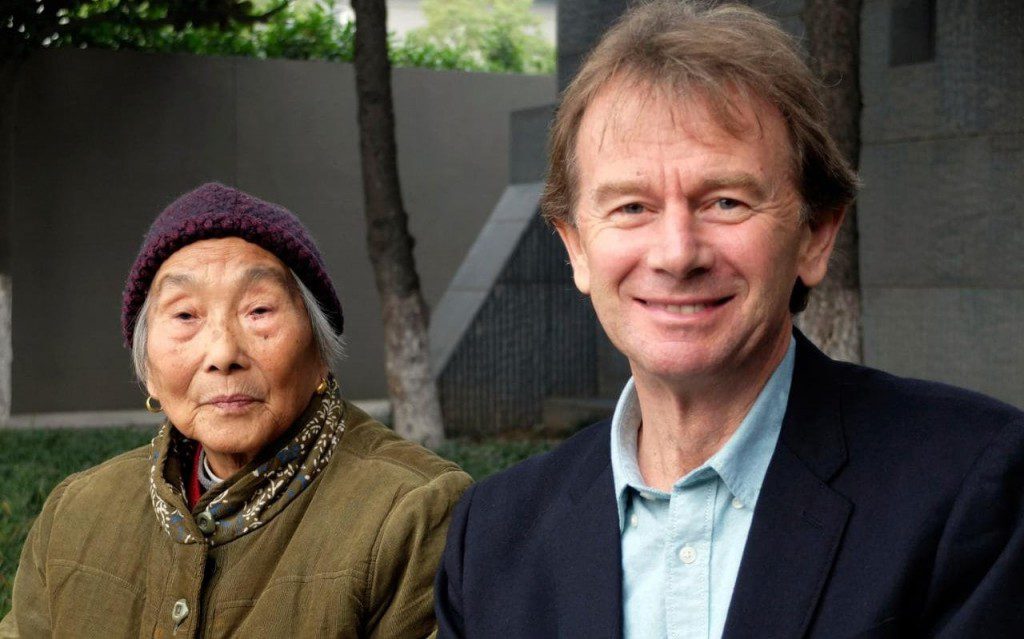
Michael Wood in The Story of China (courtesey BBC/PBS)
The beauty of The Story of China is that despite the gaps and glosses, even the historian is r by the human stories at the heart of the series. Again and again, Wood introduces history through the living relatives of those who have shaped it, often venturing to the very villages and cities, even venturing deep into the excavated mud to show the progressive building of a city’s walls, growing higher and higher with each disastrous flood.
My Buddhistdoor colleague Raymond Lam noted recently:
History has shown that during its unhappy periods of decline or division, China turns inwards, paralyzed when trying to deal with the world beyond its borders. In periods of confidence and ascendance, such as during the High Tang, the High Qing, or I daresay now in 2017, China is able to unite while radiating its influence across Eurasia as the civilization-state that history has shaped it to be.
In light of similar thoughts, my first question for Wood was about how the Chinese see themselves today. Do they worry about revolution? Do they see the U.S. and other nations hovering over them? Wood responded that, “The narrative that has bene given to the Chinese people over the last 50 years has been of a “century of humiliation” and it has been attacked, almost dismembered by aggressors from outside: colonial powers, unjust treaties, especially the Japanese.” He continued, “The Chinese feel that Communist party has rescued them from this. You’ll see it in the Nanjing museum, the labeling of all of the exhibits telling and retelling this story.”
Wood also emphasized that despite, or perhaps in virtue of their extensive history, there exists a very strong, “idea that they are a unitary civilization: Han culture, Han speech, Han script, all of these dating back to the 3rd century CE.”
Asked which one period of Chinese history most excited him, Wood initially listed three: 18th century China, the Tang Dynasty, and the Song. The Tang, in particular, he noted, gave us the mixture of Confucian and Daoist ideals with Buddhism. In our conversation, Wood recalled a saying of the period: “To be a humane person is to be a Confucian in one’s practical life, a Buddhist in spiritual life, and a Daoist in one’s private or mystical life.”
After a moment, though, he settled on the last of these as perhaps the most interesting of them all, saying that the Song represented a period of maturity in Chinese culture, a flowering of humanistic ideals. He recalled a book on taking care of one’s elders that was first published in the time – a book that is still in print! Laughing, Wood noted that the details of the book are just as applicable today as they would have been then: “Do not patronize the elderly, but surround them with the good things of their youth.”
In the episode on the Tang period, Wood covers the introduction of Christianity to China. I asked him to speculate a bit about why Christianity did not take hold in China, while Buddhism did. He had earlier mentioned that one of the great things about China is that it throws into relief so many of our basic assumptions, including monotheism. Such an idea wasn’t present in China and while the Western ideas were respected, a following never took hold.
On the other hand, “Buddhism is Eastern, and it conformed to the way that religion was generally done in Chinese culture,” Wood remarked. Nonetheless, Christianity remained in scattered pockets, as did Judaism; and Islam thrived and continues to thrive, especially in northwest China, along sites of the old Silk Route.
Today, as much as ever, the forces of unity find themselves in conflict with the religious and cultural diversity of the country. The view does seem to be outward, as Raymond Lam suggests, but an eye still must be on the rapid internal changes taking place as the nation steps into global superpower status.
Support independent coverage of Buddhism by joining a community of fellow learners/practitioners at Patreon.
‘Like’ American Buddhist Perspectives on facebook.
Previous Post

June 23, 2017
Tibet Women's Soccer Team to Play in Vancouver After U.S. Visa Denial
Next Post

July 14, 2017 Can Western Appropriation of Buddhism, Mindfulness, and Yoga be Good?
Browse Our Archives
Select a Category Academia Activism American Buddhism Art Book review Buddhism Buddhism Today Buddhist Ethics Burma/Myanmar China Christianity Commodification Environment Gender Happiness Health Humor India Interfaith Islam Japanese Buddhism Kant Media / News Meditation mindfulness Photography Poetry Politics quicktakes Running Teaching Technology Thailand Theism/Atheism Theravada Tibet Tibetan Buddhism Travels Uncategorized Unitarian Universalism video Western Philosophy Zen
Select a Month June 2021 January 2021 November 2020 August 2020 July 2020 March 2020 January 2020 October 2019 August 2019 June 2019 May 2019 March 2019 February 2019 January 2019 December 2018 November 2018 October 2018 September 2018 August 2018 July 2018 June 2018 May 2018 April 2018 March 2018 February 2018 January 2018 December 2017 November 2017 October 2017 September 2017 August 2017 July 2017 June 2017 May 2017 April 2017 March 2017 February 2017 January 2017 December 2016 November 2016 October 2016 September 2016 August 2016 July 2016 June 2016 May 2016 April 2016 March 2016 February 2016 January 2016 December 2015 November 2015 October 2015 September 2015 August 2015 July 2015 June 2015 May 2015 April 2015 March 2015 February 2015 January 2015 December 2014 November 2014 October 2014 September 2014 August 2014 July 2014 June 2014 May 2014 April 2014 March 2014 February 2014 January 2014 December 2013 November 2013 October 2013 September 2013 August 2013 July 2013 June 2013 May 2013 April 2013 March 2013 February 2013 January 2013 December 2012 November 2012 October 2012 September 2012 August 2012 July 2012 June 2012 May 2012 April 2012 March 2012 February 2012 January 2012 December 2011 November 2011 October 2011 September 2011 August 2011 July 2011 June 2011 May 2011 April 2011 March 2011 February 2011 January 2011 December 2010 November 2010 October 2010 September 2010 August 2010 July 2010 June 2010 May 2010 April 2010 March 2010 February 2010 January 2010 December 2009 November 2009 October 2009 September 2009 August 2009 July 2009 June 2009 May 2009 April 2009 March 2009 February 2009 January 2009 December 2008 November 2008 October 2008 September 2008 August 2008 July 2008 June 2008 May 2008 April 2008 March 2008 September 2007 August 2007 July 2007 June 2007 May 2007 April 2007 March 2007 February 2007 January 2007 December 2006 November 2006 October 2006 September 2006 August 2006 July 2006 June 2006 May 2006 April 2006 March 2006 February 2006 January 2006 December 2005 November 2005 October 2005 September 2005 November 2004 September 2004 August 2004
Follow Us!
TAKE THE
Religious Wisdom Quiz
Who said, 'My kingdom is not of this world'?
Select your answer to see how you score.
Peter Paul Jesus John
Support this
Column


Related posts from American Buddhist Perspectives

For Pride Month: Our 2015 Interview with La...
American Buddhist Perspectives

In strife and uncertainty: let us remember loving-kindness
American Buddhist Perspectives

In the rush to return to normal, can...
American Buddhist Perspectives

A Festival of Radical Awakening: Socially Engaged Buddhism...
American Buddhist Perspectives
TRENDING AT PATHEOS Buddhist

On Taking Refuge in the Dharma
(Here I continue the feature of sharing talks and essays by teachers...

(Continuing my intention to share talks and essays by other members of Empty...
The Subtle Art of Bowing: A Dharma Discourse
(This presentation was first offered by my dear friend Dharma Holder Tom...

Internal Family Systems Can Heal you Mentally &...
How IFS Helped Me Stop Fighting Myself Internal Family Systems (IFS) is...

The Bible No One Spoke About: A Family’s...
A mysterious family Bible, unspoken faith, and a journey from curiosity to...

How Uncertainty Can Transform Your Life in 2025
Embracing Uncertainty: A New Year’s Resolution for the Brave As 2025 approaches,...
view all Buddhist blogs
Ad-Free & Subscriber Log-In Subscription Support
- About Us
- 2026 Calendar
- Videos
- Podcasts
- Library of World Religions
- Faith In Media Tracker
- Advertise With Us
- Write for Us
- Privacy Policy
- Terms of Service
- Do Not Sell My Data
- Contact Us
- Radiant Digital
- Manage Newsletter Subscriptions
- Unsubscribe From Notifications
- Sitemap
Copyright 2008-2026, Patheos. All rights reserved.
Subscription Support Ad-Free & Subscriber Log-In
Follow Patheos