
BuddhistCatholicContemplativeEvangelicalGeneral ChristianHinduJewishLatter-day SaintMuslimNew VisionsProgressive Christian
Beliefs
- Buddhist
- Catholic
- Contemplative
- Evangelical
- General Christian
- Hindu
- Jewish
- Latter-day Saint
- More Voices
- Muslim
- New Visions
- Pagan
- Progressive Christian
Topics
- Religion News
- Food and Religion
- Sports and Religion
- Religious Art
- Religious Music and Entertainment
- Religious Events
- History and Religion
- Style and Religion
- Politics and Religion
- Women in Religion
- Recreation Outdoors and Religion
- Business Finance and Religion
- Careers Workplace and Religion
- Education and Religion
- Family Parenting and Religion
- Health Fitness and Religion
- Home and Religion
- Relationships and Religion
- Technology and Religion
- Travel and Religion
Columnists
- Buddhist Columnists
- Business Finance and Religion Columnists
- Careers Workplace and Religion Columnists
- Catholic Columnists
- Contemplative Columnists
- Education and Religion Columnists
- Evangelists Columnists
- Family Parenting and Religion Columnists
- General Christian Columnists
- Health Fitness and Religion Columnists
- Hindu Columnists
- History and Religion Columnists
- Home and Religion Columnists
- Jewish Columnists
- More Voices Columnists
- Latter Day Columnists
- Muslim Columnists
- New Visions Columnists
- Nonreligious Columnists
- Pagan Columnists
- Politics and Religion Columnists
- Progressive Columnists
- Recreation Outdoors and Religion Columnists
- Relationships and Religion Columnists
- Religion News Columnists
- Religious Art Columnists
- Religious Events Columnists
- Religious Music and Entertainment Columnists
- Sports and Religion Columnists
- Style and Religion Columnists
- Technology and Religion Columnists
- Travel and Religion Columnists
- Women in Religion Columnists
Resource Library
- 2026 Calendar
- Library of World Religions
- The 100 Most Holy Places on Earth
- Patheos Answers
- Podcasts
- Videos
- Faith Leaders Database
- Anglican Episcopalian
- Bahai
- Baptist
- Buddhism
- Christianity
- Confucianism
- Eastern Orthodoxy
- Hinduism
- Holiness and Pentecostal
- ISKCON
- Islam
- Judaism
- Lutheran
- Methodist
- The Church of Jesus Christ of Latter-day Saints
- New Age
- Paganism
- Presbytarian and Reformed
- Protestantism
- Religion Behind the Scenes
- Roman Catholic
- Scientology
- Shia Islam
- Sikhism
- Sufism
- Sunni Islam
- Taoism
- Zen
- See all religions
Research Tools
 Ad-Free & Subscriber Log-In Subscription Support
Follow Patheos 

- Trending:
- Advent
- |
- Forgiveness
- |
- Thanksgiving
- |
- Election
- |
- Seasonal Holidays
- |
- Marriage
 American Buddhist Perspectives
- Home
- Buddhist
- Religion News
- Confronting Our Demons: Courage as the Essence of Buddhism
Confronting Our Demons: Courage as the Essence of Buddhism
Last updated on: May 12, 2017 at 1:04 pm by Justin Whitaker
Confronting Our Demons: Courage as the Essence of Buddhism 2017-05-12T13:04:40-06:00 Justin Whitaker
Patheos Explore the world's faith through different perspectives on religion and spirituality! Patheos has the views of the prevalent religions and spiritualities of the world.
A guest-post by Tom Clements.
There is no nobler vision than a willingness to voluntarily encounter the unknown. As human beings, we are designed to go beyond what’s comfortable in order to grow and to develop. This growth is measured in large part by how bravely we face suffering in the forms of conflict, disagreement, disappointment and grief.
Our conscience tells us when we need to do something we feel is right and our nervous systems are attuned to know and tell us that what we are doing is meaningful. Our core becomes stronger when we voluntarily confront the things we fear most. Indeed, it is only in confronting our demons that we can even hope to overcome them. The Buddha’s own conscience told him that he needed to face the deplorable poverty and starvation outside of his palace walls and it was only by exposing himself to the grim and painful reality of suffering that we was eventually able to transcend it.
I am a sensitive soul. I hide away from seeing living things in pain. It hurts me to watch scenes of war on the news or to hear of animals being abused. Hiding from this has only buried it in the deep recesses of my subconscious where it often shows itself as recurring dreams of walking through slaughter houses, unable to escape, and forced to witness the primal fear of innocent creatures about to have their throats slit.
In 2010, I suffered my first series of panic attacks which landed me in the hospital for 8 weeks. Many fears had accumulated in my mind over a long period of time and were now manifesting themselves as physiological symptoms such as nerve pain, exhaustion and heart palpitations. Anxiety is a dreadful thing. If it persists for extended periods of time it makes you weak and especially prone to negative emotions like anger and despair. Medications like Prozac take the edge off but do not address the real root cause. As uncomfortable as it is, the only way to transcend the very real pain of anxiety is to face it directly. This really is the core of the Buddha’s teaching.
In my case, I knew that the things I disliked most and were causing me to keep suffering had to be confronted head-on. I started small, simply by doing something that caused me discomfort and the pain of being derided by close friends. I took my cap off to expose my premature baldness, something I was very self-conscious about in my early 20s. At first, my ego was wounded by a few cheap jibes made by a fellow in the bar I was in, but after a few minutes, the anxiety subsided and my nervous system began to balance itself out. I immediately felt calmer and lighter, as though a small psychic burden had been lifted. I slept better that night.
A few days later, and this was the one I’d been dreading most, I went online and watched a video of sheep entering an abattoir on a conveyor and being slaughtered one by one. I wept and wept and wept. It was immensely painful for me, but to voluntarily face this fact that sentient beings suffer in the world was one that ultimately came to strengthen me as a person, just as the Buddha refused to look away at the sight of a decrepit old man, half-dead from a lack of sustenance. After a few days, the image of the poor creatures stopped and I felt mentally calmer and more resilient. I certainly did not delight in these images, but at least now I could accept them as an inevitable part of life and move forward less susceptible to being sucked into a vortex of despair and nihilism.
Even though we may not understand everything in the world, we must, if we are to live nobly in it, face everything, good or bad, directly and honestly. The only way we can reach and equilibrated state and attain Buddha mind is to first admit the things we’re afraid of and to be mindful of the fear we feel once we do summon the courage to face them.
Tom Clements is a teacher from Bishop’s Stortford, UK. He was diagnosed with Asperger Syndrome in 2011 and is now an advocate of the neurodiversity movement. His memoir ‘The Autistic Buddha: An Unconventional Path to Enlightenment’ is soon to be published (cover art below).
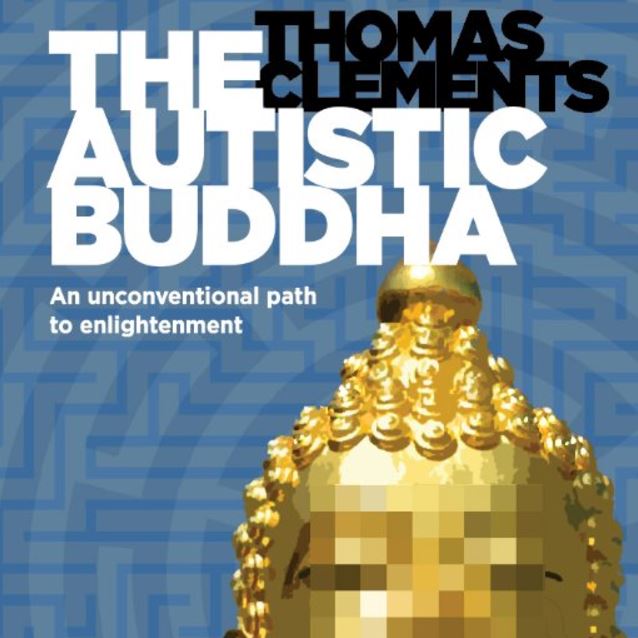
Cover art for the forthcoming book, The Autistic Buddha: An unconventional path to enlightenment by Thomas Clements
Previous Post

April 30, 2017
Images of Tibet's Larung Gar demolition, April 2016 - April 2017
Next Post

May 11, 2017 A Roundup of Critical Perspectives on Meditation
Browse Our Archives
Select a Category Academia Activism American Buddhism Art Book review Buddhism Buddhism Today Buddhist Ethics Burma/Myanmar China Christianity Commodification Environment Gender Happiness Health Humor India Interfaith Islam Japanese Buddhism Kant Media / News Meditation mindfulness Photography Poetry Politics quicktakes Running Teaching Technology Thailand Theism/Atheism Theravada Tibet Tibetan Buddhism Travels Uncategorized Unitarian Universalism video Western Philosophy Zen
Select a Month June 2021 January 2021 November 2020 August 2020 July 2020 March 2020 January 2020 October 2019 August 2019 June 2019 May 2019 March 2019 February 2019 January 2019 December 2018 November 2018 October 2018 September 2018 August 2018 July 2018 June 2018 May 2018 April 2018 March 2018 February 2018 January 2018 December 2017 November 2017 October 2017 September 2017 August 2017 July 2017 June 2017 May 2017 April 2017 March 2017 February 2017 January 2017 December 2016 November 2016 October 2016 September 2016 August 2016 July 2016 June 2016 May 2016 April 2016 March 2016 February 2016 January 2016 December 2015 November 2015 October 2015 September 2015 August 2015 July 2015 June 2015 May 2015 April 2015 March 2015 February 2015 January 2015 December 2014 November 2014 October 2014 September 2014 August 2014 July 2014 June 2014 May 2014 April 2014 March 2014 February 2014 January 2014 December 2013 November 2013 October 2013 September 2013 August 2013 July 2013 June 2013 May 2013 April 2013 March 2013 February 2013 January 2013 December 2012 November 2012 October 2012 September 2012 August 2012 July 2012 June 2012 May 2012 April 2012 March 2012 February 2012 January 2012 December 2011 November 2011 October 2011 September 2011 August 2011 July 2011 June 2011 May 2011 April 2011 March 2011 February 2011 January 2011 December 2010 November 2010 October 2010 September 2010 August 2010 July 2010 June 2010 May 2010 April 2010 March 2010 February 2010 January 2010 December 2009 November 2009 October 2009 September 2009 August 2009 July 2009 June 2009 May 2009 April 2009 March 2009 February 2009 January 2009 December 2008 November 2008 October 2008 September 2008 August 2008 July 2008 June 2008 May 2008 April 2008 March 2008 September 2007 August 2007 July 2007 June 2007 May 2007 April 2007 March 2007 February 2007 January 2007 December 2006 November 2006 October 2006 September 2006 August 2006 July 2006 June 2006 May 2006 April 2006 March 2006 February 2006 January 2006 December 2005 November 2005 October 2005 September 2005 November 2004 September 2004 August 2004
Follow Us!
TAKE THE
Religious Wisdom Quiz
What does "Beersheba" mean in Hebrew?
Select your answer to see how you score.
Dwelling of the Lord Place of Bread Well of the Oath City of Peace
Support this
Column


Related posts from American Buddhist Perspectives

For Pride Month: Our 2015 Interview with La...
American Buddhist Perspectives

In strife and uncertainty: let us remember loving-kindness
American Buddhist Perspectives

In the rush to return to normal, can...
American Buddhist Perspectives
A Festival of Radical Awakening: Socially Engaged Buddhism...
American Buddhist Perspectives
TRENDING AT PATHEOS Buddhist
On Taking Refuge in the Dharma
(Here I continue the feature of sharing talks and essays by teachers...
(Continuing my intention to share talks and essays by other members of Empty...
The Subtle Art of Bowing: A Dharma Discourse
(This presentation was first offered by my dear friend Dharma Holder Tom...

Internal Family Systems Can Heal you Mentally &...
How IFS Helped Me Stop Fighting Myself Internal Family Systems (IFS) is...

The Bible No One Spoke About: A Family’s...
A mysterious family Bible, unspoken faith, and a journey from curiosity to...

How Uncertainty Can Transform Your Life in 2025
Embracing Uncertainty: A New Year’s Resolution for the Brave As 2025 approaches,...
view all Buddhist blogs
Ad-Free & Subscriber Log-In Subscription Support
- About Us
- 2026 Calendar
- Videos
- Podcasts
- Library of World Religions
- Faith In Media Tracker
- Advertise With Us
- Write for Us
- Privacy Policy
- Terms of Service
- Do Not Sell My Data
- Contact Us
- Radiant Digital
- Manage Newsletter Subscriptions
- Unsubscribe From Notifications
- Sitemap
Copyright 2008-2026, Patheos, part of the Radiant Digital network of media brands. All rights reserved.
Subscription Support Ad-Free & Subscriber Log-In
Follow Patheos