
BuddhistCatholicContemplativeEvangelicalGeneral ChristianHinduJewishLatter-day SaintMuslimNew VisionsProgressive Christian
Beliefs
- Buddhist
- Catholic
- Contemplative
- Evangelical
- General Christian
- Hindu
- Jewish
- Latter-day Saint
- More Voices
- Muslim
- New Visions
- Pagan
- Progressive Christian
Topics
- Religion News
- Food and Religion
- Sports and Religion
- Religious Art
- Religious Music and Entertainment
- Religious Events
- History and Religion
- Style and Religion
- Politics and Religion
- Women in Religion
- Recreation Outdoors and Religion
- Business Finance and Religion
- Careers Workplace and Religion
- Education and Religion
- Family Parenting and Religion
- Health Fitness and Religion
- Home and Religion
- Relationships and Religion
- Technology and Religion
- Travel and Religion
Columnists
- Buddhist Columnists
- Business Finance and Religion Columnists
- Careers Workplace and Religion Columnists
- Catholic Columnists
- Contemplative Columnists
- Education and Religion Columnists
- Evangelists Columnists
- Family Parenting and Religion Columnists
- General Christian Columnists
- Health Fitness and Religion Columnists
- Hindu Columnists
- History and Religion Columnists
- Home and Religion Columnists
- Jewish Columnists
- More Voices Columnists
- Latter Day Columnists
- Muslim Columnists
- New Visions Columnists
- Nonreligious Columnists
- Pagan Columnists
- Politics and Religion Columnists
- Progressive Columnists
- Recreation Outdoors and Religion Columnists
- Relationships and Religion Columnists
- Religion News Columnists
- Religious Art Columnists
- Religious Events Columnists
- Religious Music and Entertainment Columnists
- Sports and Religion Columnists
- Style and Religion Columnists
- Technology and Religion Columnists
- Travel and Religion Columnists
- Women in Religion Columnists
Resource Library
- 2026 Calendar
- Library of World Religions
- The 100 Most Holy Places on Earth
- Patheos Answers
- Podcasts
- Videos
- Faith Leaders Database
- Anglican Episcopalian
- Bahai
- Baptist
- Buddhism
- Christianity
- Confucianism
- Eastern Orthodoxy
- Hinduism
- Holiness and Pentecostal
- ISKCON
- Islam
- Judaism
- Lutheran
- Methodist
- The Church of Jesus Christ of Latter-day Saints
- New Age
- Paganism
- Presbytarian and Reformed
- Protestantism
- Religion Behind the Scenes
- Roman Catholic
- Scientology
- Shia Islam
- Sikhism
- Sufism
- Sunni Islam
- Taoism
- Zen
- See all religions
Research Tools
 Ad-Free & Subscriber Log-In Subscription Support
Follow Patheos 

- Trending:
- Advent
- |
- Forgiveness
- |
- Thanksgiving
- |
- Election
- |
- Seasonal Holidays
- |
- Marriage
 American Buddhist Perspectives
- Home
- Buddhist
- Religion News
- A Roundup of Critical Perspectives on Meditation
A Roundup of Critical Perspectives on Meditation
Last updated on: May 12, 2017 at 1:52 pm by Justin Whitaker
A Roundup of Critical Perspectives on Meditation 2017-05-12T13:52:56-06:00 Justin Whitaker
Patheos Explore the world's faith through different perspectives on religion and spirituality! Patheos has the views of the prevalent religions and spiritualities of the world.
A guest post by Pierce Salguero
I am not a scholar of Buddhist meditation. My own research has only touched on meditation insofar as it was claimed to have therapeutic benefits in a handful of texts in premodern Asia. But, as a long-time on-again/off-again practitioner myself, I have been following the rise of meditation in American popular consciousness over the past 15 years with interest. More recently, I have also begun following the critiques of meditation that have circulated in scholarly and practitioner communities, which some observers have begun to characterize as a “backlash.” This post is a roundup of such critiques.
I do not claim that the list below is comprehensive, that the examples I’ve chosen are particularly influential, or that my insights are particularly original. Other people have rounded up critiques of meditation before me, including in this great (though absurdly expensive) book that goes into great depth. This post is simply my way of making sense of the critical perspectives that most interest me, from my own personal vantage point as a scholar and practitioner.
The internal Buddhist critique
Some of the most salient critiques of contemporary meditation (and of mindfulness meditation in particular) have come from within the Buddhist fold. There are multiple specific objections that belong to this category, including (but not limited to):
- Modern mindfulness has mischaracterized or dumbed-down the Buddhist concept of “sati.”
- Mindfulness is divorced from Buddhist ethics, and therefore its applications can be potentially dangerous.
- The enthusiasm for meditation has encouraged a misperception that this is all there is to Buddhism.
This latter point, which is the least commonly articulated of the three, at least in English-language popular media, is the one that connects best with my research. I have found little evidence of mass interest in meditation in my readings of historical Buddhist texts on health and wellbeing. And, from what I can tell from my formal and informal ethnographic studies in contemporary East Asia, Thailand, and Asian-American Buddhist temples in the US, it is not the dominant feature of contemporary Buddhist practice either. In fact, I think it’s now uncontroversial to acknowledge that before widespread lay involvement in meditation began in 19th-century Burma as a product of colonial-era reforms and sensibilities, and still today in most parts of the world, very few lay Buddhists have ever meditated.
The exaggerated claims critique
Another widely accepted critique of meditation is that the therapeutic claims made about its efficacy have been wildly exaggerated. Serious studies of meditation (e.g., Goyal et al., 2014) and of MBSR in particular (e.g., de Vibe et al. 2012) have tended to be rather cautious in reporting the benefits of these practices. This contrasts markedly with the piles of URLs from the popular media filled with breathless hyperbole hyping mindfulness as a cure for this or that ailment—or even as a super-power.
… Or at least, that was the state of things a year or two ago. Somewhere in late 2015 or early 2016, the tides seem to have begun turning, and critiquing mindfulness itself has now become mainstream. Questioning the overblown claims about meditation is now the favorite passtime of the very same popular media outlets that previously had been peddling the myth of mindfulness-as-panacea (e.g., Psychology Today, Inc. magazine, Newser, etc.). It seems that perhaps the stress-busting juggernaut has begun moving on to greener pastures. (What’s next, you ask? I’ve got my money on drumming for stress relief.)

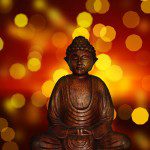
(image via Pixabay)
The capitalist/neoliberal critique
This critique has been around for quite some time, but has recently gained more traction. The idea, in a nutshell, is that meditation rhetoric places the onus on the individual to manage their own stress. Attention is thus moved away from addressing structural problems that cause the stress in the first place (for example, exploitative corporate labor practices, hostile work environments, economic precarity, etc.). And, of course, the individual is encouraged to pay for products, apps, and workshops to learn to destress, which further benefits corporate interests at our expense.
I believe the first person to suggest that meditation is a tool for the production of acquiescent capitalist subjects was Slavoj Žižek in his article, “From Western Marxism to Western Buddhism,” 16 years ago. Ron Purser & David R. Loy’s 2013 article popularized the label “McMindfulness” for the phenomenon of corporatized mindfulness, and was helpful in pushing this critique into the mainstream. Outside of mainstream media, this line of argumentation has continued to be developed in increasingly sophisticated ways by Marxists and critical theorists, among whom Tom Pepper and others at the Speculative Non-Buddhism website have been the most vocal (and, at times, bombastic). Although these blogs (and especially their comment sections) are sometimes difficult to wade through, they collectively articulate a sharp and trenchant criticism of 21st-century meditation that I think should be required reading for any serious practitioner today.
The race/identity critique
Another objection that has been circulating widely of late might be summarized as the “whiteness of meditation critique.” Several people, including myself, wrote about this when TIME magazine’s infamous 2014 magazine cover was released. White-washing certainly is not limited to popular representations of meditation: a number of pointed articles have appeared in the past year or so highlighting the systematic erasure of Asian Americans and other Buddhists of color by the mainstream media. These outlets tend to hold up Caucasian practitioners as the mainstream face of American Buddhism, while fetishizing Asian teachers and culture (Žižek again), and overlooking Asian Americans and other non-white Americans entirely. Some highlights of this particular genre include articles by Wakoh Shannon Hickey, Chenxing Han, Funie Hsu, Ajahn Amaro, and the Buddhist Peace Fellowship.
The committed skeptic’s critique
The final type of critique I will raise here is one that the critic of modern Buddhism Glenn Wallis has called the “principle of sufficient Buddhism” (see his Speculative Non-Buddhism website), and which has also come up in different guises in other places as well (e.g., Dharma Overground and the Imperfect Buddha podcast). Applied to meditation, this critique might take the following form:
Buddhist doctrine and mindfulness hype both tell us that by doing meditation, we gain greater insight into reality “as it is,” but what if those changes in perception are just the product of changes in the mind or the brain that are in themselves inherently meaningless? Even if we stipulate that meditation reliably leads to changes in our perceptions of the world, how do we know that these perceptions are more true or more accurate than those we had before? Or, worse, what if meditation functions like some form of self-hypnosis that results in a further distorted view of reality. How would a committed skeptic be able to tell the difference?
Wallis’s point, as I understand it, is that Buddhism can’t answer these questions without making circular arguments that rest on Buddhist doctrine.
Then why meditate?
At the end of the day, many of us (myself included) intuitively feel that meditation practice has beneficial effects on our lives. But, how to speak of these benefits in light of the above critiques? Filtering our responses to the question “Why meditate?” through these critiques seems to eliminate all of the most popular reasons to meditate. Saying “meditation helps me to relive the stress in my life” becomes inadmissible in light of the capitalist subject critique; “it is the very heart of the Buddha’s teachings” becomes inadmissible in light of the historical critique; “it helps me to experience the present moment as-it-is” becomes inadmissible in light of the sufficiency critique; and so forth.
So, from this perspective, what is left to recommend the practice of meditation? If we extend Wallis’s sufficiency critique further, I think it also prevents us from boiling meditation down to any other single explanatory paradigm (appealing to the sufficiency of neurological states, for example, or of the placebo effect). In my view, the only answers that seem to remain relevant are personal, experiential, modest, even mundane.
Is it enough that meditation merely helps me to fall asleep, or that it makes unpleasant physical experiences a bit more tolerable, or that it makes me a little more patient with my kids? Or do we need more? What do you think: can you articulate why you meditate without falling into one of the traps outlined above?
Pierce Salguero is an interdisciplinary humanities scholar interested in the role of Buddhism in the crosscultural exchange of medical ideas. He has a PhD in the History of Medicine from Johns Hopkins School of Medicine, and is Assistant Professor of Asian History and Religious Studies at Penn State University’s Abington College, in the Philadelphia area. He is the author of Translating Buddhist Medicine in Medieval China (UPenn Press, 2014) and Traditional Thai Medicine (White Lotus Press, 2016) and the editor of Buddhism and Medicine: An Anthology of Premodern Sources (Columbia U Press 2017). See www.piercesalguero.com.
Previous Post

May 5, 2017
Confronting Our Demons: Courage as the Essence of Buddhism
Next Post
May 15, 2017 A Survey on Secular Buddhism
Browse Our Archives
Select a Category Academia Activism American Buddhism Art Book review Buddhism Buddhism Today Buddhist Ethics Burma/Myanmar China Christianity Commodification Environment Gender Happiness Health Humor India Interfaith Islam Japanese Buddhism Kant Media / News Meditation mindfulness Photography Poetry Politics quicktakes Running Teaching Technology Thailand Theism/Atheism Theravada Tibet Tibetan Buddhism Travels Uncategorized Unitarian Universalism video Western Philosophy Zen
Select a Month June 2021 January 2021 November 2020 August 2020 July 2020 March 2020 January 2020 October 2019 August 2019 June 2019 May 2019 March 2019 February 2019 January 2019 December 2018 November 2018 October 2018 September 2018 August 2018 July 2018 June 2018 May 2018 April 2018 March 2018 February 2018 January 2018 December 2017 November 2017 October 2017 September 2017 August 2017 July 2017 June 2017 May 2017 April 2017 March 2017 February 2017 January 2017 December 2016 November 2016 October 2016 September 2016 August 2016 July 2016 June 2016 May 2016 April 2016 March 2016 February 2016 January 2016 December 2015 November 2015 October 2015 September 2015 August 2015 July 2015 June 2015 May 2015 April 2015 March 2015 February 2015 January 2015 December 2014 November 2014 October 2014 September 2014 August 2014 July 2014 June 2014 May 2014 April 2014 March 2014 February 2014 January 2014 December 2013 November 2013 October 2013 September 2013 August 2013 July 2013 June 2013 May 2013 April 2013 March 2013 February 2013 January 2013 December 2012 November 2012 October 2012 September 2012 August 2012 July 2012 June 2012 May 2012 April 2012 March 2012 February 2012 January 2012 December 2011 November 2011 October 2011 September 2011 August 2011 July 2011 June 2011 May 2011 April 2011 March 2011 February 2011 January 2011 December 2010 November 2010 October 2010 September 2010 August 2010 July 2010 June 2010 May 2010 April 2010 March 2010 February 2010 January 2010 December 2009 November 2009 October 2009 September 2009 August 2009 July 2009 June 2009 May 2009 April 2009 March 2009 February 2009 January 2009 December 2008 November 2008 October 2008 September 2008 August 2008 July 2008 June 2008 May 2008 April 2008 March 2008 September 2007 August 2007 July 2007 June 2007 May 2007 April 2007 March 2007 February 2007 January 2007 December 2006 November 2006 October 2006 September 2006 August 2006 July 2006 June 2006 May 2006 April 2006 March 2006 February 2006 January 2006 December 2005 November 2005 October 2005 September 2005 November 2004 September 2004 August 2004
Follow Us!
TAKE THE
Religious Wisdom Quiz
What does "Apocalypse" mean in Greek?
Select your answer to see how you score.
Judgment Revelation Destruction Victory
Support this
Column


Related posts from American Buddhist Perspectives

For Pride Month: Our 2015 Interview with La...
American Buddhist Perspectives

In strife and uncertainty: let us remember loving-kindness
American Buddhist Perspectives

A Festival of Radical Awakening: Socially Engaged Buddhism...
American Buddhist Perspectives

The Coronavirus is coming - Some thoughts from...
American Buddhist Perspectives
TRENDING AT PATHEOS Buddhist

On Taking Refuge in the Dharma
(Here I continue the feature of sharing talks and essays by teachers...

(Continuing my intention to share talks and essays by other members of Empty...
The Subtle Art of Bowing: A Dharma Discourse
(This presentation was first offered by my dear friend Dharma Holder Tom...

Internal Family Systems Can Heal you Mentally &...
How IFS Helped Me Stop Fighting Myself Internal Family Systems (IFS) is...

The Bible No One Spoke About: A Family’s...
A mysterious family Bible, unspoken faith, and a journey from curiosity to...

How Uncertainty Can Transform Your Life in 2025
Embracing Uncertainty: A New Year’s Resolution for the Brave As 2025 approaches,...
view all Buddhist blogs
Ad-Free & Subscriber Log-In Subscription Support
- About Us
- 2026 Calendar
- Videos
- Podcasts
- Library of World Religions
- Faith In Media Tracker
- Advertise With Us
- Write for Us
- Privacy Policy
- Terms of Service
- Do Not Sell My Data
- Contact Us
- Radiant Digital
- Manage Newsletter Subscriptions
- Unsubscribe From Notifications
- Sitemap
Copyright 2008-2026, Patheos, part of the Radiant Digital network of media brands. All rights reserved.
Subscription Support Ad-Free & Subscriber Log-In
Follow Patheos