
BuddhistCatholicContemplativeEvangelicalGeneral ChristianHinduJewishLatter-day SaintMuslimNew VisionsProgressive Christian
Beliefs
- Buddhist
- Catholic
- Contemplative
- Evangelical
- General Christian
- Hindu
- Jewish
- Latter-day Saint
- More Voices
- Muslim
- New Visions
- Pagan
- Progressive Christian
Topics
- Religion News
- Food and Religion
- Sports and Religion
- Religious Art
- Religious Music and Entertainment
- Religious Events
- History and Religion
- Style and Religion
- Politics and Religion
- Women in Religion
- Recreation Outdoors and Religion
- Business Finance and Religion
- Careers Workplace and Religion
- Education and Religion
- Family Parenting and Religion
- Health Fitness and Religion
- Home and Religion
- Relationships and Religion
- Technology and Religion
- Travel and Religion
Columnists
- Buddhist Columnists
- Business Finance and Religion Columnists
- Careers Workplace and Religion Columnists
- Catholic Columnists
- Contemplative Columnists
- Education and Religion Columnists
- Evangelists Columnists
- Family Parenting and Religion Columnists
- General Christian Columnists
- Health Fitness and Religion Columnists
- Hindu Columnists
- History and Religion Columnists
- Home and Religion Columnists
- Jewish Columnists
- More Voices Columnists
- Latter Day Columnists
- Muslim Columnists
- New Visions Columnists
- Nonreligious Columnists
- Pagan Columnists
- Politics and Religion Columnists
- Progressive Columnists
- Recreation Outdoors and Religion Columnists
- Relationships and Religion Columnists
- Religion News Columnists
- Religious Art Columnists
- Religious Events Columnists
- Religious Music and Entertainment Columnists
- Sports and Religion Columnists
- Style and Religion Columnists
- Technology and Religion Columnists
- Travel and Religion Columnists
- Women in Religion Columnists
Resource Library
- 2026 Calendar
- Library of World Religions
- The 100 Most Holy Places on Earth
- Patheos Answers
- Podcasts
- Videos
- Faith Leaders Database
- Anglican Episcopalian
- Bahai
- Baptist
- Buddhism
- Christianity
- Confucianism
- Eastern Orthodoxy
- Hinduism
- Holiness and Pentecostal
- ISKCON
- Islam
- Judaism
- Lutheran
- Methodist
- The Church of Jesus Christ of Latter-day Saints
- New Age
- Paganism
- Presbytarian and Reformed
- Protestantism
- Religion Behind the Scenes
- Roman Catholic
- Scientology
- Shia Islam
- Sikhism
- Sufism
- Sunni Islam
- Taoism
- Zen
- See all religions
Research Tools
 Ad-Free & Subscriber Log-In Subscription Support
Ad-Free & Subscriber Log-In Subscription Support
Follow Patheos 

- Trending:
- Forgiveness
- |
- Marriage
- |
- Consciousness
- |
- Death Penalty
- |
- Election
- |
- Halloween
 American Buddhist Perspectives
- Home
- Buddhist
- Religion News
- The Dalai Lama’s Doctor – Buddhist advice on Forgiveness
The Dalai Lama’s Doctor – Buddhist advice on Forgiveness
Last updated on: September 9, 2016 at 10:35 am by Justin Whitaker
The Dalai Lama’s Doctor – Buddhist advice on Forgiveness 2016-09-09T10:35:13-06:00 Justin Whitaker
Patheos Explore the world's faith through different perspectives on religion and spirituality! Patheos has the views of the prevalent religions and spiritualities of the world.
Barry Kerzin is an extraordinary person. A medical doctor, a philosopher, and a Tibetan Buddhist monk. He has been featured on PBS advocating for more compassion in medicine and has given two TED talks, one on happiness and the other on compassion and anger management. Today he writes on forgiveness:
At one level, forgiveness means you shouldn’t develop feelings of revenge. Revenge harms the other person. It is a form of violence and usually leads to counter-violence – so the problem never goes away. At another level, forgiveness means you should try not to develop feelings of anger toward your enemy. Anger doesn’t solve the problem. It brings uncomfortable feelings to yourself and destroys your own peace of mind.
Anger doesn’t just ruin your peace of mind, it can make you physically sick. In an article last year on “the science of forgiveness,” journalist Megan Feldman Bettencourt described the many physiological effects of holding tight to anger and blame. Here the ties between physical health and emotional happiness are bountifully apparent, as the article’s subtitle tells us, “When you don’t forgive you release all the chemicals of the stress response.”
In her book, Triumph of the Heart: Forgiveness in an Unforgiving World, she explores further the lives changed through the process of forgiveness, drawing “on cutting-edge research showing that forgiveness can provide a range of health benefits, from relieving depression to decreasing high blood pressure. She examines situations as mundane as road rage, as painful as cheating spouses, and as unthinkable as war crimes.”

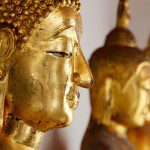
Image via pixabay.
In reading stories of forgiveness, it becomes apparent that anger itself is not unwarranted or unhealthy. But hanging on to anger is. The act of forgiveness is not for the other person, though often times what could have been an impassable rift between two beings is healed. The real importance comes in healing oneself which allows not only greater peace and happiness in one’s own life, but ensures that the harm does not get passed on down the line. The stories again show that those who cause harm are themselves almost always victims of past abuse.
As Feldman Bettencourt noted:
even though [forgiveness] involves parts of the brain responsible for reason, it also requires a counterintuitive, and some would argue, irrational, choice: “You wronged me, but I forgive you, anyway.”
This moment of truth, “you wronged me” is important. Especially as we see so much widespread racial and religious violence in our world today. A movement from denial to forgiveness is useless (see spiritual bypassing). But the move from the truth of the harm to forgiveness is also essential. As Zen teacher Wayne Codling recently wrote, we too often cling to rightness (or righteousness) at the expense of kindness.
In a Buddhist morality the importance of punishment is diminished and our whole moral structure takes on a softer configuration. Meticulous morality becomes more of a scrupulous morality. This means less behaviour that is energized by fear and more behaviour motivated by a sense of personal value and balance. Meditation is the activity that allows that small shift to occur: initially as a recognition of its veracity and then as an evolving reference point for thought, word and deed.
Zen meditation teaches the techniques of reducing toward zero such internal activities as judgments, opinions and attachments of all kinds. When we pay attention to our breath, the mind trends toward stillness and calm. Having zero desire beyond breath and posture, there is little suffering. In meditation we reduce suffering in which we are complicit and by doing not-doing we are not the cause of further harm to beings.
“They insulted me; they hurt me;
they defeated me; they cheated me.”
In those who harbor such thoughts,
hate will never cease.
“They insulted me; they hurt me;
they defeated me; they cheated me.”
In those who do not harbor such thoughts,
hate will cease.
For hate is never conquered by hate.
Hate is conquered by love.
This is an eternal law.
Many do not realize that we must all come to an end here;
but those who do realize this, end their quarrels at once.
Dhammapada, chapter 1
Previous Post
August 15, 2016
Mindfulness – not just a technique!

Browse Our Archives
Select a Category Academia Activism American Buddhism Art Book review Buddhism Buddhism Today Buddhist Ethics Burma/Myanmar China Christianity Commodification Environment Gender Happiness Health Humor India Interfaith Islam Japanese Buddhism Kant Media / News Meditation mindfulness Photography Poetry Politics quicktakes Running Teaching Technology Thailand Theism/Atheism Theravada Tibet Tibetan Buddhism Travels Uncategorized Unitarian Universalism video Western Philosophy Zen
Select a Month June 2021 January 2021 November 2020 August 2020 July 2020 March 2020 January 2020 October 2019 August 2019 June 2019 May 2019 March 2019 February 2019 January 2019 December 2018 November 2018 October 2018 September 2018 August 2018 July 2018 June 2018 May 2018 April 2018 March 2018 February 2018 January 2018 December 2017 November 2017 October 2017 September 2017 August 2017 July 2017 June 2017 May 2017 April 2017 March 2017 February 2017 January 2017 December 2016 November 2016 October 2016 September 2016 August 2016 July 2016 June 2016 May 2016 April 2016 March 2016 February 2016 January 2016 December 2015 November 2015 October 2015 September 2015 August 2015 July 2015 June 2015 May 2015 April 2015 March 2015 February 2015 January 2015 December 2014 November 2014 October 2014 September 2014 August 2014 July 2014 June 2014 May 2014 April 2014 March 2014 February 2014 January 2014 December 2013 November 2013 October 2013 September 2013 August 2013 July 2013 June 2013 May 2013 April 2013 March 2013 February 2013 January 2013 December 2012 November 2012 October 2012 September 2012 August 2012 July 2012 June 2012 May 2012 April 2012 March 2012 February 2012 January 2012 December 2011 November 2011 October 2011 September 2011 August 2011 July 2011 June 2011 May 2011 April 2011 March 2011 February 2011 January 2011 December 2010 November 2010 October 2010 September 2010 August 2010 July 2010 June 2010 May 2010 April 2010 March 2010 February 2010 January 2010 December 2009 November 2009 October 2009 September 2009 August 2009 July 2009 June 2009 May 2009 April 2009 March 2009 February 2009 January 2009 December 2008 November 2008 October 2008 September 2008 August 2008 July 2008 June 2008 May 2008 April 2008 March 2008 September 2007 August 2007 July 2007 June 2007 May 2007 April 2007 March 2007 February 2007 January 2007 December 2006 November 2006 October 2006 September 2006 August 2006 July 2006 June 2006 May 2006 April 2006 March 2006 February 2006 January 2006 December 2005 November 2005 October 2005 September 2005 November 2004 September 2004 August 2004
Follow Us!
TAKE THE
Religious Wisdom Quiz
What root attitude does Paul say is the "root of all kinds of evil"?
Select your answer to see how you score.
Love of wisdom Love of animals Love of music Love of money
Support this
Column


Related posts from American Buddhist Perspectives

In strife and uncertainty: let us remember loving-kindness
American Buddhist Perspectives

In the rush to return to normal, can...
American Buddhist Perspectives

A Festival of Radical Awakening: Socially Engaged Buddhism...
American Buddhist Perspectives

Shambhala Buddhist Community Faces New Allegations in Chapman...
American Buddhist Perspectives
TRENDING AT PATHEOS Buddhist

On Taking Refuge in the Dharma
(Here I continue the feature of sharing talks and essays by teachers...

(Continuing my intention to share talks and essays by other members of Empty...
The Subtle Art of Bowing: A Dharma Discourse
(This presentation was first offered by my dear friend Dharma Holder Tom...

Internal Family Systems Can Heal you Mentally &...
How IFS Helped Me Stop Fighting Myself Internal Family Systems (IFS) is...

The Bible No One Spoke About: A Family’s...
A mysterious family Bible, unspoken faith, and a journey from curiosity to...

How Uncertainty Can Transform Your Life in 2025
Embracing Uncertainty: A New Year’s Resolution for the Brave As 2025 approaches,...
view all Buddhist blogs
Ad-Free & Subscriber Log-In Subscription Support
- About Us
- 2026 Calendar
- Videos
- Podcasts
- Library of World Religions
- Faith In Media Tracker
- Advertise With Us
- Write for Us
- Privacy Policy
- Terms of Service
- Do Not Sell My Data
- Contact Us
- Radiant Digital
- Manage Newsletter Subscriptions
- Unsubscribe From Notifications
- Sitemap
Copyright 2008-2026, Patheos. All rights reserved.
Subscription Support Ad-Free & Subscriber Log-In
Follow Patheos