
BuddhistCatholicContemplativeEvangelicalGeneral ChristianHinduJewishLatter-day SaintMuslimNew VisionsProgressive Christian
Beliefs
- Buddhist
- Catholic
- Contemplative
- Evangelical
- General Christian
- Hindu
- Jewish
- Latter-day Saint
- More Voices
- Muslim
- New Visions
- Pagan
- Progressive Christian
Topics
- Religion News
- Food and Religion
- Sports and Religion
- Religious Art
- Religious Music and Entertainment
- Religious Events
- History and Religion
- Style and Religion
- Politics and Religion
- Women in Religion
- Recreation Outdoors and Religion
- Business Finance and Religion
- Careers Workplace and Religion
- Education and Religion
- Family Parenting and Religion
- Health Fitness and Religion
- Home and Religion
- Relationships and Religion
- Technology and Religion
- Travel and Religion
Columnists
- Buddhist Columnists
- Business Finance and Religion Columnists
- Careers Workplace and Religion Columnists
- Catholic Columnists
- Contemplative Columnists
- Education and Religion Columnists
- Evangelists Columnists
- Family Parenting and Religion Columnists
- General Christian Columnists
- Health Fitness and Religion Columnists
- Hindu Columnists
- History and Religion Columnists
- Home and Religion Columnists
- Jewish Columnists
- More Voices Columnists
- Latter Day Columnists
- Muslim Columnists
- New Visions Columnists
- Nonreligious Columnists
- Pagan Columnists
- Politics and Religion Columnists
- Progressive Columnists
- Recreation Outdoors and Religion Columnists
- Relationships and Religion Columnists
- Religion News Columnists
- Religious Art Columnists
- Religious Events Columnists
- Religious Music and Entertainment Columnists
- Sports and Religion Columnists
- Style and Religion Columnists
- Technology and Religion Columnists
- Travel and Religion Columnists
- Women in Religion Columnists
Resource Library
- 2026 Calendar
- Library of World Religions
- The 100 Most Holy Places on Earth
- Patheos Answers
- Podcasts
- Videos
- Faith Leaders Database
- Anglican Episcopalian
- Bahai
- Baptist
- Buddhism
- Christianity
- Confucianism
- Eastern Orthodoxy
- Hinduism
- Holiness and Pentecostal
- ISKCON
- Islam
- Judaism
- Lutheran
- Methodist
- The Church of Jesus Christ of Latter-day Saints
- New Age
- Paganism
- Presbytarian and Reformed
- Protestantism
- Religion Behind the Scenes
- Roman Catholic
- Scientology
- Shia Islam
- Sikhism
- Sufism
- Sunni Islam
- Taoism
- Zen
- See all religions
Research Tools
 Ad-Free & Subscriber Log-In Subscription Support
Ad-Free & Subscriber Log-In Subscription Support
Follow Patheos 

- Trending:
- Forgiveness
- |
- Marriage
- |
- Consciousness
- |
- Death Penalty
- |
- Election
- |
- Halloween
 American Buddhist Perspectives
- Home
- Buddhist
- Religion News
- Zen Buddhist teacher Dogen: “The Greatest Philosopher You’ve Never Heard Of”
Zen Buddhist teacher Dogen: “The Greatest Philosopher You’ve Never Heard Of”
Last updated on: May 31, 2016 at 11:15 am by Justin Whitaker
Zen Buddhist teacher Dogen: “The Greatest Philosopher You’ve Never Heard Of” 2016-05-31T11:15:05-06:00 Justin Whitaker
Patheos Explore the world's faith through different perspectives on religion and spirituality! Patheos has the views of the prevalent religions and spiritualities of the world.
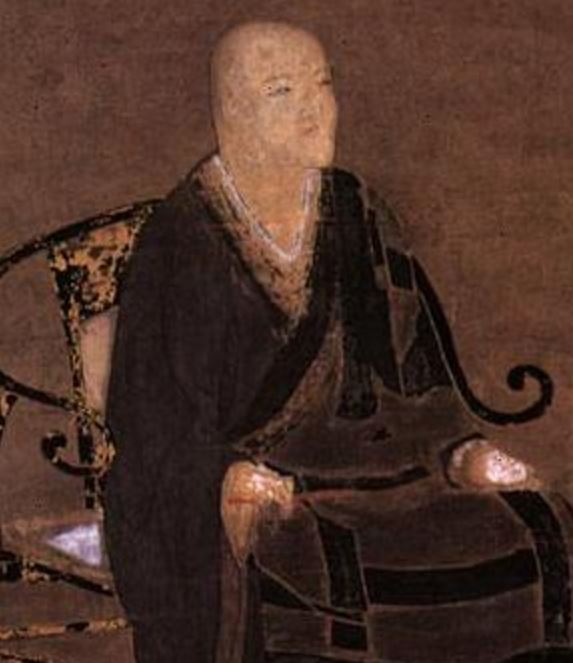
Dogen (via Wikimedia Commons)
Writing for NPR today, Adam Frank introduces us to Eihei Dōgen. Dōgen was a thirteenth century Japanese Buddhist thinker and founder of Sōtō Zen. And Frank is an astrophysicist teaching at the University of Rochester. Why would a 21st century astrophysicist be praising a long-dead Japanese guy as a “philosopher”?
As Frank writes, “it doesn’t do much good imagining that Europe cornered the market on creative thinking about being human.” He, like me, my friend Amod Lele, and a lot of other folks, read Jay Garfield and Bryan Van Norden’s editorial in the NYTimes demanding that Philosophy departments end their “systematic neglect” of non-European thought. Frank agrees and is doing something about it:
hat’s why, today, I want to tell you about Eihei Dogen.
Dogen was a 13th century Japanese Zen teacher who is considered by many to be one of the world’s most profoundly subtle and creative thinkers. Now some might object that being a Zen master automatically knocks you off the list of great philosophers. Taking that position, however, misses how closely the history of Western philosophy is tied to the monotheistic religions it grew along with. Also, there is quite a bit of debate about how Buddhism stacks up as a religion to begin with (at least in terms of how we in The West think of the word). Buddhism contains no conception of Deity and has a highly evolved monastic tradition that contains at least some elements of empiricism in its emphasis on direct experience and investigation.
But what were Buddhists like Dogen investigating — and what does it have to do with philosophy? For Buddhists, a central concern is the act of being a subject. That means the dynamics of the verb “to be” as a lived experience is often the focus of Buddhist philosophical inquiry.
For Western philosophy, this kind of question usually hinges around debates over the mind-body problem. Buddhist (and Vedic) philosophers had these kinds of debates, too, but they also had something their Western counterparts didn’t.
Contemplative practice. Or meditation. But, as Frank notes, that term doesn’t do justice to the depth and complexity of the practices Dōgen embarked upon. There is first the great deal of work needed to stabilize the mind, and second that clear, open mind is turned toward understanding the nature of reality itself. Frank uses the word “awareness” instead of “reality” there, writing, “Once mastered, the stabilized attention is meant to be turned on questions about the nature of awareness.”
Awareness. Reality.
Is there a difference? One points to an epistemological (question of knowledge) understanding, the other to an ontological one. To dig into such differences, and the ways that knowledge or our minds interact with, influence, or create our reality is to do philosophy. And philosophy is just what many Buddhists have been doing, all the way back to… you guessed it, the Buddha. At least this is the argument developed in the recently published article “Reading the Buddha as a Philosopher” by Douglass Smith and myself. More on that paper in coming weeks.
Returning to Dōgen, Frank writes:
Dogen was a master of “zazen,” the particular flavor of contemplative practice developed in Zen. Many of his writings are attempts to help his students understand the importance of, and approach to, this practice. But Dogen also tries to explain what is found, what is discovered, in zazen — and it’s here that many find his genius.
The problem with discussions of direct experience is it’s notoriously hard to report. How do I communicate my experience of a red apple or the blue sky to you? Words are just signifiers or labels. Most importantly they are clearly something different from my on-going, happening-right-now, completely vivid experience. Couple that dilemma with the depth of what Dogen claims occurs in stabilized zazen and you can see where the problem begins.
To deal with this dilemma, Dogen deploys language that can be both hauntingly poetic and infuriating at the same time. For example, here is one of the most famous of Dogen quotes. It concerns studying “the Way,” which, for Buddhists, is something like what Western philosophers might call essential nature:
“To study the Way is to study the self. To study the self is to forget the self. To forget the self is to be actualized by myriad things. When actualized by myriad things, your body and mind as well as the bodies and minds of others drop away. No trace of enlightenment remains, and this no-trace continues endlessly.”
The link there is to the Stanford Encyclopedia of Philosophy entry on Japanese Zen Buddhist Philosophy. For the novice, it’s heady stuff. Frank compares this passage to the Western phenomenologists Husserl and Heidegger. These thinkers, and others in the phenomenological tradition, sought to get us “to the things themselves” or “to the phenomena themselves.”
Phenomena. Things.
Frank relates this to hiking: “It’s like how, when I’m on a hike, the “myriad things” of the world can all simultaneously unify into a totality of experience. Suddenly, I’m free of thinking about what I’m seeing and, instead, I’m just seeing.”
Nature is a wonderful source for these experiences. But they can happen any time. In the West, we’ve come to call this state Flow, or the Zone. Of course Dōgen’s version, built as it is on extensive contemplative practice, is much deeper and – I would think – more lasting, more accessible.
Like Frank, I think that practice and the words that accompany it have much to offer us in the modern West. And not just in Religious Studies, but also in Philosophy departments.
See also my discussion of getting Buddhist Philosophy (and other non-Western thought) into the academy, and reflections from the March conference on Contemplative Education held at Naropa University.
And you won’t need a degree in philosophy to get a deeper understanding of Dōgen’s thought (and practice!) thanks to Brad Warner’s new book, Don’t Be a Jerk: And Other Practical Advice from Dogen, Japan’s Greatest Zen Master; skillfully reviewed by fellow Patheos writers James Ford and Dosho Port.


Next Post

June 3, 2016 Buddhist Political Preferences Poll Extended to June 5
Browse Our Archives
Select a Category Academia Activism American Buddhism Art Book review Buddhism Buddhism Today Buddhist Ethics Burma/Myanmar China Christianity Commodification Environment Gender Happiness Health Humor India Interfaith Islam Japanese Buddhism Kant Media / News Meditation mindfulness Photography Poetry Politics quicktakes Running Teaching Technology Thailand Theism/Atheism Theravada Tibet Tibetan Buddhism Travels Uncategorized Unitarian Universalism video Western Philosophy Zen
Select a Month June 2021 January 2021 November 2020 August 2020 July 2020 March 2020 January 2020 October 2019 August 2019 June 2019 May 2019 March 2019 February 2019 January 2019 December 2018 November 2018 October 2018 September 2018 August 2018 July 2018 June 2018 May 2018 April 2018 March 2018 February 2018 January 2018 December 2017 November 2017 October 2017 September 2017 August 2017 July 2017 June 2017 May 2017 April 2017 March 2017 February 2017 January 2017 December 2016 November 2016 October 2016 September 2016 August 2016 July 2016 June 2016 May 2016 April 2016 March 2016 February 2016 January 2016 December 2015 November 2015 October 2015 September 2015 August 2015 July 2015 June 2015 May 2015 April 2015 March 2015 February 2015 January 2015 December 2014 November 2014 October 2014 September 2014 August 2014 July 2014 June 2014 May 2014 April 2014 March 2014 February 2014 January 2014 December 2013 November 2013 October 2013 September 2013 August 2013 July 2013 June 2013 May 2013 April 2013 March 2013 February 2013 January 2013 December 2012 November 2012 October 2012 September 2012 August 2012 July 2012 June 2012 May 2012 April 2012 March 2012 February 2012 January 2012 December 2011 November 2011 October 2011 September 2011 August 2011 July 2011 June 2011 May 2011 April 2011 March 2011 February 2011 January 2011 December 2010 November 2010 October 2010 September 2010 August 2010 July 2010 June 2010 May 2010 April 2010 March 2010 February 2010 January 2010 December 2009 November 2009 October 2009 September 2009 August 2009 July 2009 June 2009 May 2009 April 2009 March 2009 February 2009 January 2009 December 2008 November 2008 October 2008 September 2008 August 2008 July 2008 June 2008 May 2008 April 2008 March 2008 September 2007 August 2007 July 2007 June 2007 May 2007 April 2007 March 2007 February 2007 January 2007 December 2006 November 2006 October 2006 September 2006 August 2006 July 2006 June 2006 May 2006 April 2006 March 2006 February 2006 January 2006 December 2005 November 2005 October 2005 September 2005 November 2004 September 2004 August 2004
Follow Us!
TAKE THE
Religious Wisdom Quiz
In 1 Timothy, what must an overseer be?
Select your answer to see how you score.
Wealthy and generous Ordained by the apostles A miracle worker Above reproach, faithful to his wife, temperate, self-controlled, respectable
Support this
Column


Related posts from American Buddhist Perspectives

Standing up to Lies: Can America Emerge from...
American Buddhist Perspectives

In strife and uncertainty: let us remember loving-kindness
American Buddhist Perspectives

In the rush to return to normal, can...
American Buddhist Perspectives

A Festival of Radical Awakening: Socially Engaged Buddhism...
American Buddhist Perspectives
TRENDING AT PATHEOS Buddhist

On Taking Refuge in the Dharma
(Here I continue the feature of sharing talks and essays by teachers...

(Continuing my intention to share talks and essays by other members of Empty...
The Subtle Art of Bowing: A Dharma Discourse
(This presentation was first offered by my dear friend Dharma Holder Tom...

Internal Family Systems Can Heal you Mentally &...
How IFS Helped Me Stop Fighting Myself Internal Family Systems (IFS) is...

The Bible No One Spoke About: A Family’s...
A mysterious family Bible, unspoken faith, and a journey from curiosity to...

How Uncertainty Can Transform Your Life in 2025
Embracing Uncertainty: A New Year’s Resolution for the Brave As 2025 approaches,...
view all Buddhist blogs
Ad-Free & Subscriber Log-In Subscription Support
- About Us
- 2026 Calendar
- Videos
- Podcasts
- Library of World Religions
- Faith In Media Tracker
- Advertise With Us
- Write for Us
- Privacy Policy
- Terms of Service
- Do Not Sell My Data
- Contact Us
- Radiant Digital
- Manage Newsletter Subscriptions
- Unsubscribe From Notifications
- Sitemap
Copyright 2008-2026, Patheos. All rights reserved.
Subscription Support Ad-Free & Subscriber Log-In
Follow Patheos