
BuddhistCatholicContemplativeEvangelicalGeneral ChristianHinduJewishLatter-day SaintMuslimNew VisionsProgressive Christian
Beliefs
- Buddhist
- Catholic
- Contemplative
- Evangelical
- General Christian
- Hindu
- Jewish
- Latter-day Saint
- More Voices
- Muslim
- New Visions
- Pagan
- Progressive Christian
Topics
- Religion News
- Food and Religion
- Sports and Religion
- Religious Art
- Religious Music and Entertainment
- Religious Events
- History and Religion
- Style and Religion
- Politics and Religion
- Women in Religion
- Recreation Outdoors and Religion
- Business Finance and Religion
- Careers Workplace and Religion
- Education and Religion
- Family Parenting and Religion
- Health Fitness and Religion
- Home and Religion
- Relationships and Religion
- Technology and Religion
- Travel and Religion
Columnists
- Buddhist Columnists
- Business Finance and Religion Columnists
- Careers Workplace and Religion Columnists
- Catholic Columnists
- Contemplative Columnists
- Education and Religion Columnists
- Evangelists Columnists
- Family Parenting and Religion Columnists
- General Christian Columnists
- Health Fitness and Religion Columnists
- Hindu Columnists
- History and Religion Columnists
- Home and Religion Columnists
- Jewish Columnists
- More Voices Columnists
- Latter Day Columnists
- Muslim Columnists
- New Visions Columnists
- Nonreligious Columnists
- Pagan Columnists
- Politics and Religion Columnists
- Progressive Columnists
- Recreation Outdoors and Religion Columnists
- Relationships and Religion Columnists
- Religion News Columnists
- Religious Art Columnists
- Religious Events Columnists
- Religious Music and Entertainment Columnists
- Sports and Religion Columnists
- Style and Religion Columnists
- Technology and Religion Columnists
- Travel and Religion Columnists
- Women in Religion Columnists
Resource Library
- 2026 Calendar
- Library of World Religions
- The 100 Most Holy Places on Earth
- Patheos Answers
- Podcasts
- Videos
- Faith Leaders Database
- Anglican Episcopalian
- Bahai
- Baptist
- Buddhism
- Christianity
- Confucianism
- Eastern Orthodoxy
- Hinduism
- Holiness and Pentecostal
- ISKCON
- Islam
- Judaism
- Lutheran
- Methodist
- The Church of Jesus Christ of Latter-day Saints
- New Age
- Paganism
- Presbytarian and Reformed
- Protestantism
- Religion Behind the Scenes
- Roman Catholic
- Scientology
- Shia Islam
- Sikhism
- Sufism
- Sunni Islam
- Taoism
- Zen
- See all religions
Research Tools
 Ad-Free & Subscriber Log-In Subscription Support
Ad-Free & Subscriber Log-In Subscription Support
Follow Patheos 

- Trending:
- Forgiveness
- |
- Marriage
- |
- Consciousness
- |
- Death Penalty
- |
- Election
- |
- Halloween
 American Buddhist Perspectives
- Home
- Buddhist
- Religion News
- On Modern Mindfulness, Buddhism, and Social Ethics
On Modern Mindfulness, Buddhism, and Social Ethics
Last updated on: May 25, 2016 at 3:30 pm by Justin Whitaker
On Modern Mindfulness, Buddhism, and Social Ethics 2016-05-25T15:30:29-06:00 Justin Whitaker
Patheos Explore the world's faith through different perspectives on religion and spirituality! Patheos has the views of the prevalent religions and spiritualities of the world.
There is much about mindfulness being published these days: studies, meta-studies, mega-studies, maha-megha-studies (bad Buddhist studies joke). And then there are the opinion pieces; “We’re all doomed. Mindfulness? Humph!”
As I mentioned in my introduction to Doug Smith’s recent article here, what we are seeing is the growth of a discussion, a dialogue. And as with many early discussions with disparate parties, it can sound a bit “noisy”, and sometimes well-meaning people who are quite close in their views can seem miles apart.
Let me begin by briefly summarizing Doug’s piece after those he draws from.
Purser and Ng
Most recent are two articles co-authored by Ron Purser and Edwin Ng: “Cutting Through the Corporate Mindfulness Hype” and “Mindfulness and Self-Care: Why Should I Care?”
The first of these explicitly points to the linkage between contemporary mindfulness practices (which are acknowledged as useful in lowering individual stress and helping with focus) and corporate/organization level discourse. Claims about the benefits of mindfulness aren’t disputed; it is the unwarranted contorting of those claims into “management science”, which “has a long and dubious history” that has Purser and Ng worried. This focus of criticism is again stated near the end, “Therapeutic benefits is one thing, callous institutional imperatives are another matter.”
In the second piece, lead-authored by Edwin Ng, they pivot toward real life examples of “critical mindfulness” which “invites people to be receptive to ‘who knows?’ by questioning for themselves the everyday ‘rules of the game’. To use critical mindfulness for ethical self-care is to perform an experiment…. to expose and transform the assumptions and conditionings shaping subjective experience.” So the critique is not against mindfulness per se, but rather an attempt to open up questions (beginning with the title itself). The point seems to be that even the choice to take up mindfulness should be made with a deeper question of why; the sort that philosophers and three year-olds are famous for. This why keeps popping up, and while perhaps irritating, it is meant to be cleansing, like the scrubbing of a mirror or the dirt off one’s body after a long day of labor.
Schettini
Doug also brings up Stephen Schettini’s 2014 article “Mindful, or Mind Empty“. In it, Schettini himself does us the service of summarizing then-recent developments, from articles by Joshua Eaton, Ron Purser and David Forbes, and Amanda Ream, all critical of certain developments in modern mindfulness (and its use by the wealthiest in society). Schettini’s response: “same old.” Industrialists co-opted Christianity in the nineteenth century and beyond, so we shouldn’t be surprised that aspects of Buddhism are being utilized along similar lines. And to what harm? “You’ll just have to do with mindfulness what you can. Buddhism has lost control of the term. It drifts through the idiom like a lost balloon, as misunderstood now as Karma™ and Samsara™. Some people will use it to calm down, perhaps even delay heart-attacks. Good for them.”
Purser and Loy
Finally, Doug points back to the still earlier (2013) article by Purser and David Loy, “Beyond McMindfulness“, which I have already discussed at some length. It is there that Doug finds the claim that he bases his piece on: “Uncoupling mindfulness from its ethical and religious Buddhist context … decontextualizing [it] from its original liberative and transformative purpose, as well as its foundation in social ethics …”
Smith
Doug’s piece asks if this is, in fact, what is happening by digging into that very historical/textual context. His findings suggest that the Buddha had no problem teaching meditation to laypeople, and his teachings on ethics to the laity were toned down considerably from what he taught to monastics. This is important, as some contemporary writers still mistake Buddhist ethics as monolithic and renunciatory in nature. The truth is, Buddhist ethics are far more diverse and complex, from the earliest tradition (based on what we know of it) to today. Doug draws from Richard Gombrich in a section titled “The Buddha Was Not an Ethical Perfectionist”, showing his use of compromise and pragmatic rule-creation. He concludes that the criticisms of modern mindfulness seem to have their roots more in the radical ideals of early Christianity than Buddhism.
In further analyzing the “foundations of social ethics” in the original teachings, Doug points to alcohol and sex as better targets of worry than “profit” for laypeople. He writes, “At any rate, the Buddha’s message contains no anti-capitalist message remotely as strong as his message against alcohol and sex. Insofar as we are concerned with recovering Buddhism’s ‘original liberative purpose’ we should be aiming for eradication of the latter rather than the former.”
Reflections
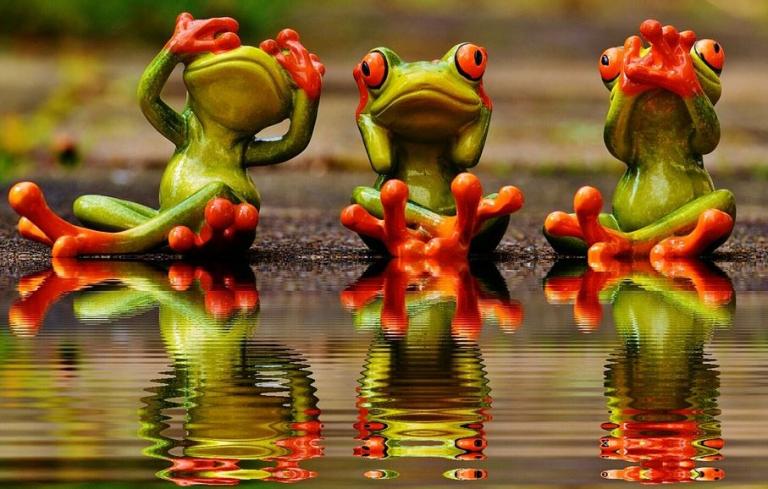
Image via Pixabay.
As I mentioned at the start, I think some of these discussions involve well-meaning people speaking past one another. This can happen for a number of reasons, from geographic and educational backgrounds to the necessary brevity of blog-posts/articles like this one. Doug tends to read the above posts as suggesting “censure or vilification” of mindfulness practice by wealth-seeking laity, and indeed that could be a fair reading. However, the articles could be read as much more focused on particular trends in-or alongside– mindfulness practice today (Purser is a professor of management, Ng is a cultural critic, Schettini is himself a mindfulness teacher). Everyone seems to be in favor of mindfulness, it’s just a matter of how – and who profits?
Returning to what I wrote in 2013 (Mindfulness: Critics and Defenders), the discussion seems to follow the “tug-of-war” that has been happening in Buddhism going back at least to the 8th century in China – perhaps earlier if we read some of the debates happening in the lifetime of the Buddha and immediately thereafter. How much do ethics really matter? As Doug’s piece points out and we find throughout the history of Buddhism, there is a certain amount of pragmatism in Buddhist ethics, not every “good Buddhist” needs to drop everything and follow the Buddha into homelessness.
As Peter Turner noted in a comment on a post here in January (Mindfulness: the Single most impactful aspect of Buddhism in America), “All beginning meditators are first motivated by superficial and/or selfish reasons. The Buddha discovered that when practiced correctly and diligently, mindfulness meditation was key to his realization of the Three Marks of existence…” So we might allow that individuals come to mindfulness for the wrong reasons. Perhaps, too, we can let corporations have their mindfulness? From a strictly Buddhist ethical point of view, there is no reason to deny them tout court. I don’t think Purser or Ng are trying to do this – their first article seems to say simply that “you can’t claim systemic benefits where there is no evidence of systemic benefits…” and “you can’t claim power neutrality” where there is none.
The clearer target would be other activities, as Doug suggests for individuals. Does the corporation promote harmful drug use or destroy the environment? In those cases the ethical Buddhist would be obliged, I think, to point out the harm and seek its cessation. Even though Buddhist soteriology is clearly directed at awakening, and this generally requires abandonment of wealth, sex, and alcohol at some point, plenty of Buddhism (the bulk in terms of sheer numbers) is found in the lives of ordinary people. Nudging people toward a more (Buddhist) ethical life through teaching mindfulness is one option. Nudging them toward historical Buddhist principles and understandings is another. Lastly, developing the Buddha’s social ethics by pointing at entire systems of dysfunction as in need of abandoning, as the Buddha did at times (most notably in DN 2, “The Fruits of the Contemplative Life”), is a worthy activity which has been largely lost as Buddhism has come to the West.
Previous Post

May 18, 2016
On Some Criticisms of Modern Mindfulness
Next Post

May 27, 2016 The Beginner’s Guide to Mindfulness: 8 Helpful Tips
Browse Our Archives
Select a Category Academia Activism American Buddhism Art Book review Buddhism Buddhism Today Buddhist Ethics Burma/Myanmar China Christianity Commodification Environment Gender Happiness Health Humor India Interfaith Islam Japanese Buddhism Kant Media / News Meditation mindfulness Photography Poetry Politics quicktakes Running Teaching Technology Thailand Theism/Atheism Theravada Tibet Tibetan Buddhism Travels Uncategorized Unitarian Universalism video Western Philosophy Zen
Select a Month June 2021 January 2021 November 2020 August 2020 July 2020 March 2020 January 2020 October 2019 August 2019 June 2019 May 2019 March 2019 February 2019 January 2019 December 2018 November 2018 October 2018 September 2018 August 2018 July 2018 June 2018 May 2018 April 2018 March 2018 February 2018 January 2018 December 2017 November 2017 October 2017 September 2017 August 2017 July 2017 June 2017 May 2017 April 2017 March 2017 February 2017 January 2017 December 2016 November 2016 October 2016 September 2016 August 2016 July 2016 June 2016 May 2016 April 2016 March 2016 February 2016 January 2016 December 2015 November 2015 October 2015 September 2015 August 2015 July 2015 June 2015 May 2015 April 2015 March 2015 February 2015 January 2015 December 2014 November 2014 October 2014 September 2014 August 2014 July 2014 June 2014 May 2014 April 2014 March 2014 February 2014 January 2014 December 2013 November 2013 October 2013 September 2013 August 2013 July 2013 June 2013 May 2013 April 2013 March 2013 February 2013 January 2013 December 2012 November 2012 October 2012 September 2012 August 2012 July 2012 June 2012 May 2012 April 2012 March 2012 February 2012 January 2012 December 2011 November 2011 October 2011 September 2011 August 2011 July 2011 June 2011 May 2011 April 2011 March 2011 February 2011 January 2011 December 2010 November 2010 October 2010 September 2010 August 2010 July 2010 June 2010 May 2010 April 2010 March 2010 February 2010 January 2010 December 2009 November 2009 October 2009 September 2009 August 2009 July 2009 June 2009 May 2009 April 2009 March 2009 February 2009 January 2009 December 2008 November 2008 October 2008 September 2008 August 2008 July 2008 June 2008 May 2008 April 2008 March 2008 September 2007 August 2007 July 2007 June 2007 May 2007 April 2007 March 2007 February 2007 January 2007 December 2006 November 2006 October 2006 September 2006 August 2006 July 2006 June 2006 May 2006 April 2006 March 2006 February 2006 January 2006 December 2005 November 2005 October 2005 September 2005 November 2004 September 2004 August 2004
Follow Us!
TAKE THE
Religious Wisdom Quiz
What is the official state church of Denmark, Norway, and Sweden?
Select your answer to see how you score.
Catholic Orthodox Lutheran Pentecostal
Support this
Column


Related posts from American Buddhist Perspectives

For Pride Month: Our 2015 Interview with La...
American Buddhist Perspectives

In strife and uncertainty: let us remember loving-kindness
American Buddhist Perspectives

In the rush to return to normal, can...
American Buddhist Perspectives

A Festival of Radical Awakening: Socially Engaged Buddhism...
American Buddhist Perspectives
TRENDING AT PATHEOS Buddhist

On Taking Refuge in the Dharma
(Here I continue the feature of sharing talks and essays by teachers...

(Continuing my intention to share talks and essays by other members of Empty...
The Subtle Art of Bowing: A Dharma Discourse
(This presentation was first offered by my dear friend Dharma Holder Tom...

Internal Family Systems Can Heal you Mentally &...
How IFS Helped Me Stop Fighting Myself Internal Family Systems (IFS) is...

The Bible No One Spoke About: A Family’s...
A mysterious family Bible, unspoken faith, and a journey from curiosity to...

How Uncertainty Can Transform Your Life in 2025
Embracing Uncertainty: A New Year’s Resolution for the Brave As 2025 approaches,...
view all Buddhist blogs
Ad-Free & Subscriber Log-In Subscription Support
- About Us
- 2026 Calendar
- Videos
- Podcasts
- Library of World Religions
- Faith In Media Tracker
- Advertise With Us
- Write for Us
- Privacy Policy
- Terms of Service
- Do Not Sell My Data
- Contact Us
- Radiant Digital
- Manage Newsletter Subscriptions
- Unsubscribe From Notifications
- Sitemap
Copyright 2008-2026, Patheos. All rights reserved.
Subscription Support Ad-Free & Subscriber Log-In
Follow Patheos