
BuddhistCatholicContemplativeEvangelicalGeneral ChristianHinduJewishLatter-day SaintMuslimNew VisionsProgressive Christian
Beliefs
- Buddhist
- Catholic
- Contemplative
- Evangelical
- General Christian
- Hindu
- Jewish
- Latter-day Saint
- More Voices
- Muslim
- New Visions
- Pagan
- Progressive Christian
Topics
- Religion News
- Food and Religion
- Sports and Religion
- Religious Art
- Religious Music and Entertainment
- Religious Events
- History and Religion
- Style and Religion
- Politics and Religion
- Women in Religion
- Recreation Outdoors and Religion
- Business Finance and Religion
- Careers Workplace and Religion
- Education and Religion
- Family Parenting and Religion
- Health Fitness and Religion
- Home and Religion
- Relationships and Religion
- Technology and Religion
- Travel and Religion
Columnists
- Buddhist Columnists
- Business Finance and Religion Columnists
- Careers Workplace and Religion Columnists
- Catholic Columnists
- Contemplative Columnists
- Education and Religion Columnists
- Evangelists Columnists
- Family Parenting and Religion Columnists
- General Christian Columnists
- Health Fitness and Religion Columnists
- Hindu Columnists
- History and Religion Columnists
- Home and Religion Columnists
- Jewish Columnists
- More Voices Columnists
- Latter Day Columnists
- Muslim Columnists
- New Visions Columnists
- Nonreligious Columnists
- Pagan Columnists
- Politics and Religion Columnists
- Progressive Columnists
- Recreation Outdoors and Religion Columnists
- Relationships and Religion Columnists
- Religion News Columnists
- Religious Art Columnists
- Religious Events Columnists
- Religious Music and Entertainment Columnists
- Sports and Religion Columnists
- Style and Religion Columnists
- Technology and Religion Columnists
- Travel and Religion Columnists
- Women in Religion Columnists
Resource Library
- 2026 Calendar
- Library of World Religions
- The 100 Most Holy Places on Earth
- Patheos Answers
- Podcasts
- Videos
- Faith Leaders Database
- Anglican Episcopalian
- Bahai
- Baptist
- Buddhism
- Christianity
- Confucianism
- Eastern Orthodoxy
- Hinduism
- Holiness and Pentecostal
- ISKCON
- Islam
- Judaism
- Lutheran
- Methodist
- The Church of Jesus Christ of Latter-day Saints
- New Age
- Paganism
- Presbytarian and Reformed
- Protestantism
- Religion Behind the Scenes
- Roman Catholic
- Scientology
- Shia Islam
- Sikhism
- Sufism
- Sunni Islam
- Taoism
- Zen
- See all religions
Research Tools
 Ad-Free & Subscriber Log-In Subscription Support
Follow Patheos 

- Trending:
- Advent
- |
- Forgiveness
- |
- Thanksgiving
- |
- Election
- |
- Seasonal Holidays
- |
- Marriage
 American Buddhist Perspectives
- Home
- Buddhist
- Religion News
- Mindfulness and Self-Care: Why Should I Care?
Mindfulness and Self-Care: Why Should I Care?
Last updated on: April 4, 2016 at 8:36 pm by Justin Whitaker
Mindfulness and Self-Care: Why Should I Care? 2016-04-04T20:36:12-06:00 Justin Whitaker
Patheos Explore the world's faith through different perspectives on religion and spirituality! Patheos has the views of the prevalent religions and spiritualities of the world.
A guest post by Edwin Ng with Ron Purser
Editor’s note: this is the second in a two-part series by Edwin Ng and Ron Purser, part one can be found at the Huffington Post here.
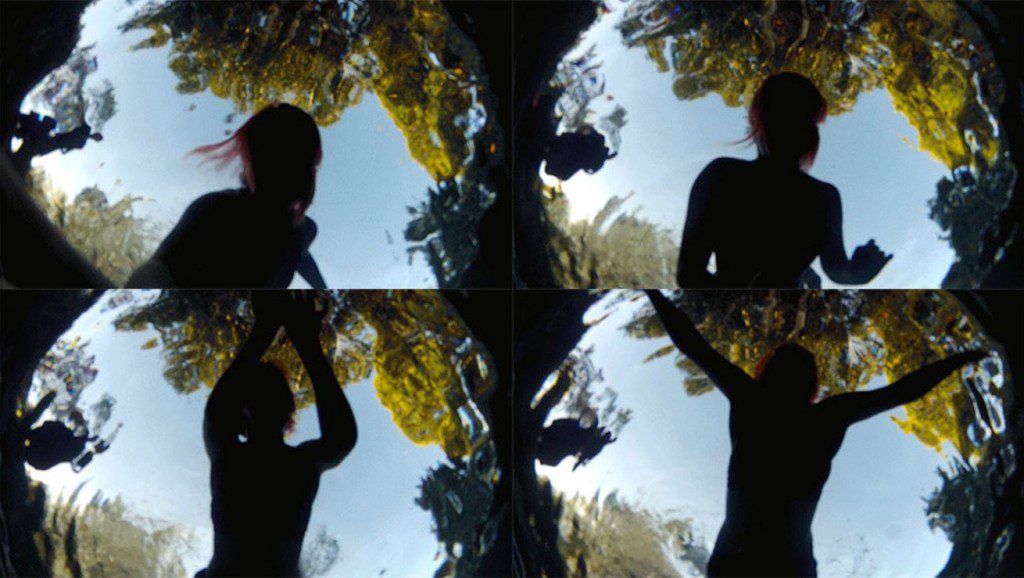
Photo credit: Alison Bennett
Part One considered the current hype surrounding workplace mindfulness against the dubious history of management science. Part Two here considers the use of critical mindfulness in experiments with ethical self-care.
Though we are skeptical about celebratory claims, we actually do hope that mindfulness might become a disruptive technology to transform prevailing systems. However, we insist on the importance of collective attentiveness towards the workings of power, which have shaped the dominant individualistic-therapeutic approach to mindfulness and the stresses we face in our private and public lives.
I’d like to clarify the notion of governmentality that guides our work. The blended concept of govern-mentality derives from the work of Michel Foucault. Governmentality does not refer only to the processes of the state. Rather, to think about governmentality is to explore how diverse types of knowledge, expertise, and practices are developed to guide people’s voluntary conduct.
Consider, for instance, the contemporary interest in “wellness“. We learn about the research conducted by medical institutions on exercising or meditation. This knowledge filters through the advice we find in the media. With the help of a trained expert or through our independent efforts, we might cultivate a daily practice of jogging or yoga or mindfulness. Companies and institutions might incorporate a wellness program into their operations.
To put it another way, governmentality plays out formally and informally as the everyday “rules of the game” for responsible conduct. Under the conditions of neoliberal capitalism, the logics of governmentality are imbued with the moral rhetoric of “free choice” and are geared towards self-optimizing, consumerist and entrepreneurial ends.
When we say we are concerned about the workings of power, we are not imagining some conspiracy of coercion, “brainwashing,” or “mind control.” We are mindful that the exercise of power over people cannot do without people’s power to act.
Foucault’s curiosity about the ethos of the care of self guiding Ancient Greek practices of spiritual cultivation is instructive here. The care of self was a vigilant attitude that individuals adopted towards their behavior and thought. The aim was to expose and transform unacknowledged habits, and to enable fresh ways of relating to others and the world. With ethical self-care the Ancient Greeks developed mastery over their passions and fostered their responsibilities as citizens. Foucault distinguished this relational approach to self-care from the narcissism of “the Californian cult of the self.” Ethical self-care is a mode of expérience, in the way Foucault evoked the dual meanings of this French word as “experience” and “experiment.”
An academic friend recently started a small business in handmade facial care products. Together with her like-minded friends, they have been experimenting with self-care to work through the existing “rules” policing their experience as women/people of color/minoritized individuals within an increasingly corporatized university and in broader society. Some colleagues of mine have also started a blog featuring selfies and stories of the fashion styles of academics. The blog showcases these practices of self-care to experiment with experiences of anxiety and insecurity, and the implicit “rules” on gendered life and labor within the institutional space of academia.
In these projects of self-care the “I” is turned from a given to a question. Consumerist, entrepreneurial practices of self-care have the potential to become disruptive technologies against prevailing systems of inequality, racism, sexism, and so forth. But importantly, this potential must be nurtured with critique.
When we speak of “critical mindfulness,” we are following Foucault in performing critique not simply to decry that things are not right as they are. Rather, it is “to show that things are not as self-evident as one believed, to see that what is accepted as self-evident will no longer be accepted as such.” Critical mindfulness does not pretend to offer predetermined “solutions”. It doesn’t say “This, then, is what should be done” because that’s not its task. As a questioning attitude critical mindfulness questions.
I’ve mentioned two scenarios involving academics, but the task of critique is not restricted to professional intellectuals. Let me quote Foucault on this:
I believe it is quite possible … to do one’s job as a psychiatrist, lawyer, engineer, or technician, and, on the other hand, to carry out in that specific area work that may properly be called intellectual, an essentially critical work. When I say “critical”, I don’t mean a demolition job, one of rejection or refusal, but a work of examination that consists of suspending as far as possible the system of values to which one refers when … assessing it. In other words: What am I doing at the moment I’m doing it?
We’ve witnessed a friend who works as a nurse use critical mindfulness for ethical self-care. His personal practice of mindfulness has helped him to manage PTSD, and to cope with the stressful and potentially violent working conditions of a psychiatric ward. The hospital’s management is advocating workplace mindfulness. But our friend questions the management’s professed concern for staff well-being. He finds it hypocritical because in the meantime, the management is aggressively pursuing budget cuts, reducing health insurance benefits, and undermining union efforts to advocate for adequate staffing and support.
Emiliana Simon-Thomas who runs the Greater Good Science Center at U.C. Berkeley remarked on a recent radio interview:
I am hard pressed to say that there is a great risk (to applying mindfulness in the workplace). If someone were to say, well, let’s make our lowest rung of employees practice mindfulness, let’s just keep paying them bad wages, let’s make them work really hard….and then let’s teach them mindfulness so that it will placate them…. That would be horrible! Right? It’s not even really mindfulness…
To be clear, I am not accusing Simon-Thomas or anyone else of being dishonest when they say this. My point is simply that employees who are drawn into corporate mindfulness programs are unlikely to communicate openly in the media. Speaking publicly against management decisions could threaten their jobs. We all live with blindspots and constraints. As accredited or self-appointed teachers and researchers or commentators of mindfulness, we wield influence and privilege which employees who are subject to the institutional power of corporations do not. Influence and privilege are workings of power; they are matters for critical mindfulness.
We take first-person reports seriously. But we recognize that it is impossible to document the experience of everyone. There is no such thing as an objective self-reporting of subjective experience. We accept that some people may speak positively about workplace mindfulness, and that there is suggestive evidence for both the benefits and risks of individualistic-therapeutic mindfulness. At the same time, the dubious track record of management science reminds us to be cautious about celebratory hype.
Yet, commentators have responded to such concerns by saying: “This is not what I see”. Personal incredulity is not an argument; it is gainsaying. Personal incredulity is not proof that the limitations and dangers are not there. Personal incredulity is a subjective appeal; it expresses disbelief in one claim whilst inviting trust or good faith in another. In using anecdotal reasoning as a counterclaim, they affirm rather than refute our argument — that we all share the same conundrum of faith-as-trust, an open question of “who knows?“.
One possible objection is that I too have relied on anecdotal reasoning. Yes, I admit as much. Because this is not a scientific conversation about objective facts but an ethical conversation about subjective habits.
Critical mindfulness invites people to be receptive to “who knows?” by questioning for themselves the everyday “rules of the game”. To use critical mindfulness for ethical self-care is to perform an experiment. But this is not an experiment to gather evidence about subjective experience. This is an experiment to expose and transform the assumptions and conditionings shaping subjective experience.
We could perform this experiment by probing the motivations steering our preferred approach to mindfulness (or other practices of self-care) — to what end? for whom or what? in whose interest?
But perhaps before all these we must ask ourselves: why should I care?
Edwin Ng, Ph.D. is an author and cultural critic currently based in Melbourne, Australia. His writings on the cultural translation of Buddhism and mindfulness have appeared in the Australian Broadcasting Corporation’s Religion & Ethics blog, Salon.com, and in the Buddhist Peace Fellowship’s Turning Wheel Media.
Ron Purser, Ph.D. is Professor of Management at San Francisco State University. His article, “Beyond McMindfulness,” in the Huffington Post went viral in 2013.
Read more from Guest authors at American Buddhist Perspectives here.
Stay in touch with American Buddhist Perspectives on Facebook:
American Buddhist Perspectives
Previous Post
April 2, 2016
Buddhists for Bernie: a breakdown of our March US Presidential Poll
Next Post
April 6, 2016 A "Very Buddhist" take on The Story of God: Apocalypse
Browse Our Archives
Select a Category Academia Activism American Buddhism Art Book review Buddhism Buddhism Today Buddhist Ethics Burma/Myanmar China Christianity Commodification Environment Gender Happiness Health Humor India Interfaith Islam Japanese Buddhism Kant Media / News Meditation mindfulness Photography Poetry Politics quicktakes Running Teaching Technology Thailand Theism/Atheism Theravada Tibet Tibetan Buddhism Travels Uncategorized Unitarian Universalism video Western Philosophy Zen
Select a Month June 2021 January 2021 November 2020 August 2020 July 2020 March 2020 January 2020 October 2019 August 2019 June 2019 May 2019 March 2019 February 2019 January 2019 December 2018 November 2018 October 2018 September 2018 August 2018 July 2018 June 2018 May 2018 April 2018 March 2018 February 2018 January 2018 December 2017 November 2017 October 2017 September 2017 August 2017 July 2017 June 2017 May 2017 April 2017 March 2017 February 2017 January 2017 December 2016 November 2016 October 2016 September 2016 August 2016 July 2016 June 2016 May 2016 April 2016 March 2016 February 2016 January 2016 December 2015 November 2015 October 2015 September 2015 August 2015 July 2015 June 2015 May 2015 April 2015 March 2015 February 2015 January 2015 December 2014 November 2014 October 2014 September 2014 August 2014 July 2014 June 2014 May 2014 April 2014 March 2014 February 2014 January 2014 December 2013 November 2013 October 2013 September 2013 August 2013 July 2013 June 2013 May 2013 April 2013 March 2013 February 2013 January 2013 December 2012 November 2012 October 2012 September 2012 August 2012 July 2012 June 2012 May 2012 April 2012 March 2012 February 2012 January 2012 December 2011 November 2011 October 2011 September 2011 August 2011 July 2011 June 2011 May 2011 April 2011 March 2011 February 2011 January 2011 December 2010 November 2010 October 2010 September 2010 August 2010 July 2010 June 2010 May 2010 April 2010 March 2010 February 2010 January 2010 December 2009 November 2009 October 2009 September 2009 August 2009 July 2009 June 2009 May 2009 April 2009 March 2009 February 2009 January 2009 December 2008 November 2008 October 2008 September 2008 August 2008 July 2008 June 2008 May 2008 April 2008 March 2008 September 2007 August 2007 July 2007 June 2007 May 2007 April 2007 March 2007 February 2007 January 2007 December 2006 November 2006 October 2006 September 2006 August 2006 July 2006 June 2006 May 2006 April 2006 March 2006 February 2006 January 2006 December 2005 November 2005 October 2005 September 2005 November 2004 September 2004 August 2004
Follow Us!
TAKE THE
Religious Wisdom Quiz
Who healed a blind man by making mud and placing it on his eyes?
Select your answer to see how you score.
Elijah Peter Jesus Moses
Support this
Column


Related posts from American Buddhist Perspectives

For Pride Month: Our 2015 Interview with La...
American Buddhist Perspectives

In strife and uncertainty: let us remember loving-kindness
American Buddhist Perspectives

In the rush to return to normal, can...
American Buddhist Perspectives

A Festival of Radical Awakening: Socially Engaged Buddhism...
American Buddhist Perspectives
TRENDING AT PATHEOS Buddhist

On Taking Refuge in the Dharma
(Here I continue the feature of sharing talks and essays by teachers...

(Continuing my intention to share talks and essays by other members of Empty...
The Subtle Art of Bowing: A Dharma Discourse
(This presentation was first offered by my dear friend Dharma Holder Tom...

Internal Family Systems Can Heal you Mentally &...
How IFS Helped Me Stop Fighting Myself Internal Family Systems (IFS) is...

The Bible No One Spoke About: A Family’s...
A mysterious family Bible, unspoken faith, and a journey from curiosity to...

How Uncertainty Can Transform Your Life in 2025
Embracing Uncertainty: A New Year’s Resolution for the Brave As 2025 approaches,...
view all Buddhist blogs
Ad-Free & Subscriber Log-In Subscription Support
- About Us
- 2026 Calendar
- Videos
- Podcasts
- Library of World Religions
- Faith In Media Tracker
- Advertise With Us
- Write for Us
- Privacy Policy
- Terms of Service
- Do Not Sell My Data
- Contact Us
- Radiant Digital
- Manage Newsletter Subscriptions
- Unsubscribe From Notifications
- Sitemap
Copyright 2008-2026, Patheos, part of the Radiant Digital network of media brands. All rights reserved.
Subscription Support Ad-Free & Subscriber Log-In
Follow Patheos