
BuddhistCatholicContemplativeEvangelicalGeneral ChristianHinduJewishLatter-day SaintMuslimNew VisionsProgressive Christian
Beliefs
- Buddhist
- Catholic
- Contemplative
- Evangelical
- General Christian
- Hindu
- Jewish
- Latter-day Saint
- More Voices
- Muslim
- New Visions
- Pagan
- Progressive Christian
Topics
- Religion News
- Food and Religion
- Sports and Religion
- Religious Art
- Religious Music and Entertainment
- Religious Events
- History and Religion
- Style and Religion
- Politics and Religion
- Women in Religion
- Recreation Outdoors and Religion
- Business Finance and Religion
- Careers Workplace and Religion
- Education and Religion
- Family Parenting and Religion
- Health Fitness and Religion
- Home and Religion
- Relationships and Religion
- Technology and Religion
- Travel and Religion
Columnists
- Buddhist Columnists
- Business Finance and Religion Columnists
- Careers Workplace and Religion Columnists
- Catholic Columnists
- Contemplative Columnists
- Education and Religion Columnists
- Evangelists Columnists
- Family Parenting and Religion Columnists
- General Christian Columnists
- Health Fitness and Religion Columnists
- Hindu Columnists
- History and Religion Columnists
- Home and Religion Columnists
- Jewish Columnists
- More Voices Columnists
- Latter Day Columnists
- Muslim Columnists
- New Visions Columnists
- Nonreligious Columnists
- Pagan Columnists
- Politics and Religion Columnists
- Progressive Columnists
- Recreation Outdoors and Religion Columnists
- Relationships and Religion Columnists
- Religion News Columnists
- Religious Art Columnists
- Religious Events Columnists
- Religious Music and Entertainment Columnists
- Sports and Religion Columnists
- Style and Religion Columnists
- Technology and Religion Columnists
- Travel and Religion Columnists
- Women in Religion Columnists
Resource Library
- 2026 Calendar
- Library of World Religions
- The 100 Most Holy Places on Earth
- Patheos Answers
- Podcasts
- Videos
- Faith Leaders Database
- Anglican Episcopalian
- Bahai
- Baptist
- Buddhism
- Christianity
- Confucianism
- Eastern Orthodoxy
- Hinduism
- Holiness and Pentecostal
- ISKCON
- Islam
- Judaism
- Lutheran
- Methodist
- The Church of Jesus Christ of Latter-day Saints
- New Age
- Paganism
- Presbytarian and Reformed
- Protestantism
- Religion Behind the Scenes
- Roman Catholic
- Scientology
- Shia Islam
- Sikhism
- Sufism
- Sunni Islam
- Taoism
- Zen
- See all religions
Research Tools
 Ad-Free & Subscriber Log-In Subscription Support
Ad-Free & Subscriber Log-In Subscription Support
Follow Patheos 

- Trending:
- Forgiveness
- |
- Marriage
- |
- Consciousness
- |
- Death Penalty
- |
- Election
- |
- Halloween
 American Buddhist Perspectives
- Home
- Buddhist
- Religion News
- 5 Lessons from the Nepal Earthquake for the Japan and Ecuador Disasters
5 Lessons from the Nepal Earthquake for the Japan and Ecuador Disasters
Last updated on: April 25, 2016 at 7:52 pm by Justin Whitaker
5 Lessons from the Nepal Earthquake for the Japan and Ecuador Disasters 2016-04-25T19:52:10-06:00 Justin Whitaker
Patheos Explore the world's faith through different perspectives on religion and spirituality! Patheos has the views of the prevalent religions and spiritualities of the world.
A Year After the Earthquake, Nepal Is a Man-Made Disaster.
This is the headline today at the Huffington Post at least. The news from PRI isn’t much better: One year after Nepal’s devastating earthquake, much of the country is still in ruins. And this CNN video concludes with a quote from residents saying that “they don’t think their country will ever be the same again.”
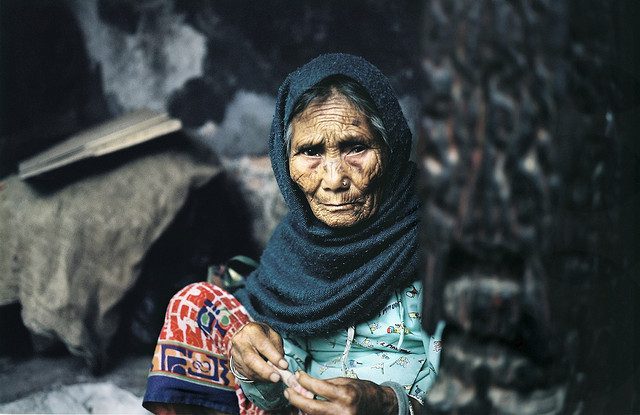
Nepali Woman, Kathmandu; photo by Lyle Vincent (flickr C.C.)
When I wrote about the Nepal earthquake a year ago, I listed 5 Ways to Help victims, with a link to Global Giving second on the list.
This week they have written about lessons learned from that disaster in the hopes for a stronger and more rapid recovery in Japan and Ecuador.
Here are the 5 lessons learned after the Nepal earthquakes that have implications for donors who want to support Ecuador or Japan, from GlobalGiving:
- Provide support now. Local organizations need fast, flexible funding after a disaster to be able to pivot their work to support their communities. Waiting until after the dust settles is often too late. Breaking through standard fundraising barriers will enable those in need to get immediate emergency support.
- Donate to local organizations. According to the Overseas Development Institute (ODI), the UK’s leading independent think tank on international development and humanitarian issues, 81 percent of funding from donor countries goes to big-name nonprofits and agencies. Go direct to the source and use crowdfunding to connect with local organizations to have the greatest impact.
- Cash is best. Monetary support (instead of in-kind donation of things) is usually the most effective way to support people in times of crisis. For guidance on how to donate, check out the USAID Center for International Disaster Information (CIDI) Donation Guidelines.
- Self-reliance drives sustainable recovery. By providing flexible, ongoing support, and appropriate training and follow-up, we can help communities become more self-reliant than they were before the disaster. This ensures that communities can have a sustainable recovery from a disaster and will continue to thrive even after international aid organizations leave and emergency relief operations wind down.
- Stay Involved. In addition to funding during and immediately after a crisis, local organizations need ongoing funding to sustain the recovery for months and even years. According to the Center for Disaster Philanthropy, the largest percentage of post-disaster giving is focused on initial rescue and relief (42 percent) while a far smaller percentage (19 percent) targets longer term reconstruction and recovery efforts. Longer-term funding is critical to help communities become more resilient against future disasters.
“The events in Nepal have shown us that we are in a very critical time with both the Ecuador and Japan relief efforts,” said Mari Kuraishi, co-founder and president of GlobalGiving. “We know donors like to give the majority of funds right after a disaster occurs, but that these funds need to last for the duration of the recovery efforts, which can span years. That’s why we’ve been working day and night to support the best local organizations that provide the greatest impact to drive relief and recovery.”
Supporting Ecuador & Japan
GlobalGiving has created an Ecuador Earthquake Relief Fund to support relief and recovery efforts after the Ecuador earthquake. Initially, the funds will help first responders meet survivors’ immediate needs for food, fuel, clean water, hygiene products, and shelter. Once initial relief work is complete, the projects will transition to support longer-term recovery efforts run by local, vetted organizations. To donate or stay up to date on the support being provided to Ecuador, visit http://www.globalgiving.org/ecuador.
The GlobalGiving Kumamoto Relief Fund is supporting immediate and long-term recovery efforts in Kumamoto, Japan after two deadly earthquakes, significant aftershocks, and landslides. GlobalGiving has relationships with many nonprofits in Japan and is getting funds quickly to vetted, locally-driven organizations who are best-positioned to provide immediate relief and to drive long-term recovery in their own communities. To donate or stay up to date on the support being provided to Japan, visit http://www.globalgiving.org/japan.
GlobalGiving and its partners will be providing ongoing updates and reports on both recent disasters. For up-to-the minute reports and to learn how funds are being used, visit https://www.globalgiving.org.
One-Year Later: Reflecting on Nepal Disaster, How To Help Rebuilding Efforts
On April 25, 2015, Nepal was impacted by an earthquake with a magnitude of 7.8Mw. The disaster shocked the world, and the event impacted more than 8 million people, caused 8,000+ deaths and injured 21,000 people.
Since the crisis occurred, GlobalGiving has worked with local nonprofits and organizations on the ground to provide relief and to help rebuild the community, raising more than $6 million in donations that went to 83 local organizations. The funding supported the initial search and rescue work through the ongoing rebuilding of infrastructure in the affected areas.
GlobalGiving continues to stay involved and support the local rebuilding efforts. Here are some examples of the impacts this funding has made:
- Search and rescue efforts. Nimble first-responders like IsraAid were critical to finding survivors like Krishnadevi, a 24 year old woman who was rescued five days after the first earthquake when most efforts had moved from rescue to search.
- Emergency supplies to survivors in remote areas. Local relief organizations are best equipped to handle these responsibilities because they know the terrain. For example, World Concern’s team was the first organization to reach and provide aid to Khalte, a remote village in the Himalayan foothills where 95 percent of the homes were destroyed or damaged.
- Providing water safety and ongoing medical care to prevent the outbreak and spread of illnesses. One such organization is the Environmental Camps for Conservation Awareness that distributed a water purification solution and mobile health camps throughout area of Kathmandu.
- Supporting communities as they begin to rebuild. Within a month of the earthquakes, the dZi Foundation began working to construct schools so that children could return to school quickly and safely. Schools will continue to be built over the next three years. Other organizations, like Tewa, launched a range of programs–training women to generate income for their families, providing tuition funding for displaced children to return to school, and training youth volunteers to promote psychosocial counseling for survivors.
Beginning on April 25, 2016, the anniversary of the first earthquake in Nepal, GlobalGiving will match donations up to $100,000 to local organizations in Nepal that are still driving the long-term recovery effort. To see the work that’s still being done and continue to support the efforts, visit globalgiving.org/leaderboards/nepal-anniversary/.
For the latest information on global natural disasters or to support local communities in need, visit www.globalgiving.org.
About GlobalGiving
GlobalGiving is the first and largest global crowdfunding community for nonprofits. GlobalGiving makes it safe and easy for people and companies to give to local projects anywhere in the world, providing nonprofits with the tools, training, and support they need to become more effective. Since 2002, GlobalGiving has helped raise more than $200 million from more than 500,000 donors for more than 14,000 projects. Because GlobalGiving works with nonprofit organizations in more than 165 countries, when earthquakes and other disasters occur, GlobalGiving can quickly deliver funds to locally driven organizations that are best-suited to provide relief in their own communities.
To donate to charities involved in disaster relief or if you are a charity looking to further your impact when disasters occurs, please visit www.globalgiving.org.

Next Post
April 26, 2016 “The Story of God” – A Buddhist Perspective on Evil
Browse Our Archives
Select a Category Academia Activism American Buddhism Art Book review Buddhism Buddhism Today Buddhist Ethics Burma/Myanmar China Christianity Commodification Environment Gender Happiness Health Humor India Interfaith Islam Japanese Buddhism Kant Media / News Meditation mindfulness Photography Poetry Politics quicktakes Running Teaching Technology Thailand Theism/Atheism Theravada Tibet Tibetan Buddhism Travels Uncategorized Unitarian Universalism video Western Philosophy Zen
Select a Month June 2021 January 2021 November 2020 August 2020 July 2020 March 2020 January 2020 October 2019 August 2019 June 2019 May 2019 March 2019 February 2019 January 2019 December 2018 November 2018 October 2018 September 2018 August 2018 July 2018 June 2018 May 2018 April 2018 March 2018 February 2018 January 2018 December 2017 November 2017 October 2017 September 2017 August 2017 July 2017 June 2017 May 2017 April 2017 March 2017 February 2017 January 2017 December 2016 November 2016 October 2016 September 2016 August 2016 July 2016 June 2016 May 2016 April 2016 March 2016 February 2016 January 2016 December 2015 November 2015 October 2015 September 2015 August 2015 July 2015 June 2015 May 2015 April 2015 March 2015 February 2015 January 2015 December 2014 November 2014 October 2014 September 2014 August 2014 July 2014 June 2014 May 2014 April 2014 March 2014 February 2014 January 2014 December 2013 November 2013 October 2013 September 2013 August 2013 July 2013 June 2013 May 2013 April 2013 March 2013 February 2013 January 2013 December 2012 November 2012 October 2012 September 2012 August 2012 July 2012 June 2012 May 2012 April 2012 March 2012 February 2012 January 2012 December 2011 November 2011 October 2011 September 2011 August 2011 July 2011 June 2011 May 2011 April 2011 March 2011 February 2011 January 2011 December 2010 November 2010 October 2010 September 2010 August 2010 July 2010 June 2010 May 2010 April 2010 March 2010 February 2010 January 2010 December 2009 November 2009 October 2009 September 2009 August 2009 July 2009 June 2009 May 2009 April 2009 March 2009 February 2009 January 2009 December 2008 November 2008 October 2008 September 2008 August 2008 July 2008 June 2008 May 2008 April 2008 March 2008 September 2007 August 2007 July 2007 June 2007 May 2007 April 2007 March 2007 February 2007 January 2007 December 2006 November 2006 October 2006 September 2006 August 2006 July 2006 June 2006 May 2006 April 2006 March 2006 February 2006 January 2006 December 2005 November 2005 October 2005 September 2005 November 2004 September 2004 August 2004
Follow Us!
TAKE THE
Religious Wisdom Quiz
What is the Jewish "coming of age" ceremony?
Select your answer to see how you score.
Passover Sabbath Bar Mitzvah Circumcision
Support this
Column


Related posts from American Buddhist Perspectives

For Pride Month: Our 2015 Interview with La...
American Buddhist Perspectives

A Festival of Radical Awakening: Socially Engaged Buddhism...
American Buddhist Perspectives
In Hong Kong, the Bodhisattvas wear Crosses
American Buddhist Perspectives
Bhikkhu Bodhi addresses the Climate Crisis at the...
American Buddhist Perspectives
TRENDING AT PATHEOS Buddhist

On Taking Refuge in the Dharma
(Here I continue the feature of sharing talks and essays by teachers...

(Continuing my intention to share talks and essays by other members of Empty...
The Subtle Art of Bowing: A Dharma Discourse
(This presentation was first offered by my dear friend Dharma Holder Tom...

Internal Family Systems Can Heal you Mentally &...
How IFS Helped Me Stop Fighting Myself Internal Family Systems (IFS) is...

The Bible No One Spoke About: A Family’s...
A mysterious family Bible, unspoken faith, and a journey from curiosity to...

How Uncertainty Can Transform Your Life in 2025
Embracing Uncertainty: A New Year’s Resolution for the Brave As 2025 approaches,...
view all Buddhist blogs
Ad-Free & Subscriber Log-In Subscription Support
- About Us
- 2026 Calendar
- Videos
- Podcasts
- Library of World Religions
- Faith In Media Tracker
- Advertise With Us
- Write for Us
- Privacy Policy
- Terms of Service
- Do Not Sell My Data
- Contact Us
- Radiant Digital
- Manage Newsletter Subscriptions
- Unsubscribe From Notifications
- Sitemap
Copyright 2008-2026, Patheos. All rights reserved.
Subscription Support Ad-Free & Subscriber Log-In
Follow Patheos