
BuddhistCatholicContemplativeEvangelicalGeneral ChristianHinduJewishLatter-day SaintMuslimNew VisionsProgressive Christian
Beliefs
- Buddhist
- Catholic
- Contemplative
- Evangelical
- General Christian
- Hindu
- Jewish
- Latter-day Saint
- More Voices
- Muslim
- New Visions
- Pagan
- Progressive Christian
Topics
- Religion News
- Food and Religion
- Sports and Religion
- Religious Art
- Religious Music and Entertainment
- Religious Events
- History and Religion
- Style and Religion
- Politics and Religion
- Women in Religion
- Recreation Outdoors and Religion
- Business Finance and Religion
- Careers Workplace and Religion
- Education and Religion
- Family Parenting and Religion
- Health Fitness and Religion
- Home and Religion
- Relationships and Religion
- Technology and Religion
- Travel and Religion
Columnists
- Buddhist Columnists
- Business Finance and Religion Columnists
- Careers Workplace and Religion Columnists
- Catholic Columnists
- Contemplative Columnists
- Education and Religion Columnists
- Evangelists Columnists
- Family Parenting and Religion Columnists
- General Christian Columnists
- Health Fitness and Religion Columnists
- Hindu Columnists
- History and Religion Columnists
- Home and Religion Columnists
- Jewish Columnists
- More Voices Columnists
- Latter Day Columnists
- Muslim Columnists
- New Visions Columnists
- Nonreligious Columnists
- Pagan Columnists
- Politics and Religion Columnists
- Progressive Columnists
- Recreation Outdoors and Religion Columnists
- Relationships and Religion Columnists
- Religion News Columnists
- Religious Art Columnists
- Religious Events Columnists
- Religious Music and Entertainment Columnists
- Sports and Religion Columnists
- Style and Religion Columnists
- Technology and Religion Columnists
- Travel and Religion Columnists
- Women in Religion Columnists
Resource Library
- 2026 Calendar
- Library of World Religions
- The 100 Most Holy Places on Earth
- Patheos Answers
- Podcasts
- Videos
- Faith Leaders Database
- Anglican Episcopalian
- Bahai
- Baptist
- Buddhism
- Christianity
- Confucianism
- Eastern Orthodoxy
- Hinduism
- Holiness and Pentecostal
- ISKCON
- Islam
- Judaism
- Lutheran
- Methodist
- The Church of Jesus Christ of Latter-day Saints
- New Age
- Paganism
- Presbytarian and Reformed
- Protestantism
- Religion Behind the Scenes
- Roman Catholic
- Scientology
- Shia Islam
- Sikhism
- Sufism
- Sunni Islam
- Taoism
- Zen
- See all religions
Research Tools
 Ad-Free & Subscriber Log-In Subscription Support
Ad-Free & Subscriber Log-In Subscription Support
Follow Patheos 

- Trending:
- Forgiveness
- |
- Marriage
- |
- Consciousness
- |
- Death Penalty
- |
- Election
- |
- Halloween
 American Buddhist Perspectives
- Home
- Buddhist
- Religion News
- Mindfulness, Buddhism, and Philosophy, for the love of language, and the limits of language
Mindfulness, Buddhism, and Philosophy, for the love of language, and the limits of language
Last updated on: March 25, 2016 at 5:37 pm by Justin Whitaker
Mindfulness, Buddhism, and Philosophy, for the love of language, and the limits of language 2016-03-25T17:37:42-06:00 Justin Whitaker
Patheos Explore the world's faith through different perspectives on religion and spirituality! Patheos has the views of the prevalent religions and spiritualities of the world.
One of the highlights of the recent Mindfulness, MOOCs, and Money in Higher Education conference at Naropa University (March 18-21) was a small break-out session led by Carrie Bergman of The Center for Contemplative Mind in Society. We were joined by two Naropa faculty, Susan Burggraf and Cynthia Kneen (who co-founded Naropa and happens to be a classically trained clown), an undergraduate independent scholar from Amherst College named Vivian Mac, and James Rhem, Executive Director of the National Teaching & Learning Forum.
Our ostensible topic was “the definition of ‘Mindfulness'” – obviously an apt subject for the conference and in particular for our motley discussion group.
However, the conversation meandered through the topic and around the topic with remarkable ease and care.
Just after each of us gave our own vague definition of “mindfulness” Susan -or James, I don’t remember which- mentioned that it’s like Wittgenstein’s ladder (I think it was Susan first, and then James noted that this was in the Tractatus, Wittgenstein’s first great work). I quickly felt regret over never formally studying Wittgenstein. I recognized what they were talking about, but the sheer joy on both of their faces at this mutual realization-connection led me to think I really should dig into Wittgenstein at some point.
In any case, part of the discussion pointed to the fact that all of the “talking around” a topic such as mindfulness never really gets us there. It is only ever so much semantic circling. To get to it, one must do it. And yet, as scholars, we must talk about it, often with people who have no inclination toward practicing mindfulness.
And so we must play the game of language, choosing our words and situating them to make meaning, our meaning, our shared meaning, but not getting lost or stuck in them. Our conversation that day was a bit of a game, a game of sharing and, most importantly, a game of listening.
Susan came to a sort of spontaneous insight as she was speaking that a problem today with teaching (the conference was on higher ed) is the failure of the older generation to listen to the younger. The older generation “projects” she said, “their own worries and concerns and reality” onto younger people, “but that is not their reality.”
Vivian brought up the physicist Arthur Zajonc (pronounced “Zion-s” roughly), who wrote “Thinking Like Einstein,” which discusses Einstein’s “ah-ha” moment for the theory of relativity. The theory “de-centered” the idea of an objective standpoint in physics – an objective standpoint which had been the very goal of physicists to that time. Following the Dalai Lama’s recommendation, Zajonc suggests we sit in stillness or “calming meditation” to let that realization settle in. What does that mean exactly? Is there an objective meaning to that discovery in physics, or will it mean something a little different to each of us? Zajonc reassures us that relativity, or groundlessness, is not the end of our conversation, but the beginning of it:
In the language of Francisco Varela, Evan Thompson, and Eleanor Rosch (The Embodied Mind), we learn to lay down the path beneath our feet by walking. Instead of looking for security is stasis, we realize the groundlessness of material reality and find our way to security through movement instead, through processes that generate meanings. In Robert Kegan’s classification of the stages of human epistemologies, he calls this final stage the “self-transforming mind.”
So I was delighted today to receive this piece of mind-transforming assistance: a beautifully written review of Dialectic of the Ladder: Wittgenstein, the ‘Tractatus’ and Modernism by Benjamin Ware (review by Andrew Winer). The review deftly draws us through Wittgenstein’s struggles (or play) with language, it’s seeming limits, fragmentations, and mutations. As Winer writes, it is at our moment of greatest frustration that the magic happens:
And this is Ware’s point: aligning himself, in part, with anti-metaphysical or what he calls “resolute” readers of the Tractatus, Ware takes Wittgenstein’s closing exhortations to the reader — to throw away “the ladder” and view the book’s preceding propositions as nonsense — at face value, or rather Ware takes it in the face, so to speak, honoring the shocking blow (the second punch) that the philosopher intends, on Ware’s reading, to deliver to the reader. Having invited us to take on a variety of positions about language that seem to align neatly with modernist views of language’s limitations, Wittgenstein, according to Ware, then reveals them to be nonsense — not because he claims to be able to view language as a whole from some position outside of it (à la Eliot, say), but rather because he has invited us, one-by-one, to occupy the internal logic of these positions, before turning the tables on us in order to bring us to an awareness the problem isn’t with words per se, but with our confused relation to them. The Tractatus‘ effect, then, isn’t due to its content so much as its form, and this, Ware beautifully shows, is precisely what puts the Tractatus on literary ground: the book means to awaken us, as a result of our experience of reading it; it’s a literary performance that delivers an emotional wallop to the reader who has spent the bulk of the book looking into a mirror reflecting — in the form of its propositions — her or his own philosophical hungers.
Among those hungers is not only a desire for ineffable truths but for scientific ideals of precision and progress — ideals that, in the modernist era (as in ours), can lead one to want to find the perfect words, in the perfect order, on some finite trek toward truth. Such desires for perfection are in part what drove many of the aforementioned modernists towards unease with themselves, their worlds, and the words they used to try to capture that unease… To then encounter the book’s last statements that tell us to throw this structure — the ladder — away, and that tell us to consider all of those perfect statements nonsense, is to be put through the experience of awakening from a dream. That dream, as Ware points out, is the dream of traditional philosophy, in which one puts forth theories and builds systems. (emphasis mine)
That dream is the dream upon which scientism and all other dogmatisms are built, a dream of certainty, a closing of the mind and its uncomfortable bumps against reality.
The Tractatus, then, is a literary work that has this ethical effect on us, without recourse to specific ethical language; instead, it relies on an authorial strategy of seduction and then, through its sudden and massive discarding, shock.
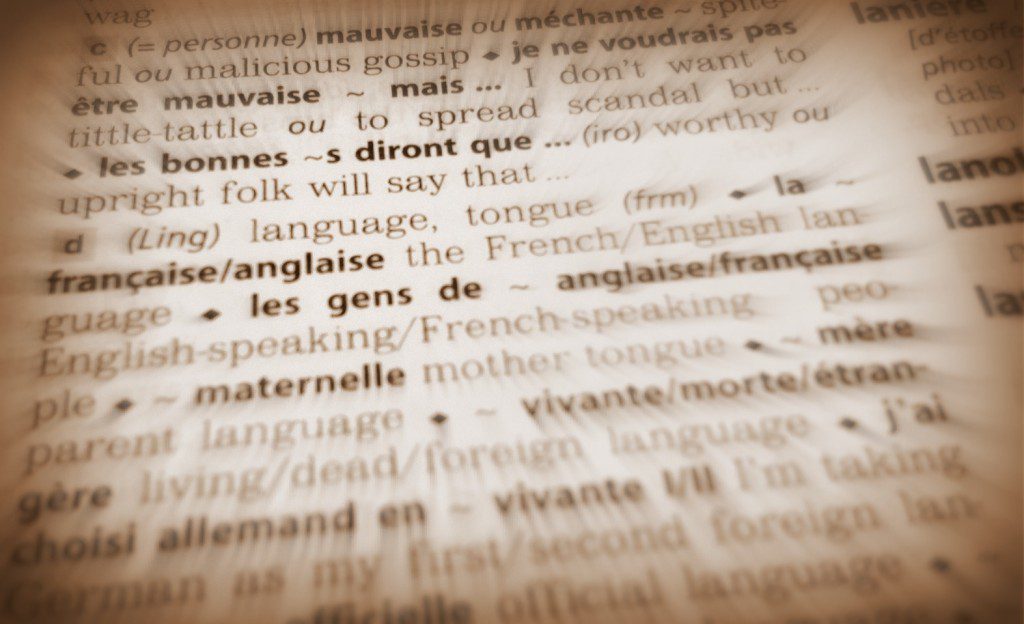
And so we’re left – in the moment of perplexity – hopefully ready to play with that language which had seemed so rigid; to play in a way that makes meaning for us. For language becomes something sort of out there, outside of me, and outside of you, hanging, as it were, in the ether, waiting for our use of it together.
Mindfulness is there, in that shared ether. Mindful once meant “of good memory.” In Victorian English it was associated with memory, with perception, even care. And it is this semantic range that led Caroline and Thomas Rhys Davids to use “mindfulness” to translate the Pali term sati. Mindfully, they chose other English words to translate similar Pali terms so as to maintain the early differentiation.
Today, though, we have a number of terms from Pali and Sanskrit being translated as “mindfulness” – from vipassana (“insight”) to samatha (“calming”) and certainly others that don’t come to my mind at the moment. Likewise, we have a difficult time solidifying one clear meaning to the word “mindfulness.”
I hope to explore some of those meanings, their origins and contexts, in future posts.

Next Post
March 26, 2016 Buddhism, Politics, and the 2016 US Presidential Race
Browse Our Archives
Select a Category Academia Activism American Buddhism Art Book review Buddhism Buddhism Today Buddhist Ethics Burma/Myanmar China Christianity Commodification Environment Gender Happiness Health Humor India Interfaith Islam Japanese Buddhism Kant Media / News Meditation mindfulness Photography Poetry Politics quicktakes Running Teaching Technology Thailand Theism/Atheism Theravada Tibet Tibetan Buddhism Travels Uncategorized Unitarian Universalism video Western Philosophy Zen
Select a Month June 2021 January 2021 November 2020 August 2020 July 2020 March 2020 January 2020 October 2019 August 2019 June 2019 May 2019 March 2019 February 2019 January 2019 December 2018 November 2018 October 2018 September 2018 August 2018 July 2018 June 2018 May 2018 April 2018 March 2018 February 2018 January 2018 December 2017 November 2017 October 2017 September 2017 August 2017 July 2017 June 2017 May 2017 April 2017 March 2017 February 2017 January 2017 December 2016 November 2016 October 2016 September 2016 August 2016 July 2016 June 2016 May 2016 April 2016 March 2016 February 2016 January 2016 December 2015 November 2015 October 2015 September 2015 August 2015 July 2015 June 2015 May 2015 April 2015 March 2015 February 2015 January 2015 December 2014 November 2014 October 2014 September 2014 August 2014 July 2014 June 2014 May 2014 April 2014 March 2014 February 2014 January 2014 December 2013 November 2013 October 2013 September 2013 August 2013 July 2013 June 2013 May 2013 April 2013 March 2013 February 2013 January 2013 December 2012 November 2012 October 2012 September 2012 August 2012 July 2012 June 2012 May 2012 April 2012 March 2012 February 2012 January 2012 December 2011 November 2011 October 2011 September 2011 August 2011 July 2011 June 2011 May 2011 April 2011 March 2011 February 2011 January 2011 December 2010 November 2010 October 2010 September 2010 August 2010 July 2010 June 2010 May 2010 April 2010 March 2010 February 2010 January 2010 December 2009 November 2009 October 2009 September 2009 August 2009 July 2009 June 2009 May 2009 April 2009 March 2009 February 2009 January 2009 December 2008 November 2008 October 2008 September 2008 August 2008 July 2008 June 2008 May 2008 April 2008 March 2008 September 2007 August 2007 July 2007 June 2007 May 2007 April 2007 March 2007 February 2007 January 2007 December 2006 November 2006 October 2006 September 2006 August 2006 July 2006 June 2006 May 2006 April 2006 March 2006 February 2006 January 2006 December 2005 November 2005 October 2005 September 2005 November 2004 September 2004 August 2004
Follow Us!
TAKE THE
Religious Wisdom Quiz
To what place did Jacob flee after stealing his brother's blessing?
Select your answer to see how you score.
Nineveh Bethel Egypt Haran
Support this
Column


Related posts from American Buddhist Perspectives

For Pride Month: Our 2015 Interview with La...
American Buddhist Perspectives

Standing up to Lies: Can America Emerge from...
American Buddhist Perspectives

In strife and uncertainty: let us remember loving-kindness
American Buddhist Perspectives

In the rush to return to normal, can...
American Buddhist Perspectives
TRENDING AT PATHEOS Buddhist

On Taking Refuge in the Dharma
(Here I continue the feature of sharing talks and essays by teachers...

(Continuing my intention to share talks and essays by other members of Empty...
The Subtle Art of Bowing: A Dharma Discourse
(This presentation was first offered by my dear friend Dharma Holder Tom...

Internal Family Systems Can Heal you Mentally &...
How IFS Helped Me Stop Fighting Myself Internal Family Systems (IFS) is...

The Bible No One Spoke About: A Family’s...
A mysterious family Bible, unspoken faith, and a journey from curiosity to...

How Uncertainty Can Transform Your Life in 2025
Embracing Uncertainty: A New Year’s Resolution for the Brave As 2025 approaches,...
view all Buddhist blogs
Ad-Free & Subscriber Log-In Subscription Support
- About Us
- 2026 Calendar
- Videos
- Podcasts
- Library of World Religions
- Faith In Media Tracker
- Advertise With Us
- Write for Us
- Privacy Policy
- Terms of Service
- Do Not Sell My Data
- Contact Us
- Radiant Digital
- Manage Newsletter Subscriptions
- Unsubscribe From Notifications
- Sitemap
Copyright 2008-2026, Patheos. All rights reserved.
Subscription Support Ad-Free & Subscriber Log-In
Follow Patheos