
BuddhistCatholicContemplativeEvangelicalGeneral ChristianHinduJewishLatter-day SaintMuslimNew VisionsProgressive Christian
Beliefs
- Buddhist
- Catholic
- Contemplative
- Evangelical
- General Christian
- Hindu
- Jewish
- Latter-day Saint
- More Voices
- Muslim
- New Visions
- Pagan
- Progressive Christian
Topics
- Religion News
- Food and Religion
- Sports and Religion
- Religious Art
- Religious Music and Entertainment
- Religious Events
- History and Religion
- Style and Religion
- Politics and Religion
- Women in Religion
- Recreation Outdoors and Religion
- Business Finance and Religion
- Careers Workplace and Religion
- Education and Religion
- Family Parenting and Religion
- Health Fitness and Religion
- Home and Religion
- Relationships and Religion
- Technology and Religion
- Travel and Religion
Columnists
- Buddhist Columnists
- Business Finance and Religion Columnists
- Careers Workplace and Religion Columnists
- Catholic Columnists
- Contemplative Columnists
- Education and Religion Columnists
- Evangelists Columnists
- Family Parenting and Religion Columnists
- General Christian Columnists
- Health Fitness and Religion Columnists
- Hindu Columnists
- History and Religion Columnists
- Home and Religion Columnists
- Jewish Columnists
- More Voices Columnists
- Latter Day Columnists
- Muslim Columnists
- New Visions Columnists
- Nonreligious Columnists
- Pagan Columnists
- Politics and Religion Columnists
- Progressive Columnists
- Recreation Outdoors and Religion Columnists
- Relationships and Religion Columnists
- Religion News Columnists
- Religious Art Columnists
- Religious Events Columnists
- Religious Music and Entertainment Columnists
- Sports and Religion Columnists
- Style and Religion Columnists
- Technology and Religion Columnists
- Travel and Religion Columnists
- Women in Religion Columnists
Resource Library
- 2026 Calendar
- Library of World Religions
- The 100 Most Holy Places on Earth
- Patheos Answers
- Podcasts
- Videos
- Faith Leaders Database
- Anglican Episcopalian
- Bahai
- Baptist
- Buddhism
- Christianity
- Confucianism
- Eastern Orthodoxy
- Hinduism
- Holiness and Pentecostal
- ISKCON
- Islam
- Judaism
- Lutheran
- Methodist
- The Church of Jesus Christ of Latter-day Saints
- New Age
- Paganism
- Presbytarian and Reformed
- Protestantism
- Religion Behind the Scenes
- Roman Catholic
- Scientology
- Shia Islam
- Sikhism
- Sufism
- Sunni Islam
- Taoism
- Zen
- See all religions
Research Tools
 Ad-Free & Subscriber Log-In Subscription Support
Ad-Free & Subscriber Log-In Subscription Support
Follow Patheos 

- Trending:
- Forgiveness
- |
- Marriage
- |
- Consciousness
- |
- Death Penalty
- |
- Election
- |
- Halloween
 American Buddhist Perspectives
- Home
- Buddhist
- Religion News
- Buddhism and Modernity: Conversations at the Edge, all three panels [Video]
Buddhism and Modernity: Conversations at the Edge, all three panels [Video]
Last updated on: October 11, 2015 at 2:20 am by Justin Whitaker
Buddhism and Modernity: Conversations at the Edge, all three panels [Video] 2015-10-11T02:20:28-06:00 Justin Whitaker
Patheos Explore the world's faith through different perspectives on religion and spirituality! Patheos has the views of the prevalent religions and spiritualities of the world.
Today the Mangalam Research Center posted video of a post-conference seminar following the June 3-7 Mindfulness & Compassion conference at San Francisco State University. The topic, “Buddhism and Modernity: Conversations at the Edge,” drew a variety of responses from top academics in Buddhist studies and philosophy, psychologists, practitioners, and others.
Below are the videos with brief notes and impressions.
Panel 1: Buddhist Philosophy and the perennial concerns of Western philosophy
Stephen Jenkins, Humboldt State University
Steven Stanley, Cardiff University
David Brazier, International Zen Therapy Institute
Stephen Jenkins sets the stage by discussing the ways that Buddhist ethics differ from what we often search for in the West, noting especially our (academics looking at Buddhist philosophy at least) “over-privileging of systematic discourse and under-privilege of narrative materials” earlier citing the Jataka tales. He also offers a wonderful caution about taking Buddhist teachings out of context. Buddhism does have a universalist nature to it which makes extractions of key ideas appealing, but this, he warns, can lead you as a scholar to “make an ass of yourself” if you’re not careful.
Urging for academic humility, Jenkins suggests that scholars looking back at us in 100 years will probably look at us the way we look at Buddhologists from the early 20th century, noting that we really haven’t gone as far as we might think we have.
Steven Stanley followed, describing a certain shift of perspective toward a more critical look at how “Buddhist thought and practice is being adapted and understood in our present day, modern context.” He says that the way many of us are looking at Buddhist thought today follows from the direction set out long ago by Descartes and Locke; namely Descartes’ epistemological dualism and Locke’s empiricism which likewise suggested a dualism between the outside world and our inner sensing of it. As such he thinks a sort of representationalism is “coming back into Contemplative Science.”
He continued that he has a real concern that Theravadin literature, namely the Sattipathana Sutta, is being interpreted through the lens of cognitive behavioral science. This is worrying, he says, because these dominant modes of talking about psychology and now Buddhism are “entirely compatible with Descartes’ aim and concern to be masters and possessors of nature.” His concluding point is that the sources of technological innovations are crucial to how science is working today and that we must be cognizant of the cultural, environmental, and economic foundations of our science, nodding to the climate change activism discussed by one of Bhikkhu Bodhi’s students in the conference.
David Brazier next discussed the way we try to translate concepts today vs past masters such as Dogen or Shinran, who approached texts not seeking the “right way” to translate it, but rather the “possibilities” presented by that text. “Buddhism is an opening up rather than a narrowing down,” he said, and defended the translation of skandhas as “aggregates” as in some ways a bad translation but in some ways also a very good one because in fact all things we see as singularities are actually pluralities or aggregates or sets.
Going on to talk about Buddhist ethics, Brazier suggested that we in the West are looking for things like justice in Buddhism, but this is not a very Buddhist term, and that in itself reflects different values in Buddhism from what we have in the West around things like the individual and society. For instance there is plenty about interconnectedness one can find in Buddhism if we want. Yet individualism is also important in Buddhism as a lifestyle where one stands on his/her own two feet; whereas in Western thought it is much more “about posing as an individual for an audience.” So while their is clearly a complexity of ideas in Buddhism, we tend to come to the religion with our own Western agenda(s) and mining the material to justify our own position.
In the Q&A it was re-emphasized by Jenkins that ambiguities must be accepted and explored, not avoided or papered over, drawing from as broad a context as possible.
Comments: I really appreciated the remarks from all three of these panelists. Stephen Jenkins I know from two excellent lectures on Buddhist ethics from 2009 you can see here and here. David Brazier I’ve known for years through friends in the UK and a wonderful recent guest post on Buddhism as a religion. I think their comments flowed well with one another, taking away the principles of humility and opening up through our exploration of Buddhist texts. Steven Stanley is new to me, but I found his remarks tracing contemporary approaches back to the epistemologies of Descartes and Locke interesting and wonder what contemporary cognitive scientists would say in response to that. And his concluding remark, that we look not only at the scientific effects of neuro-technologies, but their broader environmental and social impacts was, while not central to the topic, really a breath of fresh air.
~
Panel 2: The role for the transcendent dimensions of Buddhist practice and teachings in a disenchanted world
Lisa Dale Miller, Private Practice
David Lewis, Independent Researcher
Jack Petranker, Mangalam Research Center
In this video David Lewis begins with a discussion of the very difficult to talk about and to study area of the subtle body, sambhogakaya, the effervescent, etc. He suggests, after some back and forth with an audience member, that he hopes that cognitive science can be a way to do that.
Lisa Dale Miller spoke next, noting that transcendence is a part of Advaitya Vedanta, but not the Buddha’s teachings. However, the paramis or paramitas (usually translated as ‘perfections’) can be translated as ‘that which goes beyond’ – “and that way,” she said, “transcendence is part of Buddhist traditions.” From there she described the application of the sixth paramita, transcendent wisdom, in her work as a clinician, guiding patients through subject-object duality.
Jack Petranker responded with a discussion of the various ways of knowing that people bring to this topic and possible approaches to terms like ‘transcendent’ and ‘disenchantment’.
In the Q&A, David McMahan notes that “I imagine that the way you were using the term disenchantment was in the Weberian sense… he says the modern world has been disenchanted, we no longer believe in spirits and gods and mystery in a sense has been taken out…” Whereas in Thich Nhat Hanh and such there is a move to re-enchant the world. Likewise, however, consumeristic imagery that we are bombarded with is enchanting; so care must be taken in looking at how we are enchanted vs disenchanted today. Lisa Dale Miller responded that physical experience we all have each day is already deeply enchanting, but not on the fear/greed, gain/loss level, which is a product of delusion.
Comments: It may be just that it’s getting late here, but I find myself with much less to say about this panel; but I did very much appreciate Lisa Dale Miller’s remarks – I know the idea of ‘transcendence’ is contested heavily in Buddhist scholarship and I think she did a great job of incorporating it into the Buddhist scheme of virtues or perfections. Likewise, Jack Petranker’s remarks on approaches to these key terms and David McMahan’s comments on ‘disenchantment’ added greatly to the discussion.
~
Panel 3: How insights from the fields of science studies/history of science/continental thought might shed new light on the dialogue between Buddhism and science
David McMahan, Franklin & Marshall College
Cliff Saron, University of California, Davis
Kin Cheung, Temple University
Geoffrey Samuel, University of Sydney
Linda Heuman, Brown University/John Templeton Fellow
David McMahan began by situating the historical context of Western interpretation of Buddhism – the context of colonialism. In response to this, Buddhists began to select from their own texts ideas that could be matched with Western science, presenting them most famously at the 1893 Parliament of World Religions in Chicago. This then attracted many Westerners who were seeking a ‘scientific religion’ in contrast to Christianity. This ‘scientized Buddhism’ along with a move toward meditation set the stage for discussions like the ones we are having today around Buddhism, mindfulness, and science. It also has brought meditation into a sort of Western representationalist epistemic model where reality is ‘out there’ and we need to find a way to get to or understand it objectively (free of subjective feelings, cultural prejudices, etc). However, Buddhist thought might be better understood as phenomenology, where mind and world are inseparable. With this approach, a better language might be developed to get Buddhist meditation out into the world, as opposed to the individualistic, separated approach that seems to have dominated.
Cliff Saron followed, discussing the scientistic nature of so much of the discussion. He described a study done that showed that a poorly written, factually weak article with a picture of an fMRI was judged as better than a well-written, tightly argued article. He went on to say that “reverse inference,” where you look at an fMRI image in order to know what a person was experiencing doesn’t work. So, he suggests, science must be understood more as an art, “and not at the surface level that is in the public sphere for the most part.”
Kin Cheung spoke next, saying that studies going back to the 1920s fail to give an explicit definition of “health.” This matters today as we think of issues like homosexuality, which was considered a mental illness at one time by psychologists, and on the other end sufferers of chronic fatigue syndrome and migraines who have had to fight to have their conditions recognized as disabilities (as “unhealthy”). How then do scientific studies of meditation consider Buddhist models of “health?” Elements of ethics and karma are included, as are demons and the balance of the four elements – are these considered? How and why or why not? So we need multiple perspectives, which we can each hear and bring back to our individual departments, etc, to expand out our definitions.
Geoffrey Samuel then spoke about the relationship between science, materialism, and Buddhism. This is important, he notes, because in materialism we can at least talk about things; whereas away from materialism, where mind or consciousness is foremost, things get more difficult to talk about (e.g. what gets ‘reincarnated’?). So if we cannot reduce mind to brain activity, how do we talk about it? Some attempts have been made in the past, but it’s not clear how far they might go, and we may need still an entirely new perspective to speak from.
Linda Heuman spoke last, trying to unpack some implicit assumptions in the topic of the panel, making them explicit. First of all, the topic (How insights from the fields of science studies/history of science/continental thought might shed new light on the dialogue between Buddhism and science) assumes that these fields might shed light on the dialogue and that this might constitute some sort of progress. It further assumes that the dialogue needs some light shed upon it and that it’s somehow stuck and in need of new direction. In 2012 she was awarded a grant from the John Templeton Foundation to break new ground in the dialogue between Buddhism and Science and she has worked at length with Buddhism publisher Tricycle Magazine.
She notes that as Buddhism and science have set aside differences to enter into debate, they’ve set aside their own foundational principles. This creates an illusion of compatibility between the two and the arising of ideologies of scientific triumphalism and ‘subtractionism’ (where progress is discussed in terms of ‘shirking off old/past’ ideas). How do we overcome this? By decontextualizing the decontexualizer, or looking at the roots of the scientific worldview – something that thinkers in the continental tradition have done for over 100 years. Buddhists should talk with these thinkers (and vice versa). She concludes with some interesting comments on Buddhism’s universality and the way we talk about bringing mindfulness and Buddhism into new contexts, sometimes losing sight of the validity of other traditions already there (e.g. Christianity).
Comments: There’s a ton to unpack here, and I can’t possibly cover it all in a short space. Perhaps in a future post and/or in responses to your comments below…
Previous Post

June 16, 2015
Understanding Buddhist-Muslim relations in Burma (Myanmar)
Next Post
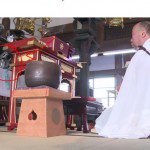
June 18, 2015 Buddhist funerals for... robot dogs? In Japan, yes.
Browse Our Archives
Select a Category Academia Activism American Buddhism Art Book review Buddhism Buddhism Today Buddhist Ethics Burma/Myanmar China Christianity Commodification Environment Gender Happiness Health Humor India Interfaith Islam Japanese Buddhism Kant Media / News Meditation mindfulness Photography Poetry Politics quicktakes Running Teaching Technology Thailand Theism/Atheism Theravada Tibet Tibetan Buddhism Travels Uncategorized Unitarian Universalism video Western Philosophy Zen
Select a Month June 2021 January 2021 November 2020 August 2020 July 2020 March 2020 January 2020 October 2019 August 2019 June 2019 May 2019 March 2019 February 2019 January 2019 December 2018 November 2018 October 2018 September 2018 August 2018 July 2018 June 2018 May 2018 April 2018 March 2018 February 2018 January 2018 December 2017 November 2017 October 2017 September 2017 August 2017 July 2017 June 2017 May 2017 April 2017 March 2017 February 2017 January 2017 December 2016 November 2016 October 2016 September 2016 August 2016 July 2016 June 2016 May 2016 April 2016 March 2016 February 2016 January 2016 December 2015 November 2015 October 2015 September 2015 August 2015 July 2015 June 2015 May 2015 April 2015 March 2015 February 2015 January 2015 December 2014 November 2014 October 2014 September 2014 August 2014 July 2014 June 2014 May 2014 April 2014 March 2014 February 2014 January 2014 December 2013 November 2013 October 2013 September 2013 August 2013 July 2013 June 2013 May 2013 April 2013 March 2013 February 2013 January 2013 December 2012 November 2012 October 2012 September 2012 August 2012 July 2012 June 2012 May 2012 April 2012 March 2012 February 2012 January 2012 December 2011 November 2011 October 2011 September 2011 August 2011 July 2011 June 2011 May 2011 April 2011 March 2011 February 2011 January 2011 December 2010 November 2010 October 2010 September 2010 August 2010 July 2010 June 2010 May 2010 April 2010 March 2010 February 2010 January 2010 December 2009 November 2009 October 2009 September 2009 August 2009 July 2009 June 2009 May 2009 April 2009 March 2009 February 2009 January 2009 December 2008 November 2008 October 2008 September 2008 August 2008 July 2008 June 2008 May 2008 April 2008 March 2008 September 2007 August 2007 July 2007 June 2007 May 2007 April 2007 March 2007 February 2007 January 2007 December 2006 November 2006 October 2006 September 2006 August 2006 July 2006 June 2006 May 2006 April 2006 March 2006 February 2006 January 2006 December 2005 November 2005 October 2005 September 2005 November 2004 September 2004 August 2004
Follow Us!
TAKE THE
Religious Wisdom Quiz
Who fell out of a window and was restored to life by Paul?
Select your answer to see how you score.
Timothy Eutychus Silas Barnabas
Support this
Column


Related posts from American Buddhist Perspectives

For Pride Month: Our 2015 Interview with La...
American Buddhist Perspectives

In strife and uncertainty: let us remember loving-kindness
American Buddhist Perspectives

A Festival of Radical Awakening: Socially Engaged Buddhism...
American Buddhist Perspectives

The Coronavirus is coming - Some thoughts from...
American Buddhist Perspectives
TRENDING AT PATHEOS Buddhist

On Taking Refuge in the Dharma
(Here I continue the feature of sharing talks and essays by teachers...

(Continuing my intention to share talks and essays by other members of Empty...
The Subtle Art of Bowing: A Dharma Discourse
(This presentation was first offered by my dear friend Dharma Holder Tom...

Internal Family Systems Can Heal you Mentally &...
How IFS Helped Me Stop Fighting Myself Internal Family Systems (IFS) is...

The Bible No One Spoke About: A Family’s...
A mysterious family Bible, unspoken faith, and a journey from curiosity to...

How Uncertainty Can Transform Your Life in 2025
Embracing Uncertainty: A New Year’s Resolution for the Brave As 2025 approaches,...
view all Buddhist blogs
Ad-Free & Subscriber Log-In Subscription Support
- About Us
- 2026 Calendar
- Videos
- Podcasts
- Library of World Religions
- Faith In Media Tracker
- Advertise With Us
- Write for Us
- Privacy Policy
- Terms of Service
- Do Not Sell My Data
- Contact Us
- Radiant Digital
- Manage Newsletter Subscriptions
- Unsubscribe From Notifications
- Sitemap
Copyright 2008-2026, Patheos. All rights reserved.
Subscription Support Ad-Free & Subscriber Log-In
Follow Patheos