
BuddhistCatholicContemplativeEvangelicalGeneral ChristianHinduJewishLatter-day SaintMuslimNew VisionsProgressive Christian
Beliefs
- Buddhist
- Catholic
- Contemplative
- Evangelical
- General Christian
- Hindu
- Jewish
- Latter-day Saint
- More Voices
- Muslim
- New Visions
- Pagan
- Progressive Christian
Topics
- Religion News
- Food and Religion
- Sports and Religion
- Religious Art
- Religious Music and Entertainment
- Religious Events
- History and Religion
- Style and Religion
- Politics and Religion
- Women in Religion
- Recreation Outdoors and Religion
- Business Finance and Religion
- Careers Workplace and Religion
- Education and Religion
- Family Parenting and Religion
- Health Fitness and Religion
- Home and Religion
- Relationships and Religion
- Technology and Religion
- Travel and Religion
Columnists
- Buddhist Columnists
- Business Finance and Religion Columnists
- Careers Workplace and Religion Columnists
- Catholic Columnists
- Contemplative Columnists
- Education and Religion Columnists
- Evangelists Columnists
- Family Parenting and Religion Columnists
- General Christian Columnists
- Health Fitness and Religion Columnists
- Hindu Columnists
- History and Religion Columnists
- Home and Religion Columnists
- Jewish Columnists
- More Voices Columnists
- Latter Day Columnists
- Muslim Columnists
- New Visions Columnists
- Nonreligious Columnists
- Pagan Columnists
- Politics and Religion Columnists
- Progressive Columnists
- Recreation Outdoors and Religion Columnists
- Relationships and Religion Columnists
- Religion News Columnists
- Religious Art Columnists
- Religious Events Columnists
- Religious Music and Entertainment Columnists
- Sports and Religion Columnists
- Style and Religion Columnists
- Technology and Religion Columnists
- Travel and Religion Columnists
- Women in Religion Columnists
Resource Library
- 2026 Calendar
- Library of World Religions
- The 100 Most Holy Places on Earth
- Patheos Answers
- Podcasts
- Videos
- Faith Leaders Database
- Anglican Episcopalian
- Bahai
- Baptist
- Buddhism
- Christianity
- Confucianism
- Eastern Orthodoxy
- Hinduism
- Holiness and Pentecostal
- ISKCON
- Islam
- Judaism
- Lutheran
- Methodist
- The Church of Jesus Christ of Latter-day Saints
- New Age
- Paganism
- Presbytarian and Reformed
- Protestantism
- Religion Behind the Scenes
- Roman Catholic
- Scientology
- Shia Islam
- Sikhism
- Sufism
- Sunni Islam
- Taoism
- Zen
- See all religions
Research Tools
 Ad-Free & Subscriber Log-In Subscription Support
Ad-Free & Subscriber Log-In Subscription Support
Follow Patheos 

- Trending:
- Forgiveness
- |
- Marriage
- |
- Consciousness
- |
- Death Penalty
- |
- Election
- |
- Halloween
 American Buddhist Perspectives
- Home
- Buddhist
- Religion News
- Are you screaming at me? Stopping the noise.
Are you screaming at me? Stopping the noise.
Last updated on: March 18, 2014 at 5:18 pm by Justin Whitaker
Are you screaming at me? Stopping the noise. 2014-03-18T17:18:48-06:00 Justin Whitaker
Patheos Explore the world's faith through different perspectives on religion and spirituality! Patheos has the views of the prevalent religions and spiritualities of the world.
A guest-post by Daniel D. Woo (© 2010, 2013, 2014)
As a child I grew up in a family with a father filled with rage, intemperate emotions and verbal abuse and sometimes physical violence. My dad was a former P-51 fighter pilot who flew with the Kuomintang in the Chinese Civil War, where over 80 fellow pilots from my dad’s squadrons died, and where the People’s Republic of China (the Communists) under Chairman Mao Tse-tung won the Civil War.
I knew nothing about post-traumatic stress disorder, the effects of alcohol on anger or the family and culture of my dad’s upbringing. My adaptations in growing up carried on into my career to the point where the very things that made me good at what I did, including litigating and trying cases, were clearly not skillful for living with any sense of contentment, peace, gratitude, acceptance, compassion, empathy, nonjudgmental awareness, tolerance or unconditional love.
At the end of 2002, I decided to learn something about meditation. A few months earlier, I had met a Soto Zen practitioner who had grown up in Chicago and then explored Buddhism in India, Nepal and the US, before settling on a Soto Zen practice here in Washington State. At the time he had been practicing almost 30 years. He said that anyone can develop a skillful mind, and somehow that attracted my attention.
So I made a New Year’s resolution to begin a meditation practice, and in the first two days of January 2003, I looked at many titles in the downtown Seattle Barnes & Noble section on Eastern religions and meditation. I picked one book to start with: Pema Chödrön’s “Comfortable with Uncertainty: 108 Teachings on Cultivating Fearlessness and Compassion.” A short while later, I bought Shunryu Suzuki’s “Zen Mind, Beginner’s Mind.”
I also started attending Seattle Insight Meditation Society’s sittings, and in the intervening years, I’ve visited and sat at a variety of Zen, Insight Meditation Society and Tibetan sanghas, or attended short non-residential retreats.
Mostly I have practiced my own assortment of daily meditation, mindfulness and contemplative practices for over 11 years. I’ve experienced what are for me profound changes in ways I relate to my past, myself, family, friends, acquaintances, strangers and the universe.
Today when I hear internal voices or someone else “screaming” at me, I look immediately for the source inside. Every “screaming scenario” has turned out to be a self-deceiving construct diverting truths about myself and reflecting false projections. Inevitably any impulsive or unwise response or reaction from me amplifies negative energies and my own misery. “I” truly am the source of my own unhappiness.
In over 11 years of continuing practices to become sooner aware of “screaming” scenarios before responding or reacting, everything has changed. Some essential practices for me come from Buddhist teachings. Practice itself cultivates skillful means of conscious action or non-action and teaches that whatever internal pain comes up is neither inevitable nor inescapable.
Two years after I began meditation, mindfulness and other practices, an analogy came up from my childhood. I grew up with vinyl records where if there is a deep enough scratch, the record player needle would hit the scratch, bounce back and start over again until it hit the scratch again and do this over and over again into infinity. The only solution was to lift up and put down the needle after the scratch to play the rest of the recording.
Over time in and after meditations, I learned to be silent until I heard the rustling of leaves and grasses, the rain, the humming in rooms, the beating of wings and hearts, the heat rising from sun-baked stones, claws, pads and footsteps on pavement, earth, sand, the air cooling and warming, the sounds of life, the movement of everything, until the moments came when the sounds of my own thoughts fade – and at such moments, the needle would be lifted, the player dissolved and the music that is always here could be heard.
I understood over time that what I had been unconsciously holding on to were the scratches, the stuck needles, the distorted sounds, the players and the recordings and that none of these were real. I discovered that it is in letting go, everything enters.
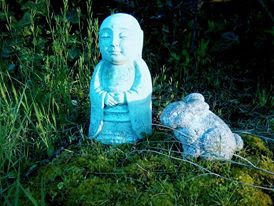
These practices point to a way of peaceful living inside that is no longer held hostage to anger or fear with whatever may happen in life. Continuing practices resulted for me in momentary insights – which when recognized, inspired more practice. The changes themselves are like flashes of light in a dark room. The entire room may not be lit up but the flashes disclose some truths.
The internal insights are not merely a matter of intellectually understanding of words or concepts as better ideas of living. The flashes of light are life itself.
Shantideva (Sk:Śāntideva) was an 8th-century Indian Buddhist scholar at Nālandā University in Bihar, India. Shantideva explained how to cultivate and expand compassion and wisdom in the classic and enduring The Way of the Bodhisattva. One of the translations of this work is from the Padmakara Translation Group, and it was published by Shambhala in 2008. Chapter 6 offers verses on patience. They speak to what today I term “screaming scenarios.”
Here are a few of the verses on patience:
“1. All the good works gathered in a thousand ages,
Such as deeds of generosity,
And offerings to the Blissful Ones –
A single flash of anger shatters them.
No evil is there similar to anger,
No austerity to be compared with patience.
Steep yourself, therefore, in patience,
In various ways, insistently.Those tormented by the pain of anger,
Never know tranquility of mind –
Strangers they will be to every pleasure,
They will neither sleep nor feel secure.”“24.Never thinking, ‘Now I will be angry,’
People are impulsively caught up in anger.
Irritation, likewise, comes
Though never plans to be experienced!”“33.Thus, when enemies or friends
Are seen to act improperly,
Remain serene and call to mind
That everything arises from conditions.”
I have also learned from the Buddhist Mettā bhāvanā practices (the cultivation of loving-kindness).
“Mettā (Pāli:मेत्ता) or maitrī (Sanskrit) has been translated as ‘loving-kindness, ’‘friendliness,’ ‘benevolence,’ ‘amity,’ ‘friendship,’ ‘good will,’ ‘kindness,’ ‘love,’ ‘sympathy,’ and ‘active interest in others.’… The object of mettā meditation is lovingkindness (without Upādāna, that is, attachment). Traditionally, the practice begins with the meditator cultivating loving kindness towards themselves, then their loved ones, friends, teachers, strangers, enemies, and finally towards all sentient beings. Commonly, it can be used as a greeting or closing to a letter or note.’
“Mettā signifies friendship and non-violence as well as ‘a strong wish for the happiness of others’, but also less obvious or direct qualities such as showing patience, receptivity, and appreciation. Though it refers to many seemingly disparate ideas, Mettā is in fact a very specific form of love – a caring for another independent of all self-interest – and thus is likened to one’s love for one’s child or parent. Understandably, this energy is often difficult to describe in words; however, in the practice of Mettā meditation, one recites specific words and phrases in order to evoke this ‘boundless warm-hearted feeling.’ The strength of this feeling is not limited to or by family, religion, or social class. Indeed, Mettā is a tool that permits one’s generosity and kindness to be applied to all beings and, as a consequence, one finds true happiness in another person’s happiness, no matter who the individual is.”
[Excerpts are from Wikipedia: http://https://en.wikipedia.org/wiki/Mettā.]
When I began Mettā practices in very early January 2003, I wanted to make sure that I took time for these practices early in the morning. Our sons had to catch a school bus before 7 am each morning so after they were fed and I washed the dishes, I would wash and shave under the shower. As I did so, I spent most of the time going through Mettā practices, using specific individuals whom I knew personally as examples for each step. I did this for 18 months before the practices became “second nature” for me.
I’ve learned during this time that I never should skip beginning with myself, for it is to the extent that I harbor grudges against myself, am I unable to offer acceptance and kindness to others. I begin with the following words for myself, then extend them to a person I love, a person I like, a neutral person, a person I dislike, a person I “hate” and cannot conceivably forgive, and finally all sentient beings.
I use something like the following for each phase of the practice (substituting the words “you” or “all sentient beings” as appropriate for the different stages of the practice):
May I be filled with loving-kindness.
May I be safe from inner and outer dangers.
May I be well in body and mind.
May I be at ease and happy.
Another practice that I’ve incorporated comes from Tibetan tonglen (the Great Compassion or “sending and receiving” meditations). Tonglen is a practice of accepting wholeheartedly (1) on the in-breath whatever unease, anger, fear or other difficult emotion or condition that I may be experiencing in the moment and expanding that acceptance of the same emotions and conditions that all sentient beings may be experiencing at the same moment, and (2) on the out-breath, transmitting a wish that all sentient beings be free in that moment of such emotion or condition.
In January 2003 I started my tonglen practices. Tonglen is paradoxically opposed to how I had reacted to pain, discontent, fear, anger or other afflictive emotions before beginning the practice.
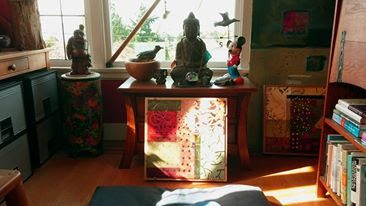
In October 2003, I had an extremely severe and acute episode with back spasms where I could not stand straight, sit, lie, walk, or be in any position without creating more back spasms. Episodic acute back spasms occurred yearly after I had a back injury in 1991, and I had developed chronic back pain with a swollen area near a lower disc in my back. I hobbled to a quiet room where I decided to practice tonglen for the severe pain that I was experiencing. On each in-breath, I surrendered to and simultaneously accepted my back pain and also asked to take into myself the same kind of back pain from all living beings. On each out-breath, I asked that all living beings be relieved of the same kind of back pain. I lost track of time. I heard a giant “pop” and at the same moment, I felt a complete release in my back. I was freed of the acute pain although my back had some soreness. Since then, I no longer have chronic back pain and only on 2 or 3 occasions have I suffered any acute back spasms.
The release of pain was a complete surprise for me. I was not practicing tonglen to be relieved of pain. I thought that my attitude toward pain might change – not that the pain itself would leave me.
This and other experiences inform me that most of my experiential pain doesn’t really exist – instead, my own responses, reactions and relationship to and rejection of pain are what create seemingly unbearable pain.
Another practice comes from a teaching by the Buddha. Beginning in 2003 and until mid-2004, I kept by my workstation the following variation of the Buddha’s words (which I had found in a Zen calendar):
“People with opinions go around bothering other people.”
These words were for me a constant reminder to practice neither rejecting nor struggling with what other people said (whether in person, phone calls, emails, texts or other communications or media) or with phantom conversations taking place in my own thoughts. Instead I was to catch myself before responding or reacting. I was to practice pausing and to reflect and contemplate whether I may be adding anything useful, wise or timely at any moment, and I wait. This quote was also a reminder that “who” I am is not a collection of my opinions.
In effect I was learning patience through this practice. I was developing what some Buddhist teachers call the “Sacred Pause” during which I can learn not to add to suffering – whether it is my own or that of another living being.
After about 16 months, I did not need to keep the quote on a piece of paper near me. The words are engraved in my mind. Today when I am bothered by another’s opinion and either immediately want to respond or react, I recognize that I create a wall around myself and close off what this moment already provides, if I do not practice the Sacred Pause.
Another Buddhist teaching is about “Deep Listening” or “Generous Listening” practices. These practices in effect continue the development of the Sacred Pause and can be mindfully adopted in every listening situation (whether with one person or a group of people). For me, I incorporate the “bare awareness of breath” practices from the Four Foundations of Mindfulness (the Satipaṭṭhāna Sutta), to stop when I am distracted, trying out responses or arguments or otherwise distracted by or focused on whatever problems I might be conjuring up in my mind, and instead to come back to the present moment, with bare awareness of breath, and to start listening again right then.
This practice by itself helps open me up to what someone is actually saying from the heart and I’ve learned through the patience developed during this practice, how often some insight or other learning could be heard when my mind is quieter and I am hearing.
It is through these past 11 years of experiences that I now interpret in my own life what the disease of the mind is as described in the opening verses of the Hsin Hsin Ming (“Verses on the Faith Mind” by the Third Cha’n (Zen) Patriarch Chien-chih Seng-ts’an (about 606 AD):
“The Great Way is not difficult
for those who have no preferences.
When love and hate are both absent
everything becomes clear and undisguised.
Make the smallest distinction, however,
and heaven and earth are set infinitely apart.
If you wish to see the truth
then hold no opinions for or against anything.
To set up what you like against what you dislike
is the disease of the mind.
When the deep meaning of things is not understood
the mind’s essential peace is disturbed to no avail.
The Way is perfect like vast space
where nothing is lacking and nothing is in excess.
Indeed, it is due to our choosing to accept or reject
that we do not see the true nature of things.
Be serene in the oneness of things
and such erroneous views will disappear by themselves.”
I am not suggesting that only one set of practices is the only or best way to the insights I’ve experienced. To the contrary there are teachings in faiths, paths, traditions and religions of all kinds that can allow for such changes and I’ve been learning also from other spiritual paths and practices.
For example, it is in the practices that I’ve described here where I learned the simple wisdom of what the shaman don Miguel Ruiz describes as “The Second Agreement” in his “The Four Agreements”; he says:
“Don’t Take Anything Personally.”
“Nothing others do is because of you. What others say and do is a projection of their own reality, their own dream. When you are immune to the opinions and actions of others, you won’t be the victim of needless suffering.”
It took until sometime in 2004, when I recognized the insanity of the idea that I can read anyone’s mind. This specific realization came when I realized this was even true with my wife’s mind. I stopped trying to do so. Since the moment I stopped trying to read her mind, our relationship began to improve. (We’ve been married over 42 years as of this date in 2014.)
In 2005, a client and I met over lunch to discuss his business agenda. He was wound-up, distracted, angry, snappy and rude. Rather than contracting and closing off, I asked whether something had happened in his life. He told me that his brother had drowned a few days earlier, and he talked for the next two hours about the impact on his parents and the grief and anger he was feeling. We did not return to the business reason for the meeting.
In 2009, a former colleague (who is an intense workaholic and always self-preoccupied) asked me to help out on a legal project. When I saw him in a conference room at his firm’s offices, he was angry and loudly swearing about a different project. Rather than contracting from him and wishing that I was somewhere else with someone else, I silently practiced Mettā and tonglen meditations for him – to allow him to regain and experience some space. Eventually he quieted down. (This is one of many occasions where in comparing past encounters, I could see that my past reactions to such incidents amplified the other person’s tension, anger, fear or other negative emotions.)
In 2011, my dad died. I experienced a complete forgiveness of all that was in the past when I went to the hospital and saw my dad, a dying man in a hospital bed. Over the next 10+ weeks, I would visit and sit with him with one purpose only – to help him die in peace. When he struggled with pain while trying to sleep, I practiced Mettā and tonglen while holding his hand. Whenever I did this, he slept more peacefully. I learned during these weeks that patience is intertwined with forgiveness and love.
I have reinforced my faith in continuing practice with everything – on the mat, in a grocery waiting line, in traffic, with family, friends, strangers, easy and difficult people, washing dishes, emptying the trash, writing bills, walking, typing, reading, on the phone, with myself, and even in dream states when sleeping.
During these years of practice, I am losing conventional notions of sanity. What I once considered normal and sane ways to respond, react or relate to screaming and other difficult scenarios no longer appear sane. In a sense a tremendous volume of “noise” just stops with practice. Many transitions of change that once were very difficult are simpler today.
I am learning that when we accept things as they are, right now and here, our hearts comprehend that we are complete and perfect in this moment. When we forgive what we think we are, right now and here, we understand that incompleteness is perfection. Neither do we have to escape nor fight. Time ceases. We return to a natural state of spaciousness and from such, our intuition will guide us for the right response – whether of action or restraint, with what is within or before us. We can enjoy a moment of liberation and happiness and joy follow.
Dan Woo is a lawyer who has for over 36 years represented creative, innovative companies and individuals, in the arts, software publishing, medical technologies and other fields. Dan has also seen much suffering in the imperfections of conflict resolution in the US legal system.

Next Post

March 21, 2014 Coursera's Buddhism and Modern Psychology : week one
Browse Our Archives
Select a Category Academia Activism American Buddhism Art Book review Buddhism Buddhism Today Buddhist Ethics Burma/Myanmar China Christianity Commodification Environment Gender Happiness Health Humor India Interfaith Islam Japanese Buddhism Kant Media / News Meditation mindfulness Photography Poetry Politics quicktakes Running Teaching Technology Thailand Theism/Atheism Theravada Tibet Tibetan Buddhism Travels Uncategorized Unitarian Universalism video Western Philosophy Zen
Select a Month June 2021 January 2021 November 2020 August 2020 July 2020 March 2020 January 2020 October 2019 August 2019 June 2019 May 2019 March 2019 February 2019 January 2019 December 2018 November 2018 October 2018 September 2018 August 2018 July 2018 June 2018 May 2018 April 2018 March 2018 February 2018 January 2018 December 2017 November 2017 October 2017 September 2017 August 2017 July 2017 June 2017 May 2017 April 2017 March 2017 February 2017 January 2017 December 2016 November 2016 October 2016 September 2016 August 2016 July 2016 June 2016 May 2016 April 2016 March 2016 February 2016 January 2016 December 2015 November 2015 October 2015 September 2015 August 2015 July 2015 June 2015 May 2015 April 2015 March 2015 February 2015 January 2015 December 2014 November 2014 October 2014 September 2014 August 2014 July 2014 June 2014 May 2014 April 2014 March 2014 February 2014 January 2014 December 2013 November 2013 October 2013 September 2013 August 2013 July 2013 June 2013 May 2013 April 2013 March 2013 February 2013 January 2013 December 2012 November 2012 October 2012 September 2012 August 2012 July 2012 June 2012 May 2012 April 2012 March 2012 February 2012 January 2012 December 2011 November 2011 October 2011 September 2011 August 2011 July 2011 June 2011 May 2011 April 2011 March 2011 February 2011 January 2011 December 2010 November 2010 October 2010 September 2010 August 2010 July 2010 June 2010 May 2010 April 2010 March 2010 February 2010 January 2010 December 2009 November 2009 October 2009 September 2009 August 2009 July 2009 June 2009 May 2009 April 2009 March 2009 February 2009 January 2009 December 2008 November 2008 October 2008 September 2008 August 2008 July 2008 June 2008 May 2008 April 2008 March 2008 September 2007 August 2007 July 2007 June 2007 May 2007 April 2007 March 2007 February 2007 January 2007 December 2006 November 2006 October 2006 September 2006 August 2006 July 2006 June 2006 May 2006 April 2006 March 2006 February 2006 January 2006 December 2005 November 2005 October 2005 September 2005 November 2004 September 2004 August 2004
Follow Us!
TAKE THE
Religious Wisdom Quiz
What Christian group is known for its historic peace churches and pacifism?
Select your answer to see how you score.
Methodists Quakers Presbyterians Pentecostals
Support this
Column


Related posts from American Buddhist Perspectives

For Pride Month: Our 2015 Interview with La...
American Buddhist Perspectives

A Festival of Radical Awakening: Socially Engaged Buddhism...
American Buddhist Perspectives

Shambhala Buddhist Community Faces New Allegations in Chapman...
American Buddhist Perspectives

Secular vs Religious, Buddhism vs Mindfulness, and a...
American Buddhist Perspectives
TRENDING AT PATHEOS Buddhist

On Taking Refuge in the Dharma
(Here I continue the feature of sharing talks and essays by teachers...

(Continuing my intention to share talks and essays by other members of Empty...
The Subtle Art of Bowing: A Dharma Discourse
(This presentation was first offered by my dear friend Dharma Holder Tom...

Internal Family Systems Can Heal you Mentally &...
How IFS Helped Me Stop Fighting Myself Internal Family Systems (IFS) is...

The Bible No One Spoke About: A Family’s...
A mysterious family Bible, unspoken faith, and a journey from curiosity to...

How Uncertainty Can Transform Your Life in 2025
Embracing Uncertainty: A New Year’s Resolution for the Brave As 2025 approaches,...
view all Buddhist blogs
Ad-Free & Subscriber Log-In Subscription Support
- About Us
- 2026 Calendar
- Videos
- Podcasts
- Library of World Religions
- Faith In Media Tracker
- Advertise With Us
- Write for Us
- Privacy Policy
- Terms of Service
- Do Not Sell My Data
- Contact Us
- Radiant Digital
- Manage Newsletter Subscriptions
- Unsubscribe From Notifications
- Sitemap
Copyright 2008-2026, Patheos. All rights reserved.
Subscription Support Ad-Free & Subscriber Log-In
Follow Patheos