
BuddhistCatholicContemplativeEvangelicalGeneral ChristianHinduJewishLatter-day SaintMuslimNew VisionsProgressive Christian
Beliefs
- Buddhist
- Catholic
- Contemplative
- Evangelical
- General Christian
- Hindu
- Jewish
- Latter-day Saint
- More Voices
- Muslim
- New Visions
- Pagan
- Progressive Christian
Topics
- Religion News
- Food and Religion
- Sports and Religion
- Religious Art
- Religious Music and Entertainment
- Religious Events
- History and Religion
- Style and Religion
- Politics and Religion
- Women in Religion
- Recreation Outdoors and Religion
- Business Finance and Religion
- Careers Workplace and Religion
- Education and Religion
- Family Parenting and Religion
- Health Fitness and Religion
- Home and Religion
- Relationships and Religion
- Technology and Religion
- Travel and Religion
Columnists
- Buddhist Columnists
- Business Finance and Religion Columnists
- Careers Workplace and Religion Columnists
- Catholic Columnists
- Contemplative Columnists
- Education and Religion Columnists
- Evangelists Columnists
- Family Parenting and Religion Columnists
- General Christian Columnists
- Health Fitness and Religion Columnists
- Hindu Columnists
- History and Religion Columnists
- Home and Religion Columnists
- Jewish Columnists
- More Voices Columnists
- Latter Day Columnists
- Muslim Columnists
- New Visions Columnists
- Nonreligious Columnists
- Pagan Columnists
- Politics and Religion Columnists
- Progressive Columnists
- Recreation Outdoors and Religion Columnists
- Relationships and Religion Columnists
- Religion News Columnists
- Religious Art Columnists
- Religious Events Columnists
- Religious Music and Entertainment Columnists
- Sports and Religion Columnists
- Style and Religion Columnists
- Technology and Religion Columnists
- Travel and Religion Columnists
- Women in Religion Columnists
Resource Library
- 2026 Calendar
- Library of World Religions
- The 100 Most Holy Places on Earth
- Patheos Answers
- Podcasts
- Videos
- Faith Leaders Database
- Anglican Episcopalian
- Bahai
- Baptist
- Buddhism
- Christianity
- Confucianism
- Eastern Orthodoxy
- Hinduism
- Holiness and Pentecostal
- ISKCON
- Islam
- Judaism
- Lutheran
- Methodist
- The Church of Jesus Christ of Latter-day Saints
- New Age
- Paganism
- Presbytarian and Reformed
- Protestantism
- Religion Behind the Scenes
- Roman Catholic
- Scientology
- Shia Islam
- Sikhism
- Sufism
- Sunni Islam
- Taoism
- Zen
- See all religions
Research Tools
 Ad-Free & Subscriber Log-In Subscription Support
Ad-Free & Subscriber Log-In Subscription Support
Follow Patheos 

- Trending:
- Forgiveness
- |
- Marriage
- |
- Consciousness
- |
- Death Penalty
- |
- Election
- |
- Halloween
 American Buddhist Perspectives
- Home
- Buddhist
- Religion News
- Zen in America, a Documentary – an interview with Adam Kō Shin Tebbe
Zen in America, a Documentary – an interview with Adam Kō Shin Tebbe
Last updated on: October 6, 2013 at 3:20 pm by Justin Whitaker
Zen in America, a Documentary – an interview with Adam Kō Shin Tebbe 2013-10-06T15:20:41-06:00 Justin Whitaker
Patheos Explore the world's faith through different perspectives on religion and spirituality! Patheos has the views of the prevalent religions and spiritualities of the world.
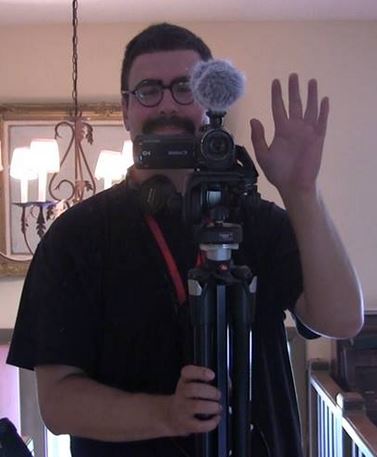
Adam Kō Shin Tebbe is creating the documentary film Zen in America. My friend and fellow Patheos Blogger Danny Fisher discussed the documentary in a recent post at the start of Adam’s fundraising campaign on Kickstarter. Now over 90% funded, I recently took the opportunity to ask some questions of my own. Have a look at Danny and Adam’s conversation (here) to read more about Adam’s work, past and future.
And with that, we’ll dive in…
JW: So you are making a documentary about Zen in America. First some methodological questions: What is Zen? What is America? Talk to me about the physical/geographical and other borders to this project.
Zen is a Mahayana Buddhist tradition that began in China as a distinct school sometime in the 6th century, spreading later to Vietnam, Korea and Japan. As you and your readers probably know, the term comes from the Sanskrit word dhyāna, which basically means meditation. So Zen Buddhism could be described as a tradition that places a great emphasis on meditation.
For the purposes of my film “Zen in America”, we’ll be focusing on North America – which means I’ll be filming in the United States, Canada, and Mexico. What we’re seeing today over here is a transformation of the tradition rather than a mere transplantation, inherited from early pioneers who came over from Japan, Korea, Vietnam and China. Traditionally we mark the World’s Parliament of Religions of 1893 as Zen’s first major entryway in the United States, where the Rinzai priest Soyen Shaku arrived as a representative of the tradition. Interestingly, while today Soto Zen and Korean Zen derivatives are by far the more dominant paths, the earliest teachers to come over here were from the Rinzai school – people like Soyen Shaku, D.T. Suzuki, Nyogen Senzaki and Sokei-an. In Canada you have Samu Sunim and his lineage, as well as several affiliate groups of sanghas that began in the United States. As far as Mexico is concerned, I’m as interested as anyone else to learn more about its history and what is going on today down there.
Put simply, I’ve limited this series to North America for practical reasons. There’s quite a lot to explore as it is by limiting it to the three countries and I’ll have more than enough to tackle. I plan to cover all of the main schools and lineages such as Vietnamese Zen (which includes Thich thien-An and Thich Nhat Hanh), the Rinzai school (which includes Sokei-an, Joshu Sasaki, Eido Shimano, Shodo Harada and Omori Sogen), the Soto school (which includes Shunryu Suzuki, Soyu Matsuoka, Kobun Chino, Taizan Maezumi, Jiyu Kennett, Dainin Katagiri and some of Deshimaru’s American groups), the Harada-Yasutani lineage and its derived lineages, from Aitken to Kapleau and many others, and Korean Zen derivatives, including Seung Sahn and Samu Sunim. There’s a lot of complexity in there and I’m condensing it all quite a bit for the purposes of this interview, as some teachers like Maezumi had transmission in Rinzai, Soto and Harada-Yasutani.
I don’t plan to include “self-proclaimed” teachers in the film series. That’s not to say they aren’t of value or worth taking a look at. It’s a simple matter of wanting to focus on lineages where the lines of succession are clear enough, though the topic of independent teachers will surely come up when we’re discussing teachers like Philip Kapleau in the film.
JW: You mentioned to Danny that you ordained as a Buddhist this year. What does that mean, exactly?
That’s a good question. I took formal jukai in July and received my rakusu, taking the Sixteen Bodhisattva Precepts during my ceremony. From what my preceptor Myoan Grace Schireson has told me, the first portion of my dharma name (Butsu Mon, or Buddha Gate) is a challenge of sorts – will I endeavor to keep the gate open or closed? The second portion of my name (Kō Shin, or Shining Heart) is supposed represent how others might view me. They’re both a challenge and I’m trying (and sometimes I fail). But it is somehow a bit more serious to me now, like a commitment I had made to myself and others to follow the Buddhist path.
JW: Will the documentary itself have a sort of ‘Zen flavor’ – if there is such a thing? That is, do you plan to consciously impart teachings upon the viewer in some way?
That’s another good question. The teachings will be presented, though not by me – but by those I’ll be interviewing. I’ll then do some consulting in later stages of post-production with various teachers in order to best structure chapters and parts of the series. So it’s going to be a largely interview driven film with a lot of visuals showing viewers just what we’re doing (in the formal sense). In that way, I don’t think we could even escape it having a Zen flavor, as you call it. The idea behind this is very mahasangha in spirit, and so it’s not going to be following just one person around for too long (except when necessary, such as the historical portions). I just want people to walk away from the series feeling like we did the tradition some justice by showing its diversity.
JW: What filmmakers/documentarians influence or inspire you as a budding documentarian?
I actually really liked Mitch Schultz’s documentary “DMT: The Spirit Molecule” quite a bit, and it’s available for people to check out on YouTube right now, even. I felt that film conveyed the subject matter truthfully while also appealing to an audience that went beyond those who are solely interested in DMT. So I kind of look to that film and watch to see how Mitch did it, which will come further along in the process when I’m editing. I mention this film because they really dove deeply in to one subject and covered it well by gathering the voices of so many people familiar with it. That’s definitely what I plan to do in the film. I’m also really excited to see Adam Eurich’s film “Seeking Heartwood” when it comes out, as it’s a little bit like what I’m doing – though Adam tells me it may have a more personal story aspect to it.
JW: You also mentioned in your interview with Danny that you will cover some of the controversies that have arisen in certain schools of Zen in America. Do you have a sense of how much time you will devote to this topic?
I will. How much is sort of an open question, though it certainly won’t be the primary focus. You can’t tell the story of Zen in North America without discussing it some, however. It’s not really possible to do so, as most of the lines have been touched by some of the problems around teacher misconduct at times. Some lines will have this issue discussed in the film more than others will, and that’s because in some cases this and other issues have been a more prominent. So it’s going to be discussed where appropriate. I really can’t give any estimate of how much time will be devoted to it right now, but I can say it won’t be the main focus of the film. I see it more as a part of the overall story, layered with lots of characters and personalities and complexity. Where the issue does need discussing, I’ll be talking to a swath of individuals and let the audience decide what they feel about it all. In all I anticipate the entire series will be in 5 or 6 parts, starting with the history.
JW: I see that you’re around 90% to your total in fundraising. But of course you only get the money if you’re 100% funded. How important is this round of crowd-funding and how will additional funds help in the project?
Assuming we’ll hit the $10,000 mark, which it looks like we are going to do, I’ll be adding info about what Kickstarter calls a “stretch goal.” Basically, as I’ve stated from the beginning in the project, my minimum is a conservative one and I set it lower rather than higher as I figured $10,000 would at least get me out and filming for the next year or more. However, I have anticipated travel expenses for this entire journey over the coming years will be more realistically in the $20,000 to $30,000 area. Flights, rental cars, gas, food – it all adds up quite a bit. I won’t be staying in hotels as a practice but for the rarest of emergencies, and if I do I’ll be sure it’s a motel.
So, basically, the $10,000 will allow me to start filming, and anything beyond that will allow me to get to more and more places. I may even have to revisit funding again in the distant future again, depending on how this fundraising effort goes. I figure if I have to go that route, I’ll have met a lot of new people and made more personal connections, which goes a long way when you’re looking to get a film backed. But we’ll see. I’m hoping to raise anything $10,000 or above.
JW: You plan on working on this for three years. Will you give us some updates and sneak-peaks as you go along?
Definitely. Some have already expressed a concern to me that the trailer is very white! A point I was well aware of when putting it together. That’s because I had a limited amount of footage and interviews to use for this first push, to get the ball rolling. There’s going to be a lot more diversity in the final film, rest assured. So, I’ll likely be updating the trailer a bit as I get further in to the filming process.
I’ll also be making available dharma talks I might capture on film during my stays as extras, as I will never be able to use full length talks in the final film. I’ll also blog regularly at the website and Facebook to let everyone know where I am and what I’m currently filming.
I really enjoyed your questions of me today, Justin. Thank you.
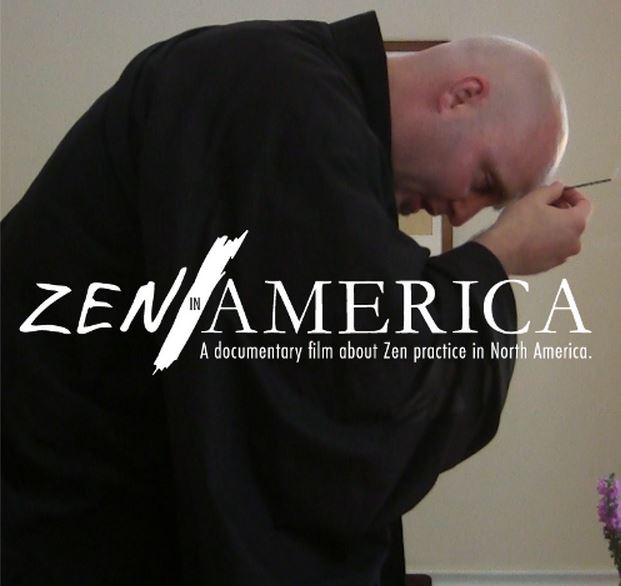 Visit the official Zen in America Kickstater campaign page here.
Zen in America official website: http://zeninamerica.com/
On Facebook: https://www.facebook.com/pages/Zen-in-America-a-documentary/
On Twitter: https://twitter.com/ZenInAmerica
Our YouTube channel: http://www.youtube.com/channel/UCr4SE7s9aVNFpJ-wmNlBNMA
Previous Post

October 6, 2013
Happy World Teacher's Day
Next Post
October 7, 2013 Buddhism: religion or philosophy?
Browse Our Archives
Select a Category Academia Activism American Buddhism Art Book review Buddhism Buddhism Today Buddhist Ethics Burma/Myanmar China Christianity Commodification Environment Gender Happiness Health Humor India Interfaith Islam Japanese Buddhism Kant Media / News Meditation mindfulness Photography Poetry Politics quicktakes Running Teaching Technology Thailand Theism/Atheism Theravada Tibet Tibetan Buddhism Travels Uncategorized Unitarian Universalism video Western Philosophy Zen
Select a Month June 2021 January 2021 November 2020 August 2020 July 2020 March 2020 January 2020 October 2019 August 2019 June 2019 May 2019 March 2019 February 2019 January 2019 December 2018 November 2018 October 2018 September 2018 August 2018 July 2018 June 2018 May 2018 April 2018 March 2018 February 2018 January 2018 December 2017 November 2017 October 2017 September 2017 August 2017 July 2017 June 2017 May 2017 April 2017 March 2017 February 2017 January 2017 December 2016 November 2016 October 2016 September 2016 August 2016 July 2016 June 2016 May 2016 April 2016 March 2016 February 2016 January 2016 December 2015 November 2015 October 2015 September 2015 August 2015 July 2015 June 2015 May 2015 April 2015 March 2015 February 2015 January 2015 December 2014 November 2014 October 2014 September 2014 August 2014 July 2014 June 2014 May 2014 April 2014 March 2014 February 2014 January 2014 December 2013 November 2013 October 2013 September 2013 August 2013 July 2013 June 2013 May 2013 April 2013 March 2013 February 2013 January 2013 December 2012 November 2012 October 2012 September 2012 August 2012 July 2012 June 2012 May 2012 April 2012 March 2012 February 2012 January 2012 December 2011 November 2011 October 2011 September 2011 August 2011 July 2011 June 2011 May 2011 April 2011 March 2011 February 2011 January 2011 December 2010 November 2010 October 2010 September 2010 August 2010 July 2010 June 2010 May 2010 April 2010 March 2010 February 2010 January 2010 December 2009 November 2009 October 2009 September 2009 August 2009 July 2009 June 2009 May 2009 April 2009 March 2009 February 2009 January 2009 December 2008 November 2008 October 2008 September 2008 August 2008 July 2008 June 2008 May 2008 April 2008 March 2008 September 2007 August 2007 July 2007 June 2007 May 2007 April 2007 March 2007 February 2007 January 2007 December 2006 November 2006 October 2006 September 2006 August 2006 July 2006 June 2006 May 2006 April 2006 March 2006 February 2006 January 2006 December 2005 November 2005 October 2005 September 2005 November 2004 September 2004 August 2004
Follow Us!
TAKE THE
Religious Wisdom Quiz
What theme is common in both Psalms and Proverbs?
Select your answer to see how you score.
Battle victories Genealogies Temple rituals The fear of the Lord
Support this
Column


Related posts from American Buddhist Perspectives

For Pride Month: Our 2015 Interview with La...
American Buddhist Perspectives

In strife and uncertainty: let us remember loving-kindness
American Buddhist Perspectives

A Festival of Radical Awakening: Socially Engaged Buddhism...
American Buddhist Perspectives

The Coronavirus is coming - Some thoughts from...
American Buddhist Perspectives
TRENDING AT PATHEOS Buddhist

On Taking Refuge in the Dharma
(Here I continue the feature of sharing talks and essays by teachers...

(Continuing my intention to share talks and essays by other members of Empty...
The Subtle Art of Bowing: A Dharma Discourse
(This presentation was first offered by my dear friend Dharma Holder Tom...

Internal Family Systems Can Heal you Mentally &...
How IFS Helped Me Stop Fighting Myself Internal Family Systems (IFS) is...

The Bible No One Spoke About: A Family’s...
A mysterious family Bible, unspoken faith, and a journey from curiosity to...

How Uncertainty Can Transform Your Life in 2025
Embracing Uncertainty: A New Year’s Resolution for the Brave As 2025 approaches,...
view all Buddhist blogs
Ad-Free & Subscriber Log-In Subscription Support
- About Us
- 2026 Calendar
- Videos
- Podcasts
- Library of World Religions
- Faith In Media Tracker
- Advertise With Us
- Write for Us
- Privacy Policy
- Terms of Service
- Do Not Sell My Data
- Contact Us
- Radiant Digital
- Manage Newsletter Subscriptions
- Unsubscribe From Notifications
- Sitemap
Copyright 2008-2026, Patheos. All rights reserved.
Subscription Support Ad-Free & Subscriber Log-In
Follow Patheos