
BuddhistCatholicContemplativeEvangelicalGeneral ChristianHinduJewishLatter-day SaintMuslimNew VisionsProgressive Christian
Beliefs
- Buddhist
- Catholic
- Contemplative
- Evangelical
- General Christian
- Hindu
- Jewish
- Latter-day Saint
- More Voices
- Muslim
- New Visions
- Pagan
- Progressive Christian
Topics
- Religion News
- Food and Religion
- Sports and Religion
- Religious Art
- Religious Music and Entertainment
- Religious Events
- History and Religion
- Style and Religion
- Politics and Religion
- Women in Religion
- Recreation Outdoors and Religion
- Business Finance and Religion
- Careers Workplace and Religion
- Education and Religion
- Family Parenting and Religion
- Health Fitness and Religion
- Home and Religion
- Relationships and Religion
- Technology and Religion
- Travel and Religion
Columnists
- Buddhist Columnists
- Business Finance and Religion Columnists
- Careers Workplace and Religion Columnists
- Catholic Columnists
- Contemplative Columnists
- Education and Religion Columnists
- Evangelists Columnists
- Family Parenting and Religion Columnists
- General Christian Columnists
- Health Fitness and Religion Columnists
- Hindu Columnists
- History and Religion Columnists
- Home and Religion Columnists
- Jewish Columnists
- More Voices Columnists
- Latter Day Columnists
- Muslim Columnists
- New Visions Columnists
- Nonreligious Columnists
- Pagan Columnists
- Politics and Religion Columnists
- Progressive Columnists
- Recreation Outdoors and Religion Columnists
- Relationships and Religion Columnists
- Religion News Columnists
- Religious Art Columnists
- Religious Events Columnists
- Religious Music and Entertainment Columnists
- Sports and Religion Columnists
- Style and Religion Columnists
- Technology and Religion Columnists
- Travel and Religion Columnists
- Women in Religion Columnists
Resource Library
- 2026 Calendar
- Library of World Religions
- The 100 Most Holy Places on Earth
- Patheos Answers
- Podcasts
- Videos
- Faith Leaders Database
- Anglican Episcopalian
- Bahai
- Baptist
- Buddhism
- Christianity
- Confucianism
- Eastern Orthodoxy
- Hinduism
- Holiness and Pentecostal
- ISKCON
- Islam
- Judaism
- Lutheran
- Methodist
- The Church of Jesus Christ of Latter-day Saints
- New Age
- Paganism
- Presbytarian and Reformed
- Protestantism
- Religion Behind the Scenes
- Roman Catholic
- Scientology
- Shia Islam
- Sikhism
- Sufism
- Sunni Islam
- Taoism
- Zen
- See all religions
Research Tools
 Ad-Free & Subscriber Log-In Subscription Support
Ad-Free & Subscriber Log-In Subscription Support
Follow Patheos 

- Trending:
- Forgiveness
- |
- Marriage
- |
- Consciousness
- |
- Death Penalty
- |
- Election
- |
- Halloween
 American Buddhist Perspectives
- Home
- Buddhist
- Religion News
- Introducing the Middle Way Society, an interview with Robert M. Ellis
Introducing the Middle Way Society, an interview with Robert M. Ellis
Last updated on: October 25, 2016 at 8:01 pm by Justin Whitaker
Introducing the Middle Way Society, an interview with Robert M. Ellis 2016-10-25T20:01:51-06:00 Justin Whitaker
Patheos Explore the world's faith through different perspectives on religion and spirituality! Patheos has the views of the prevalent religions and spiritualities of the world.
Today we’re interviewing Robert M. Ellis, a UK philosopher and formerly ordained Buddhist (in the FWBO, now TBC) about his new undertaking, the Middle Way Society. I have personally been in touch with Robert for a number of years now, having exchanged a few emails back when I began my PhD and moved to London in 2007. Since then we have mostly crossed paths of our blogs and those of fellow Buddhist-philosophy type people, and earlier this year I had the opportunity to meet Robert in person here in Bristol which was a real treat. You may remember him from some comments here or from his guest post “Quiet up!” reviewing/discussing Susan Cane’s book, Quiet. I also wrote about Robert’s talk with Ted Meissner for the Secular Buddhist Association last year here.
Let’s get started.
JW: Let’s begin with an overview of the Middle Way Society. What is it? Who is it?
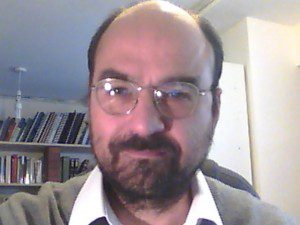
RME: It’s a new society (a charity) devoted to the understanding and practice of the Middle Way. It was launched in August 2013 by the agreement of the participants in a Middle Way Study Retreat which I led in Malvern. The participants in this retreat had come together initially through the Secular Buddhist movement. However, we wanted to create something rather different from Secular Buddhism, with a clearer philosophical foundation to help us get beyond the religious-secular divide and a greater openness to people from other traditional backgrounds. Seeing the Middle Way as a principle of universal applicability rather than just an aspect of Buddhism, we want to start treating it as such by separating it from the authority of the Buddhist tradition. That doesn’t mean, of course, that we can’t draw on the resources and symbols of the Buddhist tradition, as we could any other.
For a number of years I have been trying to promote Middle Way Philosophy by myself and feeling that I’ve made very limited headway in communicating it. The main problem is the interconnected elements that people need to understand simultaneously and in relation to each other, so it’s very easy for people to dismiss it by just applying their own model and not recognising the ways in which they also need to question other assumptions that they’re making to understand the model I’m using. It has been a great relief to start feeling that I have got across those interconnected elements to some other people who also see its value and are willing to work with me on promoting it. The key other people involved in setting up the Society are Julian Adkins and Barry Daniel.
JW: You’ve had a fascinating path in life. In addition to sending readers to a longer bio, would you like to give a short summary of how you got here?
RME: I came from a Christian (liberal Baptist) background but declared myself an atheist at the age of nine. I first got involved in Buddhism, as well as studying Sanskrit, Pali, Hinduism, Buddhism etc as an undergraduate at Cambridge in the 1980’s, but then I ducked out of Buddhism for a few years before returning to the FWBO (now Triratna) in the mid-90’s. My practical experience of Buddhism shaped my understanding of Western philosophy as I began to engage with it seriously at around the same time, and I particularly became interested in the problem of relativism and how relativism was counter-dependent on absolutism. So I did a Ph.D. in the Philosophy department at Lancaster, avoiding all the scholarly Buddhist Studies stuff and just focusing on how the Middle Way could be brought to bear on the central problem of what objectivity is. Since getting my Ph.D. in 2001 I have felt that it contained some important ideas that I needed to spread, develop and apply. At first I tried doing this in the Triratna Buddhist Order, where I was ordained as Upeksacitta between 2004 and 2008, until I realised that the primary commitment in that Order on balance is to the tradition, not the Middle Way. Since then I have been looking for new ways to move forward with Middle Way Philosophy and share it with others. There’s a longer bio here .
JW: All of your life seems to have brought you to the Middle Way. You write that the Middle Way “is justified only through practical experience.” This sounds more like Aristotle’s phronesis than the Buddhist use of the phrase that readers might be more familiar with. Is it a sort of lived wisdom that one might seek out in great or virtuous people of our time?
RME: I wouldn’t draw such a strong distinction between Buddhism and Aristotle. If we take the life of the Buddha before his enlightenment as an indication, the Buddha engaged with the Middle Way through practical experience too. Both Aristotle and the Buddha were also apparently committed to metaphysical ideas as well though, which limited the clarity of their accounts of the Middle Way even though they offer important insights. I wouldn’t reduce the Middle Way to virtue ethics or to the imitation of great people, no, though there’s no reason why we shouldn’t use great people as inspiration if we also treat them critically. The Middle Way is a principle of balanced judgement by which a positive appreciation of any person can co-exist with a critical appreciation of their limitations. It’s not about idealising people, and that’s one aspect of the Buddhist tradition I’d particularly like to move away from.
JW: Elsewhere you write that “The underlying, important, and universal point offered by the Middle Way is that metaphysical beliefs and their denial need to be avoided in order to make progress in addressing conditions. It is not just that metaphysical beliefs are a bit of a distraction: they are actually damaging because they rigidify our positions and stop us responding to new information in experience… The definition of a metaphysical belief, however, is a matter of controversy.”
How do we get to the core of our metaphysical beliefs? Is this something we need to start with on day one, perhaps with the help of a guide? Or is it the culmination of a long process?
RME: I don’t think metaphysical beliefs have a ‘core’. They can be defined by their functions – as beliefs that are dualistic, representational, absolute, apparently infallible, repressive and group-oriented. They need to be firmly put in their place as just one set of beliefs, along with many practical beliefs based on experience that everyone has. They tend to hugely over-rate themselves as motivators of action, but because of their absolute nature they are actually irrelevant to most of our actions in practical experience. The problems arise when we take them seriously and use them as an absolute source of justification. Our beliefs then get a deluded quality of certainty that leads us to act without awareness of conditions. Far from having a ‘core’, they are incredibly shallow, like braggarts with no experience to back them up. Like braggarts, they are also in conflict with each other.
Weakening our attachment to metaphysical beliefs is a long process that needs to be seen incrementally. Yes, it starts on day one, but then it continues indefinitely. We won’t necessarily get rid of them, but we can sideline them gradually by rechanneling the energy that is committed to them. That is the process of integration, which is the other important model used in Middle Way Philosophy alongside that of the Middle Way itself.
JW: One of my favourite posts on your new site is the one on the West-Eastern Divan Orchestra (in part because I’m a big Beethoven fan, but also because it features young people coming together under a common project, learning from one another, breaking down preconceptions and barriers, etc). As you write, “A shared meaning based on music at least creates the conditions in which young people on different sides of the divide begin to talk to each other, and to recognise the meaningfulness of each others’ perspectives.” Returning a bit to the first question, do you have any other projects like this that you would like to develop or promote with the Middle Way Society?
RME: The orchestra is just an example of the Middle Way in action. There are a great many other areas of practice where it is or could be, in the sense that the Middle Way can help explain the value of the practice without either absolutism or relativism, and how a balancing element is central to the success of the practice. For example: meditation, psycho-therapies of all kinds such as CBT, mediation techniques, the arts, critical thinking and reflection. I think which of these practices, or specific instances of them, we promote most is just dependent on the experience of the people involved. My own interests lie particularly in practising and promoting critical thinking and the value of arts such as music and creative writing. I’m also very interested in practical ethics and politics. The key point is just that whatever integrative practices fit your life, you can see how the Middle Way gives them a theoretical basis.
JW: Beyond specific projects, what are your goals for the society in the months or years to come? And how can people get involved?
RME: Of course I hope that we’ll grow, and despite starting in the UK quickly get an international profile. I’m less interested in the kind of superficial involvement that can be measured in number of Facebook ‘likes’ than I am in having people involved who develop a sense of community and seriously engage with the ideas and the practices. I want us to develop offline as well as online, through talks, groups and retreats. We already have our main retreat for 2014 fixed up, which will take place for a week in August in the Worcestershire countryside. People can get involved first by engaging with the ideas, on the website and though my books, by interacting with others on the website, and by joining the society or subscribing to our free email list. Just take a look at http://www.middlewaysociety.org and these options should be clear. But what I would value most in the long-term is people signing up for the retreat and being prepared to study the Middle Way in depth and reach an understanding of what it has to offer.
JW: Any last thoughts or words you would like to add?
Some final thoughts for Buddhists, whom I take to be the main readers of your blog. I think it’s high time we started taking the Middle Way seriously. The Buddhist tradition pays lip-service to it, but in practice it struggles in competition with traditional dogmas and idealised authorities, even in relatively liberal Western groups like Triratna. The Secular Buddhists in some ways seem to be looking for a principle that can combine the insights of science with those of Buddhism, but the American branch has almost completely ignored the Middle Way and gone down a Secular Naturalist path instead – one based on negative metaphysical assumptions and that can give us no coherent account of the ethical dimension of the path.
The Middle Way is not just my account of it: the Society involves inviting others to help me develop an increasingly coherent account of what the Middle Way means. However, it does mean taking it seriously rather than ignoring it. I think it’s a scandal that Buddhism has so much neglected this principle that it gave birth to. Don’t ask the scholastic question “Is this really the Middle Way of the Buddha?”; instead ask “Is this point of balance the crucial insight that helps me make the right judgements in meditation, in ethics, in every aspect of my life?”

Next Post

October 11, 2013 Reposting "Femicide" for the International Day of the Girl Child
Browse Our Archives
Select a Category Academia Activism American Buddhism Art Book review Buddhism Buddhism Today Buddhist Ethics Burma/Myanmar China Christianity Commodification Environment Gender Happiness Health Humor India Interfaith Islam Japanese Buddhism Kant Media / News Meditation mindfulness Photography Poetry Politics quicktakes Running Teaching Technology Thailand Theism/Atheism Theravada Tibet Tibetan Buddhism Travels Uncategorized Unitarian Universalism video Western Philosophy Zen
Select a Month June 2021 January 2021 November 2020 August 2020 July 2020 March 2020 January 2020 October 2019 August 2019 June 2019 May 2019 March 2019 February 2019 January 2019 December 2018 November 2018 October 2018 September 2018 August 2018 July 2018 June 2018 May 2018 April 2018 March 2018 February 2018 January 2018 December 2017 November 2017 October 2017 September 2017 August 2017 July 2017 June 2017 May 2017 April 2017 March 2017 February 2017 January 2017 December 2016 November 2016 October 2016 September 2016 August 2016 July 2016 June 2016 May 2016 April 2016 March 2016 February 2016 January 2016 December 2015 November 2015 October 2015 September 2015 August 2015 July 2015 June 2015 May 2015 April 2015 March 2015 February 2015 January 2015 December 2014 November 2014 October 2014 September 2014 August 2014 July 2014 June 2014 May 2014 April 2014 March 2014 February 2014 January 2014 December 2013 November 2013 October 2013 September 2013 August 2013 July 2013 June 2013 May 2013 April 2013 March 2013 February 2013 January 2013 December 2012 November 2012 October 2012 September 2012 August 2012 July 2012 June 2012 May 2012 April 2012 March 2012 February 2012 January 2012 December 2011 November 2011 October 2011 September 2011 August 2011 July 2011 June 2011 May 2011 April 2011 March 2011 February 2011 January 2011 December 2010 November 2010 October 2010 September 2010 August 2010 July 2010 June 2010 May 2010 April 2010 March 2010 February 2010 January 2010 December 2009 November 2009 October 2009 September 2009 August 2009 July 2009 June 2009 May 2009 April 2009 March 2009 February 2009 January 2009 December 2008 November 2008 October 2008 September 2008 August 2008 July 2008 June 2008 May 2008 April 2008 March 2008 September 2007 August 2007 July 2007 June 2007 May 2007 April 2007 March 2007 February 2007 January 2007 December 2006 November 2006 October 2006 September 2006 August 2006 July 2006 June 2006 May 2006 April 2006 March 2006 February 2006 January 2006 December 2005 November 2005 October 2005 September 2005 November 2004 September 2004 August 2004
Follow Us!
TAKE THE
Religious Wisdom Quiz
How many books are in the entire Bible?
Select your answer to see how you score.
73 80 66 39
Support this
Column


Related posts from American Buddhist Perspectives

For Pride Month: Our 2015 Interview with La...
American Buddhist Perspectives

In strife and uncertainty: let us remember loving-kindness
American Buddhist Perspectives

In the rush to return to normal, can...
American Buddhist Perspectives

The Coronavirus is coming - Some thoughts from...
American Buddhist Perspectives
TRENDING AT PATHEOS Buddhist

On Taking Refuge in the Dharma
(Here I continue the feature of sharing talks and essays by teachers...

(Continuing my intention to share talks and essays by other members of Empty...
The Subtle Art of Bowing: A Dharma Discourse
(This presentation was first offered by my dear friend Dharma Holder Tom...

Internal Family Systems Can Heal you Mentally &...
How IFS Helped Me Stop Fighting Myself Internal Family Systems (IFS) is...

The Bible No One Spoke About: A Family’s...
A mysterious family Bible, unspoken faith, and a journey from curiosity to...

How Uncertainty Can Transform Your Life in 2025
Embracing Uncertainty: A New Year’s Resolution for the Brave As 2025 approaches,...
view all Buddhist blogs
Ad-Free & Subscriber Log-In Subscription Support
- About Us
- 2026 Calendar
- Videos
- Podcasts
- Library of World Religions
- Faith In Media Tracker
- Advertise With Us
- Write for Us
- Privacy Policy
- Terms of Service
- Do Not Sell My Data
- Contact Us
- Radiant Digital
- Manage Newsletter Subscriptions
- Unsubscribe From Notifications
- Sitemap
Copyright 2008-2026, Patheos. All rights reserved.
Subscription Support Ad-Free & Subscriber Log-In
Follow Patheos