
BuddhistCatholicContemplativeEvangelicalGeneral ChristianHinduJewishLatter-day SaintMuslimNew VisionsProgressive Christian
Beliefs
- Buddhist
- Catholic
- Contemplative
- Evangelical
- General Christian
- Hindu
- Jewish
- Latter-day Saint
- More Voices
- Muslim
- New Visions
- Pagan
- Progressive Christian
Topics
- Religion News
- Food and Religion
- Sports and Religion
- Religious Art
- Religious Music and Entertainment
- Religious Events
- History and Religion
- Style and Religion
- Politics and Religion
- Women in Religion
- Recreation Outdoors and Religion
- Business Finance and Religion
- Careers Workplace and Religion
- Education and Religion
- Family Parenting and Religion
- Health Fitness and Religion
- Home and Religion
- Relationships and Religion
- Technology and Religion
- Travel and Religion
Columnists
- Buddhist Columnists
- Business Finance and Religion Columnists
- Careers Workplace and Religion Columnists
- Catholic Columnists
- Contemplative Columnists
- Education and Religion Columnists
- Evangelists Columnists
- Family Parenting and Religion Columnists
- General Christian Columnists
- Health Fitness and Religion Columnists
- Hindu Columnists
- History and Religion Columnists
- Home and Religion Columnists
- Jewish Columnists
- More Voices Columnists
- Latter Day Columnists
- Muslim Columnists
- New Visions Columnists
- Nonreligious Columnists
- Pagan Columnists
- Politics and Religion Columnists
- Progressive Columnists
- Recreation Outdoors and Religion Columnists
- Relationships and Religion Columnists
- Religion News Columnists
- Religious Art Columnists
- Religious Events Columnists
- Religious Music and Entertainment Columnists
- Sports and Religion Columnists
- Style and Religion Columnists
- Technology and Religion Columnists
- Travel and Religion Columnists
- Women in Religion Columnists
Resource Library
- 2026 Calendar
- Library of World Religions
- The 100 Most Holy Places on Earth
- Patheos Answers
- Podcasts
- Videos
- Faith Leaders Database
- Anglican Episcopalian
- Bahai
- Baptist
- Buddhism
- Christianity
- Confucianism
- Eastern Orthodoxy
- Hinduism
- Holiness and Pentecostal
- ISKCON
- Islam
- Judaism
- Lutheran
- Methodist
- The Church of Jesus Christ of Latter-day Saints
- New Age
- Paganism
- Presbytarian and Reformed
- Protestantism
- Religion Behind the Scenes
- Roman Catholic
- Scientology
- Shia Islam
- Sikhism
- Sufism
- Sunni Islam
- Taoism
- Zen
- See all religions
Research Tools
 Ad-Free & Subscriber Log-In Subscription Support
Ad-Free & Subscriber Log-In Subscription Support
Follow Patheos 

- Trending:
- Forgiveness
- |
- Marriage
- |
- Consciousness
- |
- Death Penalty
- |
- Election
- |
- Halloween
 American Buddhist Perspectives
- Home
- Buddhist
- Religion News
- Quiet Up! A guest post by Robert M Ellis
Quiet Up! A guest post by Robert M Ellis
Last updated on: March 3, 2013 at 9:24 pm by Justin Whitaker
Quiet Up! A guest post by Robert M Ellis 2013-03-03T21:24:50-07:00 Justin Whitaker
Patheos Explore the world's faith through different perspectives on religion and spirituality! Patheos has the views of the prevalent religions and spiritualities of the world.
I’ve just finished reading Susan Cain’s book Quiet, which is deservedly popular, personally engaging, and full of interesting links to Middle Way Philosophy. It is a book about introversion which points out the way that Western (especially American) culture is especially dominated by extroversion. It also points out the value of introverted traits, and the ways that introverts and extroverts are mutually dependent.
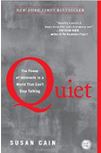
As an introvert myself, I found the book a rich source of greater understanding of the psychological processes I have gone through. She discusses the need to recognise how one is conditioned as introvert (which can be related to genetically high levels of reactivity), and the centrality of that acceptance. She points out, as I have always thought, that introversion has nothing to do with sociability in general, only with a preference for fewer deeper relationships rather than many shallow ones, and with a tendency to be fatigued by over-stimulation. However, she also explains the degree of flexibility that can attend introverted traits, and that it is quite possible to develop the capacity for extroverted behaviour in specific contexts, and to sustain that greater range, provided that one remembers the more basic need to recharge in quiet. This fits my own experience: after a little practice I have no trouble with lecturing to large audiences, for example, though public speaking is a classic stumbling-block for many introverts. Quiet is a heartening book to read if you are an introvert, and I would recommend it.
Cain’s deliberately broad definition of ‘introvert’ is bound to cause trouble with the pedantically inclined. However, she makes it clear that she includes within introversion traits that psychologists have also called conscientiousness, sensitivity, and openness to experience. She recognises how much introverts and extroverts vary, of course, but nevertheless there are justifiable generalisations to make, which are also a matter of degree. These traits often do correlate, but obviously not always: one could be a sensitive and conscientious extrovert or a dogmatic introvert. The generalisations are rough, but not so rough as to be uninformative, provided one is aware of their limitations.
Beyond my personal engagement with this book and an interest in personality psychology in its own terms, however, I also found this book exciting in relation to the questions it raised for me as to how introversion and extroversion as traits may correlate with other tendencies that I have written about. Chief amongst these are dogmatism as opposed to provisionality, the relationship of groups to metaphysical belief and individuality to openness of experience, and the dominance of the left brain over the right. The relationship between these entities is doubtless complex, but well worth disentangling, and does seem to have some crucial correlations. One central aspect of introversion as Cain depicts it is cautious awareness and observation of one’s environment before leaping into action: a trait that relates strongly to the use of the right brain rather than the left. Over-confidence about one’s environment and fixation with goals, however, is very much associated with the dominance of the left brain and the tendency of extroverts to jump unreflectively into communication. The fact that extroverts are much happier in groups seems thus less about liking people as such, than adherence to the certainties offered by the beliefs reinforced by groups – particularly metaphysical beliefs that are so well suited to the purposes of maintaining group identity. The fact that introverts cultivate individuality is what gives them access to greater creativity and insight, and the ability to examine beliefs with greater provisionality.
Surely, then, it is no coincidence that the world so much over-values extroversion, just as it is dominated by left brains. It is the smooth talkers who get through job interviews and earn bonuses, the shallow speechifiers who get elected and run most of our institutions: but these are the very people who are least well-adapted to doing so, because they have too little insight into the world around them, and are more likely to work on the basis of maladapted fixed group beliefs. It is only when introverts get lucky in an extroverted world that we get any recognition – say as scientists, writers or artists. In some ways these may be the unacknowledged legislators of the universe: but only when the extroverts bother to step aside even slightly to let them have a little influence.
Plato, who thought that the world should be run by philosophers, was right in a sense: not because of the rationality of philosophers specifically, though, but because of the dominant psychology of the thoughtful types he regarded as philosophers in his time. It is not just philosopher kings we need, but artist kings and contemplator kings: it is awareness of conditions that we need most, whether mediated by thought or feeling, sense or intuition. Why is academia so bankrupt of creativity? Because extroverts can network better and get most of the academic posts and grants. Why do we have a financial crisis? Because the financial system is overwhelmingly dominated by risk-taking extroverts. Why is life so difficult for introverted teachers and thus for introverted students? Not because introverted teachers can’t teach, but because the idea of successful teaching is so much cast in extrovert terms, and educational managers tend to impose it in those terms.
These problems are not going to go away any time soon, but the condition for them doing so is (a) the introverts having the confidence in their own value to come forward in the way Cain recommends, (b) the extroverts recognising their limitations and altering society in ways that limit their dominance. Just as the left brain needs the right to alert it to conditions, society needs introverts. Introverts have nothing to lose but the chains in which the extroverts have bound them.
Editors note: This is a re-post from Robert Ellis’s blog, Middle Way Philosophy. You can see the original here and Robert Ellis’s full blog here. Susan Cain’s book, Quiet, the Power of Introverts in a World That Can’t Stop Talking is available at booksellers worldwide including amazon (here) and amazon.uk. You can see Cain’s website here and her recent talk at TED here.
Previous Post

February 27, 2013
Buddha's Middle Way on Technology
Next Post
March 4, 2013 Buddhists, Books, and Technology
Browse Our Archives
Select a Category Academia Activism American Buddhism Art Book review Buddhism Buddhism Today Buddhist Ethics Burma/Myanmar China Christianity Commodification Environment Gender Happiness Health Humor India Interfaith Islam Japanese Buddhism Kant Media / News Meditation mindfulness Photography Poetry Politics quicktakes Running Teaching Technology Thailand Theism/Atheism Theravada Tibet Tibetan Buddhism Travels Uncategorized Unitarian Universalism video Western Philosophy Zen
Select a Month June 2021 January 2021 November 2020 August 2020 July 2020 March 2020 January 2020 October 2019 August 2019 June 2019 May 2019 March 2019 February 2019 January 2019 December 2018 November 2018 October 2018 September 2018 August 2018 July 2018 June 2018 May 2018 April 2018 March 2018 February 2018 January 2018 December 2017 November 2017 October 2017 September 2017 August 2017 July 2017 June 2017 May 2017 April 2017 March 2017 February 2017 January 2017 December 2016 November 2016 October 2016 September 2016 August 2016 July 2016 June 2016 May 2016 April 2016 March 2016 February 2016 January 2016 December 2015 November 2015 October 2015 September 2015 August 2015 July 2015 June 2015 May 2015 April 2015 March 2015 February 2015 January 2015 December 2014 November 2014 October 2014 September 2014 August 2014 July 2014 June 2014 May 2014 April 2014 March 2014 February 2014 January 2014 December 2013 November 2013 October 2013 September 2013 August 2013 July 2013 June 2013 May 2013 April 2013 March 2013 February 2013 January 2013 December 2012 November 2012 October 2012 September 2012 August 2012 July 2012 June 2012 May 2012 April 2012 March 2012 February 2012 January 2012 December 2011 November 2011 October 2011 September 2011 August 2011 July 2011 June 2011 May 2011 April 2011 March 2011 February 2011 January 2011 December 2010 November 2010 October 2010 September 2010 August 2010 July 2010 June 2010 May 2010 April 2010 March 2010 February 2010 January 2010 December 2009 November 2009 October 2009 September 2009 August 2009 July 2009 June 2009 May 2009 April 2009 March 2009 February 2009 January 2009 December 2008 November 2008 October 2008 September 2008 August 2008 July 2008 June 2008 May 2008 April 2008 March 2008 September 2007 August 2007 July 2007 June 2007 May 2007 April 2007 March 2007 February 2007 January 2007 December 2006 November 2006 October 2006 September 2006 August 2006 July 2006 June 2006 May 2006 April 2006 March 2006 February 2006 January 2006 December 2005 November 2005 October 2005 September 2005 November 2004 September 2004 August 2004
Follow Us!
TAKE THE
Religious Wisdom Quiz
According to Romans, what is the power of God that brings salvation to everyone who believes?
Select your answer to see how you score.
Prayer The gospel The Holy Spirit Faith
Support this
Column


Related posts from American Buddhist Perspectives

In strife and uncertainty: let us remember loving-kindness
American Buddhist Perspectives

The Coronavirus is coming - Some thoughts from...
American Buddhist Perspectives

Sogyal Lakar, well-known Tibetan Buddhist teacher and alleged...
American Buddhist Perspectives

Secular vs Religious, Buddhism vs Mindfulness, and a...
American Buddhist Perspectives
TRENDING AT PATHEOS Buddhist

On Taking Refuge in the Dharma
(Here I continue the feature of sharing talks and essays by teachers...

(Continuing my intention to share talks and essays by other members of Empty...
The Subtle Art of Bowing: A Dharma Discourse
(This presentation was first offered by my dear friend Dharma Holder Tom...

Internal Family Systems Can Heal you Mentally &...
How IFS Helped Me Stop Fighting Myself Internal Family Systems (IFS) is...

The Bible No One Spoke About: A Family’s...
A mysterious family Bible, unspoken faith, and a journey from curiosity to...

How Uncertainty Can Transform Your Life in 2025
Embracing Uncertainty: A New Year’s Resolution for the Brave As 2025 approaches,...
view all Buddhist blogs
Ad-Free & Subscriber Log-In Subscription Support
- About Us
- 2026 Calendar
- Videos
- Podcasts
- Library of World Religions
- Faith In Media Tracker
- Advertise With Us
- Write for Us
- Privacy Policy
- Terms of Service
- Do Not Sell My Data
- Contact Us
- Radiant Digital
- Manage Newsletter Subscriptions
- Unsubscribe From Notifications
- Sitemap
Copyright 2008-2026, Patheos. All rights reserved.
Subscription Support Ad-Free & Subscriber Log-In
Follow Patheos