
BuddhistCatholicContemplativeEvangelicalGeneral ChristianHinduJewishLatter-day SaintMuslimNew VisionsProgressive Christian
Beliefs
- Buddhist
- Catholic
- Contemplative
- Evangelical
- General Christian
- Hindu
- Jewish
- Latter-day Saint
- More Voices
- Muslim
- New Visions
- Pagan
- Progressive Christian
Topics
- Religion News
- Food and Religion
- Sports and Religion
- Religious Art
- Religious Music and Entertainment
- Religious Events
- History and Religion
- Style and Religion
- Politics and Religion
- Women in Religion
- Recreation Outdoors and Religion
- Business Finance and Religion
- Careers Workplace and Religion
- Education and Religion
- Family Parenting and Religion
- Health Fitness and Religion
- Home and Religion
- Relationships and Religion
- Technology and Religion
- Travel and Religion
Columnists
- Buddhist Columnists
- Business Finance and Religion Columnists
- Careers Workplace and Religion Columnists
- Catholic Columnists
- Contemplative Columnists
- Education and Religion Columnists
- Evangelists Columnists
- Family Parenting and Religion Columnists
- General Christian Columnists
- Health Fitness and Religion Columnists
- Hindu Columnists
- History and Religion Columnists
- Home and Religion Columnists
- Jewish Columnists
- More Voices Columnists
- Latter Day Columnists
- Muslim Columnists
- New Visions Columnists
- Nonreligious Columnists
- Pagan Columnists
- Politics and Religion Columnists
- Progressive Columnists
- Recreation Outdoors and Religion Columnists
- Relationships and Religion Columnists
- Religion News Columnists
- Religious Art Columnists
- Religious Events Columnists
- Religious Music and Entertainment Columnists
- Sports and Religion Columnists
- Style and Religion Columnists
- Technology and Religion Columnists
- Travel and Religion Columnists
- Women in Religion Columnists
Resource Library
- 2026 Calendar
- Library of World Religions
- The 100 Most Holy Places on Earth
- Patheos Answers
- Podcasts
- Videos
- Faith Leaders Database
- Anglican Episcopalian
- Bahai
- Baptist
- Buddhism
- Christianity
- Confucianism
- Eastern Orthodoxy
- Hinduism
- Holiness and Pentecostal
- ISKCON
- Islam
- Judaism
- Lutheran
- Methodist
- The Church of Jesus Christ of Latter-day Saints
- New Age
- Paganism
- Presbytarian and Reformed
- Protestantism
- Religion Behind the Scenes
- Roman Catholic
- Scientology
- Shia Islam
- Sikhism
- Sufism
- Sunni Islam
- Taoism
- Zen
- See all religions
Research Tools
 Ad-Free & Subscriber Log-In Subscription Support
Ad-Free & Subscriber Log-In Subscription Support
Follow Patheos 

- Trending:
- Forgiveness
- |
- Marriage
- |
- Consciousness
- |
- Death Penalty
- |
- Election
- |
- Halloween
 American Buddhist Perspectives
- Home
- Buddhist
- Religion News
- Better than Zizek: a critique of Contemporary Spirituality (and many Buddhists) worth investigating
Better than Zizek: a critique of Contemporary Spirituality (and many Buddhists) worth investigating
Last updated on: February 14, 2013 at 3:52 pm by Justin Whitaker
Better than Zizek: a critique of Contemporary Spirituality (and many Buddhists) worth investigating 2013-02-14T15:52:48-07:00 Justin Whitaker
Patheos Explore the world's faith through different perspectives on religion and spirituality! Patheos has the views of the prevalent religions and spiritualities of the world.
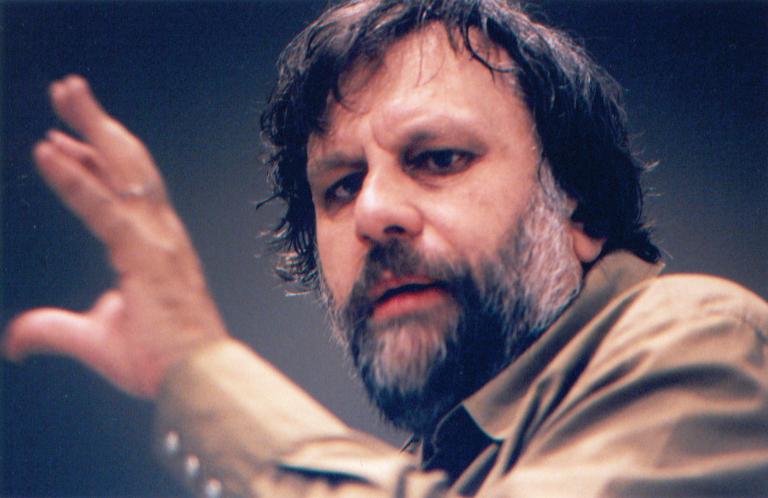 I just finished listening to a podcast interview of my friend David Webster on CBC (Canadian Broadcasting). Knowing Dave, I know that he is a bit (at least) of an admirer of the Slovenian philosopher Slavoj Žižek. My own view of Žižek is not a secret. One of my most popular blog posts last year was a discussion of Žižek, who had recently given a lecture that was, in title at least, about Western Buddhism: “Zizek waxes on about Zionism, Sex, Gangnam Style, Justin Bieber, the Pope, and Buddhism.”
While I’m sympathetic to many of Žižek’s criticisms and aims, I feel that 1) his sloppiness in appropriating Buddhist thought and 2) his narrow ideological bent make him difficult to take too seriously.
While Žižek often speaks in a ‘specialist dialect’ known well only by fellow Lacanian-Marxists, Webster speaks English, proper English English (I even caught an “innit”) in the interview and his writing. An example of Žižek’s, can we say “dogmatism” comes in a recent article in the London Review of Books, in which he concludes:
The proletarianisation of the lower salaried bourgeoisie is matched at the opposite extreme by the irrationally high remuneration of top managers and bankers (irrational since, as investigations have demonstrated in the US, it tends to be inversely proportional to a company’s success). Rather than submit these trends to moralising criticism, we should read them as signs that the capitalist system is no longer capable of self-regulated stability – it threatens, in other words, to run out of control. [emphasis added]
This is reminiscent of Toynbee’s suggestion that Communism remains the last Christian heresy, literally prophesying in this case the end of unfair, irrational economics and the oncoming golden age where each man serves his neighbor and taking never in excess, but only according to his needs. In fairness, Žižek seems more careful than this at times and has, I’m told (see comments here), been criticized heavily by “Orthodox Marxists” for failing to be dogmatic enough.
Webster at this point is still much less well-known, which no doubt saves him a lot of this grief. But it also, perhaps, allows him to speak “our” language and talk about “our” problems in a more coherent and useful way. As a University lecturer, Dave is a “lower salaried bourgeoisie” (I think), meaning that he is in the world of people who, in olden days, would have been quite well-off, though not by any means rich and powerful. These days, Žižek rightly observes once you get beyond the jargon, people in lower and even middle-range professions no longer have that sense of security that they would have even 30 years ago.
The problem, turning to Spirituality and Buddhism, is that these can be mere distractions from the real problems in the world. It is very sick, but it is also true that many people getting “irrationally high remuneration” are doing no good in the world and actually contributing quite substantially to human suffering. It doesn’t take a conspiracy theory or dogmatic ideology to see this, and much to the liberal’s disappointment, Obama in America has done very little (or nothing) to prosecute the those who stole from the poor and the middle to fatten the wallets of the wealthy. Meanwhile, people are not looking squarely at these and other problems and fighting to correct them, but are instead pouring their time and money into new spiritual practices, quite often including aspects of Buddhism.
We don’t complain to our managers (and union reps) when our job becomes overly demanding and pay and benefits are cut. Instead we join a meditation group or pick up yoga or talk to a psychic, or all three.
Webster suggests that traditional religions at least encourage commitment, an important virtue in contemporary life where this “buffet style”
spirituality allows one to become lost in endless choices and details. Commitment demands a degree of interaction with others, with real human beings, and a kind of self-transformation that is all too lacking in the consumeristic quarters of contemporary spirituality.
However, I find that it is all too often a commitment that comes at the expense of our natural “fellow feeling” (to follow Smith) or “respect” (as Kant put it) for other human beings – the ones outside of our religion. While Webster appreciates this open quest for Truth found within committed religious circles, I am a bit leery of the Truth each one comes up with. So a little lack of commitment or agnosticism is quite okay, as long as you see yourself as trying to go beyond the limits of your faith, from within the faith (if that sounds Hegelian to you, it’s because it is).
Part of my Buddhist-Kantian faith is that Truth is discoverable, but it’s not likely to be found, word for word, in the doctrines and dogmas of any of the World religions (except of course in Buddhism and Kant’s philosophy – j/k). I find myself as something of a committed Buddhist-Kantian, which might suggest to some that I’m not really committed to either, or that I’m committed to both, or, as I like to think of it, committed to each in a mutually critical fashion. In fact I would say that the only true Buddhist was the Buddha, in the sense that everyone else who came to Buddhism brought baggage. If we try to ignore that baggage, as some suggest, we simply become blind to it and it ends up coloring Buddhism for us it its own image. Great Buddhist teachers simply learn to use that baggage to connect Buddhism to similar baggage-carriers.
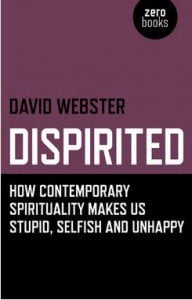
In any case, for a critique of contemporary spirituality, including much of Western Buddhism, Webster offers a far clearer analysis than Žižek of what is wrong and how to go about fixing it. You can listen to the CBC podcast here or see my full review of Webster’s latest book, Dispirited, here. Dave also recently did an interview with Ted Meissner at the Secular Buddhist – so keep an eye on that site for what is sure to be a more focused discussion.
Previous Post

February 13, 2013
The Buddha's Social Action Sutra
Next Post
February 17, 2013 Would a Buddhist Affirm that belief in God is a Delusion?
Browse Our Archives
Select a Category Academia Activism American Buddhism Art Book review Buddhism Buddhism Today Buddhist Ethics Burma/Myanmar China Christianity Commodification Environment Gender Happiness Health Humor India Interfaith Islam Japanese Buddhism Kant Media / News Meditation mindfulness Photography Poetry Politics quicktakes Running Teaching Technology Thailand Theism/Atheism Theravada Tibet Tibetan Buddhism Travels Uncategorized Unitarian Universalism video Western Philosophy Zen
Select a Month June 2021 January 2021 November 2020 August 2020 July 2020 March 2020 January 2020 October 2019 August 2019 June 2019 May 2019 March 2019 February 2019 January 2019 December 2018 November 2018 October 2018 September 2018 August 2018 July 2018 June 2018 May 2018 April 2018 March 2018 February 2018 January 2018 December 2017 November 2017 October 2017 September 2017 August 2017 July 2017 June 2017 May 2017 April 2017 March 2017 February 2017 January 2017 December 2016 November 2016 October 2016 September 2016 August 2016 July 2016 June 2016 May 2016 April 2016 March 2016 February 2016 January 2016 December 2015 November 2015 October 2015 September 2015 August 2015 July 2015 June 2015 May 2015 April 2015 March 2015 February 2015 January 2015 December 2014 November 2014 October 2014 September 2014 August 2014 July 2014 June 2014 May 2014 April 2014 March 2014 February 2014 January 2014 December 2013 November 2013 October 2013 September 2013 August 2013 July 2013 June 2013 May 2013 April 2013 March 2013 February 2013 January 2013 December 2012 November 2012 October 2012 September 2012 August 2012 July 2012 June 2012 May 2012 April 2012 March 2012 February 2012 January 2012 December 2011 November 2011 October 2011 September 2011 August 2011 July 2011 June 2011 May 2011 April 2011 March 2011 February 2011 January 2011 December 2010 November 2010 October 2010 September 2010 August 2010 July 2010 June 2010 May 2010 April 2010 March 2010 February 2010 January 2010 December 2009 November 2009 October 2009 September 2009 August 2009 July 2009 June 2009 May 2009 April 2009 March 2009 February 2009 January 2009 December 2008 November 2008 October 2008 September 2008 August 2008 July 2008 June 2008 May 2008 April 2008 March 2008 September 2007 August 2007 July 2007 June 2007 May 2007 April 2007 March 2007 February 2007 January 2007 December 2006 November 2006 October 2006 September 2006 August 2006 July 2006 June 2006 May 2006 April 2006 March 2006 February 2006 January 2006 December 2005 November 2005 October 2005 September 2005 November 2004 September 2004 August 2004
Follow Us!
TAKE THE
Religious Wisdom Quiz
What did God place on Jeremiah’s mouth as a sign of his calling?
Select your answer to see how you score.
Burning coal A staff A scroll His words
Support this
Column


Related posts from American Buddhist Perspectives

For Pride Month: Our 2015 Interview with La...
American Buddhist Perspectives

A Festival of Radical Awakening: Socially Engaged Buddhism...
American Buddhist Perspectives

Shambhala Buddhist Community Faces New Allegations in Chapman...
American Buddhist Perspectives

Secular vs Religious, Buddhism vs Mindfulness, and a...
American Buddhist Perspectives
TRENDING AT PATHEOS Buddhist

On Taking Refuge in the Dharma
(Here I continue the feature of sharing talks and essays by teachers...

(Continuing my intention to share talks and essays by other members of Empty...
The Subtle Art of Bowing: A Dharma Discourse
(This presentation was first offered by my dear friend Dharma Holder Tom...

Internal Family Systems Can Heal you Mentally &...
How IFS Helped Me Stop Fighting Myself Internal Family Systems (IFS) is...

The Bible No One Spoke About: A Family’s...
A mysterious family Bible, unspoken faith, and a journey from curiosity to...

How Uncertainty Can Transform Your Life in 2025
Embracing Uncertainty: A New Year’s Resolution for the Brave As 2025 approaches,...
view all Buddhist blogs
Ad-Free & Subscriber Log-In Subscription Support
- About Us
- 2026 Calendar
- Videos
- Podcasts
- Library of World Religions
- Faith In Media Tracker
- Advertise With Us
- Write for Us
- Privacy Policy
- Terms of Service
- Do Not Sell My Data
- Contact Us
- Radiant Digital
- Manage Newsletter Subscriptions
- Unsubscribe From Notifications
- Sitemap
Copyright 2008-2026, Patheos. All rights reserved.
Subscription Support Ad-Free & Subscriber Log-In
Follow Patheos