
BuddhistCatholicContemplativeEvangelicalGeneral ChristianHinduJewishLatter-day SaintMuslimNew VisionsProgressive Christian
Beliefs
- Buddhist
- Catholic
- Contemplative
- Evangelical
- General Christian
- Hindu
- Jewish
- Latter-day Saint
- More Voices
- Muslim
- New Visions
- Pagan
- Progressive Christian
Topics
- Religion News
- Food and Religion
- Sports and Religion
- Religious Art
- Religious Music and Entertainment
- Religious Events
- History and Religion
- Style and Religion
- Politics and Religion
- Women in Religion
- Recreation Outdoors and Religion
- Business Finance and Religion
- Careers Workplace and Religion
- Education and Religion
- Family Parenting and Religion
- Health Fitness and Religion
- Home and Religion
- Relationships and Religion
- Technology and Religion
- Travel and Religion
Columnists
- Buddhist Columnists
- Business Finance and Religion Columnists
- Careers Workplace and Religion Columnists
- Catholic Columnists
- Contemplative Columnists
- Education and Religion Columnists
- Evangelists Columnists
- Family Parenting and Religion Columnists
- General Christian Columnists
- Health Fitness and Religion Columnists
- Hindu Columnists
- History and Religion Columnists
- Home and Religion Columnists
- Jewish Columnists
- More Voices Columnists
- Latter Day Columnists
- Muslim Columnists
- New Visions Columnists
- Nonreligious Columnists
- Pagan Columnists
- Politics and Religion Columnists
- Progressive Columnists
- Recreation Outdoors and Religion Columnists
- Relationships and Religion Columnists
- Religion News Columnists
- Religious Art Columnists
- Religious Events Columnists
- Religious Music and Entertainment Columnists
- Sports and Religion Columnists
- Style and Religion Columnists
- Technology and Religion Columnists
- Travel and Religion Columnists
- Women in Religion Columnists
Resource Library
- 2026 Calendar
- Library of World Religions
- The 100 Most Holy Places on Earth
- Patheos Answers
- Podcasts
- Videos
- Faith Leaders Database
- Anglican Episcopalian
- Bahai
- Baptist
- Buddhism
- Christianity
- Confucianism
- Eastern Orthodoxy
- Hinduism
- Holiness and Pentecostal
- ISKCON
- Islam
- Judaism
- Lutheran
- Methodist
- The Church of Jesus Christ of Latter-day Saints
- New Age
- Paganism
- Presbytarian and Reformed
- Protestantism
- Religion Behind the Scenes
- Roman Catholic
- Scientology
- Shia Islam
- Sikhism
- Sufism
- Sunni Islam
- Taoism
- Zen
- See all religions
Research Tools
 Ad-Free & Subscriber Log-In Subscription Support
Ad-Free & Subscriber Log-In Subscription Support
Follow Patheos 

- Trending:
- Forgiveness
- |
- Marriage
- |
- Consciousness
- |
- Death Penalty
- |
- Election
- |
- Halloween
 American Buddhist Perspectives
- Home
- Buddhist
- Religion News
- Kumare: Hinduism, Buddhism, Yoga, and more
Kumare: Hinduism, Buddhism, Yoga, and more
Last updated on: December 21, 2012 at 4:40 pm by Justin Whitaker
Kumare: Hinduism, Buddhism, Yoga, and more 2012-12-21T16:40:22-07:00 Justin Whitaker
Patheos Explore the world's faith through different perspectives on religion and spirituality! Patheos has the views of the prevalent religions and spiritualities of the world.
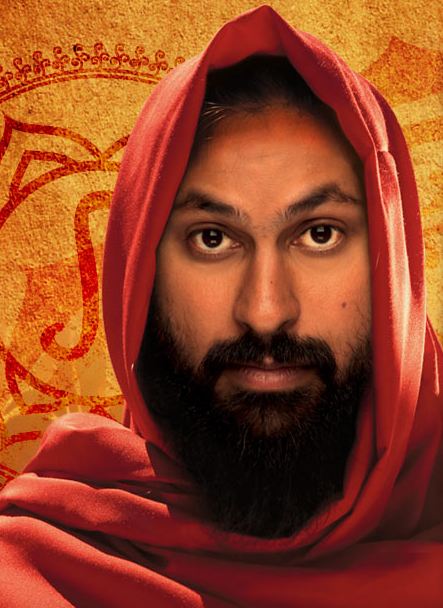
Kumare, aka Vikram Ghandhi, via kumaremovie.com.
Kumare, or Kumaré (or Kūmāré), is a movie about American spirituality on the fringe. However, the more we look into American spirituality, the more we see that the ‘fringe’ is growing. Fast. The old stalwarts of American religion: the Catholics and the Protestants, are increasingly disenfranchising their members, thus steering themselves into a future of ineffectual obscurity. Denying women’s rights, protecting child-molesters, blaming the deaths of children on homosexuality, the list could go on.
Institutionalized religions, for all the many wonderful benefits they provides their adherents in terms of community, moral structure and aspirations, and comfort in difficult times, are struggling with modernity.
Meanwhile, yoga and other “Eastern” practices and beliefs, along with self-help, self-realization, and pretty much everything else starting with “self” are on the rise.
Kumare, a film by Vikram Gandhi, follows the experiment of a man, disillusioned by the religion of his youth, Hinduism, in search of something real.
The opening sequence (after a quick scene from what would become the end of the film), brings us into Vikram’s youth, where he tells us that while most kids worshiped Hulk Hogan, he was exposed to a whole different set of heroes, those of Hindu mythology. One scene shows a white-robed Hindu holy-man shouting, “Religion is Life! And Life is Religion!” Meanwhile, Vikram wonders, “Maybe this was all just a bunch of nonsense someone made up a long time ago.” A third angle comes next, as Vikram reminisces about watching his grandmother doing her morning prayers – the sense of real peace that came over her as she did them. And finally, Vikram tells us that he studied religion in college, hoping for answers. But, of course, he only found more questions.
Within less than one minute in the movie we see four snapshots of religion:
- The shouting zealot
- The naive skeptic
- The devout practitioner, and
- The somewhat learned skeptic.
That doesn’t cover all of the angles of modern religion and spirituality, but it’s a good start.
So Vikram sets out to make a documentary about the people coming to America spreading aspects of the religion he had abandoned, specifically those tied up in the “yoga” movement. As shots of yogis, gurus, and one of our favorite lamas, pass by the screen, Vikram states, “These people insisted that they were somehow different from everyone else in some inexplicable way. But none of them seemed any different to me.”
He then asks several older learned men, “How do you know?” and receives a series of platitudes and evasive responses, the suggestion being, “you don’t.”
After a sample of India and its menagerie of Gurus, Vikram asks: “What if I could become a Guru? Wouldn’t that prove that anyone could be one?”
And so it begins, the creation of Kumare.
After some experimentation in New York and practice in India, Kumare was ready to face the world. Phoenix, Arizona was chosen as the spot to conduct the experiment. Arizona might seem a bit out-of-the-way, but per capita it probably holds the largest number of fringe groups, new religious movements, and folks like the Fundamentalist Mormons than any other place in America.
Off goes Kumare, with two female assistants, into the yoga studios of Arizona.
The rest of the story, the vast bulk of the movie, carries us through his growing “Kumare Movement.” We meet an even broader array of personalities: young and old, seasoned seekers, yogis, and the young and curious, a professor of sociology, each finding in Kumare something special… something.
Kumare’s whole philosophy at this time is that he is an illusion, a fake, and that they should find what they were looking for from within, as if he were merely a mirror. Of course the whole time, many of them simply nod and say, “yes Kumare, we’ll look within…” (remember “The Life of Brian”?) A student relates at one point:
Kumare came along and said, “here’s the idea, I’ll help you to find whatever is inside of you, but you’re gonna have to teach yourself, and I can teach you how to teach yourself that, but I’m not be here, which is true of all teachers. They don’t stick around.
However, along the way, some of these people do change in a positive way. Whatever he was doing, it helped.
Meanwhile he visits other fringe groups, a secluded group and that seem to think they’re from a different planet and a “Law of Attraction” group, each of which has its similarities to the Kumare philosophy, but also some differences. The Law of Attraction folks are friendly, but come off as a bit shallow. The different planet group is deep, as in “off the deep end…” Kumare’s reaction to each reflects his sanity and the nature of his concern for a sort of authentic spirituality.
As his teaching with his core group of students progresses, Kumare continually emphasizes his students’ responsibility to find happiness and meaning in themselves and their own lives, not only in inward meditation, but in community. In one scene, Kumare and 14 others go out and help clear a plot of land of weeds. Kumare uses this as a teaching moment. The guru is found not in him, not within, but here, among friends in helping one another, applying “the best of ourselves out in the world.”
Thus builds the climax of the film: Kumare’s “unveiling.”
While the film has had its touching moments, and plenty of funny ones, this is where it becomes most gripping. Kumare’s whole philosophy has been that he is an illusion, an unnecessary reflection of the goodness within his students. Yet, just as in pretty much any religious context, the students have projected a certain degree of holiness, otherness, and specialness upon him and then take some pleasure or joy in their relationship with that special otherness. If he not only tells them that he is not special, but actually shows them, what will they do?
If you haven’t seen it, do so before discussing the ‘ethics’ of Vikram Gandhi’s actions. In a way he does deceive his students: he wears cloths that identify him as someone he is not. He grows out his hair and beard to resemble an Indian holy man, which he is not. He changes his accent to sound like his grandmother.
But it’s far more interesting to think about just how all of this works. Why do these clothes, this appearance, etc have the effects they do today? Why do people, often well educated, thoughtful people, get sucked in – not only to Kumare’s group, but to more mainstream exotic religions on the one hand and potentially dangerous cults on the other?
If you allow questions like this to accompany your viewing of the movie, looking at how many of these people are just like you and me, instead of starting off as seeing them as fundamentally different, then I think you will enjoy this movie as much as I did. The movie isn’t about American Buddhism, but if you know many American Buddhists, you will see them, along with their questions, motivations, and experiences, reflected in the people in this movie.
http://www.youtube.com/watch?v=8Eyjeimdeg4
Have a look: http://kumaremovie.com/ – and let me know what you think.
Previous Post

December 20, 2012
Yoga Bags, Family, and Christmas (UPDATED)
Next Post
December 28, 2012 Merry Christmas
Browse Our Archives
Select a Category Academia Activism American Buddhism Art Book review Buddhism Buddhism Today Buddhist Ethics Burma/Myanmar China Christianity Commodification Environment Gender Happiness Health Humor India Interfaith Islam Japanese Buddhism Kant Media / News Meditation mindfulness Photography Poetry Politics quicktakes Running Teaching Technology Thailand Theism/Atheism Theravada Tibet Tibetan Buddhism Travels Uncategorized Unitarian Universalism video Western Philosophy Zen
Select a Month June 2021 January 2021 November 2020 August 2020 July 2020 March 2020 January 2020 October 2019 August 2019 June 2019 May 2019 March 2019 February 2019 January 2019 December 2018 November 2018 October 2018 September 2018 August 2018 July 2018 June 2018 May 2018 April 2018 March 2018 February 2018 January 2018 December 2017 November 2017 October 2017 September 2017 August 2017 July 2017 June 2017 May 2017 April 2017 March 2017 February 2017 January 2017 December 2016 November 2016 October 2016 September 2016 August 2016 July 2016 June 2016 May 2016 April 2016 March 2016 February 2016 January 2016 December 2015 November 2015 October 2015 September 2015 August 2015 July 2015 June 2015 May 2015 April 2015 March 2015 February 2015 January 2015 December 2014 November 2014 October 2014 September 2014 August 2014 July 2014 June 2014 May 2014 April 2014 March 2014 February 2014 January 2014 December 2013 November 2013 October 2013 September 2013 August 2013 July 2013 June 2013 May 2013 April 2013 March 2013 February 2013 January 2013 December 2012 November 2012 October 2012 September 2012 August 2012 July 2012 June 2012 May 2012 April 2012 March 2012 February 2012 January 2012 December 2011 November 2011 October 2011 September 2011 August 2011 July 2011 June 2011 May 2011 April 2011 March 2011 February 2011 January 2011 December 2010 November 2010 October 2010 September 2010 August 2010 July 2010 June 2010 May 2010 April 2010 March 2010 February 2010 January 2010 December 2009 November 2009 October 2009 September 2009 August 2009 July 2009 June 2009 May 2009 April 2009 March 2009 February 2009 January 2009 December 2008 November 2008 October 2008 September 2008 August 2008 July 2008 June 2008 May 2008 April 2008 March 2008 September 2007 August 2007 July 2007 June 2007 May 2007 April 2007 March 2007 February 2007 January 2007 December 2006 November 2006 October 2006 September 2006 August 2006 July 2006 June 2006 May 2006 April 2006 March 2006 February 2006 January 2006 December 2005 November 2005 October 2005 September 2005 November 2004 September 2004 August 2004
Follow Us!
TAKE THE
Religious Wisdom Quiz
How many seals are on the scroll in Revelation?
Select your answer to see how you score.
Seven Ten Four Twelve
Support this
Column


Related posts from American Buddhist Perspectives

For Pride Month: Our 2015 Interview with La...
American Buddhist Perspectives

A Festival of Radical Awakening: Socially Engaged Buddhism...
American Buddhist Perspectives

Shambhala Buddhist Community Faces New Allegations in Chapman...
American Buddhist Perspectives

Secular vs Religious, Buddhism vs Mindfulness, and a...
American Buddhist Perspectives
TRENDING AT PATHEOS Buddhist

On Taking Refuge in the Dharma
(Here I continue the feature of sharing talks and essays by teachers...

(Continuing my intention to share talks and essays by other members of Empty...
The Subtle Art of Bowing: A Dharma Discourse
(This presentation was first offered by my dear friend Dharma Holder Tom...

Internal Family Systems Can Heal you Mentally &...
How IFS Helped Me Stop Fighting Myself Internal Family Systems (IFS) is...

The Bible No One Spoke About: A Family’s...
A mysterious family Bible, unspoken faith, and a journey from curiosity to...

How Uncertainty Can Transform Your Life in 2025
Embracing Uncertainty: A New Year’s Resolution for the Brave As 2025 approaches,...
view all Buddhist blogs
Ad-Free & Subscriber Log-In Subscription Support
- About Us
- 2026 Calendar
- Videos
- Podcasts
- Library of World Religions
- Faith In Media Tracker
- Advertise With Us
- Write for Us
- Privacy Policy
- Terms of Service
- Do Not Sell My Data
- Contact Us
- Radiant Digital
- Manage Newsletter Subscriptions
- Unsubscribe From Notifications
- Sitemap
Copyright 2008-2026, Patheos. All rights reserved.
Subscription Support Ad-Free & Subscriber Log-In
Follow Patheos