
BuddhistCatholicContemplativeEvangelicalGeneral ChristianHinduJewishLatter-day SaintMuslimNew VisionsProgressive Christian
Beliefs
- Buddhist
- Catholic
- Contemplative
- Evangelical
- General Christian
- Hindu
- Jewish
- Latter-day Saint
- More Voices
- Muslim
- New Visions
- Pagan
- Progressive Christian
Topics
- Religion News
- Food and Religion
- Sports and Religion
- Religious Art
- Religious Music and Entertainment
- Religious Events
- History and Religion
- Style and Religion
- Politics and Religion
- Women in Religion
- Recreation Outdoors and Religion
- Business Finance and Religion
- Careers Workplace and Religion
- Education and Religion
- Family Parenting and Religion
- Health Fitness and Religion
- Home and Religion
- Relationships and Religion
- Technology and Religion
- Travel and Religion
Columnists
- Buddhist Columnists
- Business Finance and Religion Columnists
- Careers Workplace and Religion Columnists
- Catholic Columnists
- Contemplative Columnists
- Education and Religion Columnists
- Evangelists Columnists
- Family Parenting and Religion Columnists
- General Christian Columnists
- Health Fitness and Religion Columnists
- Hindu Columnists
- History and Religion Columnists
- Home and Religion Columnists
- Jewish Columnists
- More Voices Columnists
- Latter Day Columnists
- Muslim Columnists
- New Visions Columnists
- Nonreligious Columnists
- Pagan Columnists
- Politics and Religion Columnists
- Progressive Columnists
- Recreation Outdoors and Religion Columnists
- Relationships and Religion Columnists
- Religion News Columnists
- Religious Art Columnists
- Religious Events Columnists
- Religious Music and Entertainment Columnists
- Sports and Religion Columnists
- Style and Religion Columnists
- Technology and Religion Columnists
- Travel and Religion Columnists
- Women in Religion Columnists
Resource Library
- 2026 Calendar
- Library of World Religions
- The 100 Most Holy Places on Earth
- Patheos Answers
- Podcasts
- Videos
- Faith Leaders Database
- Anglican Episcopalian
- Bahai
- Baptist
- Buddhism
- Christianity
- Confucianism
- Eastern Orthodoxy
- Hinduism
- Holiness and Pentecostal
- ISKCON
- Islam
- Judaism
- Lutheran
- Methodist
- The Church of Jesus Christ of Latter-day Saints
- New Age
- Paganism
- Presbytarian and Reformed
- Protestantism
- Religion Behind the Scenes
- Roman Catholic
- Scientology
- Shia Islam
- Sikhism
- Sufism
- Sunni Islam
- Taoism
- Zen
- See all religions
Research Tools
 Ad-Free & Subscriber Log-In Subscription Support
Ad-Free & Subscriber Log-In Subscription Support
Follow Patheos 

- Trending:
- Forgiveness
- |
- Marriage
- |
- Consciousness
- |
- Death Penalty
- |
- Election
- |
- Halloween
 American Buddhist Perspectives
- Home
- Buddhist
- Religion News
- An Indifferent Universe
An Indifferent Universe
Last updated on: July 18, 2012 at 9:47 pm by Justin Whitaker
An Indifferent Universe 2012-07-16T23:25:58-06:00 Justin Whitaker
Patheos Explore the world's faith through different perspectives on religion and spirituality! Patheos has the views of the prevalent religions and spiritualities of the world.
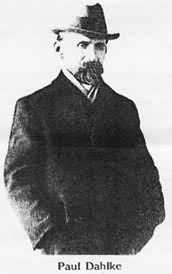
When I was first introduced to Buddhism, over ten years ago now in early University days, I found the ‘Noble Truth’ of suffering to be profoundly pessimistic. That only lasted a few days, fortunately, as I had a great professor who showed the broader context and meaning of this central aspect of Buddhism. I have since come to see Buddhist cosmology as neither pessimistic nor optimistic, but rather morally balanced; perhaps, in a word: indifferent.
So I was struck today in reading the accounts of the effect this has had on two fellow Westerners who have stumbled into Buddhism, Paul Dahlke and Dave Webster. Paul Dahlke (1865-1928), pioneer of Buddhism in Germany and founder of “Buddhistische Haus” in Berlin, wrote the following of Buddhist ethics in 1908:
… I stand in the universe quite alone travelling in utter solitude the path of Samsara. My deed alone goes with me, but not as a companion, only as my shadow. Thus I travel on like a man at evening wending his way eastwards over an infinite stretch of snowy plain or through an endless waste of sand, with nothing behind him but the long trail of his own footsteps, nothing before him but a giant shadow; beside himself — nothing.
And in a post at his Dispirited blog (book review forthcoming), Dave Webster had this to say:
While others may choose to focus on the consolations that faith offers post-death, I am much more interested in this indifference. It seems instructive. Post-death threats and promises have not promoted ethics, and many religious thinkers have also taken this view. I am sure that there are those who believe (and claim evidence, but this is another matter), to an extent, that death is survivable: but I am not interested in that. The evidence is sketchy (at very best), and this world is without us once we die. It is this world that interests me. A mortal being is what we are to this world. Even if we look beyond death, this world is a place where we are mortal. It is only effected by what we do before death. What happens beyond is irrelevant.
As for the Buddha, it’s not clear what he thought of ‘beyond’ death. He considered questions about what happens to an awakened being after death to be a profound waste of time. When he was challeneged to teach about the finitude/infinitude of the cosmos and the afterlife of awakened ones, he suggested:
It’s just as if a man were wounded with an arrow thickly smeared with poison. His friends & companions, kinsmen & relatives would provide him with a surgeon, and the man would say, ‘I won’t have this arrow removed until I know whether the man who wounded me was a noble warrior, a brahman, a merchant, or a worker.’
He would say, ‘I won’t have this arrow removed until I know the given name & clan name of the man who wounded me…
until I know whether he was tall, medium, or short…
until I know whether he was dark, ruddy-brown, or golden-colored…
until I know his home village, town, or city…
until I know whether the bow with which I was wounded was a long bow or a crossbow…
until I know whether the bowstring with which I was wounded was fiber, bamboo threads, sinew, hemp, or bark…
until I know whether the shaft with which I was wounded was wild or cultivated…
until I know whether the feathers of the shaft with which I was wounded were those of a vulture, a stork, a hawk, a peacock, or another bird…
until I know whether the shaft with which I was wounded was bound with the sinew of an ox, a water buffalo, a langur, or a monkey.’He would say, ‘I won’t have this arrow removed until I know whether the shaft with which I was wounded was that of a common arrow, a curved arrow, a barbed, a calf-toothed, or an oleander arrow.’ The man would die and those things would still remain unknown to him.
“In the same way, if anyone were to say, ‘I won’t live the holy life under the Blessed One as long as he does not declare to me that ‘The cosmos is eternal,’… or that ‘After death a Tathagata neither exists nor does not exist,’ the man would die and those things would still remain undeclared by the Tathagata. (MN 63, emphasis mine)
In the recent movie The Grey, Liam Neeson plays a character who sounds an aweful lot like this. He has lost his wife and nearly his entire will to live, but as his companions in the dark, frozen north begin talking about faith, hope, and God, he tells them, “I wish I could believe in that stuff. But this is real: the cold. That’s real: the air in my lungs…” When a companion asks him, “What about faith?” He just answers, “What about it?”
The character is neither emotionally cold nor nihilistic though. The flashbacks to him with his wife show his warmth, but here, now, he walks alone. It seems to be this balanced approach that keeps him alive as others perish, one distracted and fearful, another just giving up.
Previous Post

July 17, 2012
Bhikkhu Bodhi's "Towards an Integral Model of Buddhism"
Next Post
July 22, 2012 Wake up America: Greed, Hate, and Guns
Browse Our Archives
Select a Category Academia Activism American Buddhism Art Book review Buddhism Buddhism Today Buddhist Ethics Burma/Myanmar China Christianity Commodification Environment Gender Happiness Health Humor India Interfaith Islam Japanese Buddhism Kant Media / News Meditation mindfulness Photography Poetry Politics quicktakes Running Teaching Technology Thailand Theism/Atheism Theravada Tibet Tibetan Buddhism Travels Uncategorized Unitarian Universalism video Western Philosophy Zen
Select a Month June 2021 January 2021 November 2020 August 2020 July 2020 March 2020 January 2020 October 2019 August 2019 June 2019 May 2019 March 2019 February 2019 January 2019 December 2018 November 2018 October 2018 September 2018 August 2018 July 2018 June 2018 May 2018 April 2018 March 2018 February 2018 January 2018 December 2017 November 2017 October 2017 September 2017 August 2017 July 2017 June 2017 May 2017 April 2017 March 2017 February 2017 January 2017 December 2016 November 2016 October 2016 September 2016 August 2016 July 2016 June 2016 May 2016 April 2016 March 2016 February 2016 January 2016 December 2015 November 2015 October 2015 September 2015 August 2015 July 2015 June 2015 May 2015 April 2015 March 2015 February 2015 January 2015 December 2014 November 2014 October 2014 September 2014 August 2014 July 2014 June 2014 May 2014 April 2014 March 2014 February 2014 January 2014 December 2013 November 2013 October 2013 September 2013 August 2013 July 2013 June 2013 May 2013 April 2013 March 2013 February 2013 January 2013 December 2012 November 2012 October 2012 September 2012 August 2012 July 2012 June 2012 May 2012 April 2012 March 2012 February 2012 January 2012 December 2011 November 2011 October 2011 September 2011 August 2011 July 2011 June 2011 May 2011 April 2011 March 2011 February 2011 January 2011 December 2010 November 2010 October 2010 September 2010 August 2010 July 2010 June 2010 May 2010 April 2010 March 2010 February 2010 January 2010 December 2009 November 2009 October 2009 September 2009 August 2009 July 2009 June 2009 May 2009 April 2009 March 2009 February 2009 January 2009 December 2008 November 2008 October 2008 September 2008 August 2008 July 2008 June 2008 May 2008 April 2008 March 2008 September 2007 August 2007 July 2007 June 2007 May 2007 April 2007 March 2007 February 2007 January 2007 December 2006 November 2006 October 2006 September 2006 August 2006 July 2006 June 2006 May 2006 April 2006 March 2006 February 2006 January 2006 December 2005 November 2005 October 2005 September 2005 November 2004 September 2004 August 2004
Follow Us!
TAKE THE
Religious Wisdom Quiz
I am the first to fall asleep in death for following Jesus. I saw heaven opened as stones struck me. Who am I?
Select your answer to see how you score.
Peter Stephen James John
Support this
Column


Related posts from American Buddhist Perspectives

For Pride Month: Our 2015 Interview with La...
American Buddhist Perspectives

Standing up to Lies: Can America Emerge from...
American Buddhist Perspectives

Progressive responses to the 2020 election of Biden...
American Buddhist Perspectives

In strife and uncertainty: let us remember loving-kindness
American Buddhist Perspectives
TRENDING AT PATHEOS Buddhist

On Taking Refuge in the Dharma
(Here I continue the feature of sharing talks and essays by teachers...

(Continuing my intention to share talks and essays by other members of Empty...
The Subtle Art of Bowing: A Dharma Discourse
(This presentation was first offered by my dear friend Dharma Holder Tom...

Internal Family Systems Can Heal you Mentally &...
How IFS Helped Me Stop Fighting Myself Internal Family Systems (IFS) is...

The Bible No One Spoke About: A Family’s...
A mysterious family Bible, unspoken faith, and a journey from curiosity to...

How Uncertainty Can Transform Your Life in 2025
Embracing Uncertainty: A New Year’s Resolution for the Brave As 2025 approaches,...
view all Buddhist blogs
Ad-Free & Subscriber Log-In Subscription Support
- About Us
- 2026 Calendar
- Videos
- Podcasts
- Library of World Religions
- Faith In Media Tracker
- Advertise With Us
- Write for Us
- Privacy Policy
- Terms of Service
- Do Not Sell My Data
- Contact Us
- Radiant Digital
- Manage Newsletter Subscriptions
- Unsubscribe From Notifications
- Sitemap
Copyright 2008-2026, Patheos. All rights reserved.
Subscription Support Ad-Free & Subscriber Log-In
Follow Patheos