
BuddhistCatholicContemplativeEvangelicalGeneral ChristianHinduJewishLatter-day SaintMuslimNew VisionsProgressive Christian
Beliefs
- Buddhist
- Catholic
- Contemplative
- Evangelical
- General Christian
- Hindu
- Jewish
- Latter-day Saint
- More Voices
- Muslim
- New Visions
- Pagan
- Progressive Christian
Topics
- Religion News
- Food and Religion
- Sports and Religion
- Religious Art
- Religious Music and Entertainment
- Religious Events
- History and Religion
- Style and Religion
- Politics and Religion
- Women in Religion
- Recreation Outdoors and Religion
- Business Finance and Religion
- Careers Workplace and Religion
- Education and Religion
- Family Parenting and Religion
- Health Fitness and Religion
- Home and Religion
- Relationships and Religion
- Technology and Religion
- Travel and Religion
Columnists
- Buddhist Columnists
- Business Finance and Religion Columnists
- Careers Workplace and Religion Columnists
- Catholic Columnists
- Contemplative Columnists
- Education and Religion Columnists
- Evangelists Columnists
- Family Parenting and Religion Columnists
- General Christian Columnists
- Health Fitness and Religion Columnists
- Hindu Columnists
- History and Religion Columnists
- Home and Religion Columnists
- Jewish Columnists
- More Voices Columnists
- Latter Day Columnists
- Muslim Columnists
- New Visions Columnists
- Nonreligious Columnists
- Pagan Columnists
- Politics and Religion Columnists
- Progressive Columnists
- Recreation Outdoors and Religion Columnists
- Relationships and Religion Columnists
- Religion News Columnists
- Religious Art Columnists
- Religious Events Columnists
- Religious Music and Entertainment Columnists
- Sports and Religion Columnists
- Style and Religion Columnists
- Technology and Religion Columnists
- Travel and Religion Columnists
- Women in Religion Columnists
Resource Library
- 2026 Calendar
- Library of World Religions
- The 100 Most Holy Places on Earth
- Patheos Answers
- Podcasts
- Videos
- Faith Leaders Database
- Anglican Episcopalian
- Bahai
- Baptist
- Buddhism
- Christianity
- Confucianism
- Eastern Orthodoxy
- Hinduism
- Holiness and Pentecostal
- ISKCON
- Islam
- Judaism
- Lutheran
- Methodist
- The Church of Jesus Christ of Latter-day Saints
- New Age
- Paganism
- Presbytarian and Reformed
- Protestantism
- Religion Behind the Scenes
- Roman Catholic
- Scientology
- Shia Islam
- Sikhism
- Sufism
- Sunni Islam
- Taoism
- Zen
- See all religions
Research Tools
 Ad-Free & Subscriber Log-In Subscription Support
Ad-Free & Subscriber Log-In Subscription Support
Follow Patheos 

- Trending:
- Forgiveness
- |
- Marriage
- |
- Consciousness
- |
- Death Penalty
- |
- Election
- |
- Halloween
 American Buddhist Perspectives
- Home
- Buddhist
- Religion News
- Studies in Buddhist ethics 6 – the 21st century
Studies in Buddhist ethics 6 – the 21st century
Last updated on: May 9, 2012 at 12:03 pm by Justin Whitaker
Studies in Buddhist ethics 6 – the 21st century 2012-05-09T12:03:19-06:00 Justin Whitaker
Patheos Explore the world's faith through different perspectives on religion and spirituality! Patheos has the views of the prevalent religions and spiritualities of the world.
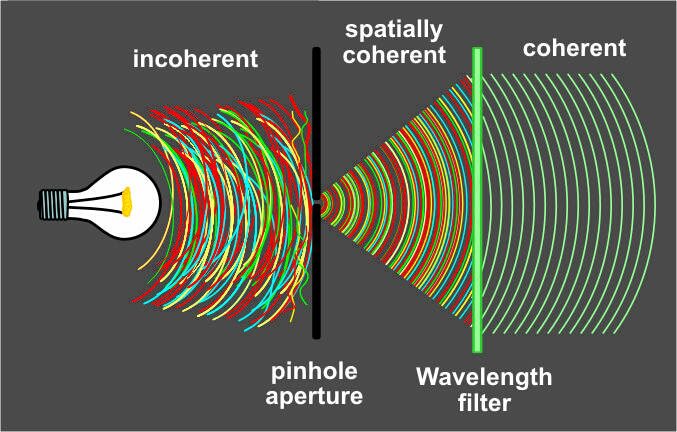
 via ScienceBlogs.
The 21st Century
This is part six of a series of posts based on a 27 February talk I delivered for the Oxford Center for Buddhist Studies; click for parts
- one, Introduction and orientation
- two, Buddhist ethics in the 1970s
- three, Buddhist ethics in the 1990s and
- four: Ongoing debates.
- five: Categorical Thinkers.
I would like to retrace my steps over one of these debates and speculate about its origins and suggest a resolution. Let us return to Little and Twiss’ tripartite system for classifying religious ethics, beginning at the most basic level of an agent’s situational application of basic norms and progressing through the validation of those norms; either be in the form of duties (deontological) or ultimate goals (teleological) and culminating in vindication, looking at metaethical concepts and discussions, or the reasons given for accepting or rejecting certain validations.
Perhaps Hallisey and Heim are correct that many, if not most, Buddhists in history lack a sophisticated moral system. Buddhists can appear to avail themselves to a variety of ethical theories to justify particular actions. Perhaps even at the level of validation of those justifications they can oscillate between deontological and teleological ethics. And perhaps most Buddhists have not spent the necessary time analyzing metaethical concepts such as not-self, dependent origination, and so on in a way that would lead to truly consistent and systematic modes of thought. Hallisey concludes to this effect in stating that:
In Theravādin commentarial literature, the Buddha is portrayed as intervening in one case to ensure the safe delivery of a child, against the demands of karma, while in another case, he uses the grief that comes from the death of a child to bring a mother to a spiritual awakening. In one case he encourages monks to support their dependent parents with the property of the monastic order; in another case, he encourages monks to keep their distance from their families. The diversity of stories associated with each one of the duties included in the Mangalasutta encourages us, in turn, to respond to the rich particularity of each situation before us without holding ourselves to a standard of moral consistency generally associated with taking guidance from a single ethical theory. (Hallisey, 1996, p.42)
However, the great thinkers of Buddhist history dating back to the Buddha himself, and including Nāgārjuna, Vasubhandu, Buddhaghosa, Śāntideva, Tsongkhapa, and others can appear before us as brilliantly systematic and consistent moral thinkers. As Richard Gombrich writes of the Buddha:
On the one hand, I [Richard Gombrich] do not think the Buddha was interested in presenting a philosophically coherent doctrine: the evidence that his concern was pragmatic, to guide his audience’s actions, is overwhelming. On the other hand, I have also concluded that the evidence that he had evolved such a structure of though and that it underpinned his pragmatic advice is no less compelling. (2009, p.164)
Charles Goodman, in skillfully introducing a breadth of Buddhist thought to Western philosophers, asks that we:
Suppose the great thinkers of the Buddhist tradition, such as the historical Buddha himself, or Buddhaghosa, or Asanga, or Śāntideva, were somehow to learn about and come to understand the debates in Western philosophy about free will, ethical theory, justice, virtue, the demands of morality or the justifications of punishment. How would they respond to these debates? (2009, p.4)
As Goodman’s work unites these thinkers under the banner of consequentialism, it is clear that he does find both a consistent thought structure and in fact a single (although varying slightly amongst traditions) ethical theory to describe Buddhist ethics. A similar case can be found in the more recent life and work of the well renowned Thai monk Buddhadāsa. Donald Swearer suggests that ‘as a reformer… he [Buddhadāsa] has been misunderstood by some for being overly intellectual and difficult to understand; by others for his relative isolation at [his] forest hermitage … and by still others for unrealistic idealism’ (1979, pp.55-56). And yet Swearer himself suggests that ‘Buddhadāsa has developed a complete system of thought which has consistently integrated ontology, epistemology, and ethics. In short, Buddhadāsa has construed a holistic view of reality, the way it is to be known or realized, and how one acts in the world having achieved that end’ (Ibidem, p.56).
So while Keown, Gombrich, Goodman, and Swearer may have drawn out consistent and coherent metaethical concepts and arguments in their work, Hallisey and Heim may be focused more on the level of individuals’ particular norms and justifications. In other words, the right question might not be whether or not Buddhist thinkers had coherent systems of thought, but rather ‘where do we look, and how do we determine what these systems might be?’ The importance of examining the more basic aspects of Buddhists lives, which seems to be the driving focus of Hallisey and Heim’s works, cannot be overstated. Without these, the metaethical concepts become detached from their lived reality leading to wild and bizarre interpretations. But to think that the Buddha or later Buddhist scholars lacked altogether an ethical theory puts Buddhism outside of, or at least in odd relationship with, other moral and religious traditions and conversations.
There will be one final section giving concluding thoughts in the coming days.
Further Reading:
Goodman, C. (2009). Consequences of Compassion: An Interpretation and Defese of Buddhist Ethics. New York: Oxford University Press.
Gombrich, R. (2009). What the Buddha Thought. London: Equinox.
Hallisey, C. (1996). Ethical Particularism in Theravāda Buddhism. Journal of Buddhist Ethics , 3, 32-43.
Hallisey, C. (1992). “Recent Works on Buddhist Ethics.” Religious Studies Review, 18:4, p.276-85.
Heim, M. (2007). Toward a “Wider and Juster Initiative”: Recent Comparative Work in Buddhist Ethics. Religion Compass , 1 (1), 107-119.
Keown, D. (1992/2001). The Nature of Buddhist Ethics. London: Palgrave.
Swearer, D. (1996). “Bhikkhu Buddhadāsa’s Interpretation of the Buddha,” Journal of the American Academy of Religion, Vol. 64, No. 2, pp. 313-336.
Previous Post

May 5, 2012
Death in the Desert in an American Buddhist Cult
Next Post
May 10, 2012 A Christian view of Gay Marriage that every Buddhist should see
Browse Our Archives
Select a Category Academia Activism American Buddhism Art Book review Buddhism Buddhism Today Buddhist Ethics Burma/Myanmar China Christianity Commodification Environment Gender Happiness Health Humor India Interfaith Islam Japanese Buddhism Kant Media / News Meditation mindfulness Photography Poetry Politics quicktakes Running Teaching Technology Thailand Theism/Atheism Theravada Tibet Tibetan Buddhism Travels Uncategorized Unitarian Universalism video Western Philosophy Zen
Select a Month June 2021 January 2021 November 2020 August 2020 July 2020 March 2020 January 2020 October 2019 August 2019 June 2019 May 2019 March 2019 February 2019 January 2019 December 2018 November 2018 October 2018 September 2018 August 2018 July 2018 June 2018 May 2018 April 2018 March 2018 February 2018 January 2018 December 2017 November 2017 October 2017 September 2017 August 2017 July 2017 June 2017 May 2017 April 2017 March 2017 February 2017 January 2017 December 2016 November 2016 October 2016 September 2016 August 2016 July 2016 June 2016 May 2016 April 2016 March 2016 February 2016 January 2016 December 2015 November 2015 October 2015 September 2015 August 2015 July 2015 June 2015 May 2015 April 2015 March 2015 February 2015 January 2015 December 2014 November 2014 October 2014 September 2014 August 2014 July 2014 June 2014 May 2014 April 2014 March 2014 February 2014 January 2014 December 2013 November 2013 October 2013 September 2013 August 2013 July 2013 June 2013 May 2013 April 2013 March 2013 February 2013 January 2013 December 2012 November 2012 October 2012 September 2012 August 2012 July 2012 June 2012 May 2012 April 2012 March 2012 February 2012 January 2012 December 2011 November 2011 October 2011 September 2011 August 2011 July 2011 June 2011 May 2011 April 2011 March 2011 February 2011 January 2011 December 2010 November 2010 October 2010 September 2010 August 2010 July 2010 June 2010 May 2010 April 2010 March 2010 February 2010 January 2010 December 2009 November 2009 October 2009 September 2009 August 2009 July 2009 June 2009 May 2009 April 2009 March 2009 February 2009 January 2009 December 2008 November 2008 October 2008 September 2008 August 2008 July 2008 June 2008 May 2008 April 2008 March 2008 September 2007 August 2007 July 2007 June 2007 May 2007 April 2007 March 2007 February 2007 January 2007 December 2006 November 2006 October 2006 September 2006 August 2006 July 2006 June 2006 May 2006 April 2006 March 2006 February 2006 January 2006 December 2005 November 2005 October 2005 September 2005 November 2004 September 2004 August 2004
Follow Us!
TAKE THE
Religious Wisdom Quiz
How many children did Job lose in the disasters at the beginning of the book?
Select your answer to see how you score.
Twelve Five Seven Ten
Support this
Column


Related posts from American Buddhist Perspectives

A Festival of Radical Awakening: Socially Engaged Buddhism...
American Buddhist Perspectives

Shambhala Buddhist Community Faces New Allegations in Chapman...
American Buddhist Perspectives

Sogyal Lakar, well-known Tibetan Buddhist teacher and alleged...
American Buddhist Perspectives

Bhikkhu Bodhi addresses the Climate Crisis at the...
American Buddhist Perspectives
TRENDING AT PATHEOS Buddhist

On Taking Refuge in the Dharma
(Here I continue the feature of sharing talks and essays by teachers...

(Continuing my intention to share talks and essays by other members of Empty...
The Subtle Art of Bowing: A Dharma Discourse
(This presentation was first offered by my dear friend Dharma Holder Tom...

Internal Family Systems Can Heal you Mentally &...
How IFS Helped Me Stop Fighting Myself Internal Family Systems (IFS) is...

The Bible No One Spoke About: A Family’s...
A mysterious family Bible, unspoken faith, and a journey from curiosity to...

How Uncertainty Can Transform Your Life in 2025
Embracing Uncertainty: A New Year’s Resolution for the Brave As 2025 approaches,...
view all Buddhist blogs
Ad-Free & Subscriber Log-In Subscription Support
- About Us
- 2026 Calendar
- Videos
- Podcasts
- Library of World Religions
- Faith In Media Tracker
- Advertise With Us
- Write for Us
- Privacy Policy
- Terms of Service
- Do Not Sell My Data
- Contact Us
- Radiant Digital
- Manage Newsletter Subscriptions
- Unsubscribe From Notifications
- Sitemap
Copyright 2008-2026, Patheos. All rights reserved.
Subscription Support Ad-Free & Subscriber Log-In
Follow Patheos