
BuddhistCatholicContemplativeEvangelicalGeneral ChristianHinduJewishLatter-day SaintMuslimNew VisionsProgressive Christian
Beliefs
- Buddhist
- Catholic
- Contemplative
- Evangelical
- General Christian
- Hindu
- Jewish
- Latter-day Saint
- More Voices
- Muslim
- New Visions
- Pagan
- Progressive Christian
Topics
- Religion News
- Food and Religion
- Sports and Religion
- Religious Art
- Religious Music and Entertainment
- Religious Events
- History and Religion
- Style and Religion
- Politics and Religion
- Women in Religion
- Recreation Outdoors and Religion
- Business Finance and Religion
- Careers Workplace and Religion
- Education and Religion
- Family Parenting and Religion
- Health Fitness and Religion
- Home and Religion
- Relationships and Religion
- Technology and Religion
- Travel and Religion
Columnists
- Buddhist Columnists
- Business Finance and Religion Columnists
- Careers Workplace and Religion Columnists
- Catholic Columnists
- Contemplative Columnists
- Education and Religion Columnists
- Evangelists Columnists
- Family Parenting and Religion Columnists
- General Christian Columnists
- Health Fitness and Religion Columnists
- Hindu Columnists
- History and Religion Columnists
- Home and Religion Columnists
- Jewish Columnists
- More Voices Columnists
- Latter Day Columnists
- Muslim Columnists
- New Visions Columnists
- Nonreligious Columnists
- Pagan Columnists
- Politics and Religion Columnists
- Progressive Columnists
- Recreation Outdoors and Religion Columnists
- Relationships and Religion Columnists
- Religion News Columnists
- Religious Art Columnists
- Religious Events Columnists
- Religious Music and Entertainment Columnists
- Sports and Religion Columnists
- Style and Religion Columnists
- Technology and Religion Columnists
- Travel and Religion Columnists
- Women in Religion Columnists
Resource Library
- 2026 Calendar
- Library of World Religions
- The 100 Most Holy Places on Earth
- Patheos Answers
- Podcasts
- Videos
- Faith Leaders Database
- Anglican Episcopalian
- Bahai
- Baptist
- Buddhism
- Christianity
- Confucianism
- Eastern Orthodoxy
- Hinduism
- Holiness and Pentecostal
- ISKCON
- Islam
- Judaism
- Lutheran
- Methodist
- The Church of Jesus Christ of Latter-day Saints
- New Age
- Paganism
- Presbytarian and Reformed
- Protestantism
- Religion Behind the Scenes
- Roman Catholic
- Scientology
- Shia Islam
- Sikhism
- Sufism
- Sunni Islam
- Taoism
- Zen
- See all religions
Research Tools
 Ad-Free & Subscriber Log-In Subscription Support
Ad-Free & Subscriber Log-In Subscription Support
Follow Patheos 

- Trending:
- Forgiveness
- |
- Marriage
- |
- Consciousness
- |
- Death Penalty
- |
- Election
- |
- Halloween
 American Buddhist Perspectives
- Home
- Buddhist
- Religion News
- Studies in Buddhist ethics 4 – Ongoing Debates
Studies in Buddhist ethics 4 – Ongoing Debates
Last updated on: April 23, 2012 at 3:51 pm by Justin Whitaker
Studies in Buddhist ethics 4 – Ongoing Debates 2012-04-23T15:51:17-06:00 Justin Whitaker
Patheos Explore the world's faith through different perspectives on religion and spirituality! Patheos has the views of the prevalent religions and spiritualities of the world.
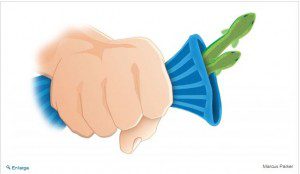
If only they had socks in the Buddha's day...
Contemporary Work and Debates
[this is part four of a series of posts based on a 27 February talk I delivered for the Oxford Center for Buddhist Studies; click for parts one, two, and three.]
As my paper title (“Wiggling Eels in a Wilderness of Views”*) suggests, the journey of Buddhist ethics, perhaps even more so in the last 35 years, has been a trip through a veritable wilderness of views.
This phrase, the ‘wilderness of views’, comes from the Aggi-Vacchagotta Sutta (MN 72, M i. 483) as the Buddha’s response to several questions such as: ‘is the cosmos finite or infinite, are the soul and the body (Pāli: jīva and sarīra)[1] the same or different,’ and so on. Following the lead of numerous scholars who have argued that the Buddha’s teaching is ultimately soteriological, that is, meant to bring about a certain ultimate state of affairs for the practitioner, we might simply see these questions as unimportant. But in fact the Buddha goes further. Not only are certain questions unimportant to the quest for nibbāna, they are outright detrimental. For each of the ten positions given to the Buddha, he replies:
“Vaccha, [this position] is a thicket of views, a wilderness of views, a contortion of views, a writhing of views, a fetter of views. It is accompanied by suffering, distress, despair, & fever, and it does not lead to disenchantment, dispassion, cessation; to calm, direct knowledge, full Awakening, Unbinding. (http://www.accesstoinsight.org/tipitaka/mn/mn.072.than.html)[2]
Perhaps our attempts to categorize Buddhist ethics similarly fall into this wilderness of views. Perhaps we have not been asking the right questions. This is certainly the position of Charles Hallisey in his 1996 article, ‘Ethical Particularism in Theravāda Buddhism.’[3] In this article Hallisey argues that our ‘already answered’ question, ‘is there a moral theory in Theravāda Buddhism?’ has ‘distorted our perceptions of Theravādin ethics’ (p.34). Employing canonical texts, commentarial literature, and a story about a king from medieval Sri Lanka, Hallisey suggests that ‘It is certainly not obvious that we should think that all of Buddhist ethics belongs to a single family of ethical theory, especially when we take the question in a manner which encourages us to conceptualize Buddhism as analogous to consequentialism or any other family of ethical theory’ (p.35). Furthermore, [we should] ‘realize that there can be no answer to a question that asks us to discover which family of ethical theory underlies Buddhist ethics in general, simply because Buddhists availed themselves of and argued over a variety of moral theories (p.37). Given the apparent multiplicity of ethical resources in Buddhist ethics, he concludes that ‘I think we should ask whether it is possible that Buddhists approached their ethical concerns without any ethical theory at all, but instead adopted a kind of ethical particularism’ (ibidem).
Maria Heim, echoing Hallisey’s concerns in 2007, writes that, ‘When the broad generalizations become too broad, as they invariably must when the entirety of the vast historical tradition of Buddhism is taken into account, the much vaunted careful attention to historical and empirical particularity slips away’ (2007, p.109). Discussing Keown in particular, she writes:
For Keown the first task of Buddhist ethics is to determine which family of moral theory it belongs, and to classify it accordingly; he argues that “the Buddhist moral system” bears close affinities to Aristotelian virtue theory (21). But the holistic move that makes this comparison possible is particularly regrettable. It forces Keown to omit entire schools of Buddhism that do not easily conform to an Aristotelian model (we find no mention of East Asian forms of Buddhism in his book, for example). It also assumes, rather than argues, that the huge range of historically diverse Buddhist traditions articulated a single moral system. Finally, such holism elides attention to Buddhists’ own distinctive systems and styles of moral discourse, which may not easily fold into Western systems and categories (see Hallisey 1996, 1997). (Heim 2007, p.110)
Similarly, in a 2011 review essay on recent anthropological works that help further the progress of Buddhist ethics, Heim concludes: ‘The intersubjective and conditioned reality of human experience is a—or perhaps the—chief problematic that ordinary people in Buddhist contexts, as well as intellectuals like Ind [a modernist intellectual active in Cambodia in the 1920s], grapple with as they figure out how to act morally in the messy contexts of human life’ (Heim 2011). It is interesting that she uses the term ‘messy,’ as this is exactly the term borrowed by Hallisey in his 1996 article, where he states that ‘from [the 20th century Scottish philosopher W.D.] Ross, we have learned to expect that ‘in ethics everything is pretty messy, and there is not much room for the sort of moral theory’ that would meet the standards of those who look to theory to provide a list of basic moral principles’ (p.38).
In the next post I will turn to the ‘categorical’ thinkers (Keown, Charles Goodman, Richard Gombrich, and others) who, unlike Hallisey and Heim, find holistic and consistent systems of thought in areas of Buddhist ethics.
* I dropped the discussion of eel wrigglers, from DN 1, the Brahmajala Sutta, at a late point in writing the paper. I wrote previously about that sutta and Eel Wrigglers here.
[1] For jīva cf Latin vivus: alive, fresh, living.
[2] [view X] kho vaccha diṭṭhigatametaṃ diṭṭhigahanaṃ diṭṭhikantāraṃ diṭṭhivisūkaṃ diṭṭhivipphanditaṃ diṭṭhisañañojanaṃ, sadukkhaṃ savighātaṃ saupāyāsaṃ sapariḷāhaṃ. Na nibbidāya na virāgāya na nirodhāya na upasamāya na abhiññāya na sambodhāya na nibbānāya saṃvattati.
[3] Published in the Journal of Buddhist Ethics (http://blogs.dickinson.edu/buddhistethics/) Paper presented in a panel on “Revisioning Buddhist Ethics” at the Annual Meetings of the American Academy of Religion in Philadelphia, 20 November 1995.
Previous Post

April 3, 2012
New Links: Dispirited and 100 reasons NOT to go to Grad School
Next Post
April 5, 2012 Does studying Ethics make you more Moral?
Browse Our Archives
Select a Category Academia Activism American Buddhism Art Book review Buddhism Buddhism Today Buddhist Ethics Burma/Myanmar China Christianity Commodification Environment Gender Happiness Health Humor India Interfaith Islam Japanese Buddhism Kant Media / News Meditation mindfulness Photography Poetry Politics quicktakes Running Teaching Technology Thailand Theism/Atheism Theravada Tibet Tibetan Buddhism Travels Uncategorized Unitarian Universalism video Western Philosophy Zen
Select a Month June 2021 January 2021 November 2020 August 2020 July 2020 March 2020 January 2020 October 2019 August 2019 June 2019 May 2019 March 2019 February 2019 January 2019 December 2018 November 2018 October 2018 September 2018 August 2018 July 2018 June 2018 May 2018 April 2018 March 2018 February 2018 January 2018 December 2017 November 2017 October 2017 September 2017 August 2017 July 2017 June 2017 May 2017 April 2017 March 2017 February 2017 January 2017 December 2016 November 2016 October 2016 September 2016 August 2016 July 2016 June 2016 May 2016 April 2016 March 2016 February 2016 January 2016 December 2015 November 2015 October 2015 September 2015 August 2015 July 2015 June 2015 May 2015 April 2015 March 2015 February 2015 January 2015 December 2014 November 2014 October 2014 September 2014 August 2014 July 2014 June 2014 May 2014 April 2014 March 2014 February 2014 January 2014 December 2013 November 2013 October 2013 September 2013 August 2013 July 2013 June 2013 May 2013 April 2013 March 2013 February 2013 January 2013 December 2012 November 2012 October 2012 September 2012 August 2012 July 2012 June 2012 May 2012 April 2012 March 2012 February 2012 January 2012 December 2011 November 2011 October 2011 September 2011 August 2011 July 2011 June 2011 May 2011 April 2011 March 2011 February 2011 January 2011 December 2010 November 2010 October 2010 September 2010 August 2010 July 2010 June 2010 May 2010 April 2010 March 2010 February 2010 January 2010 December 2009 November 2009 October 2009 September 2009 August 2009 July 2009 June 2009 May 2009 April 2009 March 2009 February 2009 January 2009 December 2008 November 2008 October 2008 September 2008 August 2008 July 2008 June 2008 May 2008 April 2008 March 2008 September 2007 August 2007 July 2007 June 2007 May 2007 April 2007 March 2007 February 2007 January 2007 December 2006 November 2006 October 2006 September 2006 August 2006 July 2006 June 2006 May 2006 April 2006 March 2006 February 2006 January 2006 December 2005 November 2005 October 2005 September 2005 November 2004 September 2004 August 2004
Follow Us!
TAKE THE
Religious Wisdom Quiz
Who was Abraham's firstborn son?
Select your answer to see how you score.
Jacob Ishmael Esau Isaac
Support this
Column


Related posts from American Buddhist Perspectives

A Festival of Radical Awakening: Socially Engaged Buddhism...
American Buddhist Perspectives

Shambhala Buddhist Community Faces New Allegations in Chapman...
American Buddhist Perspectives

Sogyal Lakar, well-known Tibetan Buddhist teacher and alleged...
American Buddhist Perspectives
Bhikkhu Bodhi addresses the Climate Crisis at the...
American Buddhist Perspectives
TRENDING AT PATHEOS Buddhist

On Taking Refuge in the Dharma
(Here I continue the feature of sharing talks and essays by teachers...

(Continuing my intention to share talks and essays by other members of Empty...
The Subtle Art of Bowing: A Dharma Discourse
(This presentation was first offered by my dear friend Dharma Holder Tom...

Internal Family Systems Can Heal you Mentally &...
How IFS Helped Me Stop Fighting Myself Internal Family Systems (IFS) is...

The Bible No One Spoke About: A Family’s...
A mysterious family Bible, unspoken faith, and a journey from curiosity to...

How Uncertainty Can Transform Your Life in 2025
Embracing Uncertainty: A New Year’s Resolution for the Brave As 2025 approaches,...
view all Buddhist blogs
Ad-Free & Subscriber Log-In Subscription Support
- About Us
- 2026 Calendar
- Videos
- Podcasts
- Library of World Religions
- Faith In Media Tracker
- Advertise With Us
- Write for Us
- Privacy Policy
- Terms of Service
- Do Not Sell My Data
- Contact Us
- Radiant Digital
- Manage Newsletter Subscriptions
- Unsubscribe From Notifications
- Sitemap
Copyright 2008-2026, Patheos. All rights reserved.
Subscription Support Ad-Free & Subscriber Log-In
Follow Patheos